The real question isn't how many hours you want. It's what you want to accomplish, and whether Tokyo's geography allows it in the time you have.
Asakusa to Shibuya takes 40 minutes. That's physics, not preference—and it should shape how you choose tour duration.
Asakusa to Shibuya takes 40 minutes. That's not negotiable—it's the Ginza Line. Most travelers choose tour length based on their schedule or budget, then discover Tokyo's geography doesn't bend to either. The real question isn't how many hours you want—it's whether the city makes your goals possible in that time.
40 Minutes Is Not Negotiable
Tour duration isn't a preference. It's a constraint imposed by Tokyo's geography.
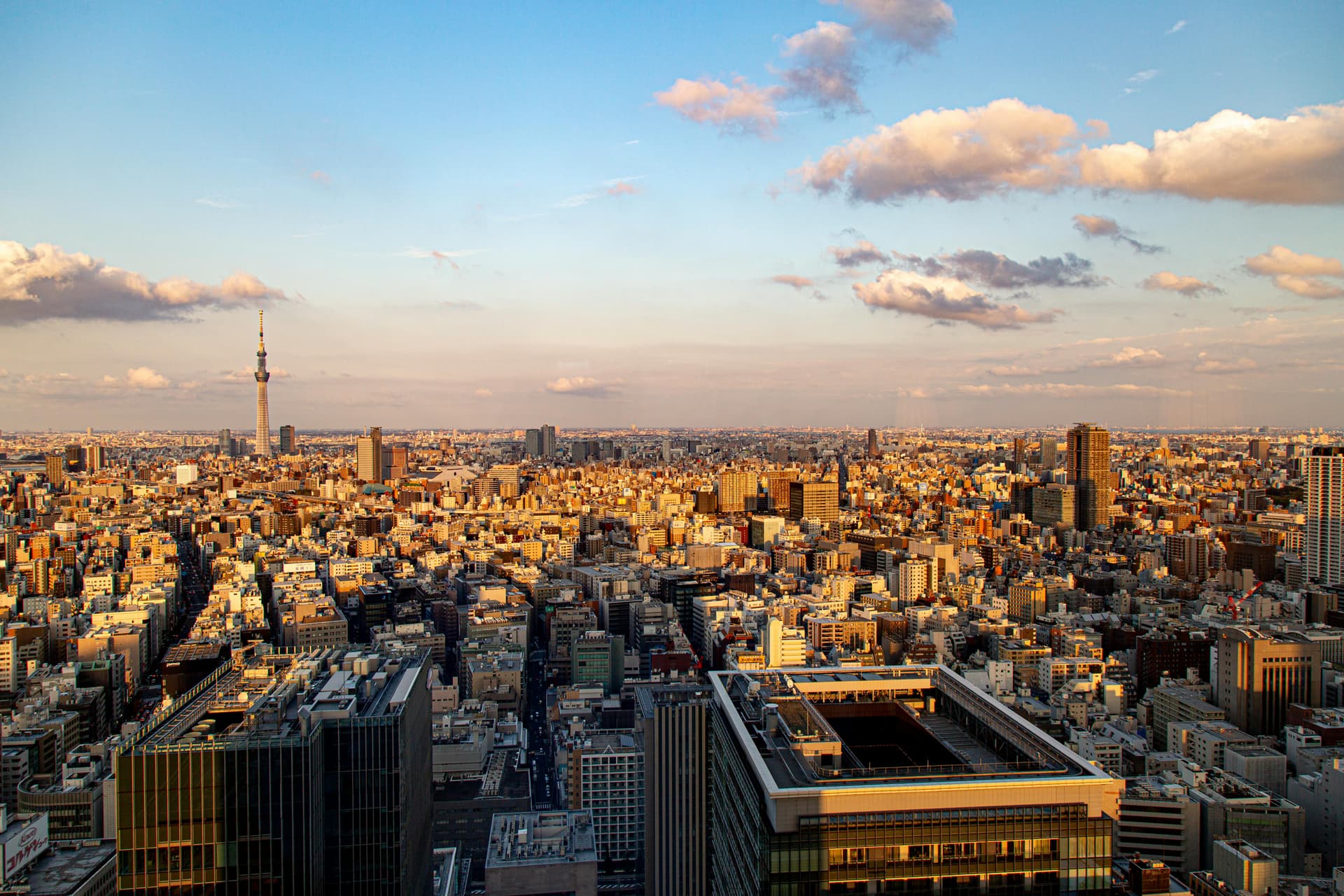
When you're planning from home, "traditional Tokyo" and "modern Tokyo" sound like a reasonable pairing for a half-day tour. Asakusa's temples in the morning, Shibuya's scramble crossing before lunch. Then you land in Tokyo and discover these neighborhoods sit on opposite ends of the city, connected by a 40-minute train ride that becomes 50 minutes once you factor in station navigation.
This isn't bad luck. It's physics. Tokyo sprawls across 23 special wards, each with its own character, separated by a rail network that rewards those who understand its constraints.
The Routes That Define Your Options
| From | To | Train Time | Door-to-Door (First-Timer) |
|---|---|---|---|
| Asakusa | Shibuya | 33-37 min | 40-50 min |
| Asakusa | Harajuku | 35-40 min | 40-50 min |
| Tsukiji | Asakusa | 20-30 min | 30-40 min |
| Shinjuku | Asakusa | 25-30 min | 35-45 min |
| Ueno | Shinjuku | 20-25 min | 25-35 min |
The "door-to-door" column matters more than the train time. First-time visitors consistently add 10-15 minutes per journey just navigating stations—finding the right platform, decoding exit signs, walking underground corridors.
What Station Complexity Actually Costs You
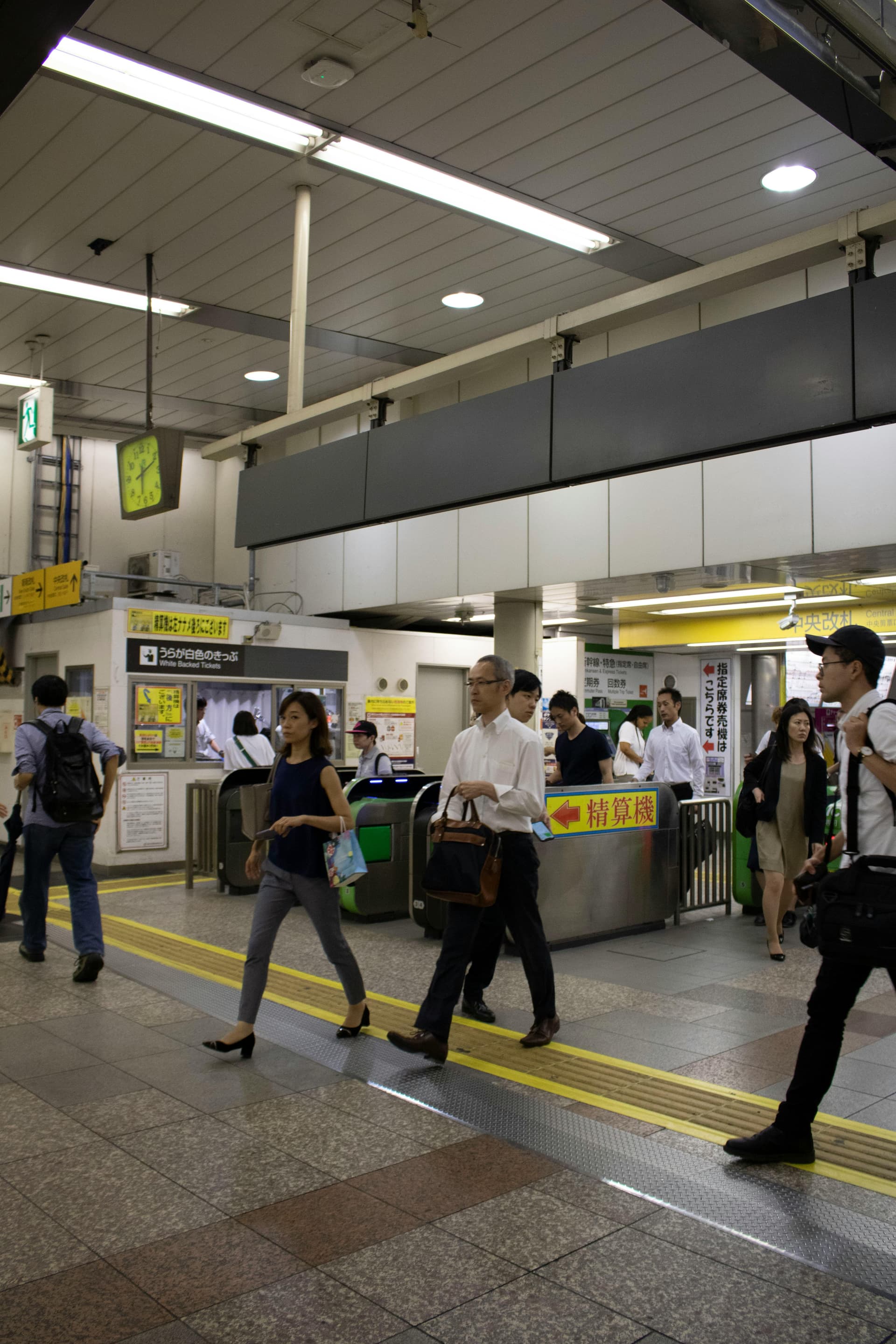
Shinjuku Station has approximately 200 exits serving 5-6 different rail operators. Finding the right exit takes 10-20 minutes if you don't know where you're going. Shibuya Station, currently undergoing major redevelopment, requires 10-15 minutes of corridor walking from most platforms to the Hachiko exit.
Even simpler stations add friction. Asakusa has three separate subway operators with no underground connection between them. Exit the wrong one and you're a 10-minute walk from where you need to be.
These minutes compound. In a 4-hour tour hoping to cover "traditional" and "modern" Tokyo, you're looking at 70+ minutes consumed by transit and station navigation alone. That's not a failure of planning. That's Tokyo's geography asserting itself.
What 4 Hours Actually Delivers
Half-day tours don't give you 4 hours of exploration. They give you 4 hours minus everything required to move you through space.
Half-Day: The Time Breakdown
A typical 4-hour morning tour:
-
9:00 AM: Hotel pickup
-
9:15-9:35: Transit to first location (20 min)
-
9:35-11:00: First location (85 min)
-
11:00-11:30: Transit to second location (30 min)
-
11:30-12:45: Second location (75 min)
-
12:45-1:00: Tour wrap-up
Actual exploration time: 2.5-3 hours across 2-3 locations.
Walking distance: 5-8 km (8,000-10,000 steps). For a deeper look at what this walking means in practice, we break down step counts and pacing expectations separately.
The tour ends at 1 PM in whichever neighborhood you happen to be in—not at your hotel.
Full-Day: Where the Extra Hours Go
A typical 8-hour tour:
-
9:00 AM: Hotel pickup
-
9:15-9:40: Transit to first location
-
9:40-11:15: First location (95 min)
-
11:15-11:40: Transit to second location
-
11:40-1:00: Second location (80 min)
-
1:00-2:00: Lunch (60 min seated)
-
2:00-2:25: Transit to third location
-
2:25-4:00: Third location (95 min)
-
4:00-4:20: Transit to fourth location
-
4:20-5:00: Fourth location (40 min)
Actual exploration time: 5.5-6 hours across 4-5 locations.
Walking distance: 10-15 km (12,000-18,000 steps), but spread across more hours with seated breaks. For context on what these distances mean in practice—the train-walk pattern and how pace adjusts—see our walking tour overview.
When Half-Day Is the Better Choice
Half-day isn't a compromise. It's optimal for specific situations.
The Geography Works in Your Favor
Some neighborhoods cluster. Meiji Jingu, Harajuku, Shibuya, and Shinjuku all sit along the JR Yamanote Line within minutes of each other:
-
Meiji Jingu to Harajuku: Adjacent (same station)
-
Harajuku to Shibuya: 1 stop (2-4 minutes)
-
Shibuya to Shinjuku: 3 stops (4-5 minutes)
Total transit time across the entire corridor: roughly 10 minutes. Harajuku Station itself has only 2 exits and one platform—the opposite of Shinjuku's complexity.
When your interests align with clustered geography, half-day tours cover three or four stops without the transit penalty that destroys cross-city itineraries. For more on how customization works within these geographic constraints, we cover what's actually possible.
Multi-Day Strategies
If you're staying 5+ days, multiple half-day tours beat fewer full-day tours. Three morning tours across different days deliver more total exploration than two exhausting full-day sessions, with better energy management and afternoons free for spontaneous discovery.
Travelers who pack every hour of every day describe their trip as "a blur." Strategic half-day bookings leave room for the unplanned—the shop you want to revisit, the neighborhood you want to wander alone, the meal that turns into a two-hour conversation.
When You Already Know What You Want
Returning visitors with specific interests—shrine architecture, contemporary art, vintage shopping in Shimokitazawa—benefit from focused half-day deep dives. You don't need orientation. You need expertise on something specific.
Evening-focused experiences fit the half-day format. An afternoon-to-evening tour (2 PM to 6 PM) captures Tokyo's transformation as lanterns light up and salarymen fill the izakaya lanes.
If mobility is a concern, 4 hours may be the comfortable maximum. Better to fully enjoy half a day than push through 8 uncomfortable hours. Tokyo has many stairs—Asakusa Station alone involves multiple flights from street to platform—and elevator access isn't universal at older stations. We cover accessibility considerations and route planning in detail.
The 1pm Problem (And Why It Costs More Than the Tour)
Half-day tours end. Then what?
What Happens When Your Guide Leaves
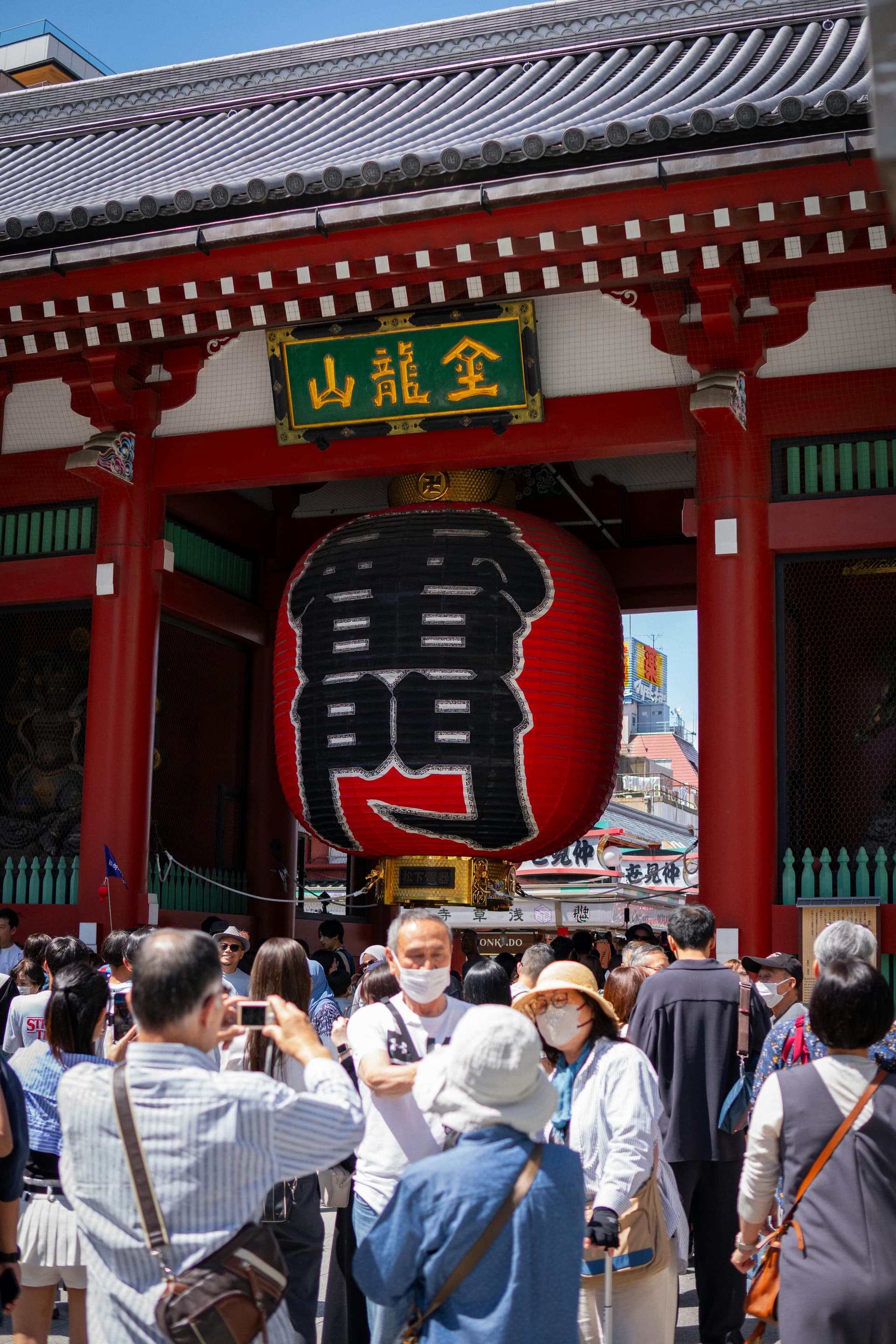
Your tour concludes at 1 PM in Asakusa. You're standing in front of Sensoji Temple, your guide has said goodbye, and you're hungry.
One traveler put it simply: "On the half day tour, you're left to explore Senso-ji on your own. It's great to go around, but would have been nice to be guided here as well."
The restaurants around you have menus in Japanese. Reading them requires kanji knowledge most visitors don't have. You don't know which places are good, which are tourist traps, which accommodate dietary restrictions. You spend 30-45 minutes finding acceptable food—pointing at plastic displays, hoping for the best.
After lunch, you need to get somewhere. Maybe Shibuya for the afternoon, maybe back to your hotel for a break. You pull out your phone, open Google Maps, and discover the nearest station has three different operators with no obvious connection between them. Another 20-30 minutes disappear to figuring out which ticket to buy and which platform to stand on.
By 3 PM, you're exhausted. You head back to the hotel. The afternoon you planned to spend exploring independently evaporated into navigation and decision fatigue.
The Hidden Time Tax
The half-day tour saved you money compared to full-day. But the afternoon cost you:
-
45 minutes finding and eating a mediocre lunch
-
30 minutes figuring out transit
-
90 minutes of your afternoon, gone
-
Energy you needed for evening plans
Travelers who book half-day tours expecting to "explore independently afterward" discover that independent exploration requires skills the tour hasn't taught them yet. They don't know how to read a station map. They don't know which exit leads where. They don't know how to get a table at a restaurant with no English menu. Some realize this mid-tour: "We enjoyed our time so much that we extended our tour for an extra hour."
Full-day tours handle all of this. The guide navigates lunch, explains what you're eating, handles dietary restrictions you couldn't communicate alone. For a detailed look at what happens during a tour day, we cover the full experience.
Why Full-Day Isn't Just 'More Hours'
The extra 4 hours aren't padding. They're capability.
About an hour goes to lunch—but lunch isn't survival, it's education. Your guide takes you to places with no English menu because those places have better food. They order, explain each dish, handle the check. You learn by watching. By your third day in Tokyo, you can do it yourself.
The same transfer happens with transit. Multiple trains, multiple stations, multiple opportunities to watch someone navigate before you do it alone. One reviewer noted their guide "taught them all they need to know about the rail system." A private tour on day one is an investment in every day that follows.
Full-day also builds narrative. Half-day shows you places; full-day shows you how they connect. The guide explains why Asakusa feels different from Shibuya, how Tokyo evolved from Edo-period temples to postwar commerce to neon chaos. Travelers praise the pacing: "She built extra time into each part so we never felt rushed." You end the day understanding Tokyo as a coherent city. For examples of how routes connect, see our 1-day Tokyo itinerary breakdown.
That said, full-day isn't universally better. Some travelers feel too tired by the end—especially if jet-lagged, in summer heat, or managing health conditions. Eight hours is a commitment. If you're unsure about stamina, half-day may serve you better.
The Right Question to Ask Yourself
Stop asking "how many hours should I book?" Start asking "what am I trying to accomplish?"
Geography Question
Are your target neighborhoods clustered or dispersed?
If you want Meiji Jingu, Harajuku, and Shibuya—clustered along the Yamanote Line—half-day works. If you want Asakusa and Shibuya—opposite ends of the city—half-day sets you up for disappointment.
Map your interests before choosing duration. Geography decides more than preference.
Navigation Comfort Question
Are you comfortable handling lunch, transit, and evening plans without guidance?
If you've traveled independently in Asia before, navigated complex rail systems, found restaurants in countries where you don't speak the language—half-day gives you structure without redundancy.
If this is your first time in a non-English-speaking country, if you feel anxious about getting lost, if you want someone else to handle decisions—full-day eliminates uncertainty through the hardest part of the day.
Trip Context Question
Is this your only Tokyo day, or one of several?
One day in Tokyo: You need efficiency. You need to maximize what you see and understand. Full-day delivers more.
Five or more days: You have time for multiple approaches. Half-day tours in the mornings, independent exploration in the afternoons, different neighborhoods on different days.
There's no universal answer. The right duration depends on your geography goals, your navigation comfort, and your trip context. For help thinking through the broader decision, our guide covers all the factors.
Cost Reality
Hinomaru One pricing:
-
Half-day (4 hours): From $314 for a group of 2
-
Full-day (6 hours): From $430 for a group of 2
-
Full-day (8 hours): From $550 for a group of 2
Pricing is per group, not per person. Rates decrease as group size increases. Meals, transportation, and entrance fees are not included in any tour.
Per-hour value:
-
Half-day: ~$78 per hour of total tour time
-
Full-day (8 hours): ~$69 per hour of total tour time
The 75% price difference between half-day and full-day buys roughly double the actual exploration time (5.5-6 hours vs 2.5-3 hours after subtracting transit and logistics). Per-hour cost is lower for full-day, but absolute commitment is higher. For a complete pricing breakdown, see our pricing guide.
Industry context: Budget Tokyo private tours run $160-350 for a full day. Mid-range operators like Backstreet Guides charge ¥37,000 ($250) for 5 hours and ¥52,000 ($350) for 8 hours. Platform aggregators like GoWithGuide average $35-45 per hour.
Where This Fits Our Approach
Built Around the Geography Problem
We designed tours knowing that Tokyo's geography is the constraint most travelers don't see until they're standing in Shinjuku Station with 200 exits and no idea which one leads to Golden Gai.
Our half-day Tokyo Trifecta tour demonstrates what's possible when routes stay clustered: Meiji Jingu's forest sanctuary, Harajuku's youth culture, and Shinjuku's evening atmosphere—three distinct experiences along one rail corridor, with walking distances between them measured in minutes rather than subway transfers.
Our full-day tours exist because cross-district ambitions require them. Traditional Asakusa and modern Shibuya in the same day isn't a preference question. It's a physics question. Eight hours makes it possible. Four hours makes it frustrating. Infinite Tokyo shows what's possible when you have the time.
What You Know When You Book
The concierge team handles planning separately from guides. They track dietary restrictions, mobility needs, special requests. Your guide focuses on delivering the tour, not remembering every detail from a pre-tour email.
Instant confirmation through calendar integration means you know immediately if your preferred date and guide are available. No 24-48 hour wait while an operator checks with freelancers.
Free cancellation up to 24 hours before your tour (full policy) addresses commitment anxiety. If you're worried about locking in 8 hours with someone you haven't met, you can cancel until the day before.
Frequently Asked Questions
Should I book a 4-hour or 8-hour tour?
Four hours works when: you want deep focus on one area, you have other Tokyo days for exploration, or your group has limited stamina. Eight hours works when: time is scarce, you want cross-district coverage, or you want the full morning-to-evening arc.
How much can I see in a half-day tour?
Realistically: one neighborhood explored deeply, or 2-3 closely clustered stops. After subtracting meeting time and transitions, you have 2.5-3 hours of actual exploration. Don't expect to cross Tokyo in a half-day.
Is an 8-hour tour too tiring?
Depends on pacing and fitness. Well-designed full-day tours include: seated lunch, café breaks, strategic taxis when needed, and flexible pacing. An 8-hour tour with proper breaks is less exhausting than a rushed 4-hour tour. Communicate energy concerns during planning.
Can I extend the tour if we're having fun?
Sometimes. It depends on whether your guide has another booking after yours. Discuss extension possibilities during pre-tour consultation. Some operators build flexibility into daily schedules; others run back-to-back bookings.
What's the best duration for families with kids?
Four to six hours for families with children under 10. Kids fatigue faster, need more breaks, and require more flexible scheduling. Eight hours is possible with older kids and built-in rest time, but pushing through exhaustion ruins the day for everyone.
At Hinomaru One, we design culturally rich, stress-free private Tokyo tours for first-time and seasoned travelers. Unrushed. Insightful. Always customized.