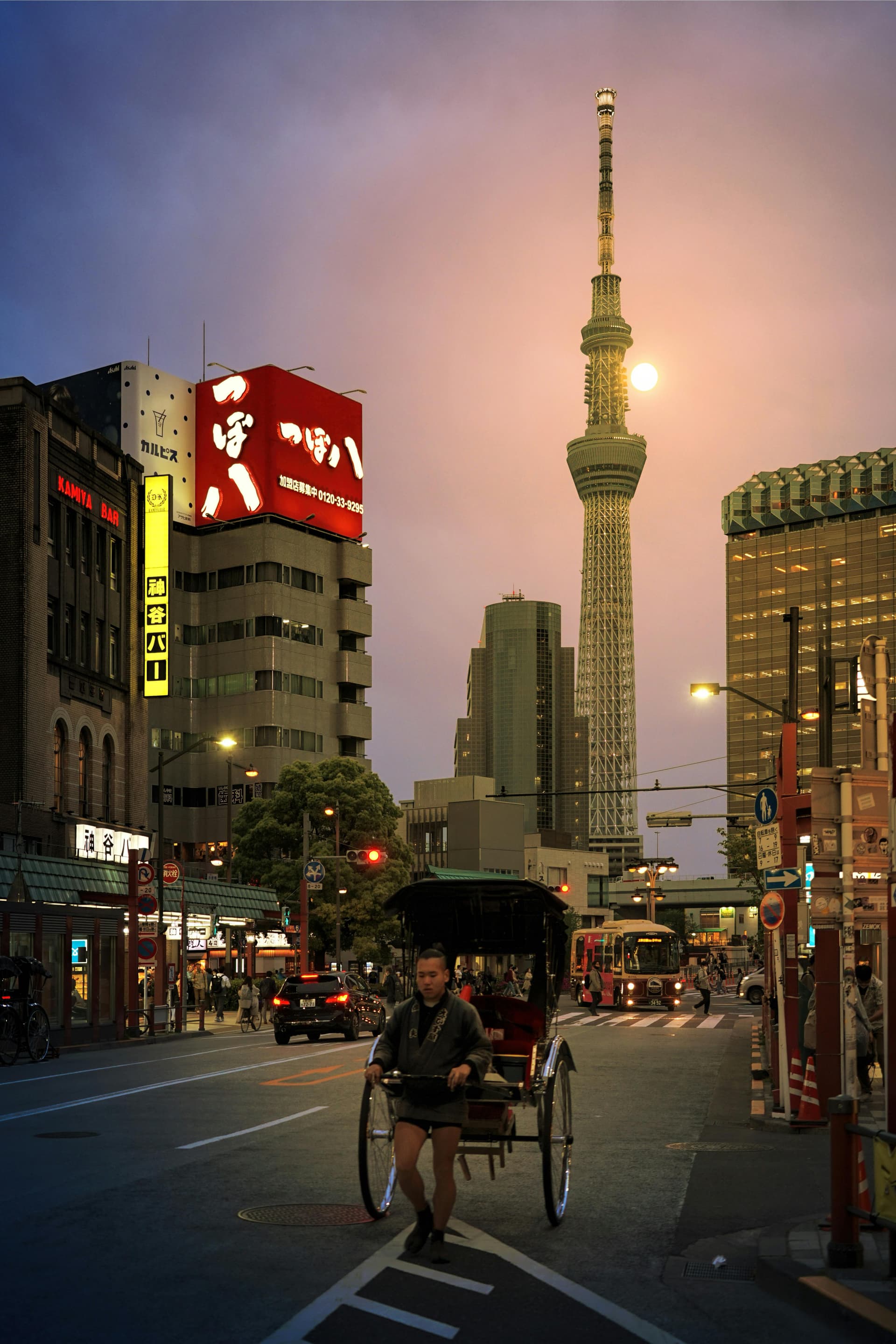
Asakusa to Shibuya takes 40 minutes. That's physics, not preference—and it should shape how you choose tour duration.
Private tour duration in Tokyo comes down to geography more than your schedule. Asakusa to Shibuya alone is 40 minutes on the Ginza Line.
You can't shorten that ride. Most travelers pick a tour length to fit their schedule or budget, then find out Tokyo's geography won't bend to either. Start with what you want to do, and check whether the city lets you do it in the hours you have.
40 Minutes Is Not Negotiable
From home, "traditional Tokyo" and "modern Tokyo" sound like a fair pairing for a half day: Asakusa's temples in the morning, the Shibuya scramble before lunch. Then you arrive and find the two neighborhoods sit at opposite ends of the city, 40 minutes apart by train, closer to 50 once you count finding your way through the stations.
Tokyo spreads across 23 special wards, each with its own character, linked by a rail network that's easy on people who know its quirks and hard on people who don't.
The Routes That Define Your Options
| From | To | Train Time | Door-to-Door (First-Timer) |
|---|---|---|---|
| Asakusa | Shibuya | 33-37 min | 40-50 min |
| Asakusa | Harajuku | 35-40 min | 40-50 min |
| Tsukiji | Asakusa | 20-30 min | 30-40 min |
| Shinjuku | Asakusa | 25-30 min | 35-45 min |
| Ueno | Shinjuku | 20-25 min | 25-35 min |
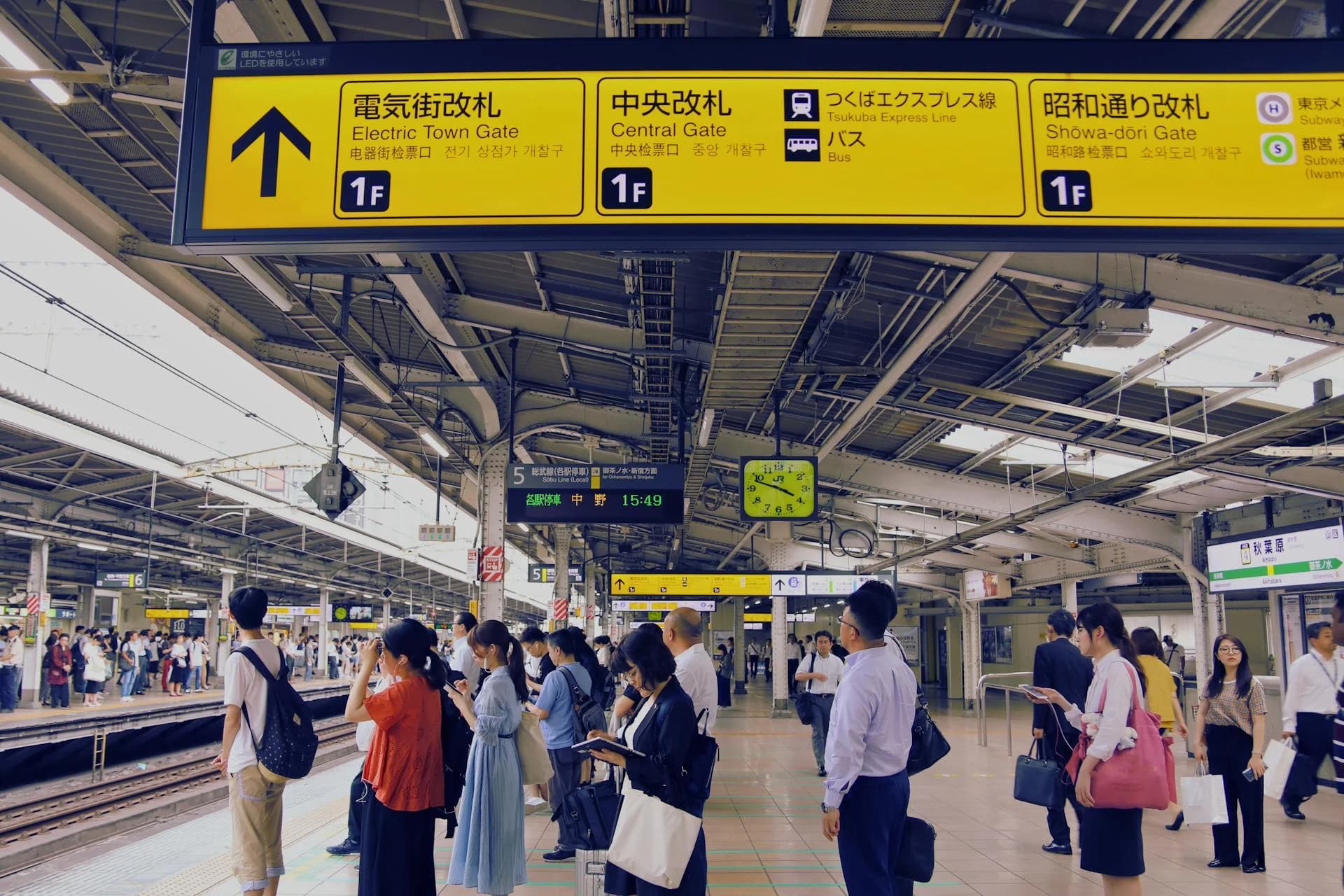
Look at the door-to-door column, not the train time. First-time visitors add 10-15 minutes to almost every journey just getting through stations: finding the platform, working out the exit signs, walking the underground corridors.
What Station Complexity Actually Costs You
Shinjuku Station has approximately 200 exits and 5-6 rail operators. If you don't know where you're going, finding the right exit takes 10-20 minutes. Shibuya Station is in the middle of a major rebuild, and from most platforms it's 10-15 minutes of corridors to the Hachiko exit.
Simpler stations still slow you down. Asakusa has three subway operators with no underground link between them, and if you come up the wrong one you're a 10-minute walk from where you meant to be.
On a 4-hour tour trying to fit in "traditional" and "modern" Tokyo, transit and station navigation eat 70+ minutes, however well you plan.
What 4 Hours Actually Delivers
A half-day tour gives you 4 hours minus however long it takes to get from place to place.
Half-Day: The Time Breakdown
A typical 4-hour morning tour:
-
9:00 AM: Hotel pickup
-
9:15-9:35: Transit to first location (20 min)
-
9:35-11:00: First location (85 min)
-
11:00-11:30: Transit to second location (30 min)
-
11:30-12:45: Second location (75 min)
-
12:45-1:00: Tour wrap-up
Actual exploration time: 2.5-3 hours across 2-3 locations.
You'll walk 5-8 km (8,000-10,000 steps). We go into step counts and pacing for what this walking means in practice in a separate piece.
The tour ends at 1 PM wherever you happen to be by then, which usually isn't your hotel.
Full-Day: Where the Extra Hours Go
A typical 8-hour tour:
-
9:00 AM: Hotel pickup
-
9:15-9:40: Transit to first location
-
9:40-11:15: First location (95 min)
-
11:15-11:40: Transit to second location
-
11:40-1:00: Second location (80 min)
-
1:00-2:00: Lunch (60 min seated)
-
2:00-2:25: Transit to third location
-
2:25-4:00: Third location (95 min)
-
4:00-4:20: Transit to fourth location
-
4:20-5:00: Fourth location (40 min)
Actual exploration time: 5.5-6 hours across 4-5 locations.
You'll walk 10-15 km (12,000-18,000 steps), spread over more hours with time sitting down in between. Our walking tour overview explains what those distances feel like, how the days alternate between train and walking, and how the pace adjusts.
When Half-Day Is the Better Choice
The Geography Works in Your Favor
Some neighborhoods sit close together. Meiji Jingu, Harajuku, Shibuya and Shinjuku are all on the JR Yamanote Line, minutes apart:
-
Meiji Jingu to Harajuku: Adjacent (same station)
-
Harajuku to Shibuya: 1 stop (2-4 minutes)
-
Shibuya to Shinjuku: 3 stops (4-5 minutes)
The whole stretch takes roughly 10 minutes of transit. Harajuku Station has only 2 exits and one platform, about as far from Shinjuku as a station gets.
If what you want to see is grouped like this, a half day covers three or four stops without the transit time that sinks a cross-city plan. We explain how customization works within these limits, and what's realistic.
Multi-Day Strategies
Staying 5+ days? Several half-day tours work better than fewer full days. Three morning tours on different days give you more total exploring than two long, tiring full days, and you keep your energy and your afternoons free.
People who fill every hour of every day tend to remember the trip as "a blur." A few half days leave space for the shop you want to go back to, the neighborhood you'd like to wander alone, the meal that turns into a two-hour conversation.
When You Already Know What You Want
Returning visitors with a specific interest, such as shrine architecture, contemporary art or vintage shopping in Shimokitazawa, get a lot from a focused half day. You've had the orientation already. Now you want someone who knows one subject well.
Evening tours suit the half-day format too. An afternoon-into-evening tour (2 PM to 6 PM) catches the lanterns coming on and the salarymen filling the izakaya lanes.
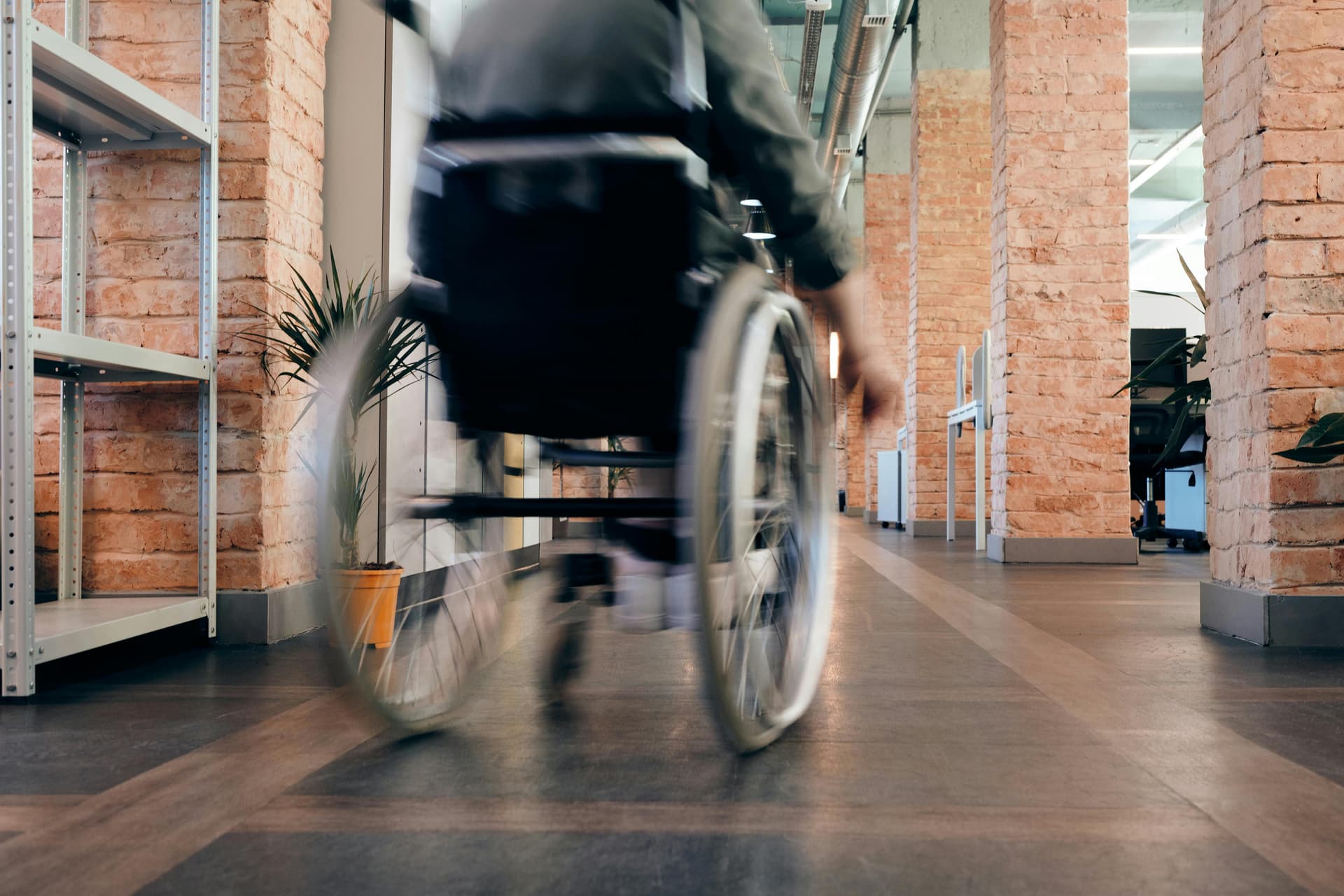
If getting around is hard for you, 4 hours may be the most that's comfortable, and enjoying half a day beats struggling through 8 hours. Tokyo has a lot of stairs. Asakusa Station alone has several flights between the street and the platform, and older stations don't all have elevators. We cover accessibility considerations and route planning in detail.
The 1pm Problem (And Why It Costs More Than the Tour)
When a half-day tour ends, you're on your own.
What Happens When Your Guide Leaves
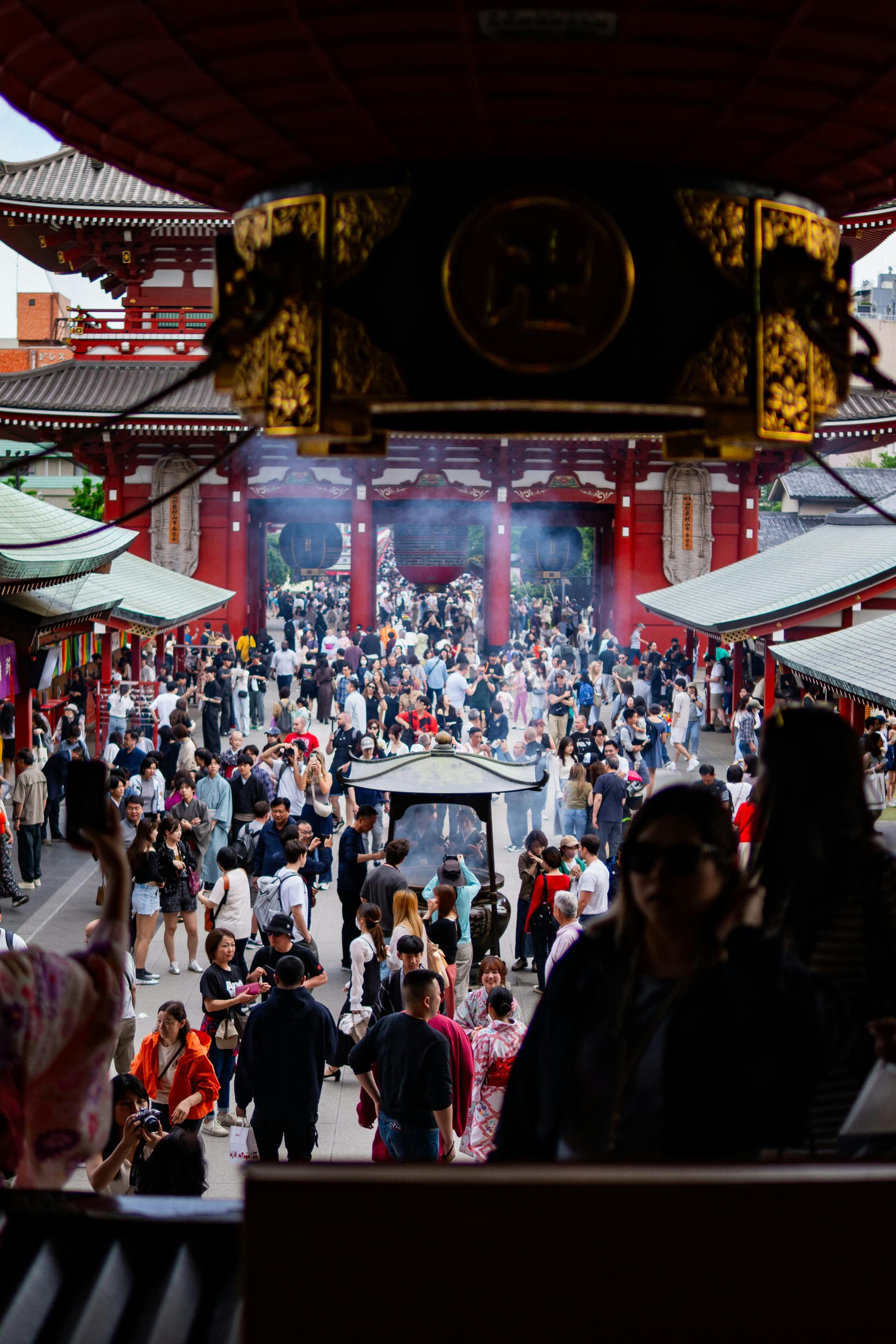
Say your tour ends at 1 PM in Asakusa. You're standing in front of Sensoji Temple, your guide has said goodbye, and you're hungry.
One traveler put it simply: "On the half day tour, you're left to explore Senso-ji on your own. It's great to go around, but would have been nice to be guided here as well."
The menus around you are in Japanese, and reading them takes kanji most visitors don't know. You can't tell which places are good, which are tourist traps or which can handle your dietary needs. You spend 30-45 minutes finding something acceptable, pointing at plastic food displays and hoping.
After lunch you need to get somewhere, maybe Shibuya for the afternoon or back to the hotel for a rest. You open Google Maps and find the nearest station has three operators and no clear connection between them. Another 20-30 minutes go on working out which ticket to buy and which platform to stand on.
By 3 PM you're worn out and heading back to the hotel. The afternoon you meant to spend exploring on your own went on navigation and small decisions.
The Hidden Time Tax
The half-day tour cost less than a full day. The afternoon cost you this:
-
45 minutes finding and eating a mediocre lunch
-
30 minutes figuring out transit
-
90 minutes of your afternoon, gone
-
Energy you needed for evening plans
People book a half day planning to "explore independently afterward," then find that exploring on their own needs skills the tour hasn't taught them yet: reading a station map, knowing which exit goes where, getting a table at a place with no English menu. Some notice partway through: "We enjoyed our time so much that we extended our tour for an extra hour."
On a full day, the guide takes care of lunch, explains what you're eating, and sorts out dietary needs you couldn't have explained alone. We walk through what happens during a tour day in more detail.
Why Full-Day Isn't Just 'More Hours'
The extra 4 hours are where you learn to manage the city yourself.
About an hour goes to lunch, and you learn something there. Your guide takes you to places without English menus, because that's often where the better food is, then orders, explains each dish and deals with the bill. You pick it up by watching, and by your third day in Tokyo you can do it yourself.
Transit works the same way. Several trains and several stations give you plenty of chances to watch someone navigate before you try it alone. One reviewer said their guide "taught them all they need to know about the rail system." A private tour on day one pays off on every day after it.
A full day also lets the places connect. A half day shows you places, and a full day shows how they fit together: why Asakusa feels so different from Shibuya, and how Tokyo went from Edo-period temples to postwar commerce to neon. Travelers mention the pacing: "She built extra time into each part so we never felt rushed." By evening the city starts to make sense as one place. Our 1-day Tokyo itinerary breakdown has examples of how routes link up.
A full day isn't right for everyone, though. Some people are spent by the end, especially with jet lag, in summer heat or with a health condition. Eight hours is a lot. If you're not sure about your stamina, a half day may suit you better.
The Right Question to Ask Yourself
Work out what you're trying to do first. The hours follow from that.
Geography Question
Are your target neighborhoods clustered or dispersed?
Meiji Jingu, Harajuku and Shibuya sit close together on the Yamanote Line, so a half day works. Asakusa and Shibuya sit at opposite ends of the city, and a half day will leave you disappointed.
Put your interests on a map before you choose a length, and let the distances guide you.
Navigation Comfort Question
Are you comfortable handling lunch, transit, and evening plans without guidance?
If you've traveled on your own in Asia, used complicated rail systems and found restaurants where you don't speak the language, a half day gives you some structure without repeating what you already know.
If this is your first time in a non-English-speaking country, if getting lost makes you anxious, or if you'd like someone else to make the calls, a full day takes the guesswork out of the hardest part of the day.
Trip Context Question
Is this your only Tokyo day, or one of several?
With one day in Tokyo, you want to see and understand as much as you can, and a full day gets you more.
With five or more days, you can mix it up: half-day tours in the mornings, your own exploring in the afternoons, a different neighborhood each day.
Our guide to thinking through the broader decision covers the rest of the choice.
Cost Reality
Hinomaru One pricing:
-
Half-day (4 hours): From $314 for a group of 2
-
Full-day (6 hours): From $430 for a group of 2
-
Full-day (8 hours): From $550 for a group of 2
Prices are per group, not per person, and go down as the group gets bigger. Meals, transportation and entrance fees aren't included on any tour.
Per-hour value:
-
Half-day: ~$78 per hour of total tour time
-
Full-day (8 hours): ~$69 per hour of total tour time
The full day costs 75% more than the half day and gets you roughly double the actual exploring (5.5-6 hours vs 2.5-3 hours once transit and logistics come out). The hourly rate is lower for the full day, though the total is higher. Our pricing guide has the complete pricing breakdown.
For comparison, budget Tokyo private tours run $160-350 for a full day. Mid-range operators like Backstreet Guides charge ¥37,000 ($250) for 5 hours and ¥52,000 ($350) for 8 hours. Platform aggregators like GoWithGuide average $35-45 per hour.
Where This Fits Our Approach
Built Around the Geography Problem
We planned our tours around the thing most travelers don't notice until they're standing in Shinjuku Station, with its 200 exits, trying to work out which one goes to Golden Gai.
Our half-day Tokyo Trifecta tour shows what a clustered route can do: the forest at Meiji Jingu, Harajuku's youth culture and Shinjuku in the evening, all on one rail line, with minutes of walking between them instead of subway transfers.
We run full days because crossing the city takes them. Old Asakusa and modern Shibuya in one day is a matter of travel time, and eight hours makes it work where four would be frustrating. Infinite Tokyo shows what you can do with the time.
What You Know When You Book
Our concierge team does the planning, separately from the guides. They keep track of dietary needs, mobility needs and special requests, so your guide can concentrate on the tour instead of remembering every line of a pre-tour email.
Booking runs off a live calendar, so you see straight away whether your date and guide are free. You won't wait 24-48 hours while an operator checks with freelancers.
Cancellation is free up to 24 hours before your tour (full policy). If committing to 8 hours with someone you haven't met makes you nervous, you can still cancel up to the day before.
Frequently Asked Questions
Should I book a 4-hour or 8-hour tour?
Four hours suits you if you want to go deep on one area, you have other days in Tokyo, or your group tires quickly. Eight hours suits you if time is short, you want to cross districts, or you want the whole day from morning to evening.
How much can I see in a half-day tour?
Realistically, one neighborhood in depth or 2-3 stops close together. Once you take out meeting time and transfers, you get 2.5-3 hours of actual exploring. A half day isn't enough to cross Tokyo.
Is an 8-hour tour too tiring?
That depends on the pacing and on you. A well-planned full day has a seated lunch, café breaks, a taxi when it makes sense and a pace that bends. An 8-hour tour with proper breaks is less tiring than a rushed 4-hour one. Tell us about energy concerns when we plan.
Can I extend the tour if we're having fun?
Sometimes. It depends on whether your guide has another booking after yours, so raise it at the pre-tour consultation. Some operators leave slack in the day, and others book guides back to back.
What's the best duration for families with kids?
Four to six hours for families with children under 10. Kids tire faster, need more breaks and need a looser schedule. Eight hours can work with older kids and planned rest, but pushing through when everyone's exhausted spoils the day for the whole family.
At Hinomaru One, we plan private Tokyo tours for first-time and seasoned travelers, and we pace them so there's time to take the city in.