The only gorge in Tokyo's 23 wards is 20 minutes from Shibuya and completely free.
Todoroki Valley runs through a residential ward in the southwest of the city, drops several metres below street level, and maintains a temperature noticeably cooler than the streets above it. Almost no tourists know it exists.
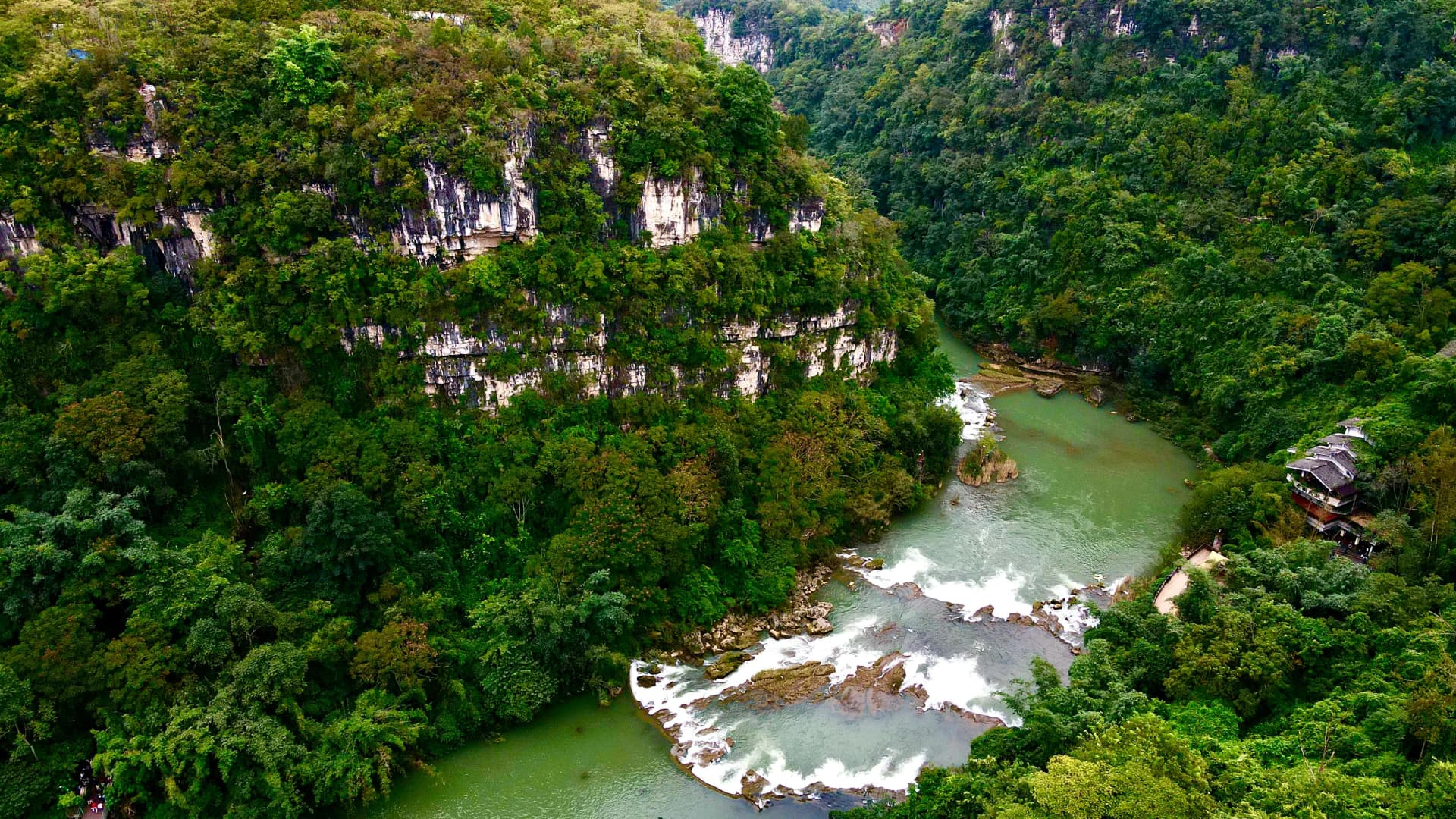
Todoroki Valley is the only valley in Tokyo's 23 special wards. The path follows the Yazawa River for 1.2km through a forested gorge that feels genuinely wild — the tree canopy closes overhead, the sound of traffic disappears, and the light changes. You descend a staircase from a residential street and emerge somewhere that looks more like rural Kyushu than central Tokyo. The Japanese practice of shinrin-yoku — forest bathing, immersing yourself in a forest environment as an act of restoration — was developed for exactly this kind of place. Todoroki is one of the few spots in the city where the practice feels natural rather than performative.
Getting There
Station: Todoroki Station on the Tokyu Oimachi Line
Exit: South exit
Walk: 5 minutes to the Golf Bridge entrance
From Shibuya: 12 minutes via Tokyu Den-en-toshi Line (change at Futako-Tamagawa) or Tokyu Oimachi Line direct
From Shinjuku: Yamanote Line to Shibuya, then Tokyu Toyoko Line to Jiyugaoka, then Oimachi Line to Todoroki — approximately 40 minutes total
From Tokyo Station: Keihin-Tohoku Line to Oimachi, then Tokyu Oimachi Line — approximately 45 minutes
The Golf Bridge — red arched steel over the valley entrance — is the landmark. The path descends from the east bank. Before you go down, take a look at the supermarket near the station if you want something to eat in the park: Seijo Ishii carries imported cheeses, bread, and deli items alongside Japanese bento options.
The Gorge Itself
The valley was carved by the Yazawa River as it cut through the Musashino plateau over geological time. What you see on the valley walls tells that story. The exposed cliff faces show layered cross-sections of clay, fine sand and gravel, and the reddish-brown Kanto loam (関東ローム層) — a volcanic ash deposit that blankets much of the Kanto plain. These strata are readable even without geological training: the darker bands at the base, lighter sediment above, and the ochre loam capping everything. The gorge is also home to more than thirty natural spring points along its length — a striking density of groundwater seeping from the plateau into the valley floor. This exceptional spring concentration earned the valley a place on Tokyo's official list of 57 Famous Springs (東京の名湧水57選).
The Yazawa River runs alongside the path, clear and narrow, crossed by small red bridges at several points. The tree canopy closes tightly overhead. The principal trees are keyaki (Japanese zelkova), shira-kashi (evergreen oak), konara (sawtooth oak), and yamazakura (wild mountain cherry). In the damper areas near springs, fern colonies grow thick enough to give the lower path a distinctly prehistoric texture. Birdsong carries through the gorge; you'll hear it long before you see any birds. The valley's steep walls prevented residential development from encroaching on the floor, which is why the natural vegetation survived as densely as it has.
Todoroki Fudōson Temple
Midway through the valley, a temple complex emerges on the left bank. The formal temple name is Mangan-ji (満願寺), but most people know it as Todoroki Fudōson, after the principal object of veneration in its valley chapel. The full official name of that chapel is Ryūgōzan Myōō-in (滝轟山明王院) — the Temple of the Thundering Waterfall King of Wisdom — which tells you something about the place before you arrive.
The founding legend runs as follows. A high priest named Kakuban (覚鑁上人, 1095–1143), known posthumously as Kōgyō Daishi and revered for reviving Mount Kōya and the Shingon sect, received a dream revelation from Fudō Myōō — the immovable wisdom king, patron of perseverance and ascetic discipline — directing him to enshrine a statue in Musashi Province at a place of abundant water. Kakuban searched the region, found the Todoroki ravine, struck a cliff face with his staff, and caused a spring to gush forth. This became the Fudo Waterfall (不動滝). The Fudō Myōō statue he enshrined above it is claimed to date from the Nara period. The water that flows from it — from two ornate stone dragons' mouths today — is still considered sacred.
The name of the valley itself is etymologically tied to this waterfall. "Todoroki" comes from todoroku (轟く), meaning to roar or to thunder — a reference to the sound of the falls echoing up through the gorge. A secondary theory traces the name to a local castle, Todorojō, owned by a feudal lord named Nanjo Shigenaga, but the waterfall-sound theory is the more widely accepted and linguistically direct of the two.
The temple was revived in 1470 as a chapel for Todoroki Castle, developed into a full seminary temple during the Muromachi and Sengoku periods, and was awarded a stipend of 13 koku by the Tokugawa shogunate during the Edo period. It belongs today to the Shingon-shū Chisan-ha school and is the 17th temple on the Bandō Sanjūroku Fudōson Reijō — a pilgrimage circuit of 36 Kantō-region temples dedicated to Fudō Myōō. That pilgrimage status means the temple still functions as an active site of devotion, not just a tourist attraction, which is perceptible in the atmosphere.
The wooden viewing platform above the temple is the best elevated viewpoint in the valley. In late March and early April the surrounding trees bloom heavily: the cherry blossoms here are quieter than those at Nakameguro or Ueno, and the gorge setting — filtered light, water sound, stone lanterns — frames them differently. Autumn foliage peaks in late October and November; the gorge turns red and gold while remaining far less crowded than Rikugien or Koishikawa Korakuen.
The Cave Tombs
Between the temple and the teahouse, a cluster of pit graves is cut into the valley wall. These are the Todoroki Valley Yokoana Tomb Group (等々力渓谷横穴墓群) — six or more horizontal burial chambers carved into the soft cliff face during the 7th to early 8th century, spanning the late Kofun period through the beginning of the Nara era. They were the graves of powerful local landowners or leading farmers of their time, a community that no longer has any other physical trace in this neighbourhood.
The most complete of these, the No. 3 pit tomb (3号横穴), is a designated Tokyo Metropolitan Historic Site. It runs 13 metres in total length, with a burial chamber (genshitsu) connected to a passage (sendō) — the classic horizontal tomb structure of the period. Excavations carried out in 1973 uncovered human bones alongside earrings and ceramic vessels, the personal effects of whoever was interred there twelve or thirteen centuries ago.
Most visitors walk straight past. The carved openings in the valley wall don't announce themselves loudly, and the explanatory signage is in Japanese. But the tombs are legible even without translation: a rectangular cut into the cliff, a low entrance, the unmistakable intentionality of the shape. They're among the most unusual things you can stumble onto in a Tokyo park, and in most guides they don't get a single sentence.
Setsugekka Teahouse
At the far end of the 1.2km path sits Setsugekka (雪月花) — the teahouse operated by Mangan-ji temple, its name meaning snow, moon, and flower, a classical Japanese phrase for seasonal beauty. The building is thatched-roof, positioned beside a small pond with koi, surrounded by bamboo. Inside, the decorative umbrellas and low tables reflect a style of traditional interior that has become rare even in Kyoto.
The menu anchors itself in wagashi — traditional Japanese sweets. The house speciality is kuzu mochi: translucent arrowroot jelly cakes served cold and dusted with kinako (roasted soybean flour), sliced and eaten with black syrup. Anmitsu (cubed agar jelly, sweet red beans, and fruit in black sugar syrup) and oshiruko (sweet red bean soup with soft mochi) are standard menu items year-round. In summer, kakigori (shaved ice with syrup) is the draw — served in a bamboo-screened garden that makes it easy to sit for an hour without feeling any urgency to leave.
Hours: Weekdays 11:00–16:00 (last order 15:30). Weekends and holidays 10:30–16:00 (last order 15:30). Closed on rainy days and during inclement weather. Winter hours reduce significantly — confirm before visiting if the teahouse is the reason for the trip. Phone: 03-3705-8137.
| Section | Distance from entrance | What's there |
|---|---|---|
| Golf Bridge entrance | 0m | Main entrance; valley descends from here |
| Yazawa River path | 0–600m | Forested gorge, exposed rock strata, springs, bridges |
| Todoroki Fudōson Temple | ~600m | Temple, Fudo Waterfall, cave tombs, viewing platform |
| Setsugekka Teahouse | ~1.2km | Traditional sweets, thatched-roof tearoom, koi pond |
How Long to Plan
Thirty to 45 minutes gets you through the valley at a walking pace without stopping. Ninety minutes allows you to explore the temple properly, read the cave tomb markers, and sit at the teahouse for a plate of kuzu mochi. A half-day combines Todoroki with Jiyugaoka — 10 minutes by train — for patisseries, European-style shopfronts, and lunch. The contrast between the wild gorge and the manicured street is part of the appeal.
When to Go
Spring brings cherry blossoms to the temple grounds in late March and early April. The valley's filtered light makes photography better here than at more crowded spots — the blossoms frame against stone lanterns and running water rather than crowds and selfie sticks.
Summer is when the temperature differential is most meaningful. The tree canopy and running water in the gorge create a genuine drop in ambient temperature that becomes noticeable within a few metres of descending from street level. On a hot Tokyo August day, the valley is a different environment entirely. This is also when the kakigori at Setsugekka earns its reputation.
Autumn peaks in late October and November, when the keyaki and konara trees turn the gorge gold. The foliage is genuinely impressive and significantly less crowded than equivalent spots elsewhere in the city. Winter is the quietest period; the teahouse operates minimal hours, so confirm before making it the point of the trip.
What Most Guides Miss
The valley has multiple entrances and the default approach — descend at Golf Bridge, walk to the teahouse, retrace — leaves out the better half of the experience. The complete loop: descend at Golf Bridge, walk the full gorge path to the teahouse, then take the steps up to the residential streets above and walk back along the upper path with views down into the canopy. The upper route passes through a neighbourhood of small single-family houses, local shotengai shops, and the kind of ordinary residential Setagaya that feels like a different city from the tourist circuits. It connects back to Todoroki Station through streets that take roughly 15 minutes on foot.
The cave tombs deserve more time than most visitors give them. The No. 3 tomb is directly accessible; you can stand at the entrance and look into the carved passage. The archaeology here — seventh-century burial chambers in the soft cliff face of what is now a municipal park in southwest Tokyo — is quietly extraordinary.
The valley also catches local morning traffic: joggers, students on their way to school, pensioner walking groups. The mid-week morning before 10am is the calmest window. By late Saturday afternoon it fills with couples and families; still not crowded by Tokyo standards, but the atmosphere shifts toward recreation rather than quiet.
Combining with Other Destinations
Jiyugaoka (10 min by train): Tokyo's patisserie neighbourhood, with European-influenced streets and a concentration of good cafés and cake shops. Works well for lunch or afternoon coffee after the valley walk.
Gotokuji Temple (nearby in Setagaya): The temple that claims to be the origin of the maneki-neko (beckoning cat) figurine is approximately 5km from Todoroki Valley — a long walk through residential Setagaya, or a short train combination via transfers. The neighbourhood between the two rewards the walk.
Kichijoji (15 min by train via Futako-Tamagawa): Inokashira Park is Todoroki Valley's better-known counterpart in western Tokyo — bigger, more manicured, with a rowing pond and a small zoo. Both in the same half-day works for a nature-focused day on the Tokyu lines.
Ordinary Tokyo covers the residential west — the neighbourhoods, the shotengai, the spaces that Tokyo residents actually use. Todoroki Valley is characteristic of this part of the city. For a custom day built around western Tokyo's quieter nature spaces, Infinite Tokyo allows any itinerary.
FAQ
Is Todoroki Valley free to enter?
Yes. There is no admission charge for the valley path, the temple grounds, or the cave tomb area. The only costs are food and drink at Setsugekka teahouse if you stop there. Entry to the teahouse itself is also free; you pay only for what you order.
Is the path wheelchair accessible?
No. The valley path includes steps, uneven surfaces, and narrow sections. The descent from the Golf Bridge entrance involves a staircase. The path is manageable for most fitness levels and comfortable footwear, but it is not suitable for wheelchairs or prams.
What time does Setsugekka teahouse close?
Last orders are at 15:30 on all days. The teahouse closes at 16:00. Weekend and holiday opening is 10:30; weekday opening is 11:00. The teahouse closes on rainy days and during bad weather without advance notice, and operates reduced hours in winter. If visiting primarily for the teahouse, call ahead on 03-3705-8137.
Can I do Todoroki Valley in the rain?
The gorge path remains usable in light rain; the canopy provides reasonable cover, and the valley atmosphere in overcast or misty conditions is particularly atmospheric. However, Setsugekka teahouse closes when the weather is poor, and the path can become slippery near the steps and river crossings. Heavy rain is not recommended.
What is Todoroki Fudōson Temple dedicated to?
The main object of veneration at the valley chapel (Myōō-in) is Fudō Myōō (不動明王) — the Immovable Wisdom King, a wrathful protective deity in the Shingon tradition. The statue is claimed to date from the Nara period (8th century). The temple is the 17th stop on a Kantō pilgrimage circuit dedicated entirely to Fudō Myōō — meaning this is an active place of prayer for devotees, not only a historic site for visitors.