Kichijoji works because of layers most visitors never see -- a water source that built Edo, a black market that refused to die, and a music scene older than the term 'live house.'
Kichijoji has no temple called Kichijoji. The name came from somewhere else.
In 1657 the Meireki Fire tore through Edo and destroyed the temple town around Kichijoji temple, in what is now Suidobashi, Bunkyo Ward. Two years later the Tokugawa shogunate moved the displaced families to grassland west of the city, a place called Mureno-Fudano that was used mostly for falconry and cutting thatch. The refugees named their new settlement after the temple they'd left behind. The temple stayed in Bunkyo, and its name ended up 20 kilometers west.
So Kichijoji was built by people who had lost their homes and started over, and that kept happening. After the 1923 Great Kanto Earthquake, people from central Tokyo fled to undamaged Musashino and stayed. After 1945, a black market grew up beside the train station and eventually became the best-known alley bar district in western Tokyo.
Kichijoji has now ranked first for seven years in a row in Daito Kentaku's survey of where Tokyo residents most want to live. Two-thirds of the people voting already live in the capital, so they know the alternatives, and they still pick Kichijoji. How livability polls shape a neighborhood's reputation is a longer story than one ranking.
The park that supplied Edo's drinking water
Inokashira Park is five minutes' walk from Kichijoji Station. Most guides call it a pleasant green space and skip the reason it exists.
The pond in the middle of the park was the source of the Kanda Aqueduct, a water supply system Tokugawa Ieyasu commissioned in 1590 for Edo Castle and the city growing around it. For roughly 300 years, much of Edo's drinking water started here. The third shogun, Tokugawa Iemitsu, visited the spring and is said to have called it "Edo's finest well." He named the pond Inokashira, which reads as either "the headwaters" or "the foremost well," depending on which historical account you trust.
Since the pond fed Edo's water, the shogunate protected the forest around it. The protection carried on into the Meiji period, when the land became imperial forest. On May 1, 1917, the Imperial Household gave the forest to the City of Tokyo, and it became Inokashira Onshi Park, Japan's first suburban park. "Onshi" means imperial gift.
The park is 38 hectares. The Benzaiten Shrine on the island in the pond dates to the Heian period and was restored by Iemitsu in the 17th century. There's a small zoo, the Inokashira Nature and Culture Garden, which opened in 1942. On weekends the pond fills with swan-shaped pedal boats. In cherry blossom season the banks become one of Tokyo's most popular hanami spots, and one of its most crowded.
On a weekday morning it's a different park. Retirees do tai chi by the pond, dog walkers loop the outer paths, and mothers push strollers along the wooded trails on the west side. The weekend version is impressive, but the Tuesday version is the one the people who live here actually use.
Harmonica Yokocho: a black market that refused to leave
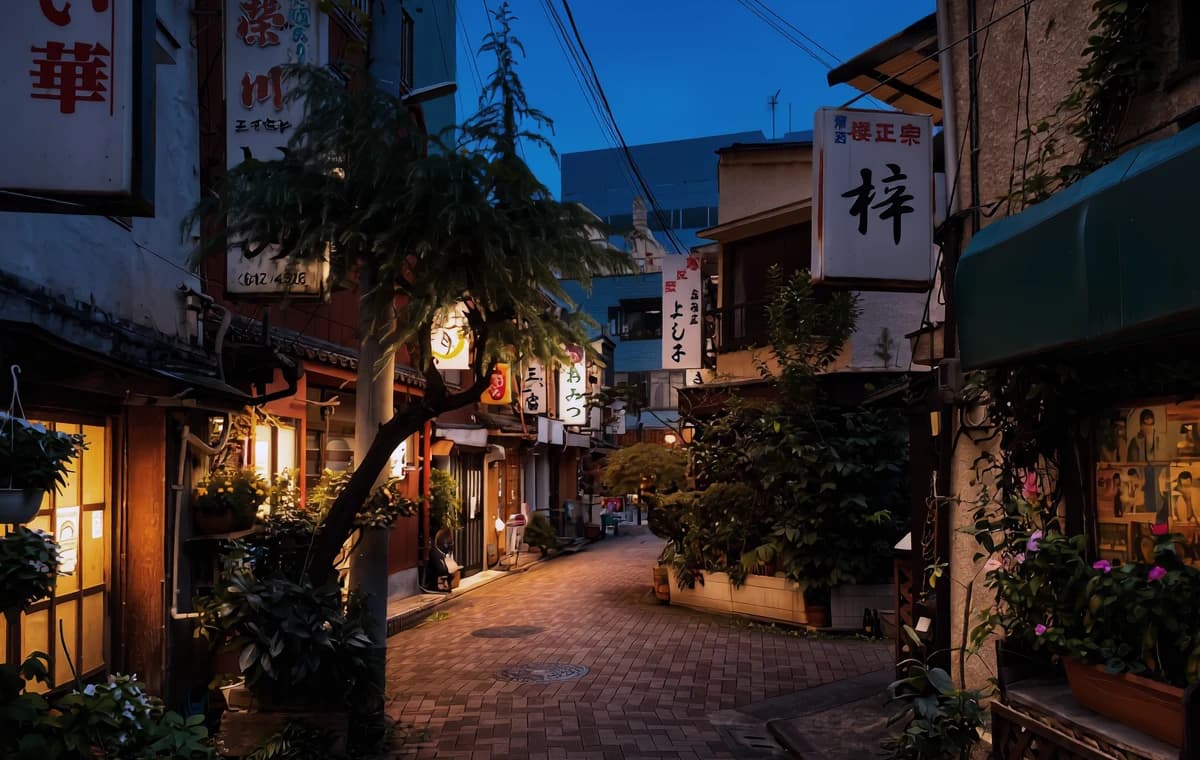
North of Kichijoji Station, about 100 small shops are packed into 3,000 square meters of narrow alleys. This is Harmonica Yokocho, and it started as a postwar black market.
After 1945, open ground around the station turned into an informal trading area. It worked because goods came in easily on both the Chuo Line and the Keio Inokashira Line. GHQ, the Allied occupation authority, dismantled other black markets across Tokyo. Harmonica Yokocho survived because the land was already split among so many owners that nobody could force a reorganization. The same tangle keeps it alive today: developers have wanted to tear it down for decades, and the overlapping property claims make that close to impossible.
The writer Katsuichiro Kamei, who lived in Musashino City, gave it the name. He thought the rows of tiny storefronts, seen from above, looked like the reeds in a harmonica.
Walk through today and you'll find three levels of access. The first only needs an appetite: sushi at Katakuchi, gyoza at Minmin, yakitori at any of the open-fronted stalls. English signs are common, and nobody looks twice at a foreign face.
The second is the standing bars, which have no English menus. Drinks are 200 to 500 yen. You point at bottles, get through a basic transaction, and stand shoulder to shoulder with commuters in suits. The etiquette is simple: don't sit on the floor, don't hang around when it's packed, and order something.
The third level is the snack bars, each with a mama-san and a set of regulars, and you can't get in without an introduction from someone who already belongs. They work more like social clubs with a pour license than restaurants. A guest who doesn't speak Japanese changes the feel of the room, so strangers get politely turned away.
Iseya and the yakitori economy
Outside Harmonica Yokocho, Iseya holds down the south side of the station. It opened in 1928 as a butcher shop and switched to sukiyaki and yakitori after the war. The current main building is a 2008 rebuild, but the business works much as it did. Iseya runs its own meat wholesale arm and a skewering factory, which keeps prices low and quality steady, and its tare sauce recipe has been handed down for decades.
The Park Shop branch is near the park entrance, and you smell the charcoal and chicken fat before you see the building. From midday both branches fill up with retirees, salarymen who left work early, and families who treat a tray of skewers as a starter before the park.
Nakamichi-dori: the street that explains the demographics
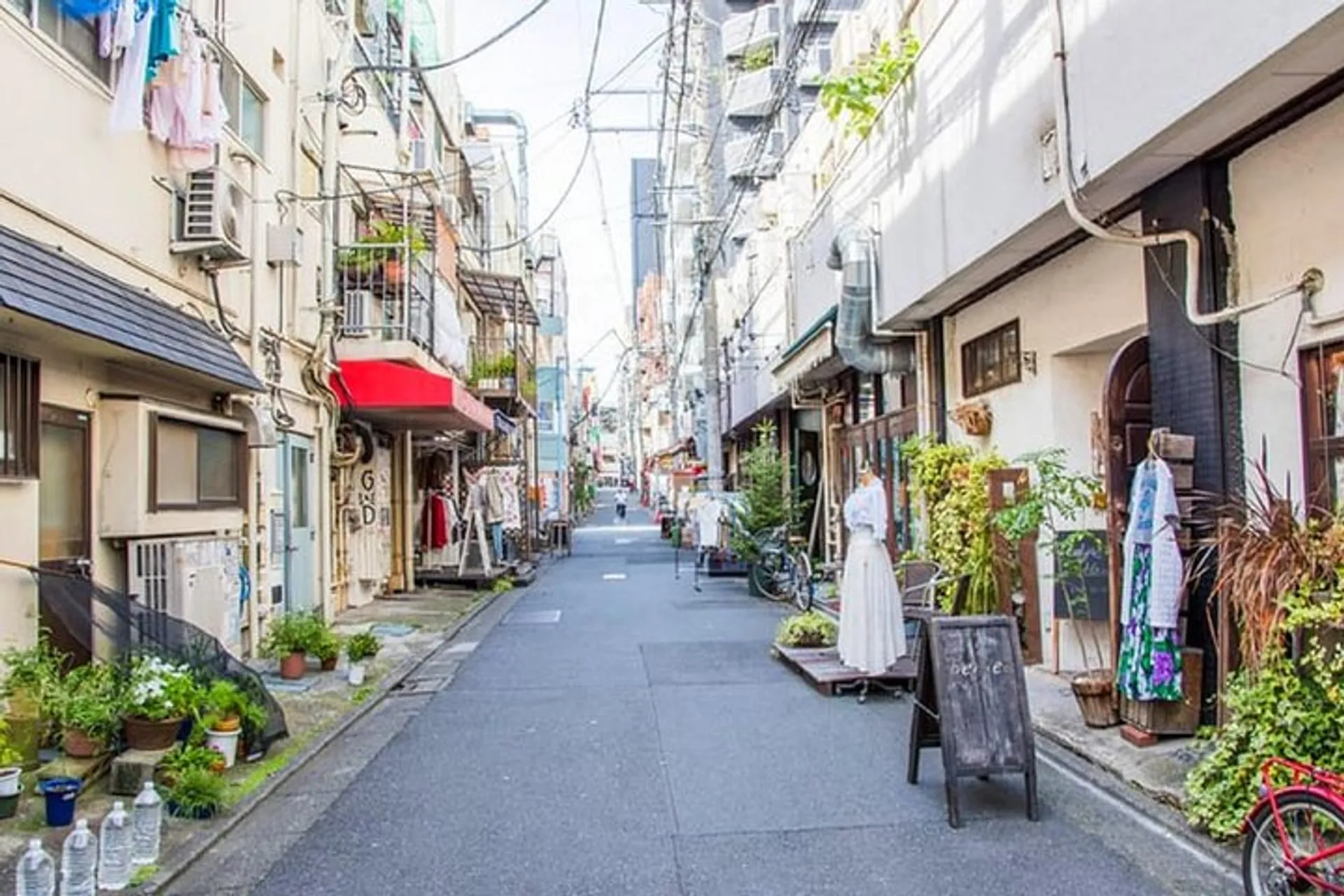
Three minutes west of the north exit, Nakamichi-dori is a shopping street that shows you who lives in Kichijoji. There's a Margaret Howell shop and cafe in a building on the edge of the park, zakka stores selling carefully chosen housewares, and Petit Village, a cluster of small storefronts built to look like a storybook illustration, with a tea house and a cat cafe inside.
That mix makes sense once you know Musashino City has one of the highest retail sales per capita figures in Japan. Independent shops survive here because residents have money to spend and opinions about where it goes. Nakamichi-dori isn't aimed at tourists. Prices are full, the signs are mostly in Japanese, and the cafes are sized for locals who come back every week.
The used bookshops tell you the same thing. Kichijoji has at least half a dozen secondhand bookstores. Yomitaya, near the station, sells a bit of everything. Hyakunen (the name means "100 years") leans literary. They stay open because enough readers live within walking distance, and few Tokyo neighborhoods can say that.
Where "live house" was invented
Kichijoji's music scene is older than most of the words used to describe it. Mandala opened in 1974 and is the oldest live house in Tokyo and the second oldest in Japan. The Japanese-English term "live house," meaning a small venue for live music, is said to have started there. It's still running, still books new artists, and serves a house curry between sets.
SOMETIME, an independent jazz club, puts on daytime shows on weekends and holidays as well as evening sets, and works as a cafe at lunchtime. That only makes sense somewhere like Kichijoji, where the crowd for afternoon jazz is the same crowd that browses used bookshops and walks in the park.
There's a cluster of record shops too, with a Disk Union branch and several smaller independents. Live venues, record shops, and used bookstores feed each other, because people who care about one usually care about the others, and enough residents here share those interests to keep all of them going.
The Ghibli Museum is in Mitaka, but you get there through Kichijoji
Officially the Ghibli Museum is in Mitaka, the next city south. The nicest way there is from Kichijoji Station, walking south through Inokashira Park for about 15 to 20 minutes. The path follows the wooded trails and crosses from Musashino City into Mitaka on the way. Many visitors prefer it to the bus from Mitaka Station, which is shorter and duller.
You can't buy tickets at the museum. They're sold only through Lawson's L-tike platform, going on sale at 10:00 AM JST on the 10th of each month for the next month's dates, and popular time slots sell out within minutes. Adults pay 1,000 yen, children aged 7-12 pay 400 yen, ages 4-6 pay 100 yen, and under 4 is free. The museum is closed on Tuesdays.
Put a reminder in your calendar for the 10th of the month before your trip, register with L-tike ahead of time (it needs SMS verification, which takes a while), and book as soon as sales open. Travel agencies also sell tickets at a markup, which is worth knowing if you miss the official window.
Give Ghibli half a day. The museum itself takes two to three hours. Add the park walk from Kichijoji, lunch at Iseya or in Harmonica Yokocho, and some time in the park afterward, and you have a full day with no taxi and no train transfer.
What the rankings actually measure
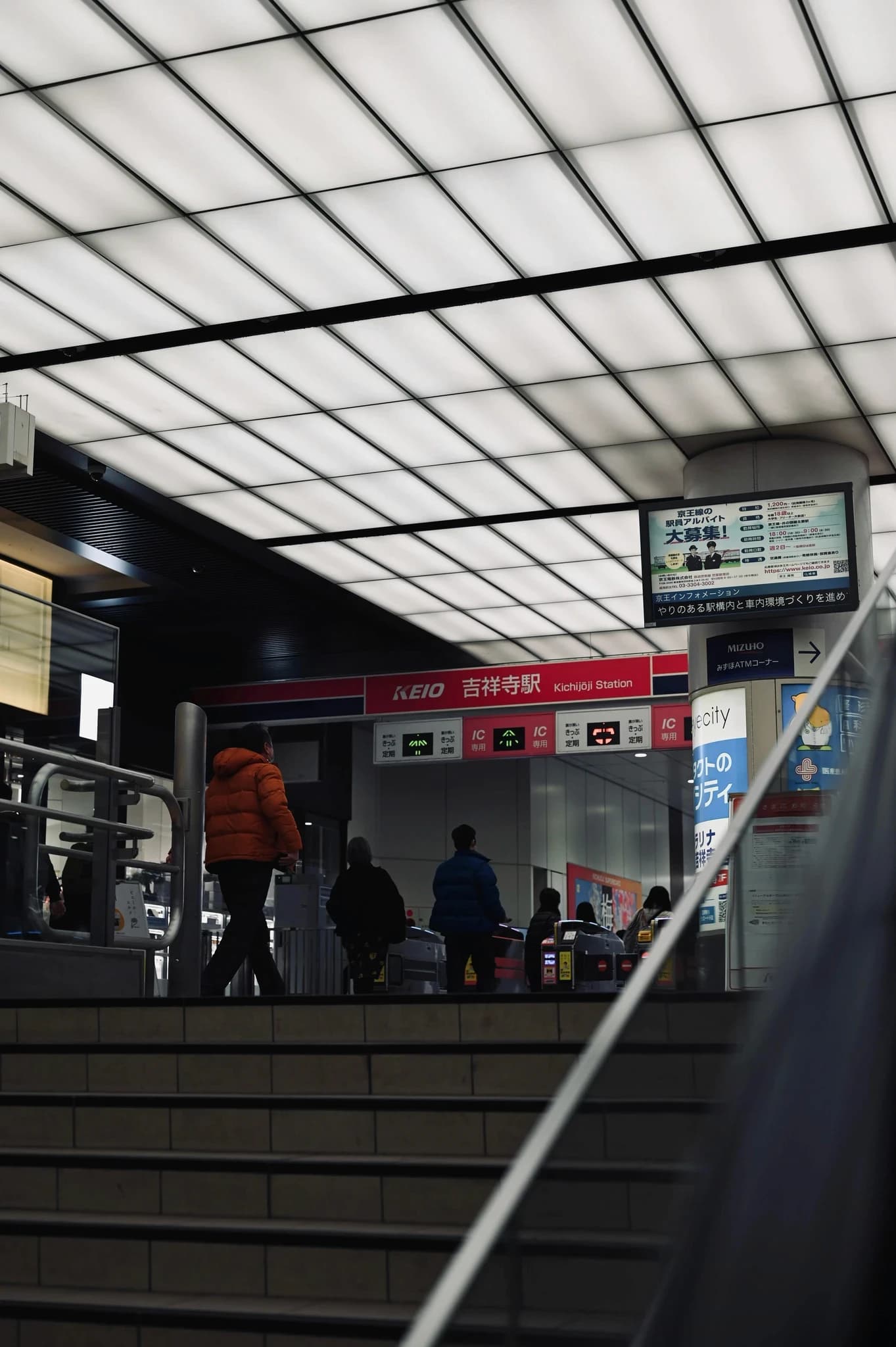
Kichijoji is 14 minutes from Shinjuku on the JR Chuo Rapid and 17 to 20 minutes from Shibuya on the Keio Inokashira Line, with a 38-hectare park five minutes from the station. It isn't cheap. A one-bedroom apartment averages around 171,000 yen a month, more than Shinjuku Ward's 143,700 yen. People pay it because nowhere else on the Chuo Line gives you that commute with that much green space.
The livability polls also pick up something harder to measure. A resident can walk from a 1974 live house to a postwar black market to a park that supplied Edo's water, all inside ten minutes. The same streets support a Margaret Howell boutique and a 100-yen yakitori stall, and you don't have to pick one.
Our read is that people are voting for how much history and variety fits into a small area. Enough different kinds of people have built their lives around it that it keeps itself going.
Kichijoji on a Private Tour
Two of our tours include Kichijoji, and they use it in different ways.
Ordinary Tokyo (8 hours, from $550 for 2 people) visits neighborhoods that show different sides of Tokyo life. Kichijoji comes in during the day, when you can see the residential side: the park that supplied Edo's drinking water, the independent shops on Nakamichi-dori, and the everyday pace of a neighborhood people have chosen seven years running.
Standing Room Only (4 hours, from $314 for 2 people) covers western Tokyo neighborhoods in the evening: Nakano, Nishi-Ogikubo, and Kichijoji. The guide takes you through Harmonica Yokocho's three levels, translates menus at the standing bars, and gets you into places that turn strangers away. Most guests spend ¥4,000-6,000 on food and drinks at the venues.
Our guides know people in Harmonica Yokocho, so they can take you past the first level into the standing bars and snack bars that would otherwise say no. Getting through those doors is the hardest part of Kichijoji to manage alone.
At Hinomaru One, we design unhurried, customized private Tokyo tours with plenty of cultural depth, for first-time and seasoned travelers.
Frequently asked questions
How do I get to Kichijoji from central Tokyo?
The JR Chuo Line (Rapid) from Shinjuku takes 14 minutes, and the Keio Inokashira Line gets you to Shibuya in 17 to 20 minutes. Both stop at Kichijoji Station. From Tokyo Station, the JR Chuo Line goes straight there in about 28 minutes with no transfers.
Is Kichijoji worth visiting if I can't get Ghibli Museum tickets?
Yes. The museum is one attraction in a neighborhood that easily fills a day without it. Inokashira Park, Harmonica Yokocho, Iseya, Nakamichi-dori, and the live music venues are each reason enough to go. Plenty of Tokyo residents spend their weekends in Kichijoji and have never been inside the Ghibli Museum.
When is the best time to visit Inokashira Park?
Cherry blossom season (late March to early April) brings huge crowds, and the hanami atmosphere is worth seeing once. Weekday mornings any time of year show the park at its quietest and most local. The November autumn colors are less famous than the cherry blossoms, just as photogenic, and far less crowded.
Can I visit Harmonica Yokocho during the day?
Some shops and a few food stalls are open in the daytime, but the place changes after 5 PM, when the bars open, the red lanterns come on, and the after-work crowd shows up. If you only have one slot, go in the evening.
How long should I spend in Kichijoji?
Half a day covers the park, Harmonica Yokocho, and one meal. A full day adds the walk to the Ghibli Museum, shopping on Nakamichi-dori, and an evening in the bars. We'd take the full day if you can spare it.