Start with the Honkan. Everything else depends on your time and interests.
The Tokyo National Museum holds 120,000 objects. On any given day, roughly 1,000 of them are on display across five buildings. The question every visitor faces isn't whether there's enough to see — it's which of the five buildings to spend time in, and how to stay focused in a complex designed to reward curiosity while quietly eating your afternoon.
The answer for most visitors: start with the Honkan, stay as long as it holds your attention, and treat the other buildings as optional depending on your time and interests. A two-hour focused visit to the Honkan is more satisfying than four hours spread thin across the campus.
The harder question is what surrounds the museum. Ueno is one of Tokyo's most culturally dense neighborhoods — four other major museums within walking distance, a park, a market street, a zoo, temples. The Tokyo National Museum works best as an anchor for a full morning or afternoon, not as the final stop on a day that started somewhere else.
The Five Buildings — What's in Each
Honkan (Japanese Gallery) — Start Here
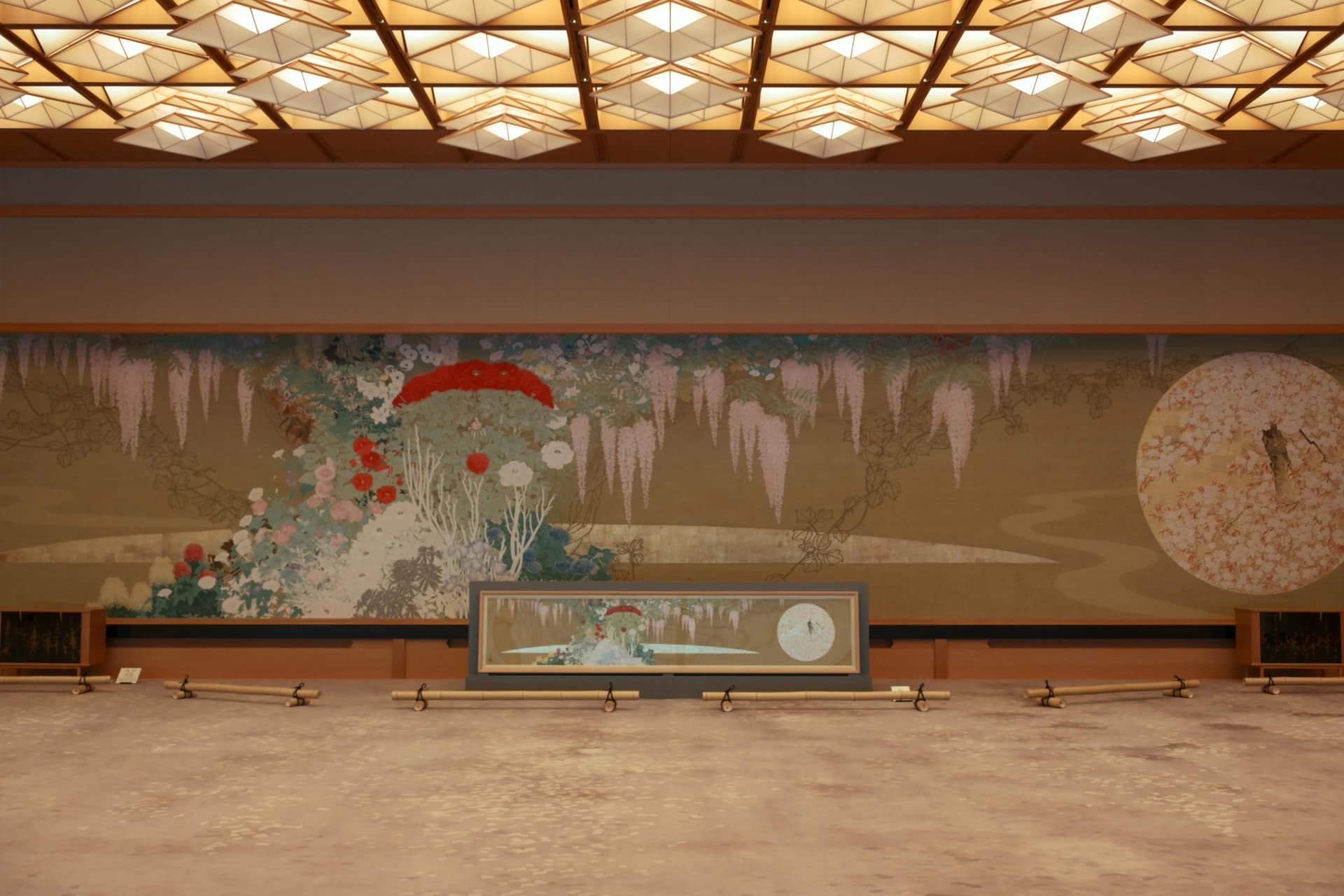
The Honkan is the main building and the reason most people come. Two floors covering Japanese art history from 10,000 BC through the late 19th century. The second floor is organized chronologically — Jomon pottery through Heian paintings through Edo-period works — so you move through Japanese artistic development as a sequence rather than a collection. The first floor organizes by genre: sculpture, swords, metalwork, lacquerware, ceramics, ukiyo-e.
The collection includes 89 National Treasures and over 646 Important Cultural Properties. What you see changes regularly — rotating works means the Honkan looks different across visits, and specific pieces you want to see may require checking the current display schedule in advance.
The building itself is worth attention. The marble atrium, ornamental lamps, stained glass windows, and the large clock inside the entrance are architectural features from the 1938 building that persist unchanged. It's one of the few places in Tokyo where you feel the weight of the institution you're standing in.
Plan 2–2.5 hours for the Honkan. Rushing through works against it.
Toyokan (Asian Gallery)
The Toyokan covers art from the rest of Asia — China, Korea, Southeast Asia, Central Asia, India, and the Islamic world. The modernist architecture was intentionally inspired by the Shosoin Treasury at Nara, which is a quiet conceptual nod worth noticing.
The Toyokan tends to be less crowded than the Honkan. If you have 30–60 minutes after finishing the main building, this is where they're well spent. The Chinese Buddhist sculpture and Korean ceramics sections are particular strengths.
Heiseikan
The Heiseikan houses major temporary exhibitions and a permanent Japanese archaeology gallery that covers Paleolithic through Edo periods. The archaeology section alone requires about an hour if you're moving at a reasonable pace — the Jomon and Yayoi period material is exceptional.
Special exhibitions rotate through Heiseikan and are the source of the museum's biggest crowds. During major exhibitions, lines form before opening and the closing weeks see concentrated visitor volume. If an exhibition interests you, visiting earlier in its run (rather than the final two weeks) produces a meaningfully different experience.
Gallery of Horyuji Treasures (Horyuji Homotsukan)
A separate building dedicated entirely to Buddhist art from Horyuji Temple — one of Japan's oldest and most significant Buddhist complexes. The collection includes masks, textiles, metalwork, and sculptures that span more than a thousand years of temple history.
Recommend this building if Buddhist art is a specific interest. For first-time visitors working through the main collection, it's a lower priority than the Honkan and Toyokan.
Hyokeikan and Kuroda Memorial Hall
The Hyokeikan is a historic building used for special events and rotating exhibitions rather than a permanent collection. The Kuroda Memorial Hall focuses on Western-style oil paintings by Kuroda Seiki, who helped establish Western painting techniques in Meiji-era Japan.
Both are secondary priorities for most visitors.
When to Go
The crowd reality
Weekdays are substantially less crowded than weekends. Arriving at opening (9:30 AM) on any day of the week produces the quietest entry — lines build rapidly after 10:00, particularly when special exhibitions are running.
The lunch rush (11:00–13:00) is consistently the worst time for congestion throughout the museum complex. If you arrive mid-morning, work through the Honkan and take lunch around 13:00 when crowds begin to thin.
Closing weeks of special exhibitions attract concentrated visitor volumes. The final 1–2 weeks before a major exhibition ends are the most crowded periods in the Heiseikan. If the exhibition interests you, earlier is better.
Summer vacation (July–August) brings consistent crowds throughout the week. Japanese national holidays produce weekend-level congestion. The museum offers several free admission days per year, typically tied to national holidays like Culture Day (November 3), Respect for the Aged Day (third Monday of September), and International Museum Day (May 18). Check tnm.jp for the current year's confirmed dates — and note that popular free days often require a timed reservation ticket even for free entry.
Advance tickets
Purchasing tickets online (through e-tix.jp or Asoview!) eliminates the on-site ticketing queue, which can add 30+ minutes during peak periods. Next week's reservations open on Fridays at noon. For weekend visits or major exhibitions, booking in advance is practical rather than optional.
The museum's social media account (@TNM_PR on X/Twitter) posts real-time crowd updates on busy days.
Pricing
| Category | Price |
|---|---|
| General admission | ~¥1,000 |
| Students and seniors | Discounted (verify on tnm.jp) |
| Special exhibitions | Priced separately by exhibition |
| Free admission days | Around Culture Day (Nov 3), Aged Day (Sept), Museum Day (May 18) — reserve ahead |
| Credit cards | Accepted (Visa, Mastercard, JCB, Amex, Diners, Discover) |
Note: Verify current pricing at tnm.jp before your visit — fees are subject to change.
English Language Support
Gallery labels throughout the permanent collection are translated into English. The official website (tnm.jp) operates in English and includes the current display schedule — worth checking before you go to see which National Treasures and Important Cultural Properties are on display during your visit.
Audio guides are available for rental. English-language volunteer guide services exist (Tokyo Free Guide offers service at some Tokyo museums), though TNM-specific availability varies. Private tour guides consistently provide more depth than audio guides because they can respond to what interests you in the moment rather than following a fixed script.
Getting There
The museum sits at the northern end of Ueno Park. From Ueno Station, walk through the park entrance toward the park's north end — approximately 5–10 minutes with clear signage once you're inside the park boundary.
Multiple train lines serve Ueno Station: JR (Yamanote, Utsunomiya, Takasaki, Joban Lines), Tokyo Metro Ginza Line, and Tokyo Metro Hibiya Line. If you're traveling from central Tokyo, the Yamanote Line to Ueno is the most straightforward route.
The park path from the station to the museum passes several of the other Ueno museums, which helps with orientation if you're planning multiple stops.
How Long to Plan
| Visit Type | Duration | What to Include |
|---|---|---|
| Focused | 2 hours | Honkan only |
| Standard | 3–4 hours | Honkan + one other building |
| Full day | 5–7 hours | All buildings, special exhibitions, garden |
| With private guide | 5–6 hours | Museum + Ueno area context |
For most first-time visitors, a half-day (3–4 hours) focused on the Honkan plus one other building is the right scope. The museum does not reward rushing, and full-day fatigue sets in for casual visitors long before they've reached the Horyuji Treasures gallery.
Dining Inside the Museum
Three options exist within the museum complex:
Café Yurinoki — A terrace café facing the garden, opened in 2020. Good for a break mid-visit. Casual, light meals and drinks.
Café Bell — Cafeteria format with lunch menus and set meals. Practical rather than notable.
Honkan Restaurant — The main food service option for fuller meals.
None of these require museum admission to reach — they're inside the ticketed zone, so you're not leaving and re-entering. Plan lunch around 13:00 when the dining crowd from the 11:00–12:00 rush begins to thin.
The Ueno Ecosystem
Ueno is one of Tokyo's most culturally dense neighbourhoods — the museum sits at the northern end of Ueno Park, surrounded by four other major institutions, a market street, a zoo, and two subway stations. The full area deserves more than a museum-only visit.
The Tokyo National Museum is the largest of five major cultural institutions clustered around Ueno Park. A full Ueno day could reasonably include:
Other museums in the park:
- National Museum of Nature and Science — natural history and science; substantial building, underrated
- Tokyo Metropolitan Art Museum — major traveling exhibitions, strong program
- Shitamachi Museum — Meiji and Showa-era Tokyo life; ¥600, open 9:30–17:00, closed Mondays
Ueno Park itself:
- Shinobazu Pond — a large pond with a lotus-covered section visible from the path; particularly striking in summer
- Ueno Zoo — Japan's oldest zoo (1882); separate admission
- Kan'ei-ji Temple and Kiyomizu Kannon-do — free; the Kannon-do is a small replica of Kyoto's Kiyomizudera, visually striking against the park
Ameyoko (Ameyokocho): Immediately adjacent to Ueno Station, Ameyoko is a market street that has operated since the postwar period — originally black market, now a dense stretch of food stalls, cosmetics shops, clothing, and souvenirs. The noise and density are in complete contrast to the quiet of the museum. Evening is the best time to walk through it. Budget 30–45 minutes.
What a Private Guide Adds
The Tokyo National Museum is one of the places in Tokyo where a private guide's value is most obvious. Gallery labels translate the names and dates; they don't explain why a particular sword's folding technique matters, or how a specific Heian painting convention communicates rank, or what the archaeologist's interpretation of a particular Yayoi burial tells us about pre-written Japanese culture.
The Honkan's second floor contains a thousand years of visual culture compressed into a single corridor. Moving through it with someone who can pull threads across the chronology — explaining how Buddhism transformed Japanese artistic vocabulary in ways that echoed for centuries — is a fundamentally different experience from reading the labels.
For travelers interested in Japanese history and culture, the museum works well as an anchor for a full day. Tokyo Essentials covers central and eastern Tokyo, including the cultural core of the city, with the flexibility to weight time toward what matters to you. Infinite Tokyo allows any custom itinerary — including one built around the National Museum plus the Ueno area as a full cultural day.
Practical Details
| Address | 13-9 Uenokoen, Taito City, Tokyo |
| Hours | 9:30–17:00 (extended on Fri/Sat to 20:00 for some exhibitions) |
| Closed | Mondays (or following Tuesday if Monday is a holiday), year-end holidays |
| Website | tnm.jp (English available) |
| Photography | Varies by gallery; check signage; generally permitted in permanent collection |
| Accessibility | Wheelchairs available at the entrance; credit cards accepted at ticketing |
Check tnm.jp for current exhibition schedules and display listings before your visit. The rotating nature of the permanent collection means specific works may not be on display on your date.
Frequently Asked Questions
Is the Tokyo National Museum worth visiting?
Yes, if you have at least 2–3 hours and a specific focus going in. It's Japan's largest museum with 120,000 objects — trying to "see everything" leaves most visitors exhausted and remembering nothing. The Honkan's second floor alone contains a thousand years of Japanese art history. Go with a goal (Japanese swords, Buddhist sculpture, ukiyo-e, a specific era) and the visit is genuinely rewarding. Go without one and you'll be overwhelmed before you finish the first floor.
How long should I spend at the Tokyo National Museum?
A focused visit to just the Honkan takes 2–2.5 hours. Adding one other building (Toyokan or Heiseikan) brings you to 3–4 hours. A full day covering all buildings plus lunch is 5–7 hours. For most first-time visitors, a half-day (3–4 hours) focused on the Honkan plus one other building is the right scope. Don't try to do all five buildings in a day.
Do I need to book tickets in advance?
Not always — but during busy periods and major special exhibitions, buying tickets online eliminates a 30+ minute queue. Tickets are available through e-tix.jp and Asoview. During the final weeks of popular special exhibitions, pre-booking is close to essential. Check tnm.jp for current exhibition dates before you go.
Which building should I visit first?
The Honkan, every time. It's the main building, covers Japanese art from prehistoric times through the 19th century, and contains the largest share of National Treasures. Every other building is secondary. If you only have 2 hours, spend them entirely in the Honkan — second floor first (chronological), then the first floor by genre.
Is the Tokyo National Museum good for kids?
Depends on the child. Young children under 10 generally find it difficult — the exhibits require reading, patience, and cultural context that most young kids don't have yet. Older kids with a specific interest (samurai armor, ancient pottery, archaeology) often engage well, especially in the Heiseikan archaeology section. The museum is free for visitors under 18, which helps. For families with a mix of ages, pairing the museum with Ueno Zoo next door gives everyone something.
How do I get to the Tokyo National Museum?
Walk from Ueno Station — exit through the park entrance, follow signs north through the park, approximately 5–10 minutes. Multiple lines serve Ueno: JR Yamanote Line, Tokyo Metro Ginza Line, Tokyo Metro Hibiya Line. The Yamanote Line is the easiest from most central Tokyo locations.
The Hinomaru One Context
The Tokyo National Museum is Japan's largest collection of Japanese art — 120,000 objects, 89 National Treasures, more cultural depth than a single visit can absorb. The question isn't whether to go. It's how to spend the hours most efficiently, and what to do with Ueno once you emerge.
At Hinomaru One, we design private Tokyo tours for first-time and seasoned travelers — unrushed, insightful, always built around what you actually want to see.