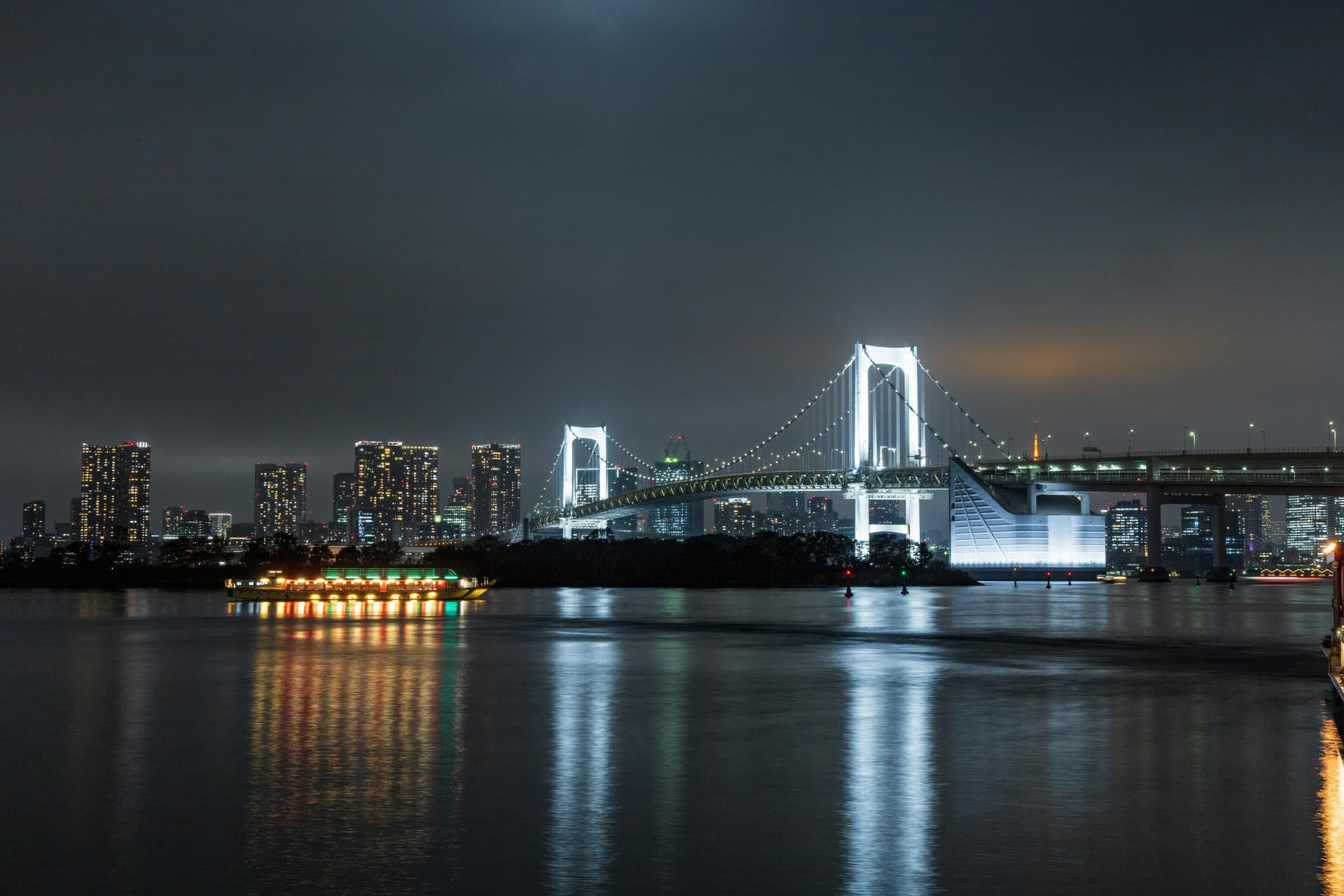
Tokyo isn't one city with neighborhoods. It's many villages connected by trains — and understanding that changes how you plan.
Understanding Tokyo starts with one fact: the city has no downtown. It's a network of separate hubs joined by trains, and that affects how you plan everything.
Maybe you've spent hours, or days, researching. You've read about Shibuya, Shinjuku, Asakusa, and a dozen other neighborhoods, looked at maps, watched videos, and you still can't answer a simple question: where's downtown? There isn't one. Most cities you've been to have one, and once Tokyo's lack of one sinks in, you plan differently.
Tokyo Doesn't Work Like Other Cities
No Downtown, Many Hubs
Most big cities have a center. London has the City and the West End, Paris has the Right Bank, New York has Manhattan. You stay near the center and head out from there.
Tokyo has nothing like that. It has several major hubs, each working as a center of its own: Shinjuku (3.5 million passengers a day, the busiest station in the world), Shibuya (3 million a day, second busiest in Japan), Ikebukuro, the Tokyo Station area, Ueno, and Asakusa. Each has its own character, shopping, nightlife, and reasons to go.
It grew this way on purpose. Tokyo developed around its train stations, with private rail companies building rival hubs, and today 48 different rail operators serve the Greater Tokyo area. What you get is closer to a dozen villages connected by trains than one big metropolis.
What This Means for Your Trip
"Where should I base myself?" has no single right answer. In Paris the 1st arrondissement is plainly more central than the 19th. Tokyo's hubs really are on an equal footing, and Shinjuku is no more central than Asakusa.
That's confusing at first, and it also gives you real choices. Where you put your hotel comes down to which group of neighborhoods you want on your doorstep.
Neighborhoods That Belong Together
Some neighborhoods group together naturally. You can cover one group in a day without a fight with the transit system, while hopping between groups eats time and energy.
The Western Cluster: Shinjuku, Shibuya, Harajuku
These three sit on the JR Yamanote Line on Tokyo's west side and have a similar feel: modern, fashion-conscious, full of neon, shopping, and nightlife.
-
Shibuya to Harajuku: one Yamanote Line stop (2-3 minutes), or a 15-20 minute walk along Cat Street, a shopping lane that's mostly pedestrian
-
Harajuku to Shinjuku: two Yamanote Line stops (4-5 minutes)
-
All three link up with Meiji Shrine and Yoyogi Park
You can spend a whole day here without going near the subway. Walk from Takeshita Street in Harajuku past the luxury boutiques of Omotesando, down Cat Street to Shibuya Crossing, then ride the Yamanote Line up to Shinjuku for dinner and Golden Gai.
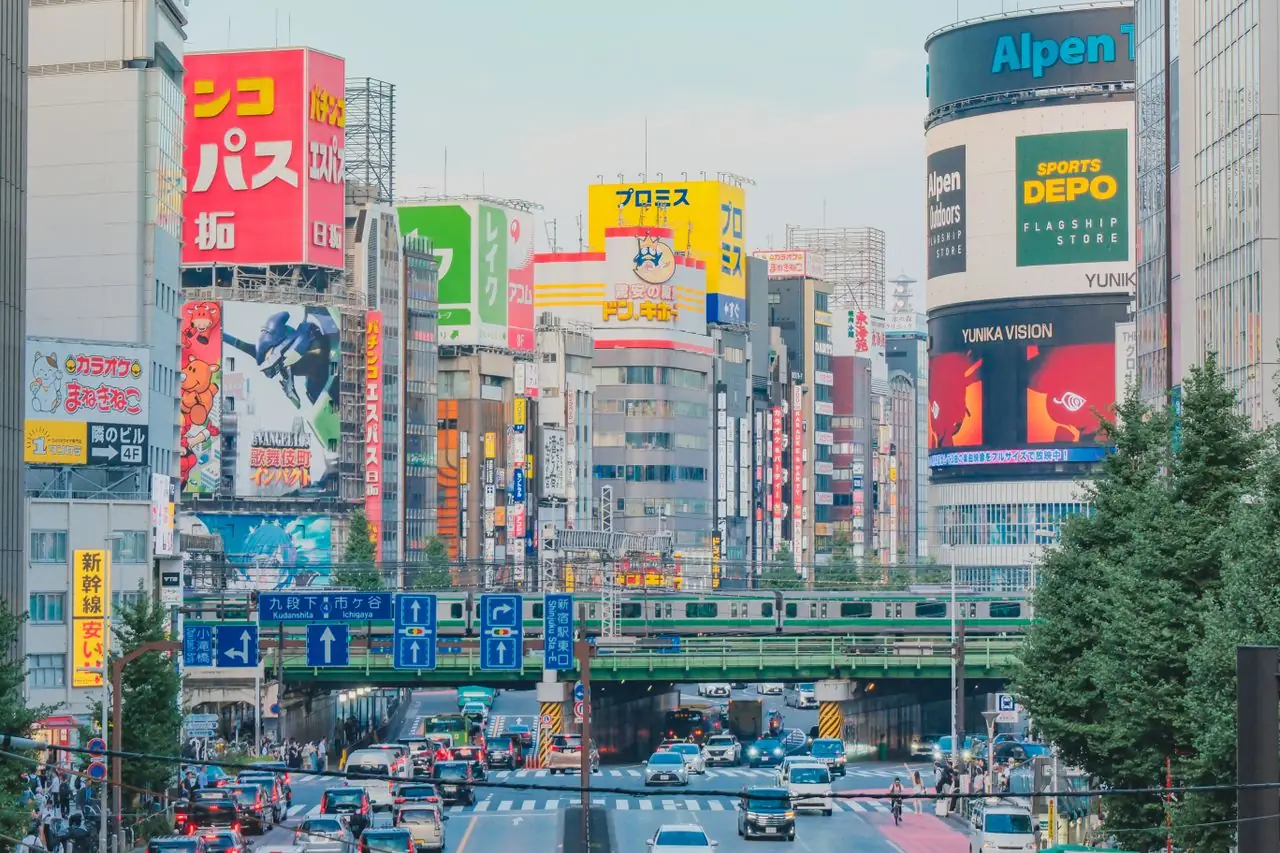
The Eastern Cluster: Asakusa, Ueno, Akihabara
East Tokyo feels like another city. It's where the older Tokyo hangs on, with temples, markets, and something of the atmosphere of Edo.
-
Asakusa to Ueno: five minutes on the Tokyo Metro Ginza Line, or a 25-30 minute walk through old neighborhoods
-
Ueno to Akihabara: two Yamanote Line stops, or a 15-minute walk through Ameyoko market
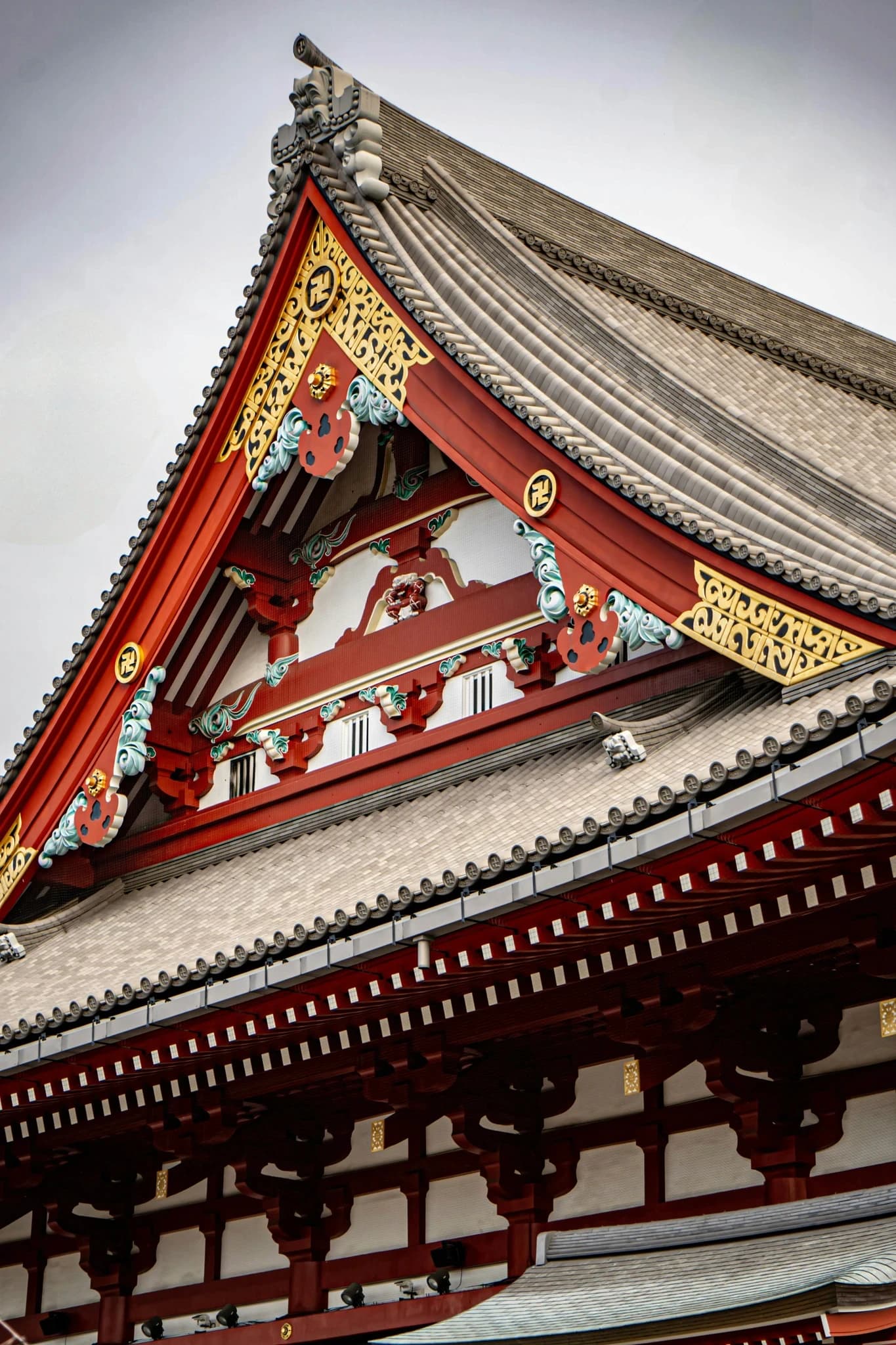
Sensoji Temple in Asakusa, the museums in Ueno Park, and the electric chaos of Akihabara all fit comfortably into one day. Walking between them shows you the streets in between, which you miss underground. We have a separate guide on how far apart things really are.
The Central Corridor: Tokyo Station, Ginza, Marunouchi
This is Tokyo's business and luxury district, built around Tokyo Station. It takes in Ginza's department stores, the Imperial Palace grounds, and the Marunouchi business district, and it's sleek and moneyed in a way the west and east sides aren't.
It's easy to reach either side from here. Tokyo Station is on the Yamanote Line, so Shibuya and Ueno are each about 20-25 minutes away.
Our rule of thumb is two neighborhoods a day at most. Any more and you'll spend your trip on trains.
Not All Stations Are Created Equal
Tokyo's trains are as efficient as you've heard, but efficient and easy are different things. The system is built for commuters who've used it for years, and there's a real learning curve. Our guide to getting to and around Tokyo covers it in full.
Stations vary a lot.
Stations You Can Relax At
Harajuku Station has two exits. One goes to Takeshita Street and the fashion district, the other to Meiji Shrine and Yoyogi Park, and you can see both from the single platform. About 65,000 people use it a day, which is busy for most cities and manageable for Tokyo.
Plenty of stations are like this, with a simple layout, obvious exits, and one or two lines. If Harajuku is your first station, you'll think Tokyo is easy.
Stations That Require Respect
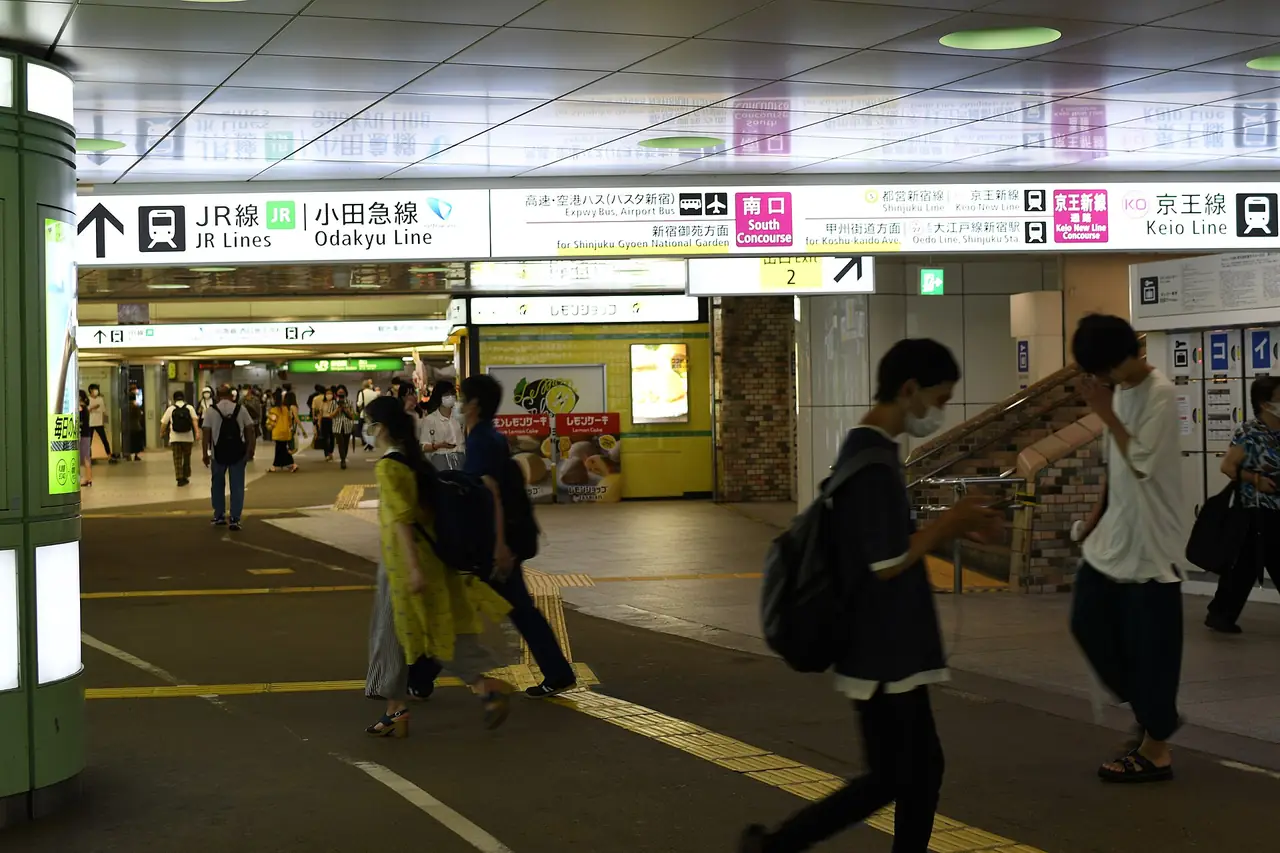
Shinjuku Station has over 200 exits, and five rail operators share it (JR East, Keio, Odakyu, Tokyo Metro, Toei). Millions of people go through it every day, more than live in many capital cities.
Shibuya Station has nine train lines run by four companies, over three floors above ground and five below. It's been under construction for years, and the Hachiko Exit moved as recently as January 2025.
You can get through these stations. Commuters do it without thinking. First-timers, though, regularly spend 10-15 minutes hunting for the right exit. If you change between operators (JR to Tokyo Metro, say), you leave one paid area and enter another. An IC card (Suica or Pasmo) pays the fare but won't tell you which passage to take, and knowing how Tokyo maps actually work helps more than you'd expect.
The First Two Days Cost More Than You Think
Everyone expects a learning curve, and most people underestimate what it costs them.
First-time visitors to Tokyo lose 2-3 hours per day to what you could call an orientation tax, the time spent working out things that seasoned travelers never think about.
Where the Time Actually Goes
Roughly, it goes like this:
-
Navigation (45-60 minutes): the wrong exit, a missed transfer, the long way round, waiting for a train that doesn't stop at your station.
-
Indecision (30-45 minutes): standing outside three restaurants trying to pick one, checking Google Maps again to compare routes, wondering whether there's a better sight nearby.
-
Fixing problems (30-60 minutes): tapping in at the wrong fare gate, a mix-up at a restaurant, an express train that skips your stop.
None of it is a disaster, and it happens to everyone. Over a four-day trip, though, 2-3 hours a day comes to 8-12 hours, a full day of your trip lost to friction.
How to Reduce the Tax
Some people like this part. The confusion is part of the adventure, and working things out yourself feels good. If that's you, allow time for it and enjoy it.
If you'd rather keep it small, a few things help:
-
Stay in one cluster on your first full day, and don't cross the city until you've got your bearings.
-
Expect day one and day two to be slower, and don't cram them with big sights.
-
Do the complicated stations early. If you're going to Shinjuku or Shibuya, go while you're fresh, not worn out at the end of the day.
Some people skip the tax altogether by starting with a guide who already knows the system. After a day with someone else handling the routes and the decisions, you've picked up the pattern, and the rest of the trip goes more smoothly. We built Tokyo Essentials for exactly this.
What to Read Next
These pages go into more detail.
If You Want to Understand the Neighborhoods
Each major Tokyo neighborhood has its own character, its best times to visit, and places most visitors miss. Our Tokyo neighborhoods guide goes through what makes each one worth your time, and which ones you could skip.
If You Want to Understand Your Options Our 25 things to do guide covers what first-timers can do, from observation decks and gardens to cultural performances, modern Tokyo, and neighborhood walks, with timing, costs, and honest trade-offs.
If You're Planning Your First Days
Our first-time visitors guide covers the practical decisions: getting in from the airport, what to do on day one, dealing with jet lag, and which mistakes to avoid.
If You Want to Understand the Transit System
Our Tokyo subway guide explains how the system works in practice: which cards to get, how transfers work, and why Google Maps sometimes sends you the wrong way.
This guide is published by Hinomaru One, a Tokyo-based private tour operator.
.jpg)