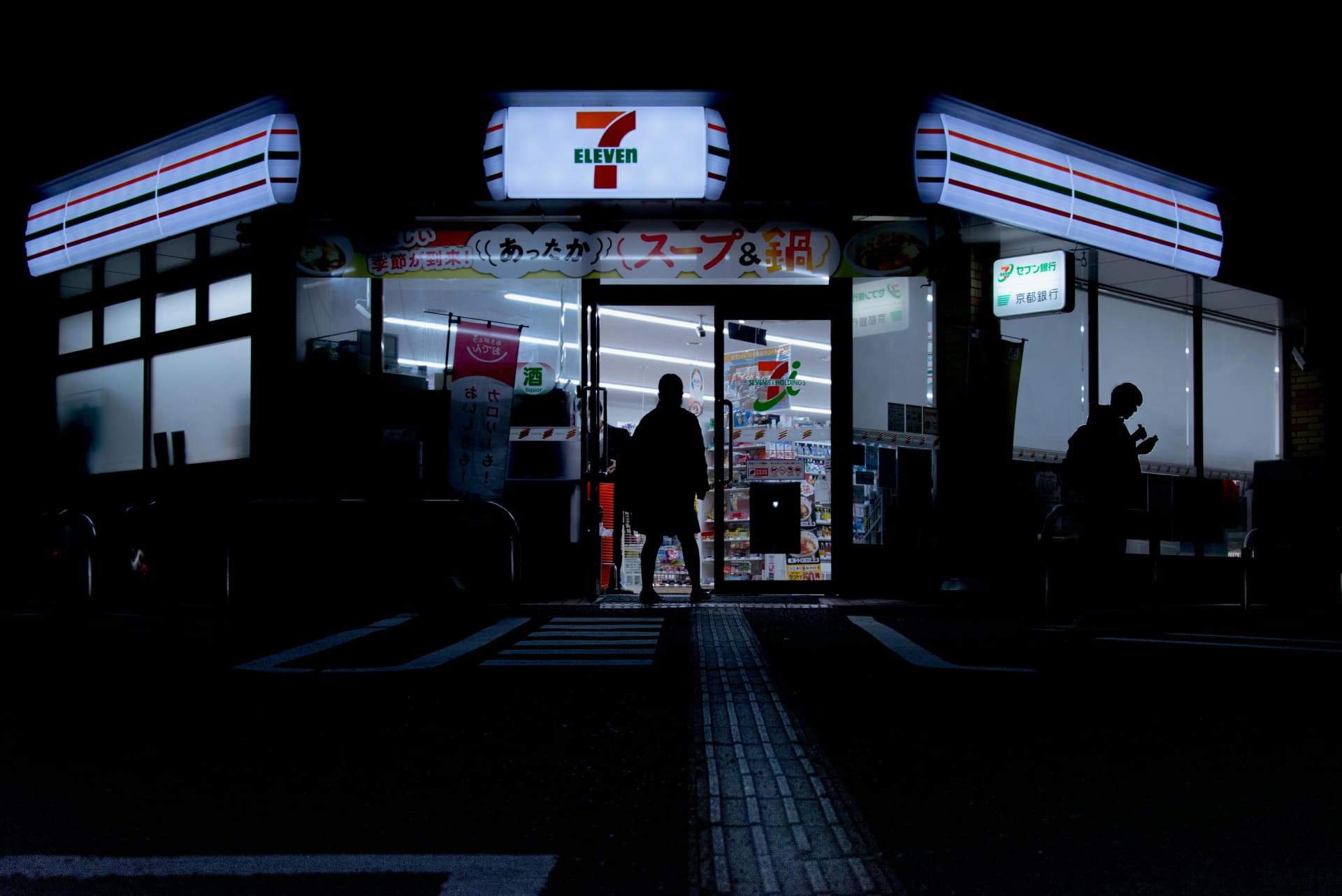
A Japanese convenience store is simultaneously a bank, a post office, a ticket agency, a restaurant, and a place to print government documents at 3am.
There are more convenience stores in Japan than there are Starbucks locations worldwide. Over 56,000 stores — one for every 2,200 people — operating 24 hours a day, seven days a week, in a country roughly the size of California. In Tokyo alone, you are never more than a few minutes' walk from one.
But the number alone doesn't explain the culture shock. Visitors from countries where "convenience store" means sad sandwiches under fluorescent lights and lottery tickets will step into a コンビニ (konbini) expecting something functional and unremarkable. What they find is a quietly astonishing institution: a machine-perfect micro-economy of food, services, and logistics that has shaped how Japan's cities actually work at 2am.
This is not a guide to the best snacks. It's a map to what you're actually walking into.
How the コンビニ Became What It Is
The origin story matters because it explains the DNA.
Japan's first real convenience store opened in May 1974 — a 7-Eleven in Toyosu, Tokyo, then an industrial waterfront neighborhood. The enterprise was a joint venture between Ito-Yokado, a Japanese supermarket group, and America's Southland Corporation. The American model was the starting point, but what happened next had nothing to do with America.
7-Eleven Japan's critical early innovation was logistics. They collapsed the delivery window between store order and shelf replenishment from a week to 24 hours. That single change unlocked everything: it meant fresh rice balls (onigiri) could sit on shelves for a few hours, not days. It meant sandwiches that didn't need to survive long transit. It meant a product cycle fast enough to react to seasons, weather, and local demand week by week. The American 7-Eleven never achieved this. The Japanese version outgrew its parent so thoroughly that 7-Eleven Japan's parent company eventually bought the American chain in 1991.
The other structural factor was regulatory. A 1974 law restricting large retail stores made it difficult for supermarket chains to expand in central neighborhoods. Instead of opening new supermarkets, the major chains — Ito-Yokado, Daiei, Seiyu — pivoted to small-footprint franchises. 7-Eleven, Lawson, and FamilyMart were all born from this constraint. Competition was fierce from the start, and fierce competition in Japan produces extraordinary refinement.
By the late 1970s, stores were beginning to experiment with 24-hour operations. The model worked. Japan's shifting labor culture, its population of shift workers, students, and overworked salarymen who needed somewhere to eat at midnight — all of it created demand that a 24-hour konbini was perfectly positioned to serve.
By the time the format matured in the 1980s and 90s, Japanese convenience stores had become something different from their Western equivalents: not a shortcut option, but a first-choice daily institution.
What a Konbini Actually Does
The food gets the attention. It shouldn't get all of it.
Walk into a major konbini in Tokyo and the services kiosk near the register handles more transactions than most people realize. At 7-Eleven's Multifunction Copier — a machine that looks like an office printer — you can:
- Pay utility bills: electricity, gas, water, internet, national health insurance
- Print airline boarding passes
- Send and receive fax documents
- Buy tickets to concerts, sports events, theme parks, and tourist attractions via services like Ticket Pia and L-Tix
- Print government documents: if you're a registered resident with a My Number Card, you can print official resident certificates (住民票の写し) and seal registration certificates at any participating konbini
The ATM is the other thing every foreign visitor needs to know. Seven Bank ATMs — found at every 7-Eleven location — accept international cards from every major network: Visa, Mastercard, American Express, UnionPay, Discover, Diners Club. The fee is ¥110 for withdrawals under ¥10,000, ¥220 above that. Lawson and FamilyMart ATMs also accept most foreign cards, though coverage is slightly less universal. For visitors in a cash-dependent situation, this is the most reliable cash infrastructure in the country. Bank branches are harder to find, keep shorter hours, and don't always accept international cards.
Beyond the kiosk: konbinis accept takkyubin (courier delivery), meaning you can ship luggage directly to your hotel from an airport, or send your bags home from a Tokyo store before flying out. International shipping is available at major chains. Some stores have small post office services. A few have pharmacy sections. Lawson has mini-Muji outlets inside certain locations.
This is the part visitors miss: the konbini isn't a store you shop at. It's infrastructure you plug into.
The Food, Specifically
Now the food.
The quality gap between Japanese konbini food and what passes for convenience store food in most other countries is not subtle. It's categorical. Japanese convenience stores operate as legitimate food businesses — product development teams, seasonal menus, chain-exclusive items, and a refresh cycle that keeps offerings rotating year-round.
Onigiri is the foundation. A rice ball wrapped in crispy nori, with a filling sealed separately to keep the seaweed dry until you open the clever three-step packaging. The tuna-mayo (ツナマヨ) remains the perennial bestseller across all chains — the Onigiri Association's 2025 survey confirmed it ranked first at every major chain for two consecutive years. Behind it: grilled salmon (鮭), kombu seaweed, and umeboshi plum. Prices hover around ¥130–170. This is a filling meal for under $1.50.
Hot foods sit under lamps at the register. The items vary by chain but the staples are consistent: karaage (fried chicken pieces), nikuman (pork buns steamed to order), corn dogs, and fried potatoes. Lawson's Karaage-kun — small fried chicken bites in several flavor variations — has a near-cult following. FamilyMart's Famichiki is its rival, a proper breaded fried chicken piece that rivals fast food. 7-Eleven leads in overall selection and is considered the benchmark for general food quality by most frequent shoppers.
Sandwiches and breads are better than they have any right to be. The egg salad sandwich — pillowy white bread, thick egg filling — is a reliable purchase. So is melon pan (a sweet bread with a crispy cookie crust) and curry bread (fried bread filled with Japanese curry).
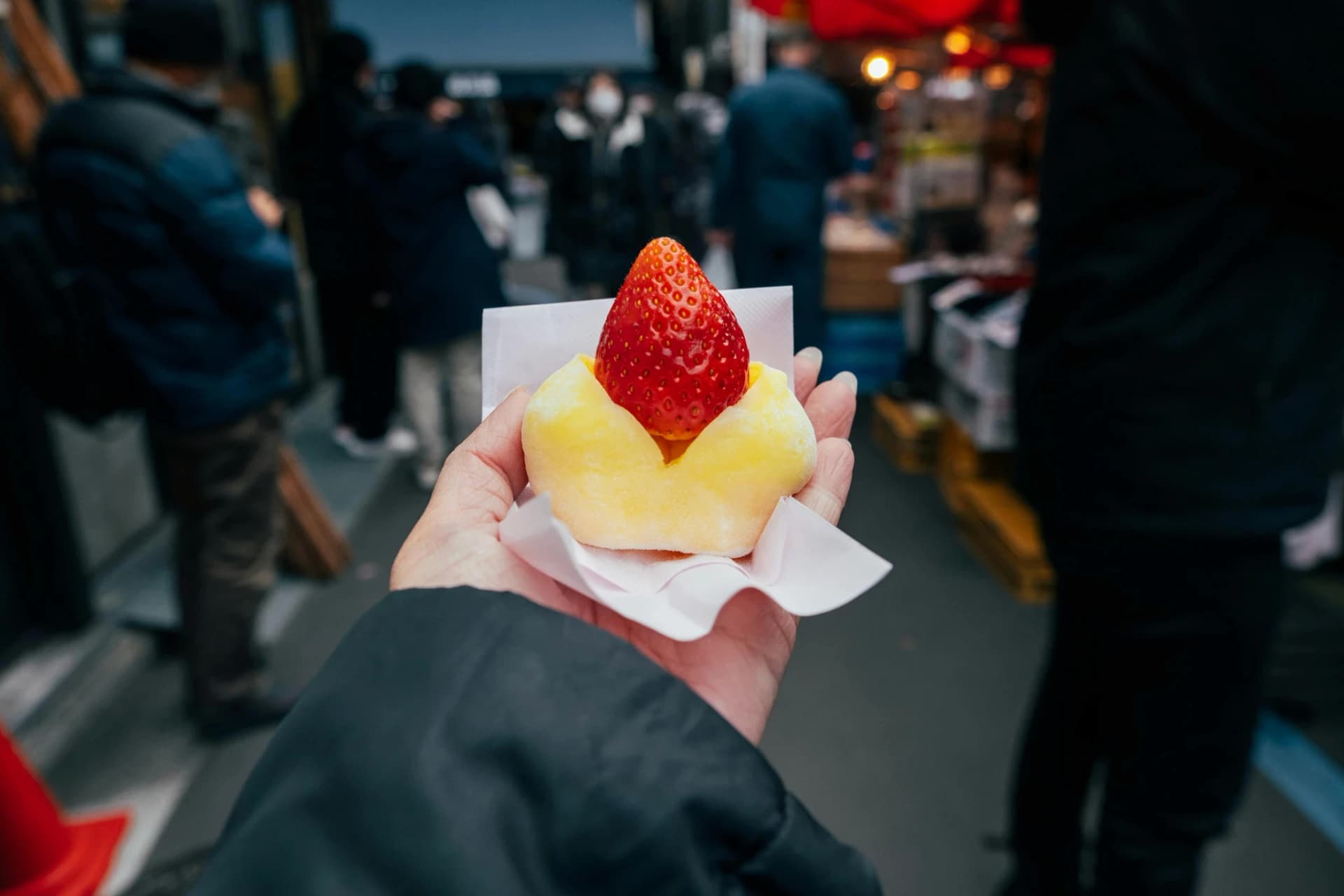
Sweets are where Lawson excels over its rivals. Uchi Café Sweets is Lawson's house dessert line — premium-positioned, seasonal-rotating, and genuinely excellent. Basque cheesecake, strawberry shortcake, eclairs. These are not afterthoughts; Lawson invests heavily in this category and it shows.
Drinks deserve attention too. Canned coffee, matcha lattes, canned oden broth in winter. The 100-yen fresh-ground coffee machines at all major chains are used by millions of Japanese people daily as a genuine morning ritual. The quality is unremarkable by specialty coffee standards but perfectly solid and vastly cheaper than a café.
Seasonal items follow the Japanese calendar closely: oden (a simmered hot pot dish) appears on store warmers in autumn and runs through winter. Christmas sees strawberry cake. New Year brings mochi. Summer brings kakigori and cold ramen. Following the seasonal rotation is a way to feel the texture of Japanese daily life.
The Three Chains: What Each Does Better
| Chain | Stores (Japan, 2024) | Signature item | Best for |
|---|---|---|---|
| 7-Eleven | ~21,200 | N/A — generalist | Overall food quality, ATM reliability |
| FamilyMart | ~16,600 | Famichiki fried chicken | Hot foods variety, comfortable seating |
| Lawson | ~14,500 | Karaage-kun, Uchi Café sweets | Desserts, beer selection, mini-Muji |
All three are genuinely good. The "which is best" debate on Japanese forums largely comes down to single items (people feel strongly about Famichiki versus Karaage-kun) and location. You will use all three because in Tokyo, whichever is closest is typically close enough.
A note on Seicomart: often mentioned in Japan food conversations, this Hokkaido-based chain has very limited presence in Tokyo and is not meaningfully part of a Tokyo visitor's experience.
The Daily Rhythm
The konbini shifts character by the hour. Not dramatically — the fluorescent lights stay the same, the layout doesn't change — but the people do, and so does the energy.
7am is the quietest rush you'll see. Salarymen in suits drift in, still half-asleep, headed for the 100-yen coffee machine. The machine is a fixture at every major chain: fresh-ground, dispensed hot into a paper cup, and cheaper than anything you'll find at a café. The same people come in at the same time most mornings. They grab an egg sandwich or a rice ball, tap their Suica, and leave. Nobody lingers. The staff restocks the refrigerated section with the morning's first delivery — fresh onigiri, sandwiches, the items that sell out by noon. The warmth under the hot food lamps gets turned up. The oden pot, if it's winter, starts simmering. This is when the konbini is most like a ritual.
Noon is a different animal. Office workers descend in waves, checking their phones, comparing bento options in the refrigerated section. The daily specials — today's limited quantity pasta, the seasonal sandwich — get snapped up fast. Some people already know what they want, reach without looking, pay, and leave in under two minutes. Others stand in front of the bento case for an oddly long time, weighing options. The registers run constantly. Staff move with efficiency that looks rehearsed, because it is. This is peak transaction volume. If you want to see how many people a single konbini serves, stand near the door at 12:15pm.
3pm belongs to students. Junior high and high school kids, uniforms on, backpacks slung over one shoulder, buying snacks and drinks. The atmosphere loosens. The after-school crowd doesn't have anywhere to be urgently. They browse the bread shelf, debate which onigiri to split, linger over the drink cooler. The konbini becomes a third space — not home, not school, somewhere to exist for 15 minutes. The register line moves slowly because nobody's rushing. This is the store at its most relaxed.
9pm marks the shift into night mode. Construction workers come in dusty boots, buying cigarettes and canned coffee. Restaurant staff getting off their dinner shifts grab a beer and a quick meal. The hot food selection has been picked over but not yet restocked for the late-night crowd. The store feels transitional — the daytime regulars are gone, the late-night regulars haven't arrived yet. Staff wipe down counters, check expiration dates, rotate stock. The register light stays on, but the energy drops a notch. This is the beginning of the evening cycle, the prelude to the midnight hours the article already covers.
The same 50 square meters serves a completely different population every few hours. The salaryman at 7am never sees the student at 3pm. The office worker grabbing a bento at noon doesn't overlap with the construction worker at 9pm. The konbini is a single location that functions as several different places depending on when you walk in.
The Seasonal Calendar
The earlier section mentioned seasonal items briefly. Here's what that actually looks like over the course of a year.
Konbinis follow the Japanese calendar with a precision that borders on obsessive. This isn't just marketing — it's how many Japanese people first learn that a new season has arrived. You walk in, see a display of sakura-flavored items, and realize cherry blossom season has started. The konbini is a clock.
January and February open with New Year's items: mochi, osechi-style bento plates that echo the traditional New Year's foods, and warming drinks. By late January, Valentine's displays appear. In Japan, Valentine's Day involves women giving chocolate to men — giri-choco (obligation chocolate) for colleagues and friends, honmei-choco for romantic partners. Konbinis stock both, plus "friend chocolate" and self-purchase options. The chocolate selection expands to fill entire end caps. The warming items — hot canned coffee, oden, nikuman — peak during the coldest weeks. You can gauge the severity of a Tokyo winter by how much shelf space the hot drink machine gets.
March and April bring the sakura season. This is not subtle. Pink packaging everywhere. Sakura-flavored Kit Kats, sakura mochi, sakura lattes in cans, sakura onigiri with a salted cherry blossom leaf, sakura doughnuts, sakura beer. The hanami bento — a bento designed for cherry blossom viewing, usually with spring vegetables and a slightly nicer presentation — appears for about three weeks and then vanishes. The seasonal window is tight. If you see sakura items on April 20, they're leftovers. The new items by then are already spring vegetables and the first cold noodle offerings.
May and June are tsuyu — the rainy season. The konbini pivots to cold items: hiyashi chuka (cold ramen with toppings), cold pasta salads, refreshing drinks with yuzu or shiso. Hydration products appear near the register — Pocari Sweat, Aquarius, mineral waters with added minerals. The warmers under the hot foods get turned down or repurposed. The oden pot disappears entirely. This is the quietest season for hot prepared foods.
July and August are summer at full volume. Kakigori — shaved ice with flavored syrup — gets its own shelf. Cold ramen, cold soba, cold somen, all designed to be eaten at home without heating up a kitchen. Festival-themed bento appear during Obon and local matsuri seasons, often with yakitori or other grilled items. The drink cooler expands its selection of cold teas, cold coffees, and sports drinks. The hot food section shrinks to karaage and a few staples. The ice cream freezer is restocked more frequently. This is when the konbini feels most like a survival station — a place to escape the heat and buy something cold.
September and October bring autumn flavors. Sweet potato (daigaku imo style, or baked sweet potato), chestnut, mushroom items, and the first warm canned coffee campaigns. The packaging shifts from bright summer colors to earth tones. The oden pot returns, initially with a limited selection, then expanding as the weather cools. Pumpkin-flavored sweets appear, though this is less intense than in the US — Japanese autumn is more about sweet potato and chestnut. The transition from cold to warm beverages is gradual but noticeable. By mid-October, the hot coffee machine sees morning lines again.
November and December are oden season at its peak. The simmering pot by the register becomes a fixture. Konbini Christmas cake appears in pre-order form — yes, you can reserve a Christmas cake at a convenience store, and many people do. The cakes are solid: strawberry shortcake, the Japanese Christmas standard, produced by chain-specific bakeries and delivered fresh. Year-end bento appear, slightly fancier than usual, designed for the period between Christmas and New Year when people are tired of cooking but want something that feels like a meal. The shelves fill with winter items, otoshidama envelopes for New Year's money gifts, and postcards for nengajo — the New Year's greeting cards that Japan Post still handles by the millions.
Konbinis have seasonal items, but the seasonal rotation is also how most Japanese people experience the calendar. You don't need to visit a specialty shop or read a seasonal guide. You walk into the nearest konbini, and the store tells you what time of year it is. The items are affordable, accessible, and culturally legible — a form of free cultural education that updates weekly.
How to Use One Without Speaking Japanese
The language barrier is genuinely minimal.
Every major chain uses self-checkout terminals with English-language options. The touchscreens switch languages. Point-of-sale systems accept IC cards (Suica, Pasmo) and most international contactless payments including Visa Contactless and Mastercard PayPass. Credit and debit cards are broadly accepted — konbinis were among the first Japanese retailers to push cashless adoption aggressively. If you have a loaded Suica card, checkout is a single tap.
If you're paying with a Suica card, the same card handles trains, buses, vending machines, and konbini — a significant simplification to the Tokyo payment experience. For a full guide to setting up Suica, see our Suica and Pasmo guide.
A few practical notes for first-timers:
At the register: Staff will ask if you want items heated (「温めますか?」- "atatamemasu ka?"). Nod yes for sandwiches, onigiri, and anything with a heating symbol on the label. They'll also offer chopsticks, forks, and a bag — you can gesture or accept whatever's handed to you. The entire transaction moves quickly and without expectation of conversation.
The counter bins: Small trash receptacle near the register is for immediate packaging. Separating wet and dry waste is standard — staff will point you to the right slot.
Late-night etiquette: Konbini at midnight in Tokyo is routine, unremarkable — salarymen buying dinner, students studying at the counter seats, construction workers refueling. There's no social oddity to late-night konbini use. It's built into how the city runs.
The Part Nobody Mentions: The Social Cost
Japan has roughly 56,000 convenience stores generating over 13 trillion yen in annual sales. That number keeps growing. But inside this success story is a structural tension that's worth knowing.
The 24-hour model creates severe pressure on franchise owners. Unlike salaried employees at a corporate store, konbini franchise operators are bound by contracts that historically mandated round-the-clock operation regardless of customer traffic. Many owners work dangerous hours to cover understaffed shifts. A franchise revolt in 2019–2020 — owner coalitions demanding the right to close at night — forced the major chains to begin allowing exceptions, but the cultural default remains 24/7.
Food waste is substantial. A single store discards an estimated 18-19 onigiri and 5 boxed meals per day on average, plus bread, sweets, and prepared foods that expire on rotation. The total waste per store has been estimated at ¥4.68 million per year. The industry's historical accounting structure transferred most of this waste cost directly to franchise operators, creating a perverse incentive to keep ordering beyond demand to avoid empty shelves. Chains have introduced partial subsidies since public criticism mounted, but the systemic issue remains.
This doesn't diminish the functionality of the konbini. But the convenience you access at 3am in a Tokyo 7-Eleven is partially subsidized by the person behind the counter who has been there since 11pm and will be there until 7am.
Planning Around the Konbini
If you're visiting Tokyo for the first time, the konbini genuinely reorganizes how you plan.
You don't need to over-plan breakfast. A coffee and two onigiri from the nearest konbini costs under ¥400 and takes three minutes. You don't need to find an ATM before arriving in Japan — Seven Bank ATMs are at every 7-Eleven, and 7-Elevens are everywhere. You can ship luggage between hotels without carrying it. You can print the tickets you bought online. You can buy a phone charging cable, paracetamol, an umbrella, and a cold beer from the same counter.
If you're planning a private tour of Tokyo, the konbini also sits naturally in the day: a mid-morning stop for tea and onigiri, a quick cash withdrawal before a neighborhood that runs cash-only, seasonal sweets to try on the walk. It's not a detour — it's part of how Tokyo moves.
For context on how Tokyo's food scene works beyond the konbini — from depachika food halls to street food to high-end dining — our Tokyo food scene guide covers the full landscape. And if you're mapping out a first visit, the first-time Tokyo guide addresses the practical layer that most itineraries skip.
The konbini is infrastructure. Learn to use it and Tokyo becomes significantly easier to navigate.
Frequently Asked Questions
Are Japanese convenience store ATMs reliable for foreign cards?
Seven Bank ATMs at 7-Eleven locations are the most reliable: they accept Visa, Mastercard, American Express, UnionPay, Discover, and Diners Club, and every 7-Eleven has one. Lawson and FamilyMart ATMs accept most international cards but coverage is slightly less universal. The fee is ¥110–220 per transaction. Given that 7-Elevens are extraordinarily common in Tokyo, finding one when you need cash is rarely a problem.
Is the food at Japanese convenience stores actually good?
Better than the category implies. Onigiri, hot fried foods, egg sandwiches, and seasonal sweets are quality-maintained items that most regular users treat as a legitimate meal. The preparation and ingredient standards are high relative to the price point — ¥130–500 covers most items. Lawson's dessert line and FamilyMart's hot foods are excellent. The honest caveat is that konbini meals are not health-optimized — prepared foods tend to be salty, and the range of fresh vegetables is limited.
What services can tourists actually use at a konbini?
Cash withdrawal (all major chains), ticket purchases for events and attractions, utility bill payment, package shipping via takkyubin couriers, photo printing, fax services, and multi-function copier services including boarding pass printing. The government document printing (住民票) requires a Japanese My Number Card and is only relevant to registered residents, not tourists.
How do I pay at a Japanese convenience store?
Cash, IC card (Suica, Pasmo), and contactless credit/debit cards (Visa, Mastercard) are all widely accepted. Self-checkout machines typically have an English option. If you're paying with a Suica card you've loaded for transit, the same card works here with a single tap.
Are convenience stores open at night in Tokyo?
Yes. The default for all major Tokyo konbinis is 24 hours a day, 365 days a year. Late-night use is completely ordinary — konbinis fill a gap left by restaurants that close at 10pm. Using one at 1am or 3am is neither unusual nor unwelcoming.