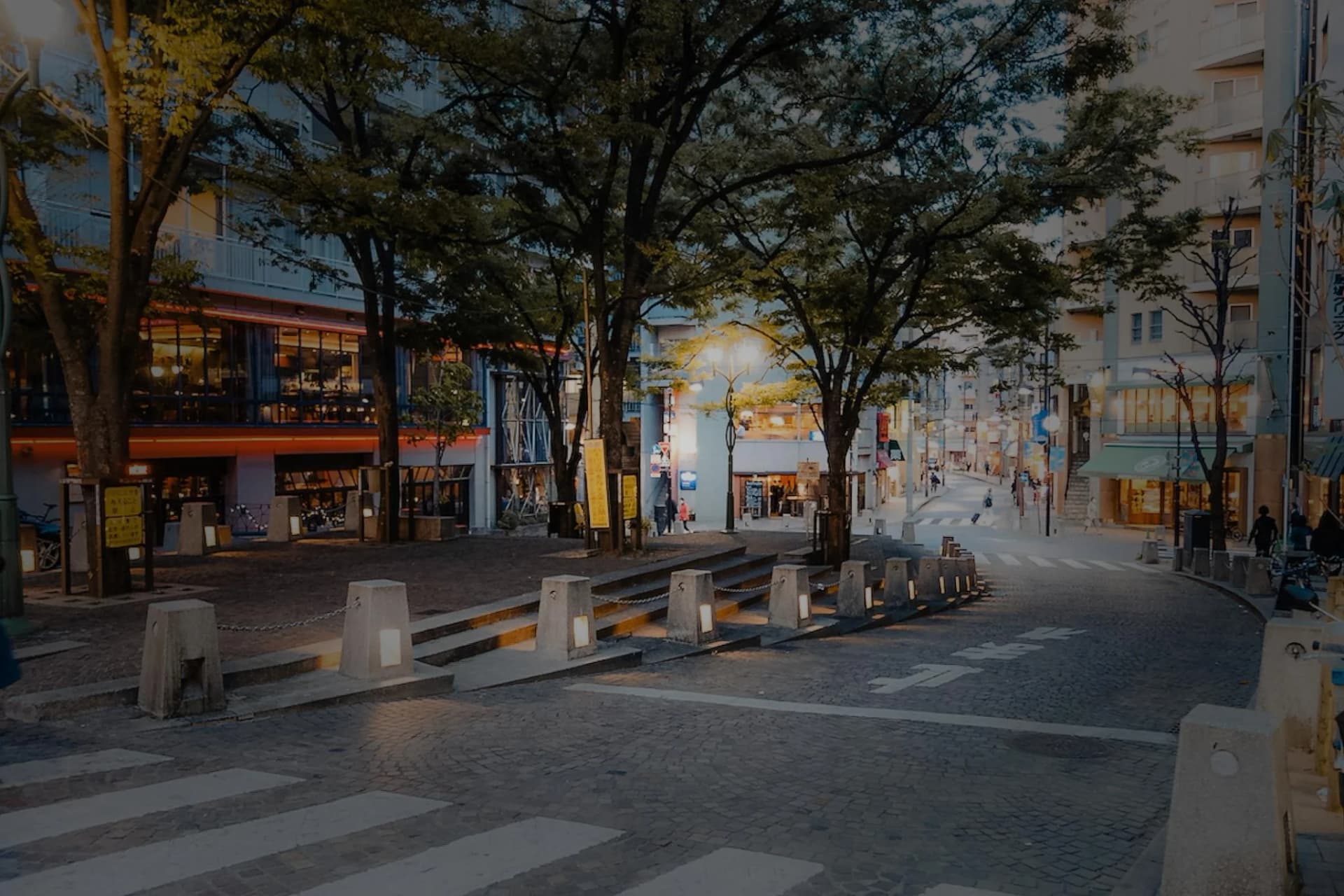
Azabu-Juban is two stops from Roppongi on the Oedo Line, sitting in the middle of Tokyo's most expensive residential district. The neighborhood has no business having a traditional shopping street. The real estate surrounding it is worth more per square meter than almost anywhere else in the city. The neighbors include embassies, luxury apartment towers, and the homes of people who do not need to think about where to eat lunch. The Azabu-Juban shopping street survives anyway, a long stretch of local shops, food vendors, and family businesses that have been operating here for generations. Some of them predate the luxury development by decades.
This is what makes Azabu-Juban worth knowing. It is not a heritage recreation or a tourist attraction. It is a working shopping street where you can buy rice crackers from a shop that once served the Imperial Household, eat taiyaki from the place that invented the format in 1909, and then walk fifty meters to a French restaurant with Michelin recognition. The neighborhood holds these things together without apparent contradiction. The sembei shop and the wine bar coexist on the same block because the people who live here want both.
Most visitors to Tokyo pass through Roppongi and never realize that this is ten minutes away. That suits the neighborhood fine.
What Azabu-Juban Actually Is
Azabu-Juban occupies a stretch of Minato ward between Roppongi and Shirokane, in the southern center of Tokyo. The name refers to both the neighborhood and its station, which sits at the intersection of the Namboku Line and the Oedo Line. In practical terms, the neighborhood is a traditional Japanese shopping street surrounded by some of the most valuable residential real estate in the country.
The shopping street predates the luxury development. Before the embassies moved in, before the apartment towers went up, before the Oedo Line opened in 2000 and connected the area to the rest of the subway network, Azabu-Juban was a local commercial district serving the surrounding residential blocks. The shotengai, the traditional shopping street, was the neighborhood's economic center. It sold rice, fish, vegetables, sweets, and household goods to the families who lived nearby.
What makes Azabu-Juban unusual is that this commercial identity survived. In most parts of central Tokyo, rising land values pushed out traditional shops and replaced them with chain stores, convenience stores, or luxury retail. Azabu-Juban kept its shotengai. The old shops stayed. New restaurants moved in alongside them rather than replacing them. The result is a specific kind of commercial ecosystem: a sembei shop founded in 1928 operates next to a natural wine bar that opened last year. A taiyaki vendor with a line out the door sits around the corner from a high-end Italian restaurant.
The residents reflect this mix. Wealthy Japanese families, diplomats from the embassies in the surrounding Azabu area, international executives, and long-term expatriates all live here. The community is similar to nearby Hiroo, but Azabu-Juban has more foot traffic and more commercial energy. Hiroo is a quiet neighborhood with a shopping street. Azabu-Juban is a shopping street with a quiet neighborhood around it.
Once a year, in late August, the Azabu-Juban Noryo Matsuri brings roughly 300,000 people to these streets over two days. It is one of the largest summer festivals in Tokyo, a fact that surprises people who think of the neighborhood as upscale and reserved. The festival is loud, crowded, and packed with food stalls. The contrast with the neighborhood's usual temperament is part of the appeal.
Naniwaya Sohonten and the Taiyaki Origin Story
The single most important address in Azabu-Juban is 1-8-14, a small shop front on the shopping street with a noren curtain that reads "元祖たいやき," meaning "original taiyaki." This is Naniwaya Sohonten (浪花家総本店), and the claim is not marketing. The shop has been making taiyaki here since 1909, and it is widely accepted as the place where taiyaki was invented.
Taiyaki are fish-shaped cakes filled with sweet red bean paste, cooked in a hinged iron mold. They are one of the most common street snacks in Japan. Every festival, every shopping arcade, every tourist area in the country has a taiyaki vendor. The format that all of them use, the sea bream shape pressed in a hot iron mold, originated here.
The story, documented in food history references including the Tabe-mono Kigen Jiten (Food Origins Dictionary), is that the shop's founder, Kiyojiro Kanbe, originally from Osaka, started by selling imagawayaki, the round version of the same cake. They did not sell well. He tried a turtle shape. That did not work either. The fish shape, specifically the tai (sea bream), which is associated with good fortune in Japan, was the version that caught on. The iron molds he designed became the template that every taiyaki shop in the country eventually adopted.
What distinguishes the Naniwaya version from the thick, bread-like taiyaki sold at most vendors is the batter. It is thin and crisp, almost cracker-like, and the red bean filling extends all the way to the tail. The anko is simmered for eight hours in a single pot each day. The shop also serves yakisoba, oshiruko (sweet red bean soup), and kakigori (shaved ice), but the taiyaki is the reason for the queue.
The queue on weekends is real. Twenty to thirty minutes is common on Saturday afternoons. Tuesday mornings, when many visitors are elsewhere, are a different experience. The shop is closed on Tuesdays, though, so check before you go. Standard hours are roughly 11 AM to 7 PM. Naniwaya Sohonten is also one of Tokyo's "Three Great Taiyaki" shops, alongside Yanagiya in Ningyocho and Wakaba in Yotsuya. It is the oldest of the three.
The Shopping Street
The Azabu-Juban Shotengai runs through the center of the neighborhood, roughly parallel to the main road, accessible from either exit of Azabu-Juban Station. The shopping association (azabujuban.or.jp) lists over 300 member shops and businesses, though the street itself is more compact than that number suggests. Many of the businesses are restaurants, service providers, and offices mixed in with the retail storefronts.
What you actually walk past: sembei shops, mochi sellers, fishmongers, small grocers selling seasonal produce, dry goods stores, pharmacies, and an increasingly international mix of restaurants and cafes. Tanuki Sembei (たぬき煎餅), at 1-9-13, has been hand-baking rice crackers here since 1928. The shop was once designated as a purveyor to the Imperial Household Agency, a distinction that still appears in their materials. The tanuki-shaped crackers come in several varieties, from crispy thin to thick and chewy, and the owner still bakes them one by one in the shop. Budget ¥400 to ¥1,200 depending on what you buy.
This is a real working shopping street, not a preserved historical attraction. The fishmonger sells fish to people who are cooking dinner tonight. The vegetable stall stocks what is in season this week. The dry goods store carries the same household items it has carried for decades. Tourists are welcome, but the street was not designed for them and does not cater to them. That is exactly what makes it interesting.
The best approach is to walk the full length slowly, stopping at whatever catches your attention. Buy sembei from Tanuki, eat taiyaki from Naniwaya, look at whatever seasonal sweets the mochi shops have in the window. The street rewards browsing more than planning.
Best Restaurants in Azabu-Juban
The restaurant scene in Azabu-Juban operates across a wide price range, from ¥1,500 lunch sets on the shopping street to ¥25,000 dinner courses in the surrounding blocks. The quality floor is high because the local clientele demands it. Diplomats, executives, and wealthy residents who eat out regularly do not tolerate mediocre food, and restaurants that cannot hold their standard do not last long in this postcode.
Sublime (スブリム) has held recognition in the Michelin Guide for three consecutive years. The kitchen works in what the chef describes as a space between French, Nordic, and Japanese cooking traditions. This is high-end dining that expects its audience to be paying attention. Dinner courses are ¥15,000 and up. The restaurant positions itself as a hidden-away French experience, and the location matches that description. It is not on the main shopping street.
For something more accessible, PANAME is a French restaurant on the edge of the neighborhood that welcomes solo diners, an unusual quality for French dining in Tokyo. Both course meals and à la carte are available, and the atmosphere is more relaxed than the price category might suggest. Lunch is a good entry point.
The Italian side of the neighborhood has been shaped by the Brianza group, founded by chef Yoshiyuki Okuno in 2003 after training across eight regions of Italy. The group's flagship DepTH brianza opened at nearby Azabudai Hills in November 2023, offering course-driven Italian with a wine program guided by a dedicated sommelier. The cooking is seasonal and ingredient-focused, built on relationships with specific farms and fisheries.
At the mid-range, the shopping street itself hosts a rotating selection of lunch spots, small restaurants serving Japanese set meals, pasta, curry, and international options that reflect the neighborhood's mixed population. Lunch plates run ¥1,500 to ¥3,000. The quality is consistently above what you would find at equivalent price points in most Tokyo neighborhoods, because the audience here has options and uses them. Walk the street at noon, look for the places with lines of local office workers, and eat where they eat.
Best Cafes and Wine Bars
Azabu-Juban has developed a genuine natural wine scene over the past several years, driven partly by the international residents who drink wine at home and partly by a generation of Japanese sommeliers and bar owners who got interested in low-intervention winemaking.
The neighborhood has several standing wine bars where you can drink natural wine by the glass with small plates without committing to a full meal. The format suits the area well — a glass and a snack before or after dinner, with the shopping street right outside.
The Noryo Matsuri
The Azabu-Juban Noryo Matsuri is one of the largest summer festivals in Tokyo. Held over two days in late August, it brings roughly 300,000 people to a neighborhood that normally operates at a quiet hum. The shopping street fills with food stalls run by the area's established shops and restaurants, alongside booths featuring regional specialties from across Japan under a program called "Oraga Kuni Jiman." Live music plays from a stage called Stage 10-BANG. There is a rakugo (comic storytelling) event. The streets become impassable in the best possible way.
The festival was cancelled from 2020 to 2022 due to COVID restrictions and returned in 2023 after a four-year gap. It has run annually since then. The 2025 edition is scheduled for August 23 and 24, from 3 PM to 9 PM each day. Dates shift slightly each year, so check the Azabu-Juban shopping association website (azabujuban.or.jp) for confirmation before planning travel around it.
If you are in Tokyo in late August and can handle the heat, this festival is worth building a day around. It is one of the few major Tokyo festivals held in a neighborhood rather than at a shrine or temple, which gives it a different character. The food is better than at most festivals because the stalls are run by actual restaurants.
How to Spend Time in Azabu-Juban
A good visit starts at Azabu-Juban Station, either the Namboku or Oedo Line exit, both of which put you within a minute's walk of the shopping street. Walk the full length of the shotengai first, taking twenty to thirty minutes to browse, snack, and get a sense of the neighborhood. Stop at Naniwaya Sohonten for taiyaki. Buy sembei from Tanuki. Look at whatever the seasonal offerings are in the smaller shops.
Lunch is the natural anchor point. Either pick a spot on the shopping street or book ahead at one of the more structured restaurants in the surrounding blocks. After lunch, walk the residential streets east of the shopping street, where the neighborhood's quieter character emerges: embassy compounds, apartment buildings with security gates, small parks, and almost no foot traffic.
Two to three hours is enough for a focused visit. Half a day is better if you want to eat well and explore without rushing.
Azabu-Juban connects naturally with adjacent neighborhoods. Hiroo is a fifteen-minute walk to the west, offering Arisugawa-no-miya Park and its own restaurant scene in a quieter register. Roppongi is ten minutes on foot or two stops on the Oedo Line, useful if you want the Mori Art Museum or the National Art Center in the afternoon. A strong combination: morning in Hiroo for the park and a coffee, lunch in Azabu-Juban on the shopping street, afternoon in Roppongi for one of the art museums.
Getting There and When to Visit
Azabu-Juban Station is served by the Tokyo Metro Namboku Line and the Toei Oedo Line. From Shibuya, take the Hanzomon Line to Nagatacho and transfer to the Namboku Line. Total travel time is about fifteen minutes. From Roppongi, take the Oedo Line two stops south. That takes five minutes. From Tokyo Station, the Marunouchi Line to Tameike-Sanno with a transfer to the Namboku Line works well.
The best time to visit is a weekday morning or early afternoon. The shopping street is active but not crowded, and Naniwaya Sohonten's queue is manageable. Weekends bring more foot traffic and longer waits at the popular shops. Avoid Saturday afternoon at Naniwaya unless you enjoy standing in line.
Late August is a special case. The Noryo Matsuri turns the neighborhood into one of the best street festival experiences in Tokyo. It is hot, it is crowded, and it is worth it.
| Neighborhood | Vibe | Best for | Crowd | Access |
|---|---|---|---|---|
| Azabu-Juban | Shotengai + luxury, lively | Taiyaki, restaurants, summer festival | Locals, expats, mixed | Namboku/Oedo Line |
| Hiroo | Quiet, embassy district | Park, French restaurants | Expats, executives | Hibiya Line |
| Roppongi | Nightlife, arts | Art museums, clubs | Mixed, international | Hibiya/Oedo Line |
| Minami-Aoyama | Design, gallery | Boutiques, architecture | Creative 30s-40s | Ginza Line |
Azabu-Juban as Part of a Private Tour
Azabu-Juban is the kind of neighborhood that rewards having someone who knows it. The shopping street is walkable on your own, but the restaurants that do not have English signage, the shops with histories that are not written down anywhere obvious, and the residential streets that reveal the neighborhood's actual character are all easier to access with a guide who has spent time here.
Our private tours in Tokyo can include Azabu-Juban as part of a day that covers the quieter, more residential side of the city. The Timeless Tokyo experience, in particular, focuses on the neighborhoods and traditions that most visitors do not find on their own. A morning that starts with taiyaki at the shop that invented it, moves through the shopping street, and ends with lunch at a restaurant that serves the neighborhood's residents is a version of Tokyo that the standard tourist itinerary does not offer.