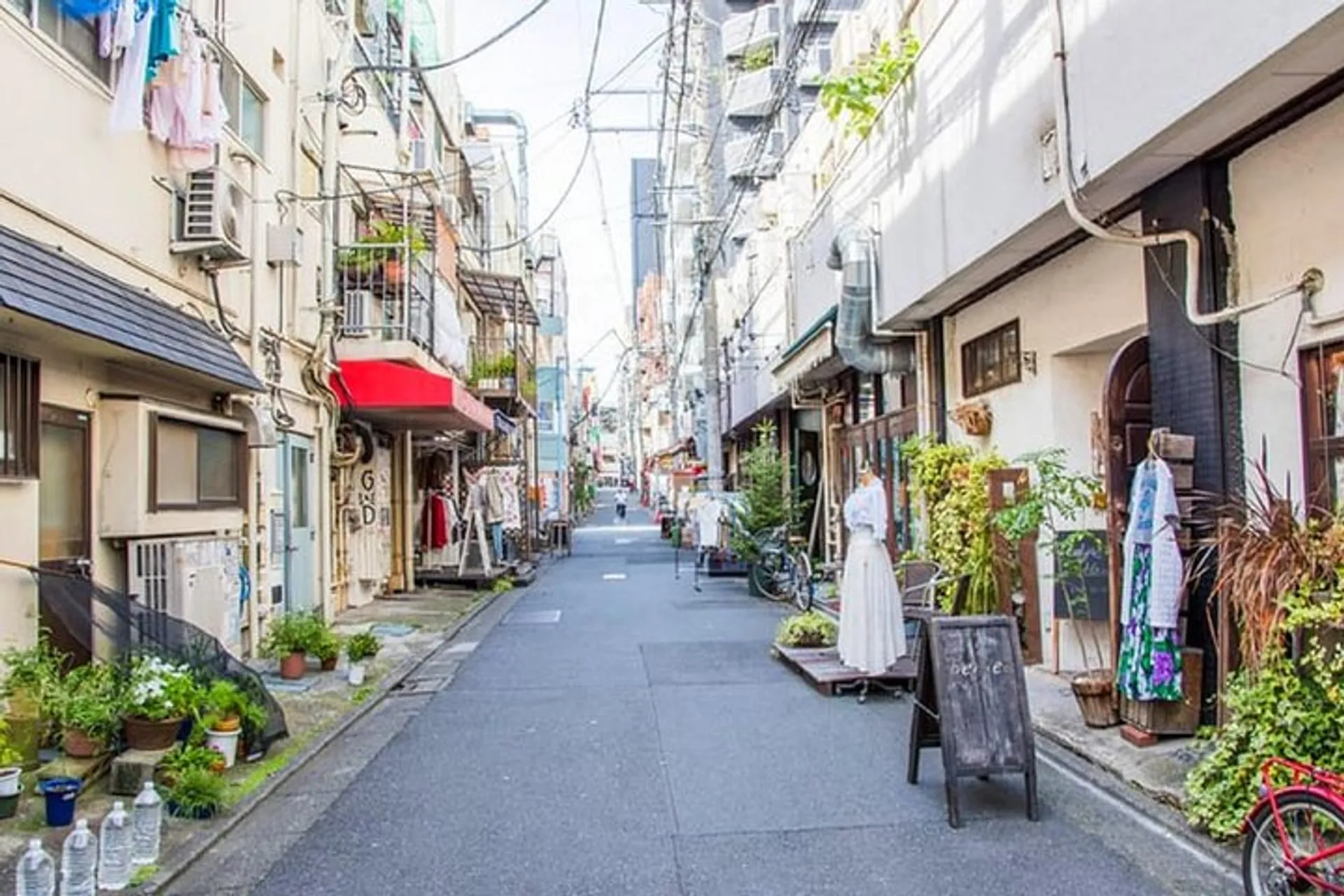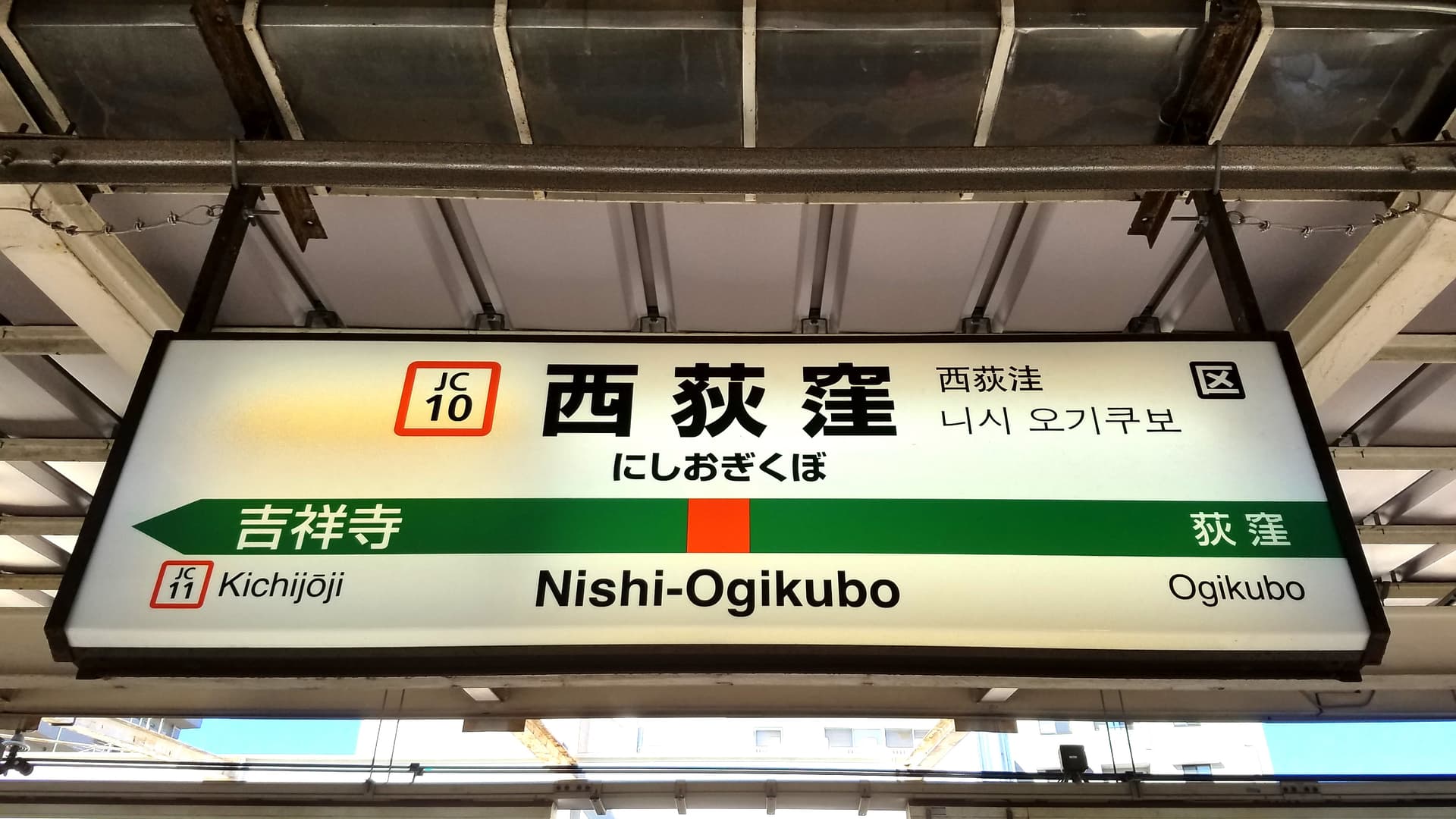
You don't visit Nishi-Ogikubo for antiques — you visit because the antiques created a neighborhood where time moves differently.
This Nishi-Ogikubo guide is for people who may never buy an antique. The antiques are why the neighborhood exists, but what they left behind is a place where time moves differently, and you should decide whether that's what you want from an afternoon.
Every guide to Nishi-Ogikubo leads with the same pitch: 50+ antique shops, Tokyo's largest concentration. None of them explain why that matters if you're not buying Meiji-era tansu or collecting Imari porcelain.
The antiques brought in a certain kind of owner, the kind who runs a shop as an extension of an obsession and worries about the business later. That spread. There's a kissaten serving the same coffee beans since 1975, a morning market that missed one Sunday in five decades, and a clock-repair shop that gets orders from across Japan.
The Antiques Built Something Else
How 50 Antique Shops Changed a Neighborhood
Nishi-Ogikubo became known for antiques in the 1980s. Post-war families in the area had furniture and heirlooms to sell, and dealers followed. Within a decade, 40-60 shops lined the streets near the station, centered on what locals call Kotto-dori, or Antique Street.
The dealers who set up here didn't run their shops like normal retail. Hours were irregular because they sourced stock themselves, and Wednesdays were closed because that's when auctions happened elsewhere. Finding the right buyer mattered more to them than moving volume.
The cafes, bookshops, and kissaten picked up the same habits. Owners ran passion projects, and commercial logic mostly stopped applying.
The Passion-Project Pattern
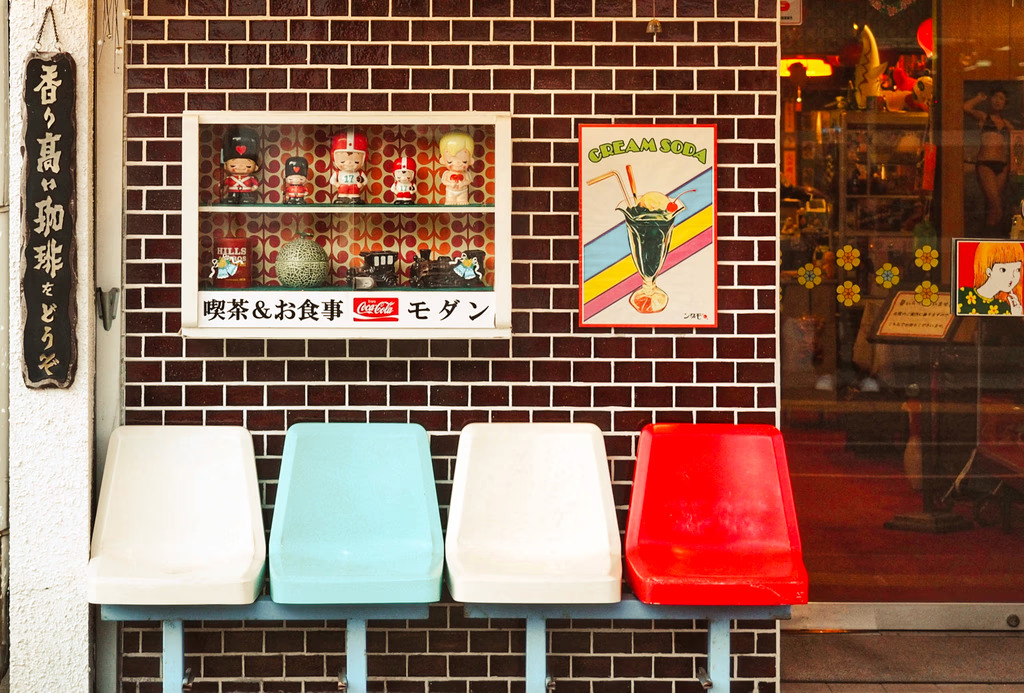
You can see it most clearly in the kissaten. 物豆奇 (Monozuki) opened in 1975. The name means "curiosity about things," which sums up the neighborhood fairly well. The owner filled the walls with antique clocks, and the coffee beans haven't changed since opening day. It was never really run as a business, so there was never much reason to change it.
There are others like it. One kissaten has been roasting its own beans at 6:30am since 1974. JUHA opened in 2010, started by an owner who spent seven years at a famous Shinjuku kissaten first. Places like these survive here because the antique trade made room for them.
This Is Not a Quick Detour
The Weekend Train Situation
On weekdays, rapid trains on the Chuo Line stop at Nishi-Ogikubo, and the ride from Shinjuku takes 12 minutes.
On weekends and holidays, rapid trains skip the station entirely. They have since December 1968, the result of a political deal: Suginami residents gave up land for track expansion in exchange for weekday rapid stops.
Weekend visitors plan around "12 minutes from Shinjuku" and then find out it doesn't apply. The local train is slower, and a transfer adds hassle. The weekend options are laid out under "Getting There" below.
The Noon Opening Rule
Most antique shops open at noon and close by 6:00pm. Some open at 11:00am, and a few stay open until 7:00pm. Arrive before noon, though, and you'll mostly find shutters.
If you're coming from central Tokyo, there's little point in arriving before 11:30am, and noon is safer.
Wednesdays are a problem too. Many shops close that day, including the biggest cluster around Doguya Jikou (3 storefronts, operating since 1982), so a Wednesday visit means missing some of the main stops.
How Long This Actually Takes
Plan for 3-4 hours at least. The shops are spread over several streets, and the kissaten are built for sitting. Most of the time goes on browsing, and you can't really hurry that.
If you're adding Kichijoji (one stop away), you'll need a full afternoon. Squeezing both into two hours leaves you short-changed in each.
Who Should Skip This
When to Prioritize Other Neighborhoods
First-time Tokyo visitors** with 3-4 days:** You'd be giving up time somewhere else. Asakusa, Shibuya, and Shinjuku pack more into an hour, and on a short trip that counts.
Families with young children: The antique shops aren't built for kids. Plenty of fragile things sit at child height, and the kissaten expect quiet. The morning market is monthly, and there's nothing like a playground. Expect bored kids and nervous parents.
Shoppers expecting English: You'll hear very little English here. The antique map comes in English, but you'll be dealing with shop owners in Japanese. If you want to ask about provenance, negotiate, or just understand what you're looking at, the language barrier gets in the way.
The Wrong Reasons to Visit
You want a "hidden gem": Nishi-Ogikubo isn't hidden. There's a free antique map in its 6th edition at the police box by the north exit. The tourist infrastructure is there; English-language listicles just don't mention it. People have been "discovering" this place for decades.
You're on a tight schedule: With 90 minutes between other plans, you'll spend half of it walking to Kotto-dori and back. Nobody at the kissaten will hurry you, and the shops aren't laid out for a quick look.
You want clear must-sees: There's no agreed "best shop" and no single spot people say you can't miss. You wander and stop at whatever catches your eye. If you like a plan with fixed stops, it will feel aimless.
What Actually Makes It Worth the Trip
The Kissaten That Haven't Changed
Monozuki is five minutes from the station. The walls are covered in antique clocks, some running and some stopped at whatever time they gave up. Jazz plays quietly while the master drips coffee one cup at a time, using beans from Jimbocho that haven't changed since 1975. It seats 15, smoking is still allowed, and it's open 9:30am to 8:00pm. It was modeled on Jashumon, a legendary kissaten in Kunitachi that set the template decades ago.
Dongurisha opened in 1974 and is now run by the third generation. It looks like a mountain lodge, furnished with antiques from the shops nearby, with jazz and classical on rotation. Beans are roasted on site at 6:30am, three mornings a week. People order the bittersweet blend, and the pizza toast.
Soreiyu dates to 1965, which makes 2025 its 60th year. Its blue roof is a neighborhood landmark, three minutes from the south exit on a narrow street running alongside the tracks. The siphon brews water-drip coffee, and the handmade cakes rotate: Victoria cake, Sacher torte, pumpkin pie, honey cake. Morning sets run until 11:30am, and weekday lunch until 3:30pm.
The Monthly Market Nobody Cancelled
The Shinmei-dori Morning Market has run every third Sunday since 1975. It was cancelled exactly once, for a typhoon, before COVID paused it for a while. It came back in October 2023.
It runs 8:00am to 11:00am, two minutes from the south exit, with forty booths along a street closed to cars. It's a local affair: produce, crafts, food stalls, and neighbors catching up.
The same day, the Yanagikoji Lunch Market runs 11:00am to 4:00pm in a narrow postwar alley 30 seconds from the south exit. It started in December 2003, and the food is from all over: Thai from Handsome Shokudo, Korean from Toyaji, Mexican from El Rojo, Greek from Greece Komachi 3-chome, plus vendors from Uzbekistan, Taiwan, and Bangladesh. You can carry food between bars, but you have to buy drinks at each one.
If your dates allow it, come on the third Sunday.
The Tree That Got Saved
Twenty minutes north of the station, a 200-year-old Japanese zelkova stands in what is now a public park. In 2008 the land was slated for development and the tree was going to come down. Residents collected over 8,000 signatures, Suginami Ward bought the land for roughly ¥400 million, and the park opened in 2010.
Locals call it the Totoro Tree. The park's official name is Hilltop Zelkova Park.
It's not a big sight. We mention it because it tells you who lives here: people who organized to save a tree, and who generally choose keeping old things over tearing them down.
Approaching Antiques Without Buying
Get the Free Map First
Leave the station by the north exit and you'll see the koban (police box) right away. Ask for the Nishi-Ogikubo Old Books and Antique Map. There's an English version, and it's currently in its 6th edition.
It lists shops by category and location, so look it over before you start walking.
The Browsing Route
From the koban, head for Kotto-dori (Antique Street). Most shops are around here, north of the station along the street that runs toward the bus rotary.
| Shop | Specialty |
|---|---|
| Doguya Jikou | Japanese and Asian antiques, folk art, tea utensils, Imari ceramics. Largest in the neighborhood, 3 storefronts |
| Northwest-antiques | British antique furniture, US vintage. Spun off from Jikou. Stock spills out onto the sidewalk |
| Rakuda | Japanese glass (和ガラス), lamps, stained glass |
| Trifle | Antique clock repair, vintage Rolex/Omega/Seiko |
| Collection's | Western antiques from America, France, Germany. Lamps, ceramics, jewelry |
Nobody expects you to buy. Interior designers come here for research, and film scouts come to source props. Browsers are welcome as long as they ask before handling anything delicate, keep their bags clear of the stock, and accept that some pieces aren't for touching.
When Language Becomes an Issue
Almost every conversation in these shops is in Japanese. Pointing and gestures are enough for browsing. Asking where a piece came from, what its history is, or whether the price can move is much harder.
The map will get you around. It can't tell you where a piece came from, why it costs what it does, or what else like it might be in the back.
That's where a guide with Japanese fluency and contacts in the antique trade earns their keep. Without one, you see what's on the shelf and what's on the tag.
Hinomaru One's neighborhood tours pair you with Japanese-fluent guides who know the local shop owners, so you can actually talk with them about what you're looking at.
The Practical Route
Getting There (Weekday vs Weekend)
From Shinjuku Station, take the JR Chuo Line. The fare is ¥230 (IC card).
| Weekday | Weekend/Holiday | |
|---|---|---|
| Train | Rapid | Local only |
| Time from Shinjuku | ~12 min | ~18 min direct |
| Alternative | (none needed) | Rapid to Ogikubo, then change to a local (15-20 min total) |
| Why | Direct service | Rapid trains skip Nishi-Ogikubo |
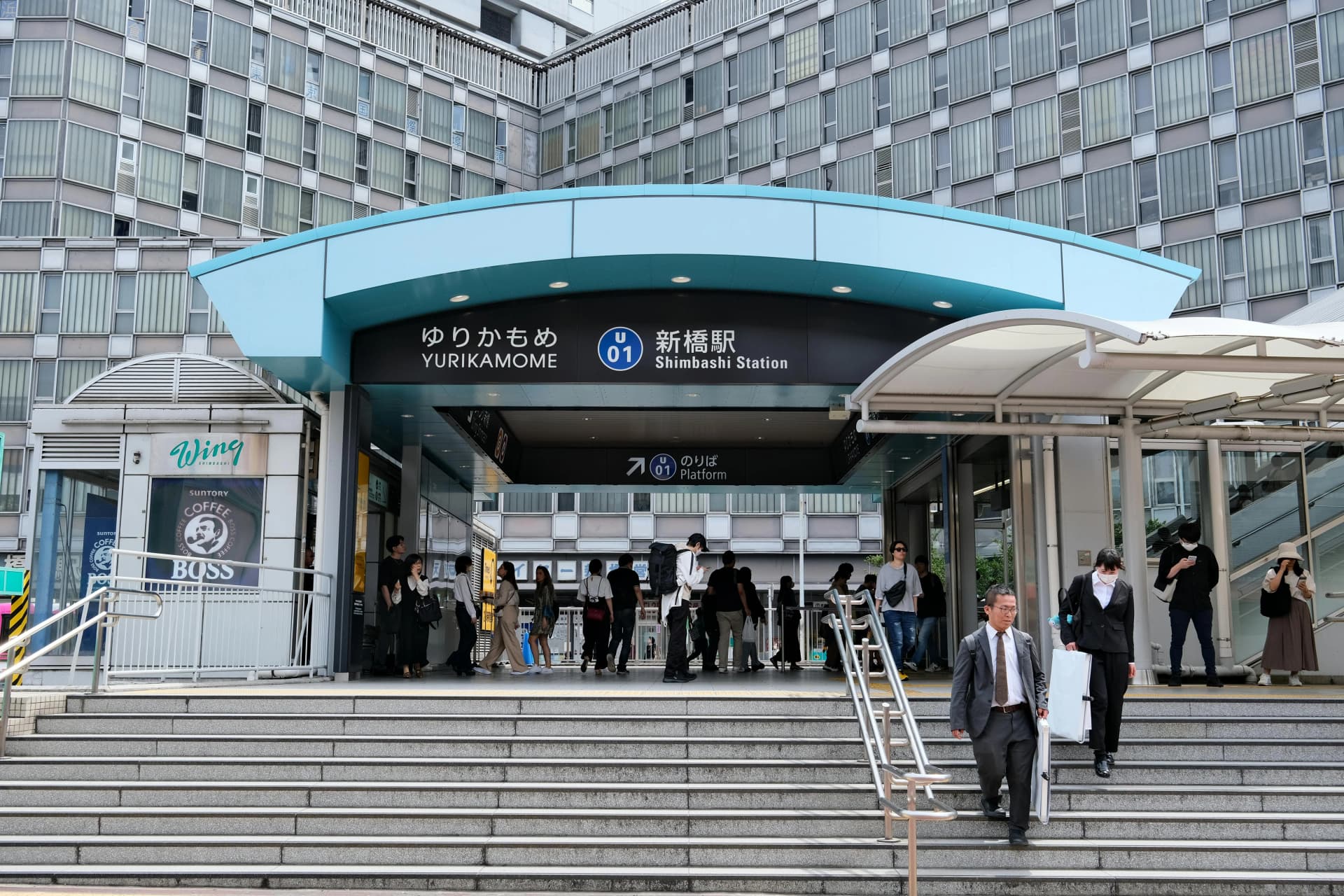
The station has one ticket gate. Turn left for the north exit (bus rotary, antique shops) and right for the south exit (柳小路, それいゆ, dining street).
The Natural Flow
Arrive at noon and pick up the antique map from the koban at the north exit. Walk to Kotto-dori and browse for 2-3 hours.
Mid-afternoon, stop for coffee at a kissaten. Monozuki is north of the station and Soreiyu is south, so pick whichever is closer.
On a third Sunday, shift everything earlier: get there at 8:00am for the morning market, stay through the lunch market into the afternoon, and move on to the antique shops once they open after noon.
In the evening, the south exit has a dining street of small, casual local bars and restaurants.
Nishi-Ogikubo is also a stop on our Standing Room Only evening tour, which runs through Nakano and Kichijoji and finishes here with ramen at 8pm.
What to Combine (and Not)
Kichijoji is one stop west on the local train. If you're doing both, start with Kichijoji. It has more set attractions (Inokashira Park, Harmonica Yokocho) and opens earlier. Then take the train to Nishi-Ogikubo for the afternoon, when the antique shops are open.
You can't do both properly in one afternoon. Make one the main event and give the other an hour or so.
Zenpukuji Park is a 15-20 minute walk north of the station, or a short bus ride. It covers 78,000 square meters of ponds and trees and is known for wild birds (50 species, kingfishers among them). The founder of the Japan Wild Bird Society lived nearby. If you want some nature, budget an extra hour. If you came for antiques, skip it, because the walk eats into your browsing.
This guide is published by Hinomaru One, a Tokyo-based private tour operator.