Hiroo sits on the Hibiya Line, two stops from Roppongi and three from Shibuya. The distance from Roppongi in terms of atmosphere is much greater. No clubs, no tourist restaurants, no neon. What Hiroo has instead is the quietest streets of any neighborhood this close to central Tokyo, an international community that has been here since the postwar occupation, and a restaurant scene that operates on the assumption that the people eating there already know what good food tastes like.
The neighborhood doesn't appear in most Tokyo travel guides. There's no must-see attraction, no famous crossing, no themed street. Hiroo works on a different register entirely. It's where Tokyo's most expensive residential real estate sits behind garden walls, where embassy staff eat lunch alongside Japanese executives at restaurants that don't bother with English menus because the regulars don't need them. The area around Hiroo Station feels closer to a quiet European capital than to the Tokyo most visitors experience. That's not an accident. It's the product of decades of international presence and old money choosing to stay out of the spotlight.
What brings people to Hiroo specifically is the food. The concentration of high-quality French and Italian restaurants in this small area rivals anywhere in the city, and the prices, while not cheap, are often lower than equivalent quality in Ginza or Roppongi. The park at the center of the neighborhood is one of the better urban green spaces in southern Tokyo. And National Azabu, the international supermarket that has served the expat community for decades, remains one of the few places in the city where you can buy imported cheese, wine, and Western pantry staples without resorting to online ordering.
What Hiroo Actually Is
Hiroo occupies a stretch of southern Shibuya ward that borders Minato ward, placing it at the intersection of two of Tokyo's wealthiest districts. The neighborhood grew into its current identity during the postwar occupation, when foreign embassies, international schools, and corporate housing for overseas executives clustered in this part of the city. That infrastructure never left. Today, more than forty embassies sit in or adjacent to the Hiroo and Azabu area, and the streets around the station carry a distinctly international character that you won't find in most Tokyo neighborhoods.
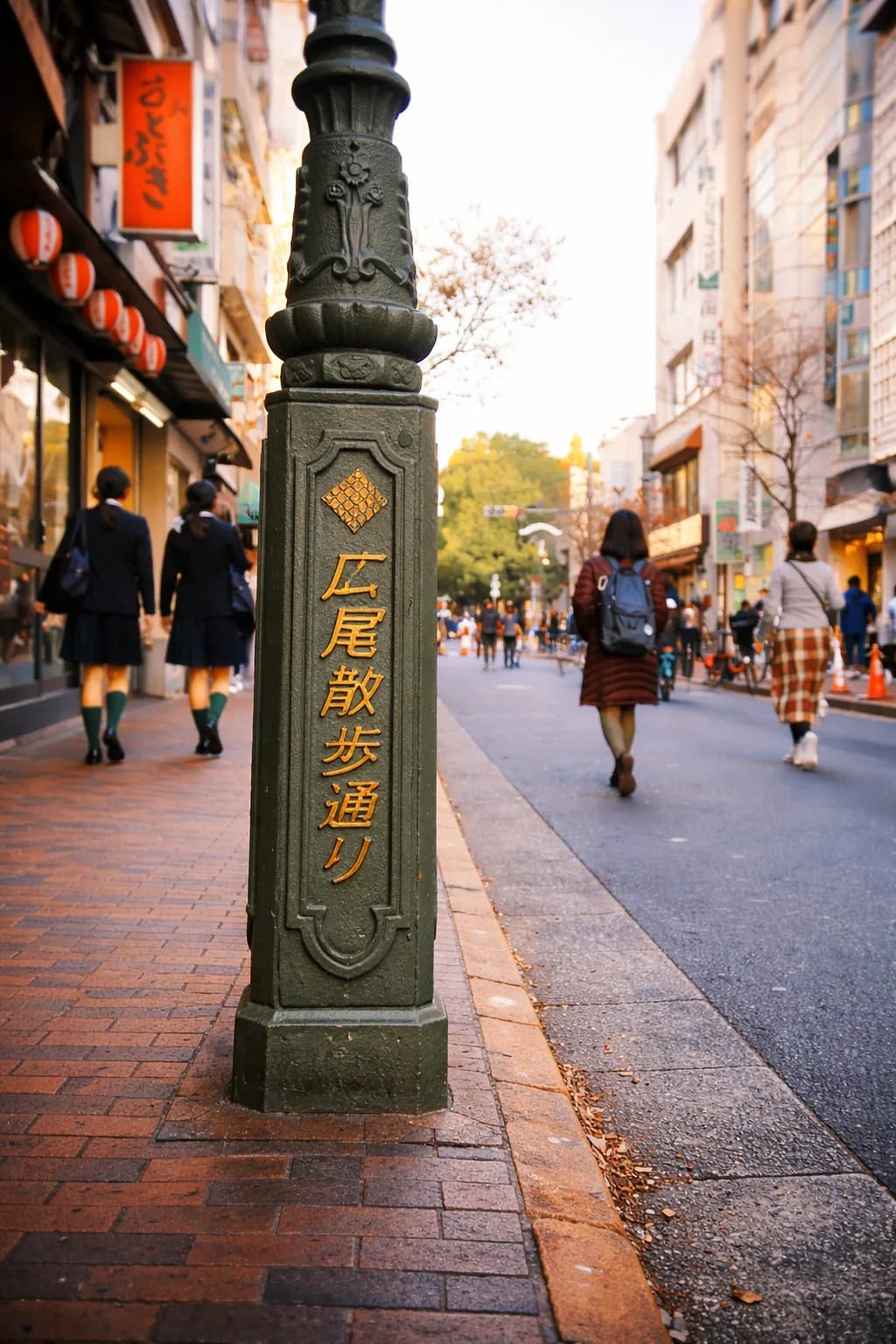
The residents reflect this history. Japanese families with generational wealth live alongside diplomats, foreign executives, and long-term expatriates. The local shopping street, Hiroo Sanpo-dori (広尾散歩通り), runs from the station toward the residential blocks, lined with bakeries, wine shops, florists, and small restaurants that cater to this mixed community. It's a proper shotengai, a traditional shopping street, but one that stocks French butter and Australian coffee alongside Japanese staples.
National Azabu supermarket, on a side street near the station, functions as a signal of who lives here. It's one of the few Tokyo supermarkets where imported Western ingredients occupy more shelf space than domestic products. Embassy staff, international school parents, and Japanese residents who cook Western food at home all shop here. The store has been operating since 1962 and remains a neighborhood institution.
Hiroo Sanpo-dori itself is worth understanding. Unlike the major shopping streets in Shibuya or Shinjuku, it operates at a human scale. The shops are small, often family-run or operated by a single owner. A florist with French-style arrangements sits next to a wine shop with a curated selection of Burgundy and Piedmont. A barbershop that's been cutting hair for decades shares a block with a newer patisserie. The street doesn't try to attract visitors from other neighborhoods. It serves the people who live here, which is why the quality stays high and the turnover stays low.
The overall feel is old money, understated rather than showy. Hiroo doesn't advertise its wealth the way Roppongi Hills does. The expensive apartments don't have lobbies designed to impress visitors. The restaurants don't have lines out the door. Everything operates on quality rather than visibility, which is exactly why the people who live here chose it.
The difference from Roppongi is worth stating plainly. Roppongi is fifteen minutes on foot from Hiroo Station, and the two neighborhoods share the Hibiya Line. But Roppongi is nightlife, art museums, and a tourist infrastructure built around entertainment. Hiroo is residential and quiet. People leave Roppongi at 2 AM. People in Hiroo are asleep by then.
Arisugawa-no-miya Memorial Park
The green center of Hiroo is Arisugawa-no-miya Memorial Park (有栖川宮記念公園), a forested hillside park named after a branch of the imperial family that once owned the land. The park occupies a sloped site just south of Hiroo Station, with paths winding down through old-growth trees to a pond at the bottom. Tokyo Metropolitan Central Library sits at the park's upper edge, a useful detail if you want somewhere quiet to read or work.
The park is not large by suburban standards, but it packs a surprising amount of variety into its footprint. The upper sections are dense with mature trees, including zelkova, cherry, and Japanese maple, creating a canopy that blocks out the surrounding city almost completely. The lower area opens onto a pond with turtles and carp, surrounded by a formal garden section with carefully maintained plantings. A small waterfall connects the upper and lower levels.
Seasonal appeal is real. Cherry blossoms in late March and early April draw local residents, though the park never reaches the crushing crowds of Ueno or Chidorigafuchi. The weeping cherries near the pond are particularly good. In November, the maples turn, and the birch trees along the path to the library catch afternoon sunlight in a way that photographs well. Summer brings thick green canopy and shade. Winter is quiet and clean.
What makes the park worth visiting isn't any single feature. It's the combination of old trees, relative silence, and the presence of actual neighborhood life. Dog walkers circle the paths in the morning. Families use the playground on weekends. Older residents sit on benches and read. Nobody is performing for social media. The park functions the way urban parks are supposed to function, as a place where people in the neighborhood actually spend time. For visitors, it's one of the better spots in southern Tokyo to sit for thirty minutes and watch the city operate at its quietest.
Best Restaurants in Hiroo
Hiroo's restaurant scene is the reason food-focused visitors come here specifically. The concentration of quality in this small area is unusual even by Tokyo standards, and the clientele, a mix of Japanese executives, embassy staff, and long-term residents, keeps the standard high without the markup that comes with tourist-facing locations.
À Nu Shohei Shimono (ア・ニュ) is the restaurant that serious diners should know about. Chef Shohei Shimono runs a French kitchen that draws on Japanese seasonal ingredients with technical precision. The restaurant has held consistent critical recognition, and the cooking reflects a chef who spent years refining his approach before putting his own name on the door. Dinner courses start around ¥15,000 and move upward depending on the season and menu. Lunch courses, when available, offer a more accessible entry point. Reservations are necessary, particularly for dinner on weekends. The space itself is understated, letting the food carry the experience.
Melograno (メログラーノ) handles creative Italian cooking with a focus on seasonal tasting menus. The kitchen builds courses around what's available, which means the menu shifts regularly. Reviews consistently highlight dishes like truffle tart tatin, sea urchin pasta, and roasted duck. Dinner courses run ¥10,000 to ¥15,000. The restaurant occupies a quiet space that matches the neighborhood's overall temperament. Reservations through Tabelog, Hitosara, or Ikyu are straightforward.
For something more accessible, Hiroo Sanpo-dori itself hosts a rotating cast of lunch spots that serve the neighborhood's daily traffic. Small Italian trattorias, Japanese set-meal restaurants, and international cafes line the shopping street, with lunch plates typically running ¥1,500 to ¥3,000. The quality floor here is higher than in most Tokyo neighborhoods because the local clientele expects it. You can walk the street, look at what's busy, and eat well without a reservation.
The international options reflect who lives here. French bistros sit next to wine bars, and the general density of European-style cooking in Hiroo is higher than almost anywhere else in Tokyo outside of Ginza. This isn't coincidental. Decades of foreign residents created demand for food that tasted like home, and Japanese chefs responded by learning to cook it at a level that often surpasses the originals.
What English-language guides often miss about Hiroo's restaurant scene is that the neighborhood supports a depth of French cooking that rivals the traditionally French-focused dining districts of Kagurazaka and Jinbocho. The reason is structural: French embassy staff and their families have lived in this area for decades, and the demand they created attracted Japanese chefs who trained in France and chose Hiroo as the place to open their own restaurants. The result is a cluster of French kitchens operating at a level where the cooking is taken seriously but the atmosphere remains neighborhood-scale rather than destination-scale.
Price orientation for planning: accessible lunch runs ¥1,500 to ¥3,000. A proper dinner at a mid-range restaurant costs ¥5,000 to ¥10,000. The premium tier, restaurants like À Nu, starts at ¥15,000 and goes higher. None of this is cheap, but comparable quality in Ginza or Omotesando typically costs twenty to thirty percent more.
Best Cafes in Hiroo
BONDI CAFE is the cafe that defines Hiroo's international side. Modeled on Australian beach culture, the space is open, bright, and dog-friendly, which matters in a neighborhood where small dogs are a genuine demographic. The menu covers all-day brunch, acai bowls, and proper flat whites. Lunch plates run ¥1,500 to ¥2,500. The terrace seating works well in spring and autumn. It draws a mixed crowd of expat families, Japanese professionals working remotely, and the occasional embassy staffer on a long lunch. The original Hiroo location has been operating long enough to feel established rather than trendy.
Truffle Bakery (トリュフベーカリー) is technically a bakery, but it functions as a cafe stop for most visitors. The signature item is the white truffle salt bread (白トリュフの塩パン), which has developed a following well beyond the neighborhood. The bread is genuinely good, a simple roll with truffle salt and butter that works because the ingredients are right. The Hiroo location is the original, and mornings often see a short line. Other items rotate seasonally, but the salt bread is the reason people come. Budget ¥300 to ¥600 per item.
National Azabu and Food Shopping
National Azabu (ナショナル麻布) has been operating near Hiroo Station since 1962, serving the neighborhood's international community. The store stocks imported products that are difficult to find elsewhere in Tokyo: European cheeses, wines from specific regions, American and Australian pantry staples, Middle Eastern ingredients, and a selection of prepared foods that reflect the diversity of the local population.
The practical value for international visitors is straightforward. If you're staying in an apartment with a kitchen and want ingredients you recognize, National Azabu is one of the few places in Tokyo where that's possible without compromise. The prices are higher than a standard Japanese supermarket, sometimes significantly, but the selection is unmatched. Embassy staff and long-term expat residents treat it as their regular grocery store. For short-term visitors, it's worth a look even if you're not cooking, just to see the specific version of internationalism that Hiroo represents.
How to Spend Time in Hiroo
A good Hiroo visit starts at the station and takes two to three hours. Walk south from Hiroo Station's Exit 1 to Arisugawa-no-miya Memorial Park. Spend thirty to forty minutes in the park, walking the paths from the upper entrance down to the pond and back. From the park, head to Hiroo Sanpo-dori, the shopping street that runs from near the station through the heart of the neighborhood. Browse the bakeries, wine shops, and small boutiques. Stop at Truffle Bakery if you're there in the morning.
Lunch is the anchor. Pick a restaurant on or near the shopping street, or book ahead at Melograno or À Nu if you want something more structured. After lunch, walk through the residential streets between the shopping area and National Azabu. This is where Hiroo's character becomes clearest: quiet blocks, well-maintained buildings, embassy compounds behind walls, and almost no foot traffic.
Hiroo combines naturally with adjacent neighborhoods. Azabu-Juban is a fifteen-minute walk south, offering its own shotengai with a more traditional Japanese character. Roppongi is fifteen minutes north, useful if you want to visit the Mori Art Museum or the National Art Center after a quiet morning in Hiroo. Ebisu is also reachable on foot in about twenty minutes, though the route is less intuitive.
Getting There and When to Visit
Hiroo Station is on the Tokyo Metro Hibiya Line. Direct access from Ginza (about ten minutes), Roppongi (one stop), and Ebisu (two stops via transfer or a twenty-minute walk). From Tokyo Station, take the Marunouchi Line to Kasumigaseki and transfer to the Hibiya Line, total travel time around fifteen minutes.
Spring and autumn are the best seasons for Hiroo. The park is at its most beautiful during cherry blossom season (late March to early April) and autumn foliage (mid to late November). Summer is hot and humid, though the park's canopy provides genuine shade. Winter is quiet and crisp, and the restaurants are easier to book.
The best time to visit is a weekday at lunch. The restaurants are at their most accessible, the park is quiet, and the neighborhood operates at the pace it was designed for. Weekends bring more families to the park and more foot traffic on the shopping street, but Hiroo never feels crowded by Tokyo standards. Avoid Friday and Saturday evenings if you plan to eat at the better restaurants without a reservation. This is not a nightlife neighborhood, and the restaurants that are worth your time fill their tables with regulars who booked ahead.
| Neighborhood | Vibe | Best for | Crowd | Access |
|---|---|---|---|---|
| Hiroo | Quiet, international, premium residential | Restaurant scene, park, food shopping | Expats, executives, 30s-50s | Hibiya Line, 2 stops from Roppongi |
| Roppongi | Nightlife, arts, international | Clubs, art museums | Mixed, nightlife crowd | Hibiya/Oedo Line |
| Azabu-Juban | Upscale residential, shotengai | Shopping, restaurants, temples | Local residents, 30s-40s | Namboku/Oedo Line |
| Ebisu | Upscale, design, beer | Yebisu Garden Place, quiet restaurants | 30s-40s professionals | JR Yamanote / Hibiya Line |
Hiroo as Part of a Private Tour
Hiroo's restaurant scene is the kind of thing a private tour in Tokyo can navigate well. Knowing which restaurants take reservations, which are walk-in only, and which have English menus makes the difference between a great lunch and a frustrating one. A guide who knows the neighborhood can also point you toward the small shops and quiet streets that don't appear on any map, the version of Hiroo that even most Tokyo residents haven't seen.
Our Timeless Tokyo experience covers the quieter, more refined side of the city, the neighborhoods where quality matters more than spectacle. Hiroo fits that approach perfectly. If your interests run toward food, architecture, or simply understanding how Tokyo's wealthiest residents actually live, this is a neighborhood worth including in your day.