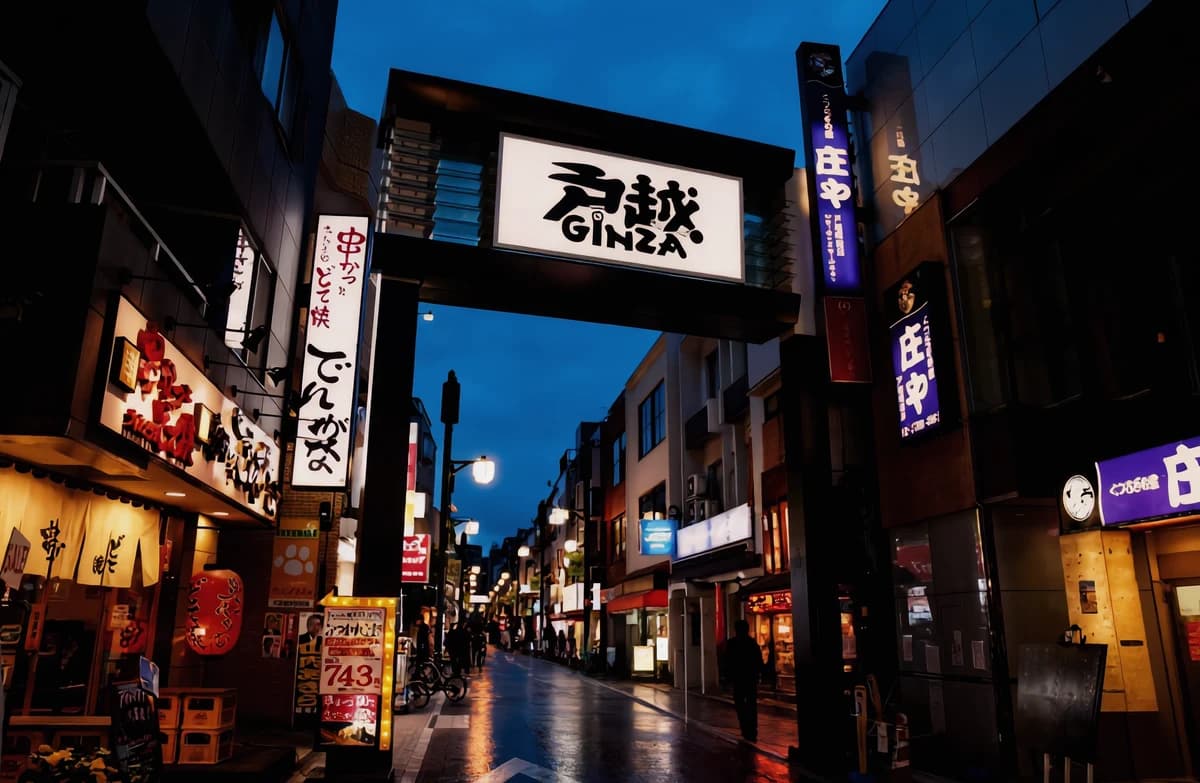
Togoshi Ginza got its name from salvaged bricks. In 1923, the Great Kanto Earthquake flattened central Tokyo. The original Ginza district, famous for its Western-style brick pavements, was destroyed. During reconstruction, the government replaced Ginza's brick roads with asphalt, leaving mountains of salvaged bricks with nowhere to go.
A man named Nishimura Katsuzo, who ran the Shinagawa White Brick Company, had an idea. The shopping street in nearby Togoshi had terrible drainage. The roads turned to mud when it rained. Nishimura proposed paving the Togoshi street with Ginza's discarded bricks. It solved two problems at once: Ginza got rid of its rubble, Togoshi got proper roads.
The locals paved their street with those bricks and named it after where they came from. Togoshi Ginza became the first "Something-Ginza" shopping street in Japan. Today there are over 300 streets across the country borrowing the Ginza name. Walk through any Japanese city and you'll find a local shopping street calling itself "Ginza." Jiyugaoka Ginza, Ebisu Ginza, Musashi-Koyama Ginza. The naming convention is so widespread that most people have forgotten where it started.
It started here. With bricks from a ruined street, repurposed to fix a drainage problem. The name "Togoshi" itself is said to mean "beyond Edo," marking the street's position just outside the old city limits. So the full name roughly translates to "the Ginza beyond Edo's edge." A century later, it still sits at the edge of where most tourists go.
What Togoshi Ginza Actually Is
Togoshi Ginza is a shotengai: a neighborhood shopping street where locals buy groceries, get haircuts, pick up dinner, and stop for a snack on the way home. It runs about 1.3 kilometers through Shinagawa Ward, making it one of the longest shopping streets in the Kanto region. Around 400 shops line both sides.
The shotengai format is disappearing across Japan. Big-box stores, convenience chains, and online shopping have hollowed out thousands of local shopping streets. Togoshi Ginza is one of the survivors, and it survives specifically because it adapted. The korokke campaign, the information center, the TV appearances on variety shows. The three shopping associations that run the street have worked to keep foot traffic alive. It's not preserved in amber. It's a living street that keeps adjusting.
It is not a tourist attraction in any conventional sense. There are no temples, no museums, no landmark buildings. There's an information center in the middle of the street with multilingual tablet devices, but that's about as far as tourist infrastructure goes. Nobody is trying to sell you a kimono rental or a rickshaw ride. The signage is almost entirely in Japanese. The shops assume you're a local.
What it is: the best place in Tokyo to eat your way down a street for two hours and spend less than ¥2,000. The food here is cheap, freshly made, and meant to be eaten while walking. If Tokyo's depachika represent food shopping at its most polished, Togoshi Ginza is the opposite end. Unpretentious, loud, smelling of hot oil, and completely without pretense.
Three Streets in One
Togoshi Ginza looks like a single continuous street, but it's actually run by three separate shopping associations:
Shoeikai (商栄会) covers the eastern end, closest to Togoshi Station on the Toei Asakusa Line. This is where you'll enter if you're coming from central Tokyo via subway.
Chuogai (中央街) is the middle section, anchored around Togoshi-Ginza Station on the Tokyu Oimachi Line. This is the busiest part, where the information center sits and where most of the famous food shops cluster.
Ginrokukai (銀六会) runs the western end of the street. It's quieter, more residential in character, with fewer food vendors and more daily-life shops like fishmongers, florists, and hardware stores. This end empties out faster in the evening and feels the most like a regular neighborhood.
The three sections connect seamlessly. You wouldn't know you'd crossed from one to another unless someone told you. Each association manages its own promotions, events, and upkeep, but they coordinate on street-wide campaigns like the korokke initiative. This three-body structure is typical of large Japanese shotengai, where competing interests among hundreds of independent shop owners require multiple governing bodies to function.
The easiest approach: start at one station, eat your way to the other, and take a different train home. If you only have an hour, start at Togoshi-Ginza Station (the middle) and work in whichever direction your nose takes you.
The Food Walk
This is why you come. Togoshi Ginza runs a "Togoshi Ginza Korokke" campaign where around 20 shops each sell their own original croquette, most priced at about ¥100. Butchers, fishmongers, delicatessens, and specialty shops all participate. The idea is simple: walk the street, buy croquettes from different shops, compare. You can try five or six without breaking ¥1,000.
But the food walk goes well beyond croquettes. Here's what to look for.
Croquettes and Fried Things
Togoshi Ginza calls itself the "holy land of korokke," and that's not entirely marketing. The density of shops selling freshly fried croquettes, menchi katsu (minced meat cutlets), and other deep-fried items is genuinely unusual. You'll hear the sizzle of oil from the street and see shops announcing fresh batches over speakers.
Goto Kamaboko-ten (後藤蒲鉾店) is the shop most people mention first. It's been here for over 60 years, originally a fish cake (satsuma-age) specialist. Their signature item is the oden korokke: a croquette with potato mixed with oden ingredients like daikon radish at the center. It sounds odd. It works. The shop also has a small eat-in area where you can sit down with oden and a drink.
Katabami Seiniku-ten (かたばみ精肉店) is a butcher shop with a prepared-food counter that locals treat like a deli. Their ham cutlet and menchi katsu are the draw. They also sell an Iwanaka pork menchi katsu that costs a bit more and is worth it. The potato croquette is solid but unremarkable next to the meat options.
Grilled Soup Dumplings
Ryuki (龍輝) is a Chinese restaurant specializing in yaki-shoronpo (grilled soup dumplings) and chicken congee. Togoshi Ginza is where Ryuki started before expanding to other locations. They have a takeout window on the right side of the shop. The soup dumplings are the thing to get. Eat them hot.
Yakitori
Yakitoriya Ryuhou (やきとり家 竜鳳) draws lines for cheap takeout yakitori. Chicken gizzard skewers run about ¥150. The shop does eat-in and takeout, but most people grab skewers and keep walking.
Curry Bread
Harimaya (ハリマヤ) sells Togoshi Ginza curry bread, a filled and deep-fried bread that's become a local specialty. They also make a very spicy version for people who want heat. It's filling enough to count as a small meal.
Everything Else
The street also has handmade shumai, dango, gelato, yakiimo (roasted sweet potato in winter), and whatever seasonal items shops decide to put out front. Part of the appeal is not planning too carefully. Walk, smell something good, buy it. The shops that have a line usually deserve the line.
A few tips for the food walk itself. Bring cash. Some shops are card-only-if-you're-lucky, and plenty are cash-only. Don't fill up at the first three shops. The street is long and the good stuff is spread across its full length. The ¥100 croquette price point means you can try many things without commitment. If something is mediocre, you've lost ¥100 and learned something. If it's great, you've spent what a vending machine drink costs.
Beyond the Food
Togoshi Ginza is a working shopping street first, food destination second. Between the food shops you'll find:
- Fishmongers with the day's catch displayed on ice
- Small clothing shops selling practical items, not fashion
- A 100-yen shop
- Hardware stores
- Florists
- A few bookstores
- The Togoshi Ginza mascot character "Gin-chan" merchandise at the information center
The character goods are worth mentioning only because they tell you something about how Japanese shopping streets work. Gin-chan exists because the shopping association created him as a branding exercise. It's one of many small, deliberate efforts to give the street an identity beyond "place where shops are." Other shotengai across Tokyo have their own mascots, their own loyalty stamp programs, their own seasonal events. This is grassroots commercial culture, organized from the bottom up by shopkeepers who share a street.
There's also Togoshi Ginza Onsen, a public bathhouse near the shopping street. If you've been walking and eating for two hours, a soak isn't the worst idea. It's a local sento, not a luxury spa. Expect basic facilities at sento prices.
The street is at its most interesting on weekday late afternoons when residents are doing their after-work shopping. Weekends are busier but less atmospheric. You're watching a neighborhood function, not a performance staged for visitors.
Getting There
Two stations serve Togoshi Ginza, and they're on different train lines at opposite ends of the street. This is actually convenient: you can enter from one end and exit from the other without backtracking.
Togoshi-Ginza Station (戸越銀座駅) is on the Tokyu Oimachi Line. It drops you in the middle of the street, right at the busiest section. From Shibuya, it's a short ride on the Oimachi Line (change at Oimachi or take the direct train). This is the easier approach from west Tokyo.
Togoshi Station (戸越駅) is on the Toei Asakusa Line. It puts you at the eastern end of the street. This is more convenient if you're coming from Asakusa, Nihombashi, or anywhere on the Asakusa Line.
The walk between the two stations, through the entire shopping street, takes about 20 minutes without stopping. With food stops, plan for 90 minutes to two hours.
When to Go
Best timing: Weekday afternoons, roughly 3pm to 6pm. Shops are open, food is being fried fresh, and you'll catch the after-work rush that gives the street its energy.
Weekends work but get crowded, especially around noon. Some shops sell out of popular items by early afternoon on weekends.
Avoid: Monday and Tuesday, when some shops close. Mornings before 11am, when many food shops haven't started frying yet.
Rain: Part of the street has covered arcades, part doesn't. A light rain won't ruin the walk but heavy rain makes the uncovered sections unpleasant.
Combining with Other Areas
Togoshi Ginza isn't next to any major tourist area, which is part of why it stays local. But it connects well enough if you're planning a full day.
From Nakameguro: Take the Tokyu Meguro Line to Oimachi, then one stop on the Oimachi Line to Togoshi-Ginza. About 20 minutes. This makes a good pairing: Nakameguro's design-focused cafes in the morning, Togoshi Ginza's street food in the afternoon.
From Gotanda: Walk. It's about 15 minutes on foot from Gotanda Station to the eastern end of Togoshi Ginza. Gotanda has good ramen shops if you want to start with a sit-down meal.
To Shinagawa: Togoshi Station (Asakusa Line) connects directly to Sengakuji, where you can transfer to JR Shinagawa. Useful if you're catching a Shinkansen after your food walk.
Full day idea: Morning at Tsukiji for market food, afternoon at Togoshi Ginza for shotengai food. Two completely different Tokyo food cultures in one day. The Asakusa Line connects the areas with one transfer at Higashi-Ginza.
What This Place Isn't
Togoshi Ginza won't make your Instagram pop. The street is visually ordinary: shop fronts, signage, plastic food displays, narrow sidewalks. There are no cherry blossom canals, no architectural showpieces, no vintage kissaten with moody lighting. If you're building a visual Tokyo itinerary, this isn't the stop.
It's also not a heritage attraction. The 1923 earthquake bricks are long gone, paved over by modern road surfaces. The history is in the name and the continuity of the street itself, not in anything you can see or photograph.
It's not Yanesen-style "old Tokyo" either. There's no weathered wood, no temple grounds, no sense of preserved time. Togoshi Ginza is thoroughly modern and commercial. The charm, to the extent it has charm, comes from function: shops doing what they do, people buying what they need, food being cooked and eaten on the spot.
And it's not convenient. It's in Shinagawa Ward, south of the areas most tourists spend time in. You won't stumble on it while walking between major sights. Getting here requires intention. You have to decide to come, take a train, and commit to a street that doesn't announce itself with any fanfare.
What it is: a street where 400 shops compete for the attention of the same neighborhood residents, every day, and have been doing so for a century. The food is good because it has to be. The prices are low because the customers are regulars, not tourists. And the atmosphere is the atmosphere of a place that exists for its own reasons, not for yours.
That's the draw. If you're looking for a food walk that feels like actual Tokyo rather than tourist Tokyo, this is it. Two hours, ¥2,000, and a train ride home from the opposite end of where you started.
With a Guide
Togoshi Ginza is the kind of place that appears on Ordinary Tokyo, Hinomaru One's tour built around everyday Tokyo rather than landmark Tokyo. A guide here isn't about navigation (the street is literally a straight line) but about knowing which shops are worth stopping at, what to order, and how to read a shotengai that has zero English signage. The street is simple to walk alone, but you'll eat better with someone who's done it fifty times.