Fashion shopping in Tokyo isn't about covering districts—it's about finding the one that speaks your style. That's what guided tours solve.
Tokyo fashion districts each draw a very different crowd, so picking the one that suits you will do more for your trip than trying to cover them all.
Every Tokyo fashion guide starts the same way: go to Harajuku.
That's fine if you want rainbow cotton candy and selfies on Takeshita Street. If your wardrobe runs to vintage denim, contemporary minimalism, or avant-garde Japanese designers, the standard advice sends you to a crowded tourist strip that serious shoppers gave up on years ago.
Tokyo has ten distinct fashion districts, and each one draws a different aesthetic. Pick by the way you already dress and you'll spend the day in shops that suit you.
You Already Know Your Style. Tokyo Just Uses a Different Language.
Most Tokyo fashion guides assume everyone visiting wants the same look. A minimalist who wears Auralee at home has no business on Takeshita Street, though, and a streetwear collector looking for WTAPS won't find it in Ginza. Nor does a vintage hunter after good denim need Shibuya 109.
Guides tend to list districts by geography. They recommend "Harajuku" as if it were one place, when it holds three separate fashion scenes within a fifteen-minute walk. For general private shopping tours that's workable. If you're shopping for a particular look, it isn't.
The Harajuku Problem (Why the Famous Street Fails Most Adults)
Takeshita Street shows up in every Tokyo shopping guide. In the 1990s it was the center of Japanese youth fashion, where streetwear brands like BAPE, UNDERCOVER, and NEIGHBORHOOD got their start.
Those days are over. Takeshita Street is now a tourist attraction with tourist prices, and much of the stock is souvenirs and goods not made in Japan. On a busy day the narrow street is packed so tight you can't really browse. The wider Shibuya area went the same way, and some of what used to be cutting edge is now a cruise-ship stop. Our Shibuya places guide sorts out what's still worth your time from what has turned into tourist infrastructure.
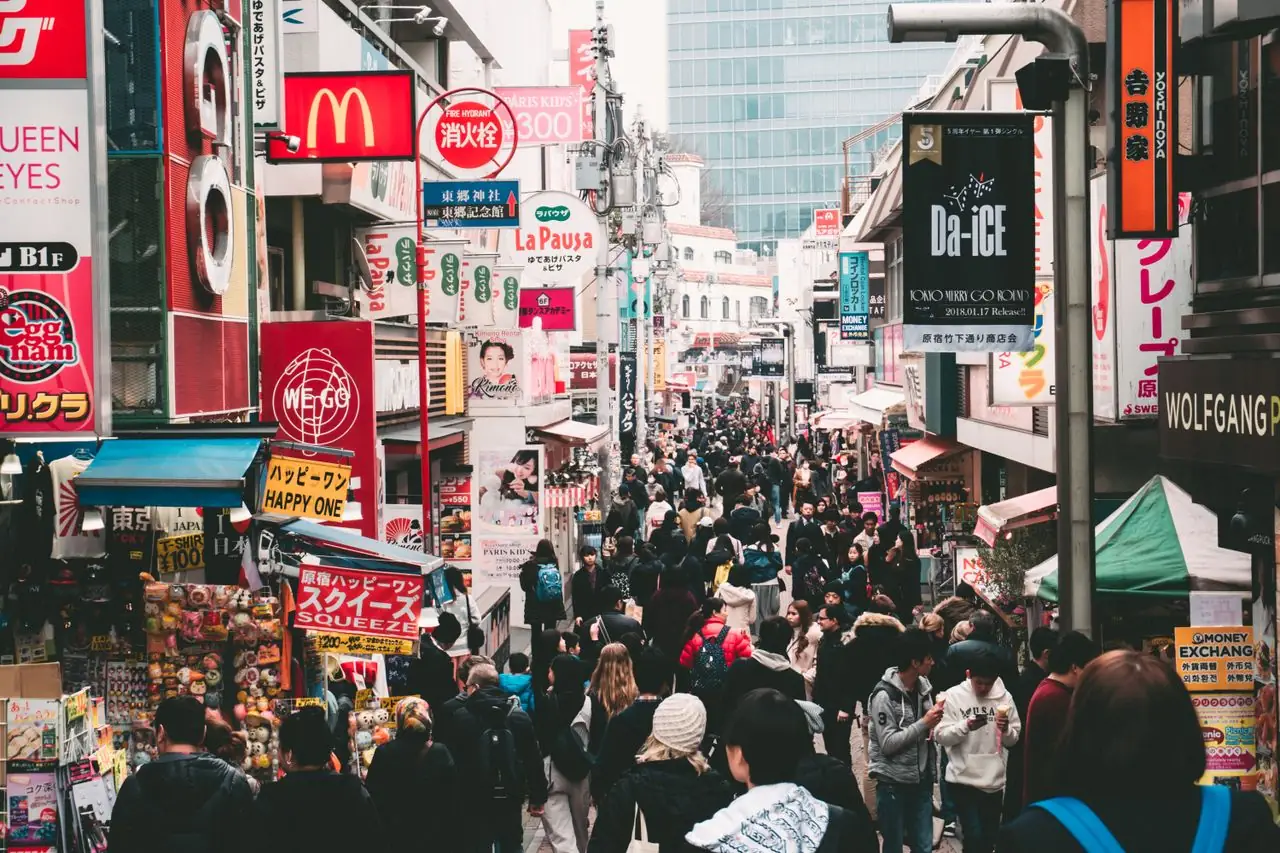
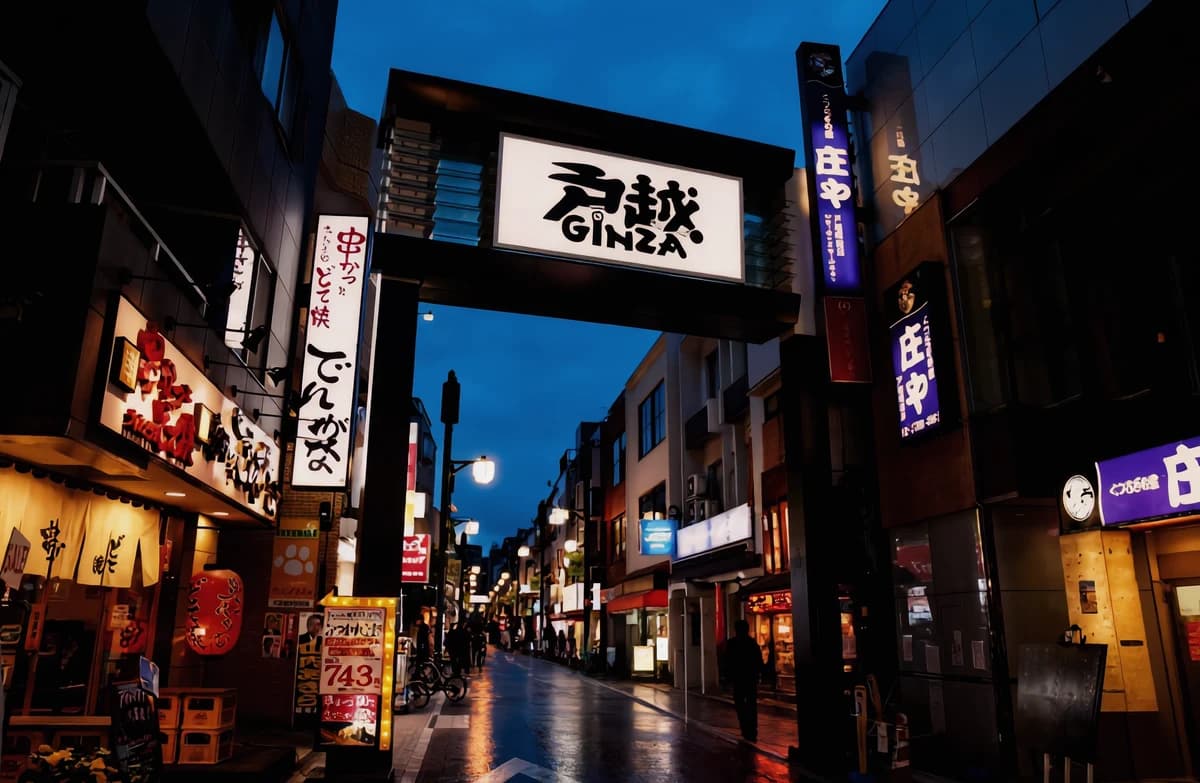
Photo: Louis / Pexels
The people who make Tokyo fashion moved on. Shimokitazawa took in the vintage scene, and Koenji pulled the more niche vintage curators. Ura-Harajuku (the back streets running parallel to Takeshita) and Cat Street still have credibility. Takeshita Street itself is for photos now.
Beyond Harajuku
Tokyo has at least ten distinct fashion districts: Aoyama, Daikanyama, Nakameguro, Shimokitazawa, Koenji, Ura-Harajuku, Cat Street, Ginza, Omotesando, Shibuya, Ebisu. Most visitors only need one or two of them.
Match Your Closet to a Neighborhood
Find the section below that sounds like your wardrobe and skip the others.
If You Dress Minimalist at Home
Head for Aoyama, Nakameguro, and Daikanyama.
Auralee, one of Japan's rising minimalist labels, has a store in Aoyama and is known for premium fabrics and well-cut basics. You'll find Comoli in multi-brand shops around Nakameguro. HYKE makes structured pieces aimed at working women.
In Nakameguro, 1LDK runs out of a renovated garage fitted out like a one-bedroom apartment. Its motto is "the extraordinary within the ordinary", and the clothes are refined casualwear pulling from workwear, military, traditional, and sports styles. Alongside imported labels it carries UNIVERSAL PRODUCTS, its in-house brand. The staff buy for classic style rather than trend.
If you like logos, graphic streetwear, or anything loud, look elsewhere.
If You Hunt Vintage
Your neighborhoods are Shimokitazawa and Koenji.
Shimokitazawa has the most vintage stores in Tokyo, over 150 of them within walking distance of the station. New York Joe Exchange is in a converted public bathhouse. Flamingo specializes in mid-20th-century American vintage. Chicago and KINJI have lots of stock at mid-range prices, and 2nd Street has two floors of well-organized inventory. Ordinary Tokyo covers Shimokitazawa as part of its neighborhood tour, mixing vintage shopping with the area's creative side.
Koenji suits narrower taste. The shops are smaller and more curated, and they're easier to take in. If you know exactly what you're after, down to the era and the style, Koenji will serve you better than Shimokitazawa's sheer volume.
Prices vary a lot:
| Tier | Price Range | Where |
|---|---|---|
| Budget | ¥700-2,000 | Stick Out (everything ¥800) |
| Mid-range | ¥3,000-5,000 | Chicago, KINJI |
| Quality brands | ¥4,000-11,000 | JAM |
| Designer/curated | ¥10,000-30,000+ | Ragtag, Berbejin |
One catch: Japanese vintage runs small, and the best pieces in larger sizes go first. There's more on sizing below.
If You Collect Streetwear
Go to Ura-Harajuku, Cat Street, and Shibuya.
Supreme Harajuku is in the Kanzaki Building, with NEIGHBORHOOD's flagship directly below it. You'll know the NEIGHBORHOOD store by its blacked-out front and neon signs. In Shibuya, WTAPS runs GIP-Store, designed as a "hidden military outpost" with olive drab netting over the windows.
Beams started in Harajuku and is still there, known for its in-house labels Beams Plus and Beams T as well as newer Japanese fashion. GR8, behind a zen-style exterior, stocks Maison MIHARA YASUHIRO and READYMADE.
For secondhand streetwear, try Ragtag on Cat Street, which moved over from Takeshita Street in 2012. Its three-floor building has the largest men's secondhand section in Tokyo, with both the second floor and the basement given over to menswear. You'll see Supreme, Balenciaga, Raf Simons, and Japanese designers. The staff speak English, Chinese, and Korean.
On budget: streetwear in Tokyo now costs about what it does anywhere else. Secondhand is better value, though you still pay a premium for the pieces everyone wants.
If You Want Contemporary Japanese Design
Aoyama and Omotesando are where you want to be.
Comme des Garçons opened its Aoyama flagship in 1999, designed with the architect Takao Kawasaki. Sacai's flagship followed in 2011. Yohji Yamamoto and UNDERCOVER both have Aoyama stores.
Dover Street Market Ginza fills seven floors with everything from Brain Dead to Chrome Hearts to Comme des Garçons. It's a lot to take in, but it has nearly everything.
For secondhand designer pieces, Ragtag and Allu sell authenticated items from Hermès, Chanel, Louis Vuitton, Gucci, Prada, Comme des Garçons, and Yohji Yamamoto. Each piece is checked, and any spots or cracks are written on the tag.
Contemporary Japanese design holds its value. Secondhand is cheaper, but cheaper here still means ¥20,000+ for good pieces.
The Barriers No Guide Mentions
Fashion guides tell you where to go. They rarely mention the practical problems that decide whether you come home with clothes you'll actually wear.
Sizing Reality
Japanese sizes run one to two sizes smaller than Western ones:
| US Size | Japanese Equivalent |
|---|---|
| S | M-L |
| M | L-XL |
| L | XL-2L |
| XL+ | Very limited |
The tag size is only part of it. Sleeves are shorter, shoulders are narrower, and hip measurements assume a different build. "Free size" items won't fit curvier or taller Western visitors.
Some visitors find out they're "plus size" in Tokyo when they're straight-sized at home. Japanese plus sizing starts at 2L, which is roughly a US L/XL, and anything bigger is very hard to find even in dedicated plus-size stores.
In practice, vintage shopping gets harder above a Japanese M, because the good larger pieces sell fast. If you have a bigger frame, the international brands with Western sizing in Omotesando and Ginza will work better than the vintage districts.
Vertical Shopping: The Best Stores Are on the Third Floor
Tokyo shops stack upward. They're in basements, on second and third floors, and only sometimes at street level.
JAM Harajuku is in a basement, and so is KINJI. Ragtag spans three floors including its basement. Allu Ginza takes up five floors. Vintage Qoo is on the second floor of Omotesando Hills West.
If you only browse at street level, the way you would in most cities, you'll miss most of what's here. The best shops mean walking into buildings, taking stairs or elevators, and reading floor directories, and that eats time and energy every outing.
Photo: Iban Lopez Luna / Pexels
Timing: Why 11am Matters More Than Which Day
Tokyo fashion shops open at 11am, while coffee shops open at 9 or 10am. Plan to start at 11am, or you'll be standing outside waiting. Your real shopping day runs from 11am to 8pm, so don't plan it as an 8am to 5pm day.
With vintage, timing also matters across the week. The good items sell within hours of going out. New stock arrives on weekday mornings ahead of the weekend crowds, so whatever is still on the rack midweek is what other people passed over.
Holidays catch people out too. Three main periods hit independent shops:
-
New Year's: December 29 to January 3
-
Golden Week: late April to early May
-
Obon: August 13-16
During these weeks, expect around 80% of Shimokitazawa's shops to be shut.
Chain stores mostly carry on. Convenience stores and big malls stay open, but the curated vintage boutiques and independent select shops, the ones you came for, close while their owners go home to family.
When District Lists Fail and Guides Help
A shop list gives you addresses and tells you what each store sells. For some visitors that's all they need.
What Shop Lists Actually Give You (And What They Don't)
Lists work well when you already know what you want. If you're after a specific WTAPS jacket and know it might be at Ragtag or GIP-Store, a list gets you there. If you've read up on 1LDK and want to go, you have the address.
They're less help if you don't know which district fits your style, if the number of options swamps you, if multi-floor buildings are new to you, or if you're unsure how to spend limited time. If you don't know what to expect, a list won't tell you.
None of these districts is hidden, and the information is all online. What takes work is translating the way you dress into Tokyo's map.
What Style Translation Requires
On the ground, that means knowing which floors of which buildings carry what you want, which shops are worth the detour, and which you can skip. Most of the work is cutting options.
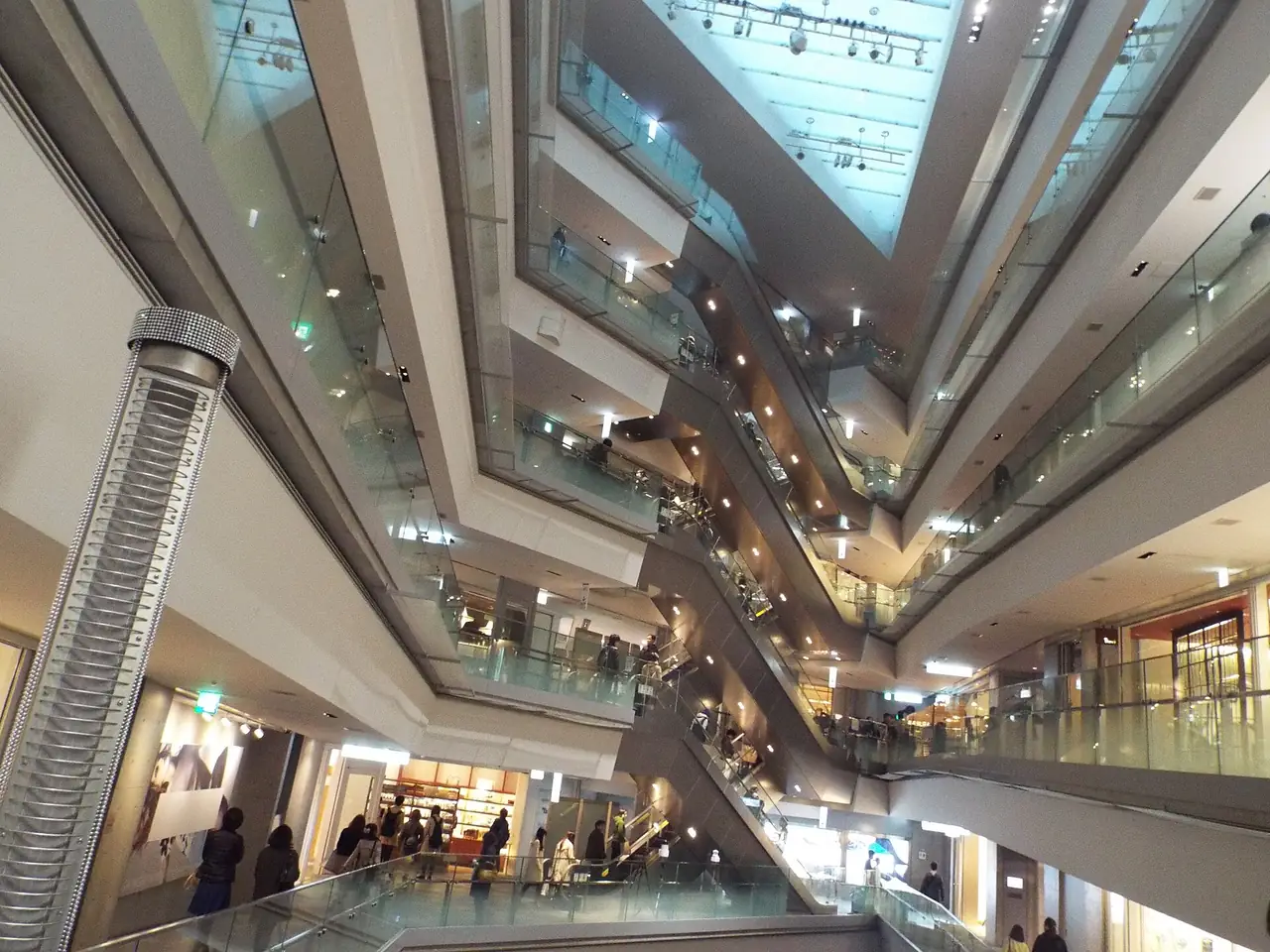
Photo: Syced / Wikimedia Commons, CC BY-SA 3.0, resized
A guide who knows the scene matches your look to the right streets and shops, and gets you there faster than you would on your own. Infinite Tokyo is built entirely around your interests, including fashion stops chosen for your style.
When Going Alone Makes More Sense
You don't need a guide if you know exactly what you want and where to find it. If you've researched specific shops, you're ready for multi-floor buildings, your size expectations are realistic, and you have time for some trial and error, going alone works.
A guide earns their fee when you're unsure which district suits you, you're short on time, the buildings are unfamiliar, or you care more about buying than browsing. In those cases the cost of a guide mostly buys back shopping hours.
One District, Done Right
Doing one major shopping district properly takes three to four hours. That covers getting around multi-floor buildings, browsing several shops, trying things on, and paying.
Most visitors don't have time for three districts. Many don't have time for two.
What limits you in Tokyo is time and stamina. Shops are easy to reach. Adding districts to the plan only spreads you thinner.
We'd take one district done properly over three rushed ones. If shopping is the main point of your trip, think about where you stay. With a hotel near your target district, dropping your bags off at midday is easy. We cover where to stay for shopping-focused trips in a separate guide.
Where Hinomaru One Fits
Infinite Tokyo is our fully customizable private tour, built around your interests. For fashion, that means a route through the districts and floors that match what you actually wear. See full tour details.
At Hinomaru One, we run unhurried private Tokyo tours with plenty of cultural context, for first-time and seasoned travelers, and every one is customized.