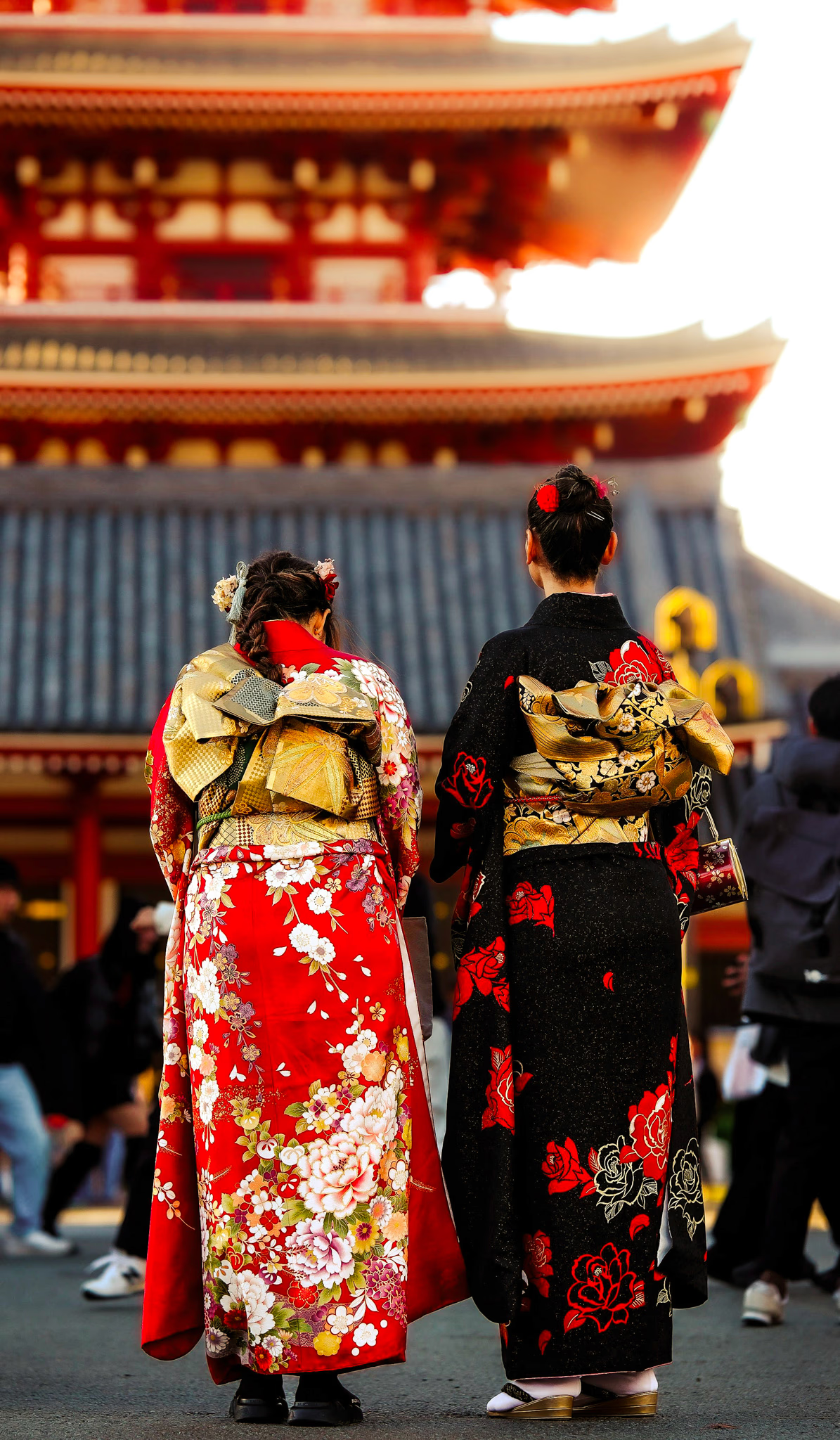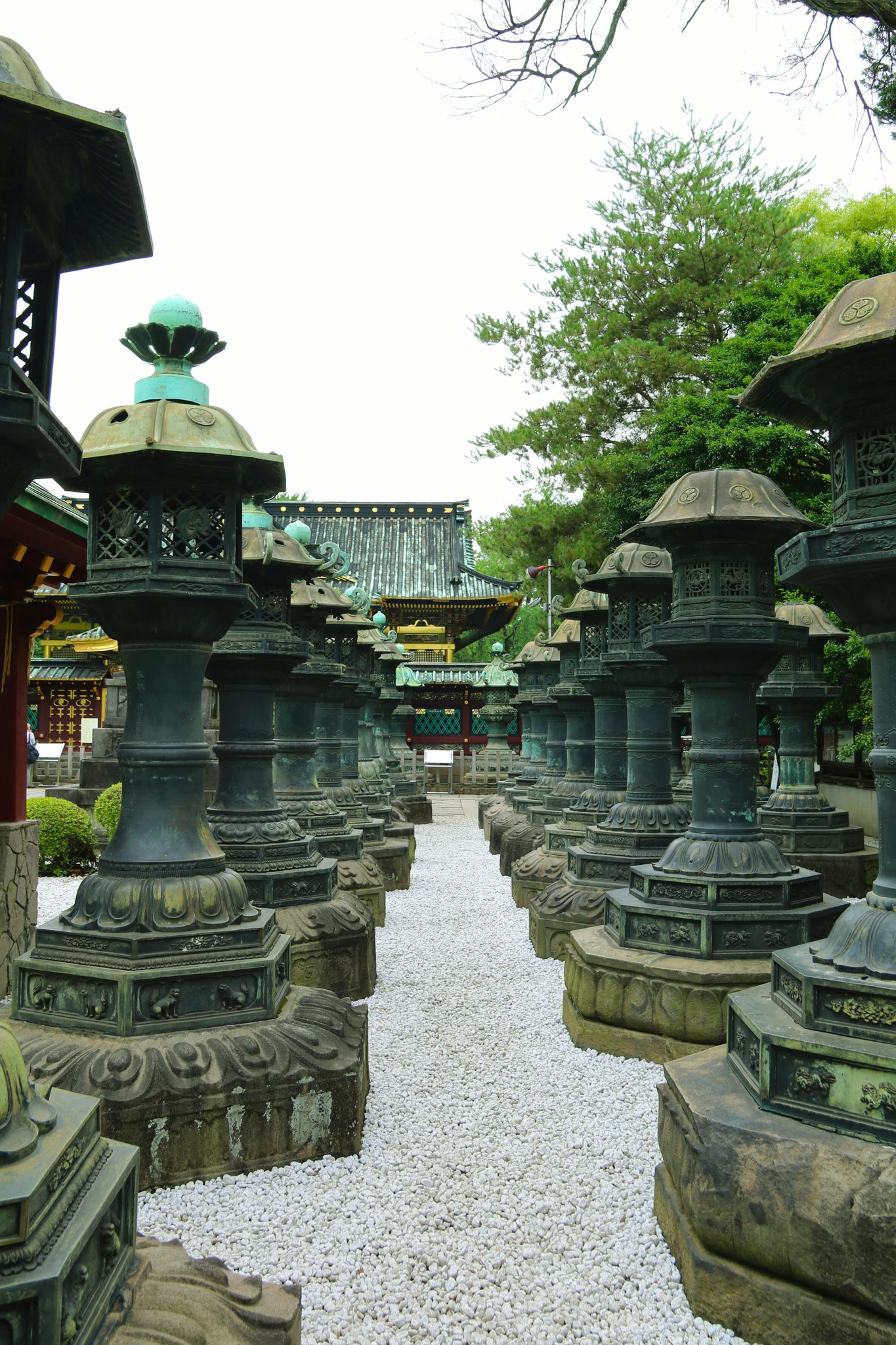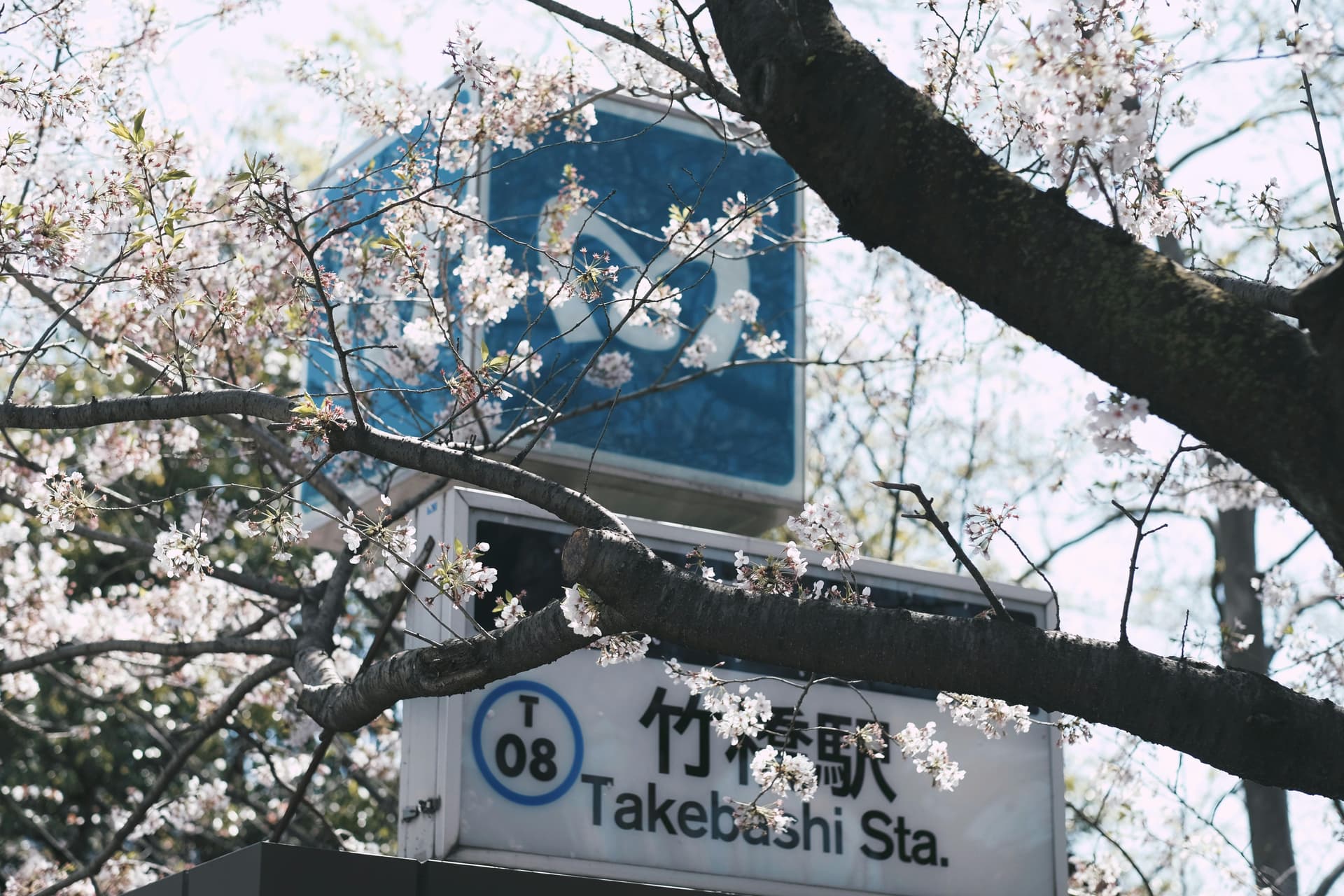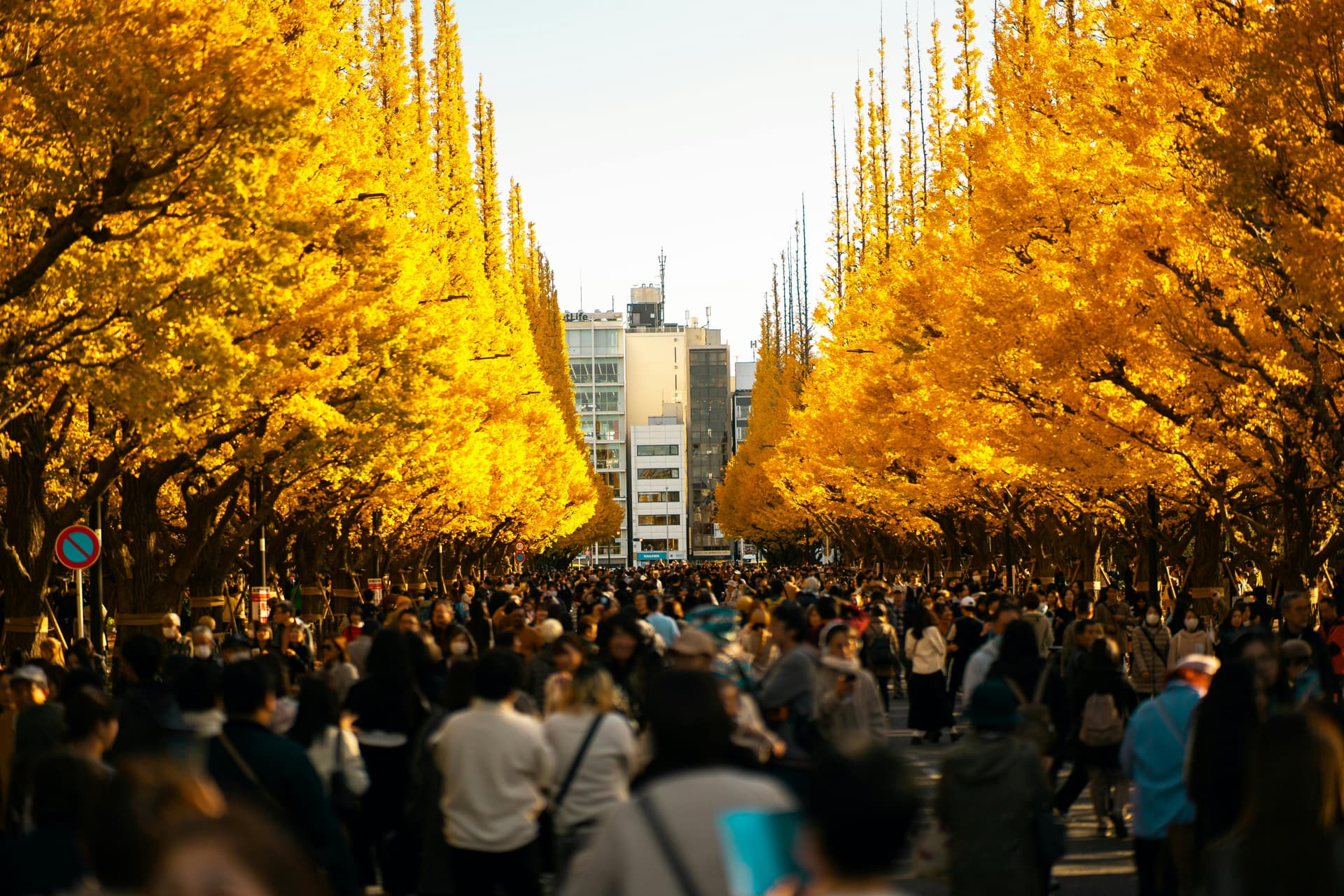
Most fall tours are garden circuits. Better ones use October-November thermal conditions to access Tokyo's street culture and seasonal production.
Most tours of Tokyo in fall are garden circuits. The better ones use the cool October-November weather for Tokyo's street culture and autumn produce.
Rikugien, Koishikawa, a temple loop: fine if you have 10 days. On a 3-4 day trip, spending half a day getting to famous gardens for a crowded 30-minute walk eats time you don't have. Fall tours work better when they use the October-November weather (18-22°C, against summer's 30-35°C) for street culture, long izakaya evenings, and craft workshops, and pick up the neighborhood foliage along the way.
Fall Unlocks What Summer Closes
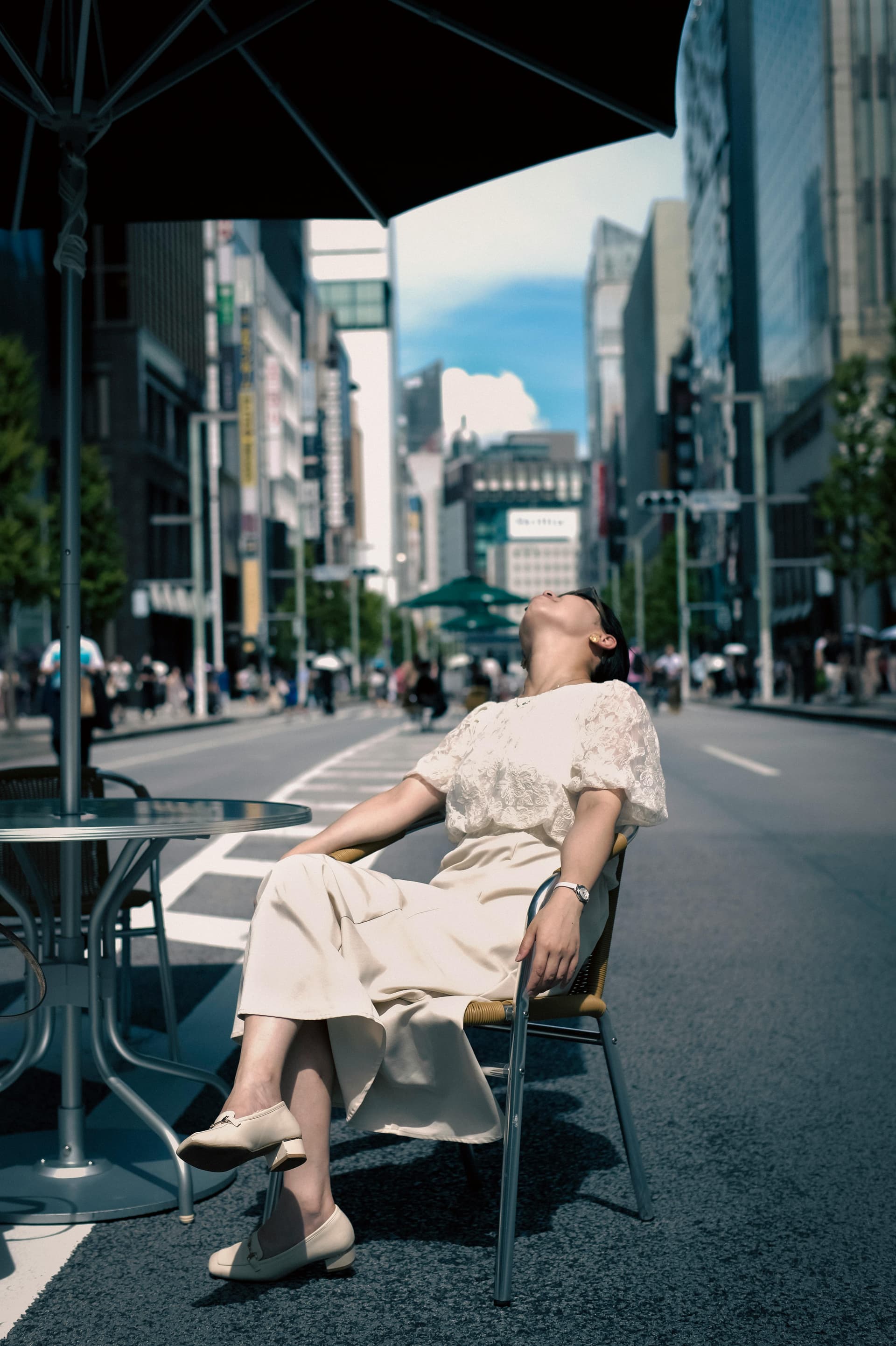
Summer izakaya evenings are uncomfortable. In July-August Tokyo hits 30-35°C with 78-83% humidity, and travelers describe it as "walking through warm soup" and feeling "completely drained after one day." By October the average is down to 20-22°C, and in November to 17°C. Three-hour izakaya evenings are comfortable again, outdoor seating comes back, and the standing bars under the railway arches stop being a humid endurance test. If izakaya touring is on your list, fall is when it works.
Neighborhoods that wear you out in July become easy walking: Yanaka's narrow streets, the backstreets of Harajuku, and markets where you stand around looking at goods. You can spend a full day outside instead of ducking into air conditioning every hour.
What's Actually In Season
A lot of Tokyo's autumn happens on the plate. Seasonal ingredients reach menus from September: matsutake mushrooms (September-November, wild-harvested and expensive), Pacific saury (sanma, the autumn fish), and new sake released after the rice harvest. Restaurants switch to autumn kaiseki menus, and izakayas put out seasonal small plates that are gone by December.
Street food vendors come back after summer's heat sends them indoors. Roasted chestnut carts (yaki-kuri) set up in shopping districts, and one near Shibuya Crossing draws lines. Sweet potato trucks (yaki-imo) return with the call that locals connect with autumn. A street food tour in fall covers ground that's miserable in summer.
October through December is also production season. Sake brewing starts after the rice harvest, and the breweries go from quiet to busy. Mochi workshops start New Year preparation, and wagashi shops show seasonal techniques with chestnut and persimmon. A guide with craft connections can set up visits to working studios, such as Mogami Kogei for Edo sashimono joinery (building without nails), Sokichi in Asakusa for Edo kiriko glass cutting, or textile dyeing workshops. Fall is when these artisans have time for visitors and work to show them.
The Timing Problem: When Foliage Actually Peaks
Fall foliage in Tokyo puts you in a bind: the best dates can't be predicted until after you've committed to your trip.
Ginkgo and maple don't peak together:
| Tree | Color | Peak window |
|---|---|---|
| Ginkgo | Yellow | November 25–30 |
| Japanese maple | Red | December 1–7 |
There's no single "peak week," and you can't see both at full color unless you stay a long time.
Travelers keep reporting that early November is too early: "You'll not see much autumn colors during November 3-11... aim for later date." September is still late summer and early October is too early. Even early November misses the peak by 2-3 weeks. Europeans and North Americans underestimate how late Tokyo's season runs.
Forecasts only become reliable 4-6 weeks before the peak. If you book flights 6-12 months out, which is normal for international travel, you're committing before anyone knows when the peak will be. On how far in advance to book a private tour, the answer depends on whether you're chasing peak dates.
Late November at peak color brings the most domestic tourists. Rikugien on a November Saturday can mean 10-20 minute waits at the ticket gate, and longer during evening illuminations. One traveler found the queue "went all the way around perimeter of park—took one look and left." They came back on Tuesday at 4pm and walked straight in. When you go matters more than where.
Early December is often better than people expect. Ginkgo peaks in late November, but red maples peak December 1-7, so early December gets you peak maple with smaller crowds. On a 3-4 day trip where efficiency matters, early December often gives you the best combination of color and comfort.
Timing is where a guide earns their fee. They follow conditions as they change and reroutes on the day based on how the color actually looks. If Rikugien is at 70% and the Yanaka temples are at 90%, the route changes. DIY travelers lock in garden visits weeks ahead from general timing advice. Our fall foliage tour approach shows how this works in practice.
What a Fall-Contextualized Day Looks Like
Most fall tours just list gardens one after another. A better day mixes foliage in with food, neighborhoods, and an evening out.
Morning: Tsukiji and autumn ingredients. The Outer Market is still running (the inner wholesale market moved to Toyosu in 2018) and is full of seasonal food: Pacific saury, salmon roe, matsutake in prepared soups. The best window is 8:00-10:00am, and it leaves you close to Hamarikyu Gardens for the next stop. Our Tsukiji page covers visiting with a guide.
Mid-morning: Hamarikyu as on-the-way foliage. The garden sits between Tsukiji and Shiodome, so you pass it anyway going from one to the other. You get decent fall color, a seawater tidal pond, and matcha with a view at the Nakajima teahouse, without spending 40 minutes each way to get there. Admission is ¥300.
Afternoon: Yanaka neighborhood integration. Take the train to Nippori Station (10-15 minutes from Shimbashi). Tennoji Temple has a bronze Buddha from 1690, and the foliage here is part of the tree-lined streets. Then walk Yanaka Ginza shopping street, with its old Tokyo character, narrow lanes, and chestnut vendors in autumn.
Evening: Extended izakaya session. The October-November weather makes a 3-hour session comfortable. Ueno's Ameyoko district has standing bars like Kadokura (opens 11am, famous for ham katsu) and Motsuyaki Daitoryo (open since 1950, known for stewed offal). Yurakucho's gado-shita, the 300-meter run of bars under the railway arches between Yurakucho and Shimbashi, has outdoor seating in fall and places like Andy's Shin Hinomoto (70+ years old, run by a British expat). Expect fall sake and seasonal small plates. If they feel intimidating, read up on Tokyo's standing bar culture first.
Compare the garden circuit: Rikugien (2+ hours all in), then Koishikawa Korakuen (another 30-40 min of travel plus the visit), then Shinjuku Gyoen. That's six hours of logistics for 90-120 minutes of actual viewing. The mixed day gets you autumn food, decent foliage, and a seasonal dinner without half of it spent on trains.
When Fall Tours Make Sense (and When They Don't)
When a guide adds value:
A guide is worth it on a 3-4 day trip where efficiency matters, or when you're unsure whether the color will be there. It's also worth it if you're curious about more than foliage photos (izakaya culture, access to craft studios, what a neighborhood is like) or it's your first visit and you're dealing with ordinary navigation on top of the fall variables. If you're not sure a guide fits your trip, this framework helps.
When DIY works fine:
If you're visiting in early October, the foliage won't be there anyway. With 10+ days in Tokyo you have time for trial and error. If photos are all you care about and food and neighborhoods don't matter, or if budget is tight, go it alone: gardens are ¥300 admission, Tsukiji is easy to do yourself, and Yanaka is free.
On 10-day trips a guide is optional, and on 3-4 day trips a guide is worth a lot. The shorter the trip and the more variables you're juggling, the more on-the-day adjustment matters.
A note on early October: if you're visiting October 1-15, you're ahead of the foliage. A guide can give you comfortable walking weather and seasonal food, but the color won't be there. For foliage, fall tours really run from mid-November through early December. Earlier visits are good-weather tours with autumn food, which are worth doing and are different from what most people imagine when they search "Tokyo fall tours."
Where Hinomaru One Fits
Fall touring rewards flexibility on the day: changing plans when Rikugien is crowded, when the maples are peaking and the ginkgo is past, or when conditions point to Yanaka over Hamarikyu. Our Timeless Tokyo tour plans your day around conditions that week instead of a garden circuit drawn up months ago. Your guide checks the foliage in the days before and adjusts the route.
At Hinomaru One, we plan private Tokyo tours for first-time and returning travelers, at an unhurried pace, with a guide who explains what you're seeing, and every one is customized.