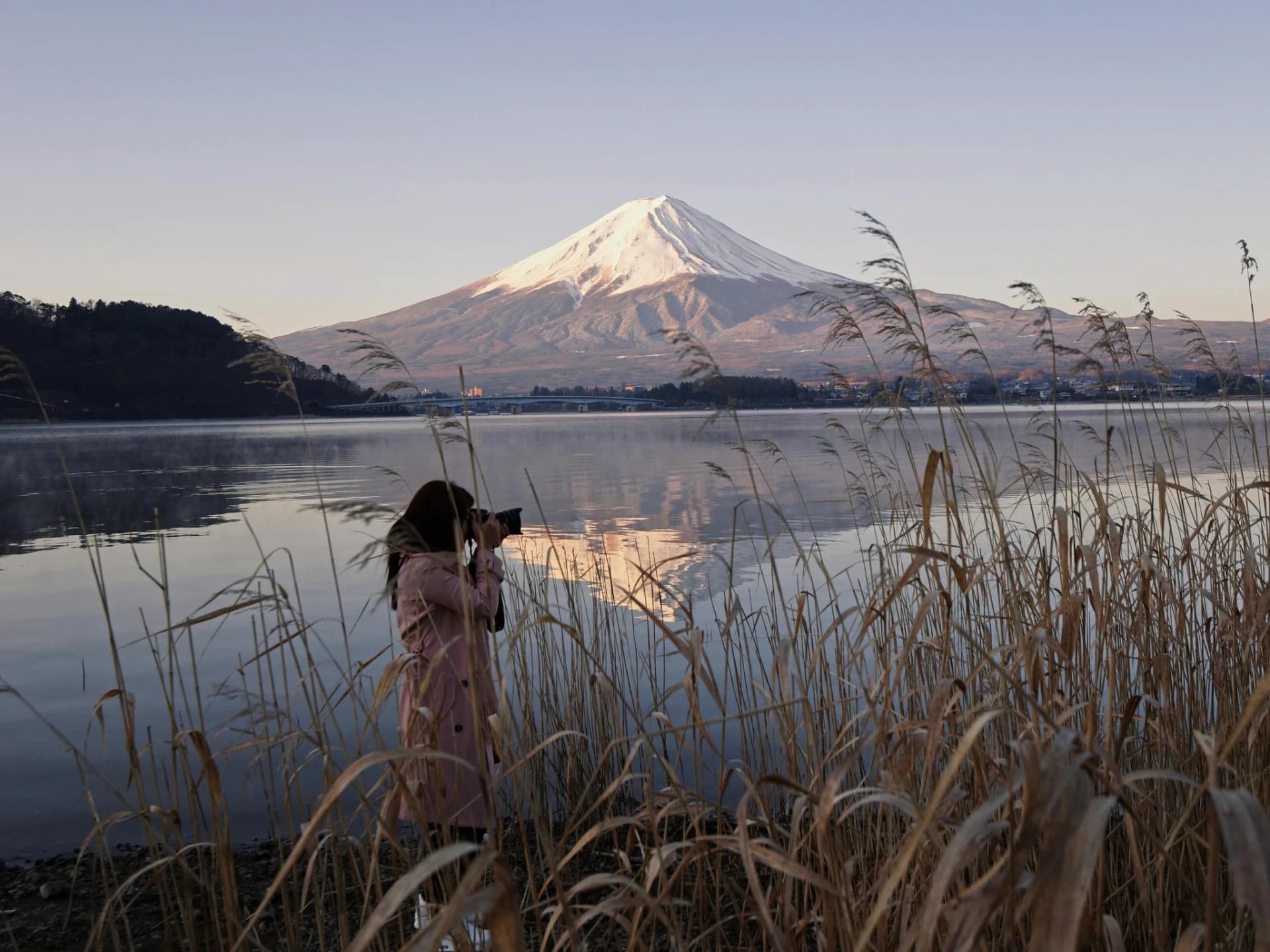
The gap between a memorable Fuji day and a disappointing one isn't weather luck — it's how you set up the day.
A Mt. Fuji day trip from Tokyo goes well or badly mostly on preparation. Weather luck plays a part, but how you set up the day decides more of it.
Most visitors to Japan get one day for Mt. Fuji. You can't control the weather, and you probably can't reschedule. You've seen both kinds of photo, the ones with the mountain in them and the ones without. Preparation is what tilts you toward the first kind.
One Chance, Multiple Variables
Weather Is One Factor, Not the Only Factor
December has the best visibility, with a 68% chance of clear views. Summer drops to 10-20% because humidity makes haze even on sunny days. Those numbers matter, though they leave a lot out.
A 14-year Japan resident wrote that it took six years to finally catch Mt. Fuji in clear conditions. If locals who can come back anytime struggle with timing, a visitor with one shot should stop hoping to get lucky and look at what they can control.
Three things decide whether your Fuji day is memorable:
-
Timing: Season, day of week, and time of day all shift the odds
-
Tour quality: Guides who adapt to conditions versus guides who run a script
-
Backup thinking: Knowing what makes a good day even when clouds win
Of the three, weather is the one you control least.
What the Odds Actually Mean
Even in December, the best month, 30% of days have poor visibility. In July, only 20% of days are clear. Use these to plan around. They won't tell you what your one day will look like.
You can stack the odds with timing, pick a tour that adapts, and have a backup plan, or you can hope. The gap between those two approaches is bigger than the gap between seasons.
Most day-trippers also miss that Mt. Fuji is clearest between 6-9 AM, and a day trip from Tokyo can't get there before 9-10 AM. If you stay overnight near Kawaguchiko, you get two visibility windows (evening and morning) instead of one partial one, which roughly doubles your chances. It's one reason how many days you spend in Tokyo affects more than your time in the city.
When to Go (And Why "Winter Is Best" Is Incomplete)
| Season | Visibility | Best For | Watch Out |
|---|---|---|---|
| Dec–Feb | 68% (best) | Clear views, snow-capped peak | 5th Station roads closed, cold, short days |
| Mar–May | Moderate | Cherry blossoms (mid-April at Kawaguchiko) | Golden Week traffic (50+ km jams), Chureito crowds |
| Jun–Sep | 10-20% (worst) | Climbing season, 5th Station access | Humidity haze, rainy season 45% rain probability |
| Oct–Nov | Good | Autumn colors + snow cap combo | Late Nov closures begin |
December Through February: The Visibility Window
Winter gives the clearest views. December averages 68% visibility and January isn't far behind. The air is dry, humidity is low, and morning conditions hold longer.
If you're timing your trip around Fuji, winter touring in Tokyo helps in the city too: 40% fewer crowds at temples and attractions, and clearer skies over Tokyo as well as Kawaguchiko.
The tradeoffs are real. Shizuoka-side 5th Station roads close from mid-November through late April. The Fuji Subaru Line on the Yamanashi side stays open all year but can close for a while in heavy snow. Days are shorter, so you have less room to adjust. At 5th Station it can drop to -10°C (14°F). Bring an insulated jacket, gloves, a hat, and the layers you'd wear for a proper winter, which Tokyo's isn't.
If what you want is a clear view of Mt. Fuji, as opposed to climbing it or standing on it, go in winter.
March Through May: Cherry Blossoms and Crowds
Cherry blossoms at Kawaguchiko open 7-10 days after Tokyo's, in mid-April rather than early April. If you've missed peak bloom in the city, that lag helps you.
Spring visibility is moderate, and humidity creeps up slowly through April. Golden Week (April 29 to May 6) brings jams measured in dozens of kilometers. The Chuo Expressway backed up 54km during Golden Week 2023.
June Through September: The Humidity Trap (and Why It's Not Hopeless)
Summer has the worst visibility even though the weather looks best. Humidity puts haze between you and the mountain on sunny days. June and July add tsuyu, the rainy season, with a 45% rain probability on any given day in the peak weeks.
You still have a chance. Early morning (7-9 AM) is the clearest window before the heat builds haze. July and August are climbing season, when 5th Station is open and busy. The rainy season ends mid-July, and late August gets better.
If summer is your only option, start early and go in with alternatives already picked.
October Through November: The Overlooked Sweet Spot
October and November pair decent visibility with autumn colors. Crowds thin after summer and the temperatures are mild.
In early November you can catch fall foliage at the lakes and a snow-capped Fuji on the same day. The Momiji (maple) Corridor at Kawaguchiko peaks in mid-November and stays lit up through late November.
Late November is when some 5th Station routes start their winter closure.
Day of Week Matters More Than You'd Think
Weekend traffic can eat two hours or more of your day. One traveler missed a planned boat ride entirely because the drive from Tokyo ran so long. Their advice: "Don't go on a weekend!"
If you can choose, go on a weekday. The roads are clearer and the popular stops are less packed, the same logic as avoiding crowds in Tokyo.
The 7 AM Problem (And How Good Guides Solve It)
Why Early Morning Changes Everything
Mt. Fuji is clearest between 7 and 9 AM. On a lot of mornings the mountain is sharp at sunrise and gone behind cloud by 9 AM.
That's a problem for standard tours. Leave Tokyo at 8-9 AM and you reach the viewpoints around 11 AM, after the best window has closed.
Guides who know this don't stick to the standard departure. They check the forecast the evening before, suggest an earlier start when conditions look good, and get the group in place for the morning light.
The Behaviors That Transform a Clouded Day
You find out whether a guide is good when the plan has to change:
-
Mid-day pivots. One guide "changed the schedule halfway and took us to a very nice coffee shop" when conditions shifted.
-
Restaurant knowledge. Good guides pick lunch from local experience, not a preset list. Several reviews mention guides booking lunch during the morning activities.
-
Real-time adjustments. When traffic throws the timing off, a skilled guide reorders the stops instead of rushing through them.
None of this shows up in star ratings or stop lists, and it decides whether a cloudy day ends up disappointing or memorable.
A real custom tour adjusts on the day, which picking from five preset packages can't do. The weather changes, so the schedule changes. Traffic is worse than expected, so the priorities move. That takes local knowledge and a guide who's allowed to make the call.
The Stops Everyone Knows (And the One They Get Wrong)
5th Station: You're ON Fuji, Not Seeing It
Private tours go to 5th Station (2,300m elevation), and it's where a lot of expectations fall apart.
At 5th Station you're standing on Mt. Fuji, above the treeline, looking up at the summit. You see volcanic ground and the climbing trail. You don't see the famous view of the mountain. That postcard shot of the snowy cone reflected in a lake or framed by cherry blossoms is taken from the lakes.
5th Station is worth it if you want to:
-
Experience standing on an active volcano
-
See the climbing trail and mountain huts (especially during climbing season)
-
Touch snow during winter months
Just don't go there for the photograph you have in your head.
The Lakes: Where the Postcard Actually Lives
Lake Kawaguchiko has the classic views: the mountain reflected in the water, framed by seasonal flowers or autumn leaves. Oishi Park on the north shore is known for an open view, with lavender in summer and cherry blossoms in spring.
Lake Yamanakako, Lake Saiko, and Lake Motosu each see the mountain from a different angle. The view from Motosu is the one on the ¥1,000 note.
Most tours combine 5th Station with one or more lakes. How the day is split depends on what you care about and, more than anything, on the morning visibility.
The Timing-Quality Tradeoff at Chureito Pagoda
Chureito Pagoda is where the most famous Mt. Fuji photo comes from, the red five-story pagoda with the mountain behind it. You climb about 400 steps to the viewpoint. In cherry blossom season it's extraordinary.
It's also extraordinarily crowded. At peak bloom on a sunny weekend, the line for the observation deck can run an hour. Travelers who got there before 8 AM on a Saturday still report "hundreds of people waiting in line."
Go early for the best light and the smallest crowds, knowing early may still mean a line, or go on a weekday and accept whatever weather that day brings.
When Clouds Win: The Day Can Still Be Good
What "Worth It" Looks Like Without the View
Say the clouds have covered the mountain and the photo you wanted isn't going to happen.
The travelers who still leave happy are mostly the ones who had a plan before they arrived. People who showed up hoping the weather would turn, then scrambled when it didn't, keep reporting disappointment. People who knew where they'd go if the clouds won call the day "a nice change of pace" and find places they'd never have seen otherwise.
Specific Alternatives in the Kawaguchiko Area
Cloudy day options at a glance:
| Place | Time Needed | Cost | Best For |
|---|---|---|---|
| Itchiku Kubota Art Museum | 1.5-2 hrs | ¥1,500 | Art lovers, rainy days (closed Tuesdays) |
| Music Forest Museum | 3-4 hrs | ¥1,800-2,100 | Families, music fans |
| Kawaguchiko Museum of Art | 1 hr | ¥600 | Quick visit, Fuji-themed art |
| Fuji Yurari (onsen) | 2-3 hrs | ¥1,500-2,000 | Relaxation, private baths available |
| Fujiyama Onsen | 1-2 hrs | ¥800-2,000 | Budget option, morning discount |
The standout: Itchiku Kubota Art Museum
If you only go to one place on a cloudy day, go here. It's a museum of kimono art in a Gaudi-inspired building. The "Symphony of Light" series shows Mt. Fuji across 80 hand-dyed silk kimonos, and there are gardens, a waterfall, and a traditional tearoom. TripAdvisor put it in its global Top 10% of attractions in 2025.
Travelers who went on rainy days call it "one of the highlights of my trip to Japan" and "my favourite museum in Japan." The tea room is the only place you're allowed to take photos, and visitors who spent 30 minutes there over tea and sweets, looking out at the garden, call it "the highlight of my day." Admission is ¥1,500, and it's closed on Tuesdays.
It works on a cloudy day because the mountain is the subject of the art, so you don't need to see the real one.
Other museums worth your time:
-
Kawaguchiko Music Forest Museum: Antique music boxes and automatic instruments, including the world's largest dance organ and instruments made for the Titanic. There are European-style gardens, live concerts, and sand art shows, and people spend 3-4 hours here. "Highly recommend, even on a rainy day." Admission ¥1,800-2,100.
-
Kawaguchiko Museum of Art: Artwork and photography of Mt. Fuji. It's smaller and quieter, right by the lake. "A perfect rainy day escape." Admission ¥600.
Day-use onsen:
Sitting in a hot spring while it rains outside makes the weather part of the mood. Travelers call it "truly blissful."
-
Fuji Yurari: 16 kinds of bath, including an outdoor panorama bath that looks at Mt. Fuji when it's visible. Private baths available. Free shuttle from Kawaguchiko Station if you reserve ahead.
-
Fujiyama Onsen: Near Fuji-Q Highland, in a modern wooden bathhouse. Morning bath ¥800, regular entry ¥1,600-2,000.
-
Benifuji no Yu: At Lake Yamanakako, with the best Mt. Fuji views of the public baths. Admission ¥900.
Walking and easy hiking:
-
Kawaguchiko Lakeside Walking Trail: Flat, easy paths along the shore. The northern promenade between the Music Forest Museum and the Museum of Art is the prettiest stretch. A nature walk still works on a cloudy day if you're dressed for it.
-
Mt. Tenjo via ropeway: Ride the ropeway up, then hike 20 minutes to the summit shrine. Cloud often sits below the peak, so on the way down you can get views that were hidden at the top. Go early, because waits of 30+ minutes are common on busy days.
When to Pivot to Hakone Instead
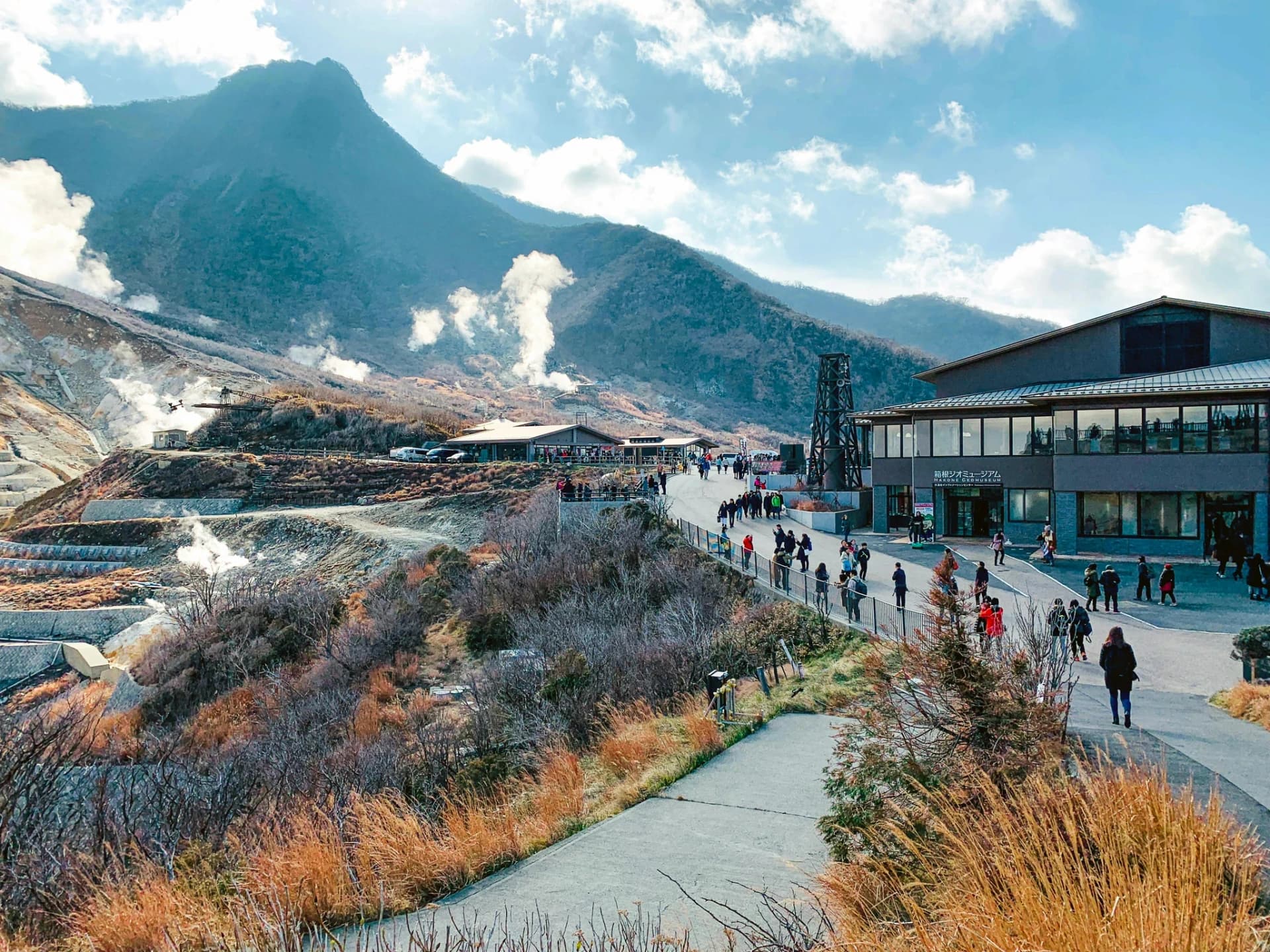
Hakone is the same distance from Tokyo as Kawaguchiko, in a different direction. Locals put it this way: "When weather is not fine, Hakone has more to do."
Hakone's attractions don't hang on one mountain view. The area gets three times Tokyo's annual rainfall and has built its tourism around that:
-
Hakone Open-Air Museum: Outdoor sculptures, plus the Picasso Pavilion indoors. They publish a "rainy day course" for visitors.
-
Pola Museum of Art: An Impressionist collection in the forest. The cafe is "a perfect spot to relax especially if it is raining."
-
Hakone Glass Museum: Venetian glass, with hands-on workshops.
-
Yunessun: A hot spring theme park with swimsuit areas and traditional nude areas, built to work in any weather.
You do have to choose. If conditions might clear, staying at Kawaguchiko keeps you in place for the view, and travelers who stayed on cloudy days have sometimes caught a clearing by afternoon: "clouds cleared by the third and fourth locations." Going to Hakone means committing to a different kind of day. If the forecast is solid gray, Hakone is the more reliable bet.
Does a Guide Actually Help? (The Fuji-Specific Case)
Where Guides Add Value
In Tokyo, a guide earns their fee through cultural context, getting you through queues, and getting you into restaurants. On a Mt. Fuji day trip the value is in adapting, which is worth keeping in mind when you weigh whether a private tour is worth it.
Weather adaptation. The guide checks conditions the night before and on the morning. If visibility looks poor, they can move the departure time, reorder stops, or switch to Plan B. Otherwise you'd be making those calls yourself with less local knowledge.
Traffic navigation. Golden Week traffic can add 2+ hours. A guide who knows other routes, or who reorders the day around the worst congestion, wins back time you'd otherwise spend sitting in the car.
Backup execution. When the clouds win, the guide already knows that Itchiku Kubota is open, which onsen has space, and whether Hakone makes more sense. You aren't googling alternatives in a parking lot.
Stops you'd skip. A guide who knows the area suggests places that aren't on the standard itinerary, like the coffee shop one guide took guests to when the weather turned, or the quiet viewpoint with a clear line to the mountain that another one found.
Where Guides Don't Help
Weather. A guide can't move clouds. If visibility is zero, so is the view, whoever is driving.
The 5th Station misconception. A guide can't change the fact that 5th Station isn't where you see Mt. Fuji from, though a good one will tell you before you get there.
Traffic you can't avoid. Some congestion you just sit through. A Golden Week weekend is slow no matter who's navigating.
The Honest Calculation
Private tours run $400-700+ for a full day. Group bus tours start around ¥14,000 (~$95). Most of that gap is flexibility, with comfort a smaller part. For Tokyo tour prices, see our pricing guide.
A guide is worth more when the weather is uncertain and flexibility counts, and worth less on a clear winter morning when the mountain is out and all you need is a ride.
Going December-February, on a weekday, with a good forecast? A driver-only option or public transport is fine. Going in a marginal season, on a weekend, or with a shaky forecast? Then the guide's ability to react is what decides whether the day works.
To vet tour operators, 10 questions to ask before booking covers what to look for.
Where Hinomaru One Fits
Mt. Fuji is outside our Tokyo service area, so we don't run Fuji tours. We do connect travelers with operators we trust. Tell us your dates and priorities and we'll suggest options that meet our standards, with no booking fee and no cut. Your Tokyo days we run ourselves. For other day trips from Tokyo, we have a separate guide.
At Hinomaru One, we plan private Tokyo tours for first-time and returning travelers, at an unhurried pace, with plenty of context, and built around what you want to see.