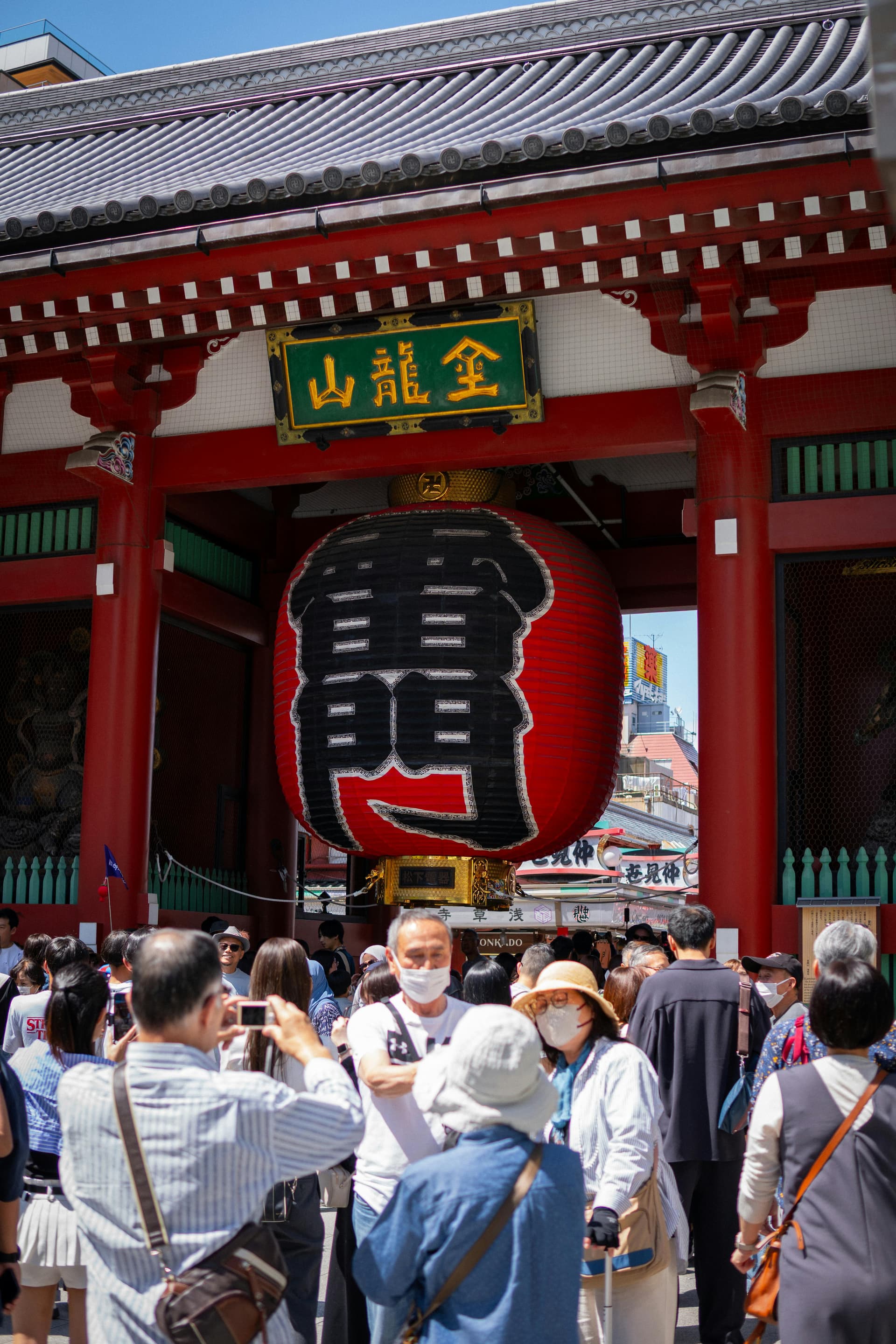
Free tours cover tourist zones. Private tours unlock local neighborhoods and solve language barriers.
Tokyo private tours with a guide and free walking tours differ less in price than in where they can take you. Free tours stay in the tourist zones. A private tour gets you into local neighborhoods and past the language barrier.
A private tour costs $600 and a free walking tour costs $0. Both take six hours of your trip. The free tour never reaches Yanaka, can't make the restaurant bookings that need a call in Japanese, and won't tell you which of Shinjuku's 200+ exits goes where.
Free Walking Tours — What "Free" Actually Means
Free walking tours run on tips. Guides expect ¥1,000-3,000 ($7-20) per person, so $14-40 for a couple. Under the "nagesen" model, a street-performer style collection, the tips are the guide's income, not a bonus.
Most people tip ¥1,000-2,000, and longer, better tours get ¥3,000. A private tour tip, for comparison, runs ¥3,000-5,000 for the whole day and the whole group. Our tipping tour guides in Japan breakdown has the details.
Tourist Zones Only
Free tours follow fixed routes, one neighborhood each:
-
Asakusa: Kaminarimon Gate → Nakamise Street → Sensoji Temple → Asakusa Shrine. 2 hours.
-
Shibuya/Harajuku: Konno Hachimangu → Shibuya Crossing → Harajuku → Meiji Shrine. 2 hours.
-
Shinjuku Night: Nightlife and drinking culture. 1.5-2 hours.
-
Imperial Palace: Shogun history and East Gardens. 2-3 hours.
-
Ueno Park: Museums, Toshogu Shrine, park grounds. 2 hours.
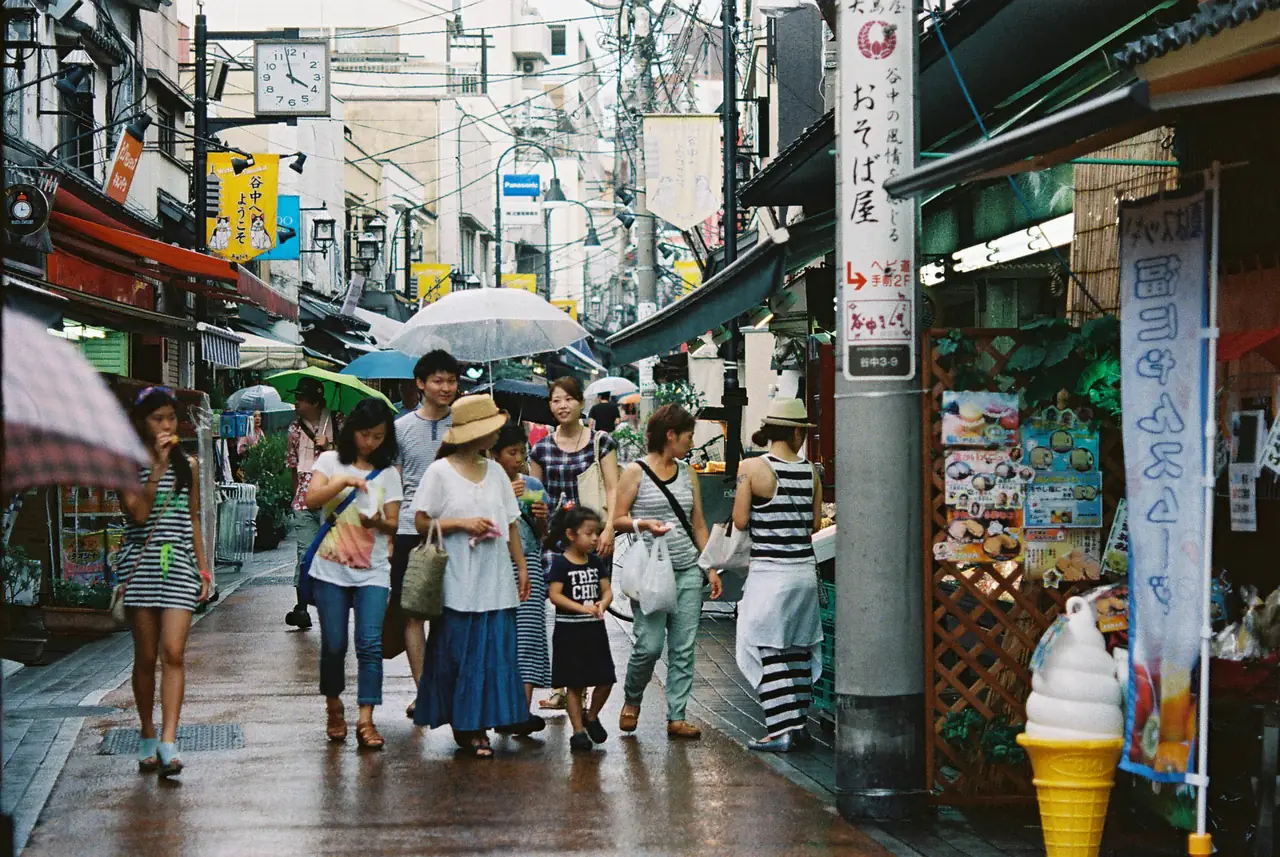
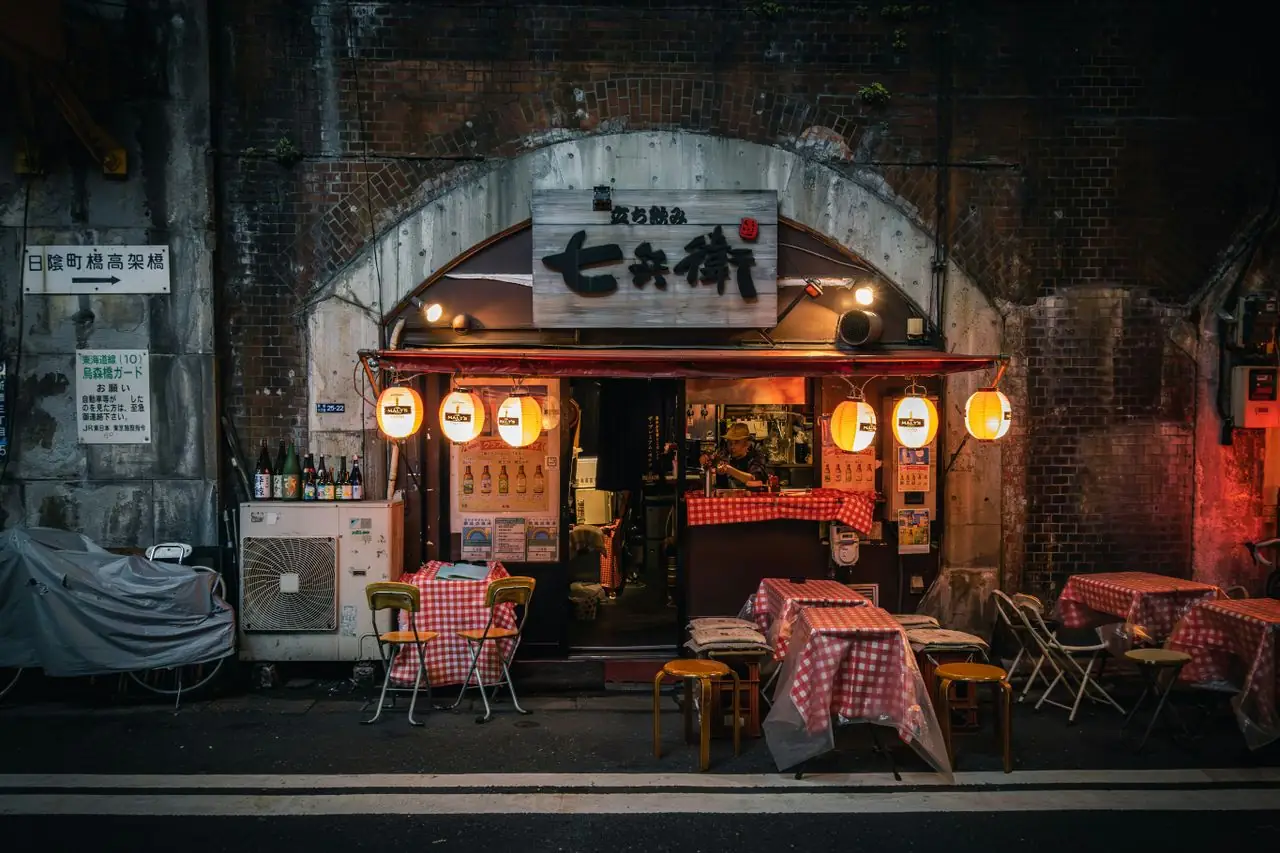
They don't go to Yanaka, Shimokitazawa, Kichijoji, Nakameguro or Tomigaya, or into backstreet izakayas and residential streets. A free tour needs a group of 15-30 people and places set up for English speakers, and local neighborhoods have neither. Our page on Tokyo neighborhood private tours covers what those areas are like.
Group Size: 15-30 People
Travelers like meeting other visitors in a big group, but a group that size can't be tailored. Groups of 25-30 move at the pace of the slowest person, detailed questions hold everyone up, and you can't stop at a shop only you care about.
The 2-3 Hour Window
You get guidance only while the tour runs. The Asakusa tour finishes at the Sumida River boat station or Kaminarimon Gate, not where it started, and from there you're on your own with Tokyo's 13 subway lines.
Our complete walking tour guide covers step counts and how a private day alternates trains and walking.
Audio Guides — Where GPS Breaks Down
Audio guides stand in for a guidebook, and they can't do what a guide does. VoiceMap ($10-15 per tour) plays narration at GPS points. GPSmyCity ($12.99-18.99 subscription) covers 6,500+ walks worldwide, with content taken from Wikipedia. Rick Steves Audio Europe is free but you advance it by hand.
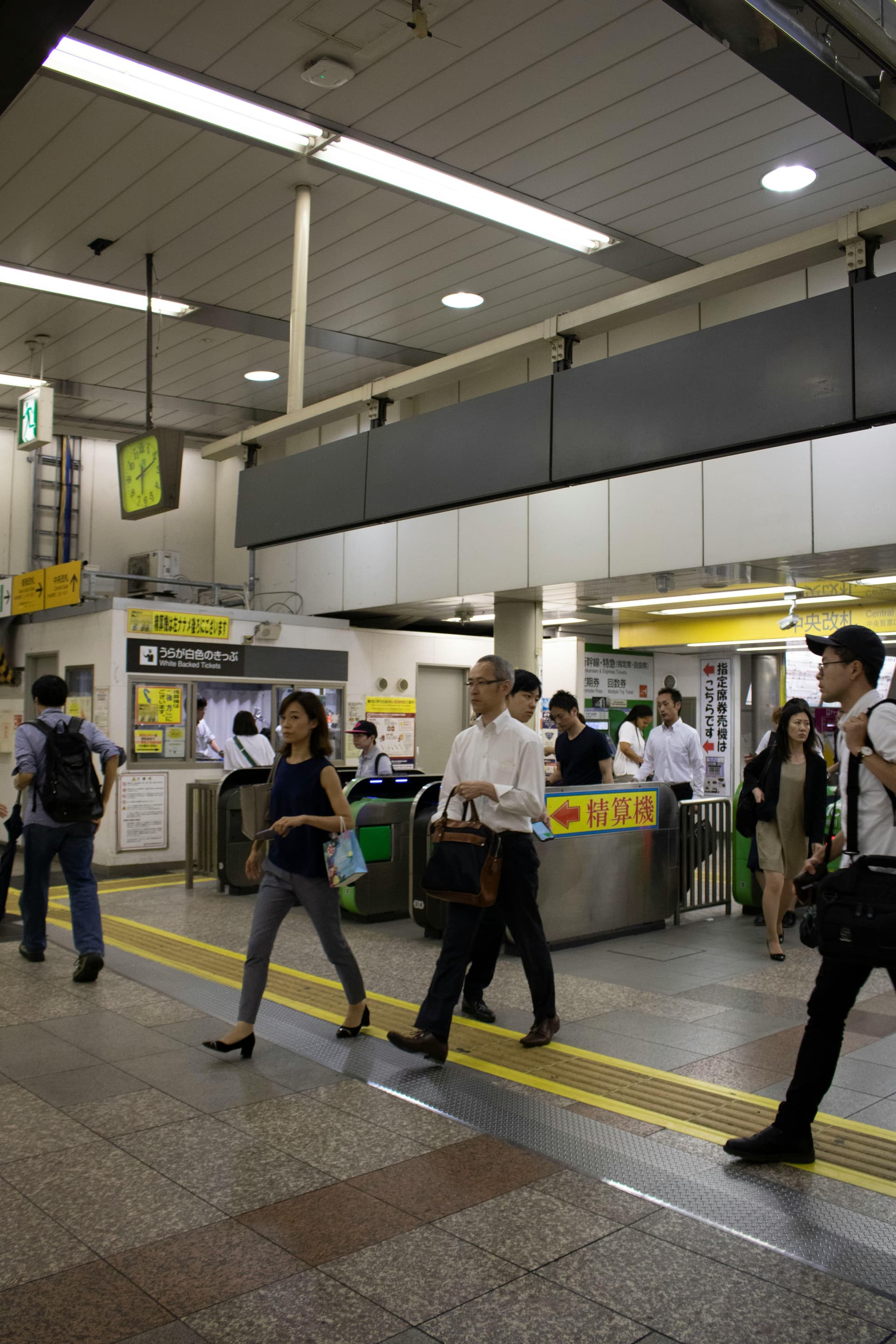
GPS doesn't work underground, and Tokyo Metro has 13 subway lines. Multi-level stations like Shinjuku (200+ exits) throw it off completely because it can't tell which level you're on. First-time visitors spend 20-30 minutes looking for the Omoide Yokocho exit while the app insists they've arrived.
An audio guide can't translate a menu, make a booking or answer a question. It tells you about landmarks and leaves the navigation and language to you (more on how language barriers actually work in Tokyo). The content is mostly in tourist zones, and Yanaka, Shimokitazawa and Kichijoji have little or none.
Bike Tours and Hop-On Hop-Off
A bike tour covers 15-30km against 5-8km on foot, but the routes are fixed and groups run 8-12 people.
| Operator | Price | Focus |
|---|---|---|
| Tokyo Great Cycling Tour | ¥9,000-15,000 | 7+ routes (13-38km), central Tokyo and backstreets |
| Freewheeling Japan | ¥10,000 (¥20,000 solo) | West Tokyo: Shimokitazawa, Kichijoji, Sangenjaya |
| DIG Tokyo Tours | Varies | Koenji, Asagaya, Nakano with food stops |
Each tour stays within 1-3 neighborhoods next to each other. You can't do Asakusa, Shibuya and Yanaka on one tour because they're too far apart. You cover more ground and spend less time at each stop.
Hop-on hop-off (Sky Hop Bus, ¥4,500/day) runs three routes past the major landmarks. Buses come every 20-45 minutes, so getting off means long waits: spend an hour in Asakusa, then wait 45 minutes for the next bus. Stops are badly marked and missing from Google Maps, and the buses stop running in heavy rain. Most riders stay on for the whole loop. None of the routes go through local neighborhoods.
The Real Cost: Time, Not Money
A 4-day Tokyo trip gives you 3 full days of sightseeing, so losing a day costs you 25-33% of the trip. On a 10-day trip, a lost day costs 11-12%.
First-time visitors going it alone lose 2-3 hours per day to navigation: finding station exits, making sense of train lines, reading menus. Over 3-4 days that's 8-10 hours, a full day gone.
Add one tourist-trap dinner ($80 instead of $30 somewhere local), one museum you didn't need ($40 plus 2-3 hours) and an afternoon in the wrong neighborhood, and you've lost $120 and a day's worth of time.
A private tour that heads off those mistakes costs $600, or $480 once you subtract the waste it prevents, and gives you back a day of your trip. We go further in are private tours in Tokyo worth it.
Combination Strategies
Many travelers mix formats:
| Strategy | Cost (couple) | Best For |
|---|---|---|
| Free tour Day 1 + Private tour Day 3 | $640-650 | 4-6 days: orientation + local depth |
| Audio guides (museums) + Private guide (neighborhoods) | $620-640 | Museum-heavy trips |
| DIY tourist zones + Private guide local areas | $600 | Confident in Shibuya/Asakusa, want Yanaka/Nakano |
| Multiple free tours | $42-120 | 10+ days, social priority |
Mixing makes sense when you want both range and depth, or a blend of tourist zones and local neighborhoods. On a very short trip (3 days) or a tight budget, pick one approach and stick with it. For timing, see full-day vs half-day private tours.
Matching Format to Your Trip
Trip length drives the decision:
-
3-4 days: Each wasted hour costs 25-33% of your trip, and a private tour heads off the expensive mistakes.
-
5-7 days: Mix formats depending on how hard each neighborhood is to get around.
-
8+ days: You can afford to lose some time. Free tours and doing it yourself work well.
Language ability matters next. With no Japanese you add 2-3 hours of overhead per day. With conversational Japanese, going it alone is realistic.
Interest type decides what you need:
-
Tourist landmarks (Sensoji, Shibuya Crossing): Any format works
-
Local neighborhoods (Yanaka, Shimokitazawa): Private guide or extensive research
-
Food culture: Guide for menu translation and reservations
Quick Scenarios
4 days, no Japanese, want famous + real neighborhoods: Free tour Day 1 to get your bearings, private tour Day 2 for the local neighborhoods, and Days 3-4 on your own in the tourist zones.
10 days, conversational Japanese, solo: Free tours Days 1-2 to meet people, Days 3-7 on your own, audio guides in the museums, and a private guide Days 8-9 if you want to go deeper on particular interests.
3 days, couple, serious food focus: Private tours Days 1-2 for neighborhood access, izakaya bookings and menus, then keep Day 3 open for whatever you found.
Ask what problems your trip will run into and which format handles them.
If a private guide isn't the answer for you, see when you don't need a private tour in Tokyo.
Frequently Asked Questions
What's the difference between a free walking tour and a private tour?
A free tour has 10-30 people, a fixed route and pace, and you pay in tips. A private tour is just your group, on a route and at a pace built around you, for a fixed price. Free tours are good for orientation and meeting people. Private tours are better for depth, flexibility and places that can't take a large group.
Are audio guides worth using in Tokyo?
For museums with big collections (Tokyo National Museum, teamLab), yes, because they add context you'd otherwise miss. For exploring neighborhoods they're less useful: they can't react to what's in front of you, answer questions or point you to the ramen shop around the corner.
Can I combine different tour formats?
Yes, and it often works best. For example: a free tour on Day 1 for orientation, a private tour on Day 2 to go deep on one area, audio guides on museum days, and your own wandering in the easy neighborhoods.
When is a free tour better than a private tour?
When your budget is tight, you want to meet other travelers, you'd like a basic orientation before exploring alone, or you're visiting a neighborhood where you just want to see it and depth doesn't matter. A free tour is a good Day 1 scouting trip.
When should I definitely book a private tour?
When time is short (3-4 days), you need Japanese for bookings or entry, you're traveling as a family with different needs, you want neighborhoods or experiences free tours don't reach, or you'd rather not share your guide with strangers.
Where Hinomaru One Fits
If your trip is short, you have no Japanese, and you want the neighborhoods free tours skip, like Yanaka, Shimokitazawa and the backstreet izakayas, that's the trip we plan for. We pick you up at your hotel, handle the navigation and the menus as you go, and set the pace by how much energy you have. You pay one price, with no group schedule and no tip to work out.
At Hinomaru One, we plan private Tokyo tours for first-time and seasoned travelers, and we pace them so there's time to take the city in.
Photo credits
- Shoppers with umbrellas browsing small shops along Yanaka Ginza on a rainy day: yamauchi from Tokyo, Japan / Wikimedia Commons, CC BY 2.0, resized


![How Much Is a Tour Guide in Tokyo? [$200–$540/Day, 2026 Guide]](/_next/image?url=%2Fimages%2F37505d69f17f.png&w=1920&q=75&dpl=dpl_2hQXgXQmWb6iVmAB2GvwsWom9dXh)