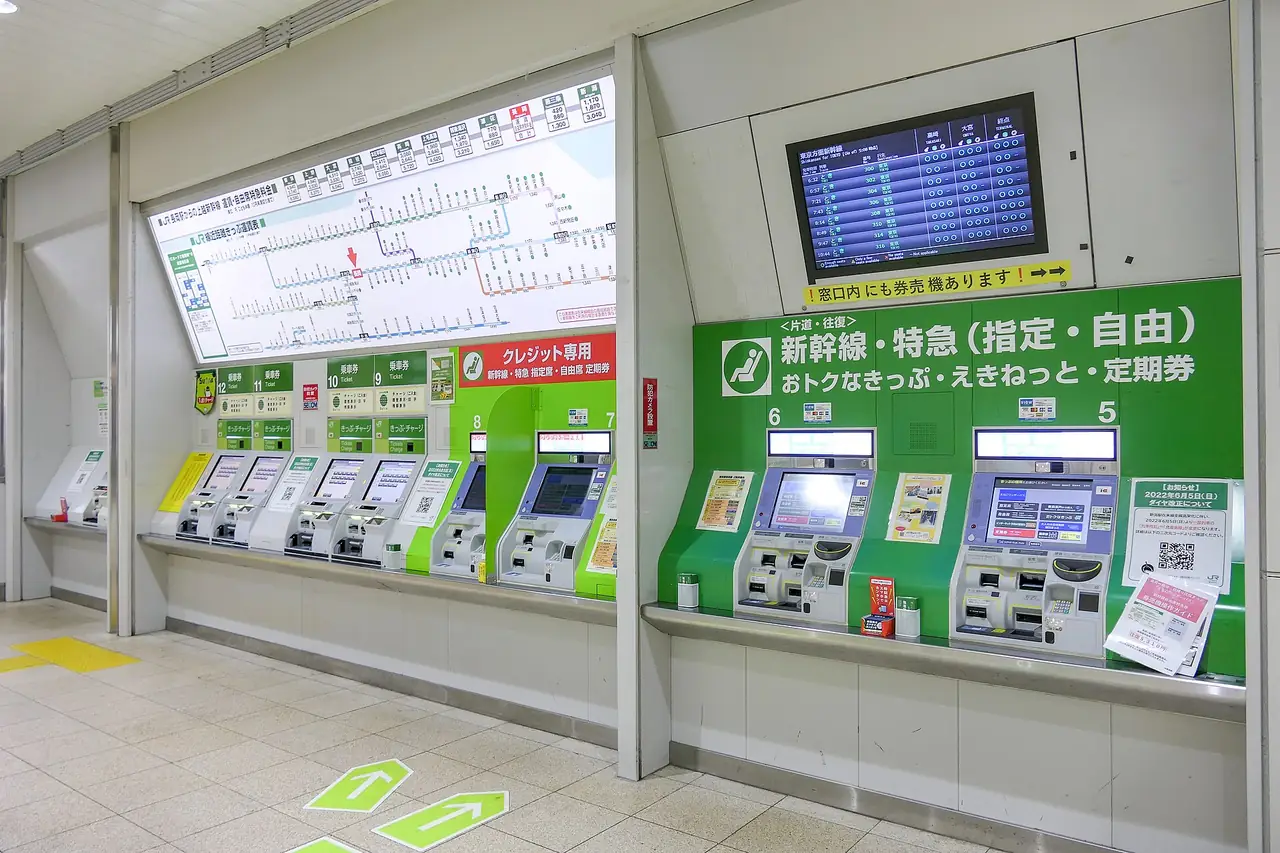
Use a card for hotels, chains and taxis, carry ¥10,000 to ¥20,000 in yen for the places that do not take one, and load an IC card for the trains.
Cash or card in Japan is not either-or: use a card where you can and carry yen for the places that still want it. Japan is more cashless than it was, but 58% is not 100%, and the gaps show up at small restaurants, shrines, buses and vending machines.
Is it better to use cash or card in Japan?
A card is better for hotels, department stores, chain restaurants, convenience stores and most taxis, and cash is better for everything small and old. Japan's trade ministry puts cashless payments at 58.0% of consumer spending in 2025, and Tokyo's own survey gives 62.2% for the 2025 fiscal year. So roughly four yen in ten is still cash. Credit cards make up 82.7% of the cashless total, so a plain Visa or Mastercard is what shops expect.
Those figures are by value, which hides how often you will hit a cash-only counter. The big spend sits in hotels and shops that take cards. The small, frequent spend, like a bowl of ramen or a shrine charm, is where yen still turns up.
Do I need cash for taxis in Japan?
Not usually in Tokyo, but keep ¥3,000 to ¥5,000 as a backup. A 2023 survey by the Tokyo Hire-Taxi Association found 98.3% of Tokyo taxis take credit cards and 97.2% take electronic money. The exception is the individual owner-driver taxi, where a cashless terminal is not guaranteed.
Check the sticker on the window or ask before you get in. Outside the big cities, card acceptance is patchier, and our taxis in Tokyo guide says newer cabs are more reliable than older ones. You do not tip a taxi driver in Japan.
How much cash should I take to Japan for 1 week?
Take about ¥30,000 to ¥50,000 per person, roughly $190 to $320 at ¥158 to the dollar, if you pay for hotels and larger meals by card. That is our estimate, not an official number. It is enough for a week of ramen counters, temple fees, bus rides and the odd cash-only bar.
A simpler way to think about it is the amount in your wallet at one time. Most guides, including our Japan travel costs guide, suggest ¥10,000 to ¥20,000 on hand at all times, topped up when it falls low. The Japan trip budget page shows what the rest of the week costs.
Where cash still wins
Small restaurants come first. Chains take cards, but family-run places are more often cash only. Ramen and curry counters with a ticket machine at the door add a wrinkle, because some machines take only bills and coins.
Shrines and temples are next. Offerings, amulets and admission are mostly cash at smaller sites. Do not count on cards there.
Buses are the third. A Toei bus in Tokyo costs ¥210, and the fare box does not accept ¥5,000 or ¥10,000 notes. A Suica or Pasmo card avoids the issue.
How IC cards fit in
A Suica or Pasmo card is the third thing to carry, after a card and some cash. It pays for trains and buses and works at convenience stores, so it replaces a lot of small change. You top it up with cash at a station machine or a convenience store.
Our Suica and Pasmo guide covers which one to buy, how the phone version works with a foreign card, and how to get the deposit back. Load a modest amount at first. You can always top up, and what is left is a little cash locked away.
Getting yen from a foreign card
Withdraw at 7-Eleven. Seven Bank ATMs take cards issued abroad, offer English and more than ten other languages, and allow up to ¥100,000 a withdrawal, or ¥30,000 if your card has only a magnetic stripe. Fees depend on your card and can reach ¥220 a withdrawal.
Japan Post Bank ATMs, at post offices and many other locations, also take foreign cards, but the limit is ¥50,000 a transaction and some cards pay a ¥220 fee. Your own bank adds a foreign-transaction fee on top, often 1% to 3%. Take out a larger sum less often, since the ATM fee is flat.
The ¥10,000 note problem
A ¥10,000 note is the big note, and a lot of small machines cannot use it. Bus fare boxes refuse it and many drink vending machines refuse it, and a small counter may groan at the change on a ¥450 bowl.
Break a ¥10,000 note early. Buy a drink or a snack at a convenience store on your first morning and you will have ¥1,000 notes and coins for the rest of the day. Keep a few ¥1,000 notes for buses and vending machines.
Setting up before you land
Bring one Visa or Mastercard that works overseas, and tell your bank you are traveling. Bring a second card from a different bank in case one is blocked. Add an IC card to your phone or buy one at the airport. Then plan on withdrawing ¥30,000 to ¥50,000 at the first 7-Eleven you pass.
Frequently asked questions
What if my card only has a magnetic stripe?
Seven Bank cuts the limit to ¥30,000 per withdrawal for magnetic-stripe cards, against ¥100,000 for chip cards. Bring a chip card if you can.
Do I tip when paying by card?
No. Tipping is not expected anywhere in Japan. See tipping in Tokyo.
Should I bring a second card?
Yes, from a different bank. If one card is blocked or refused, the other keeps you paying.
Do Tokyo buses take an IC card?
Yes. A Toei bus fare is ¥210 on cash or IC card, and the card avoids hunting for the right coins.