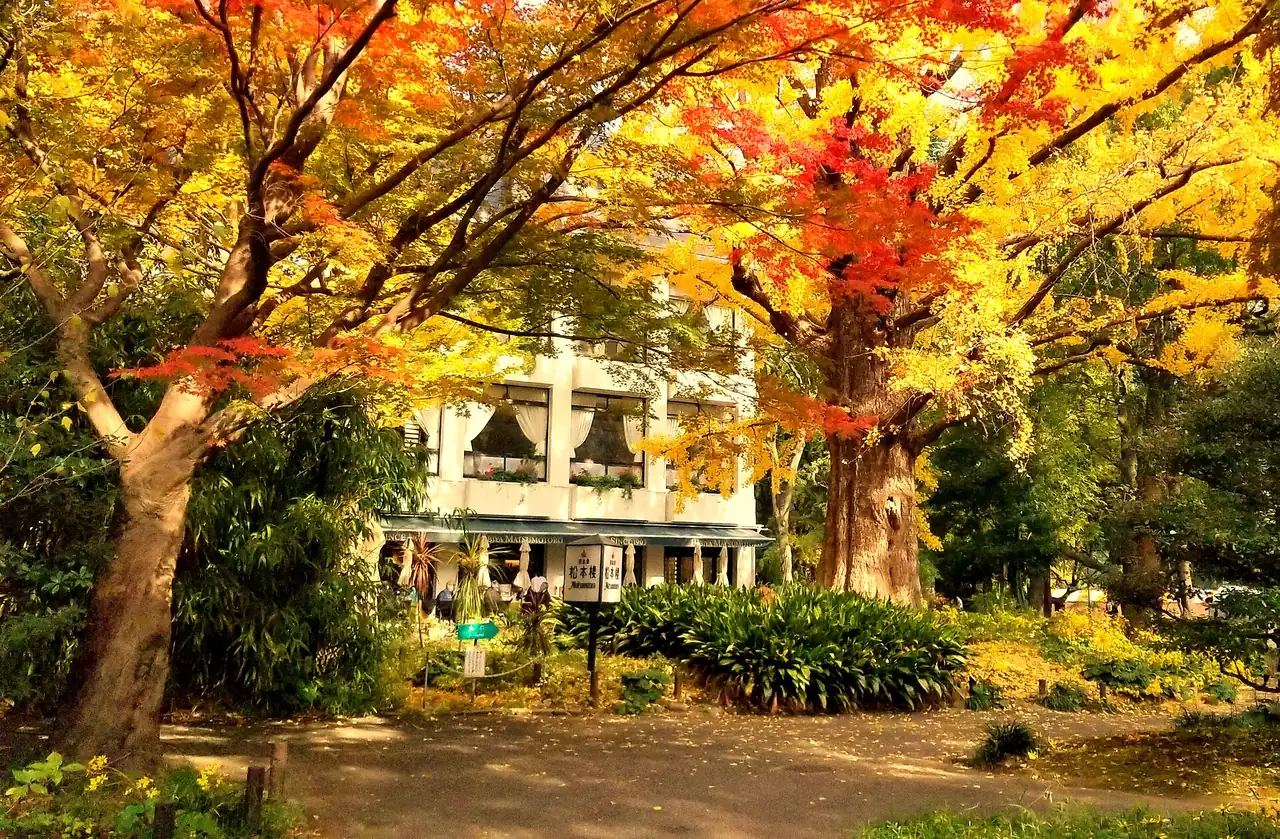
Hibiya is where Tokyo first learned to do Western leisure (the park, the grand hotel, the revue theatre), and much of it is still standing.
Hibiya is the stretch of central Tokyo between the Imperial Palace moats and the JR tracks at Yurakucho. Ginza is on the far side of those tracks and Marunouchi's office towers are to the north. Most visitors cross it on the way to somewhere else. That's a shame, because in a few blocks you get Japan's first Western-style park, a hotel that has hosted the country's foreign guests since 1890, and the theatres where Tokyo goes to see the all-female Takarazuka Revue.
Hibiya isn't an address, either. Look it up in Japanese sources and you'll find that the district is legally Yurakucho and Uchisaiwaicho, and the old name survives only on the park, the station, the crossing and the moat. Before the Tokugawa shoguns filled it in, this was a shallow sea inlet, the Hibiya-irie, that reached almost to the castle gates. The Hibiya moat by the park is said to be what's left of it.
Hibiya Park: Japan's First Western-Style Park
Hibiya Park opened on 1 June 1903, and it was the first modern Western-style park in Japan. It was built from scratch on land that had held daimyo estates in the Edo period and then served as an army parade ground, and it covers about 16 hectares.
The park's best-known resident is a tree. In 1901, Hibiya-dori was being widened and a huge ginkgo near today's Hibiya crossing was due to be cut down. The park's designer, Honda Seiroku, is said to have staked his job on saving it, and the tree was moved into the park, where it still stands. It's estimated to be at least 400 years old, and it's known in Japanese as the Kubikake Ichō, the "bet-my-neck ginkgo."
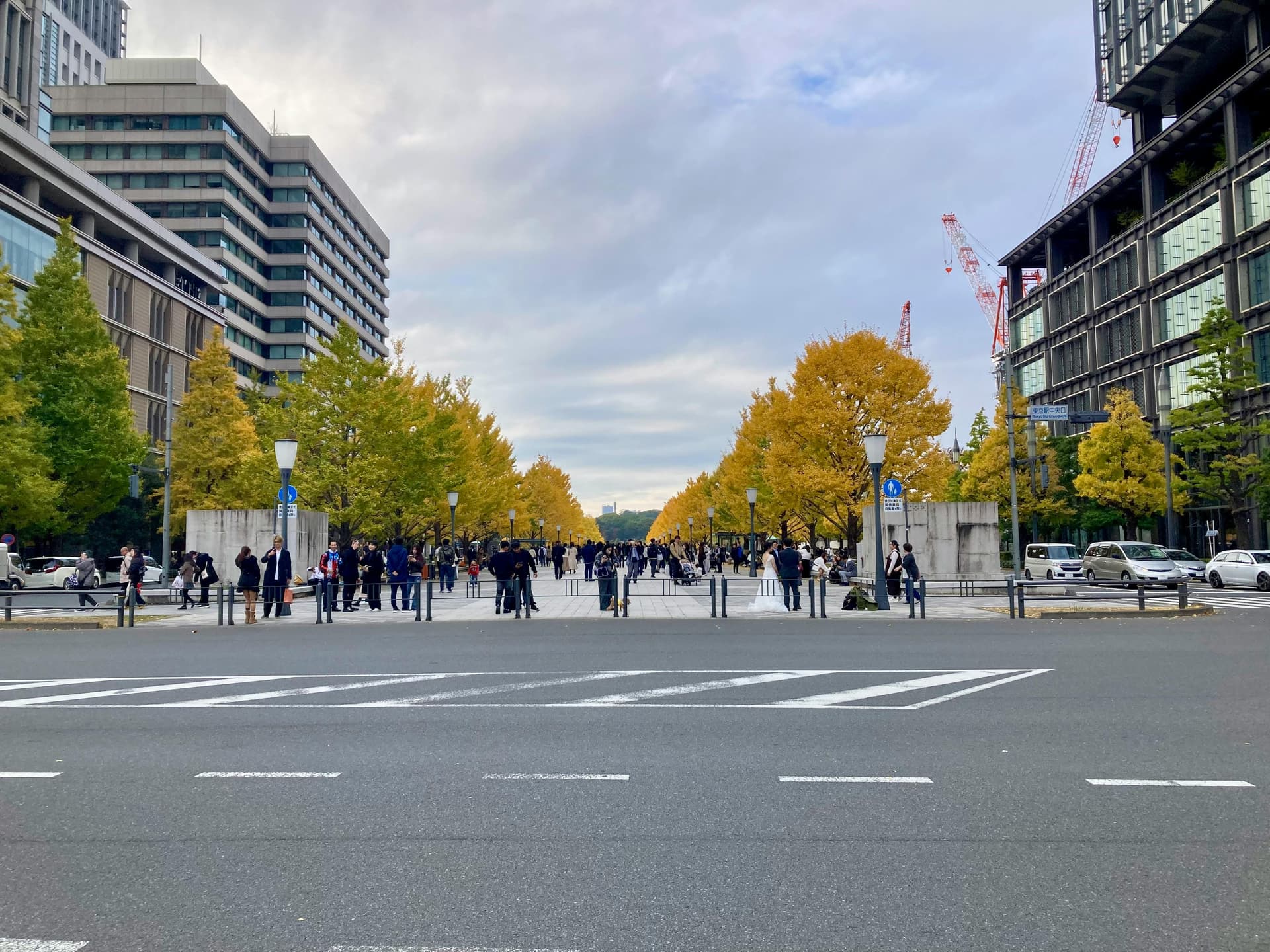
The ginkgo stands in front of Matsumoto-ro, a Western-style restaurant that opened with the park in 1903. The restaurant has burned twice. The first time was in the 1923 earthquake. The second was in November 1971, when it was firebombed during a protest against the Okinawa reversion treaty and the ginkgo was scorched along with it. Matsumoto-ro reopened in 1973, and the ginkgo survived. In late November, with the ginkgo gone gold and the maples turning, this corner is the best place in the park to sit.
The park has also seen plenty of politics, with the government ministries of Kasumigaseki right next door. In September 1905 a rally here against the peace treaty that ended the Russo-Japanese War turned into the Hibiya riots, which spread across the city. Today the park is partway through a long renovation, and its big central fountain has been replaced, so expect some work fences.
The Imperial Hotel
Across Hibiya-dori from the park is the Imperial Hotel, which opened in November 1890 as the hotel where Japan would put up its foreign guests. Its first neighbour was the Rokumeikan, the government's Western-style hall for balls and diplomacy.
The building you see today is the hotel's third main building, from 1970. The second was much more famous. Frank Lloyd Wright designed it, and the story of its opening is one we tell on our tours.
The Day Wright's Hotel Opened
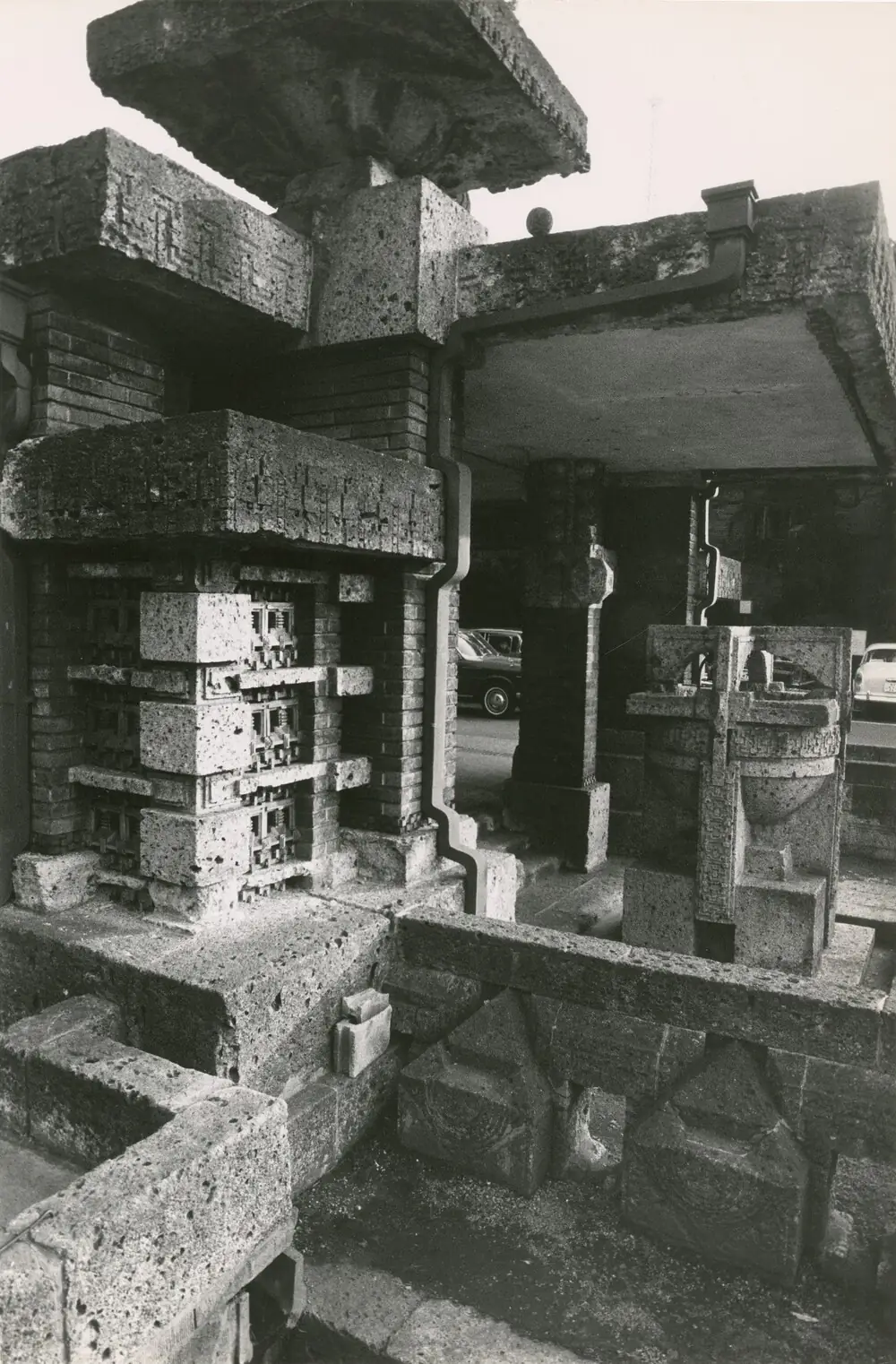
In 1916, the hotel's general manager, Hayashi Aisaku, signed a contract with an American architect he had known for years: Frank Lloyd Wright. Wright moved to Tokyo to build it and controlled everything, down to the choice of stone for the walls and the wood for the furniture. Construction began in 1919. The hotel was built from yellow brick and carved Oya stone, a soft volcanic stone from Tochigi, and the guest wings were kept to three storeys.
It went badly. Wright kept changing the design, and the costs ran far over budget. In April 1922 the old wooden hotel next door burned down, so the owners needed the new building open, and fast. Hayashi resigned to take responsibility. By most accounts Wright was pushed off the job as well. He left Japan on 22 July 1922 and never came back, so he never saw the hotel finished.
His Japanese apprentice, Endō Arata, finished it the following summer. The grand opening party was set for 1 September 1923, and that morning the staff were busy getting the banquet ready. At 11:58, the Great Kantō Earthquake struck Tokyo.
All around the hotel, buildings collapsed or caught fire. Wright's hotel was still standing. It was damaged but intact: Japanese accounts describe minor damage, and English sources record bulging floors and fallen stonework, but next to the ruins around it, it looked almost untouched. The next day, the hotel's own records show, it gave its rooms to companies and foreign embassies to use as offices.
The story goes that Wright heard about it two weeks later, in a letter from Endō, and was overjoyed. The hotel stood for another 44 years.
The Wright building closed in 1967 and was demolished in 1968, partly because it was sinking unevenly into the soft ground. Its front lobby was taken apart and rebuilt at Museum Meiji-mura, near Nagoya, where you can still walk through it. In Hibiya, you have to go looking for what's left.
The Old Imperial Bar, While It Lasts
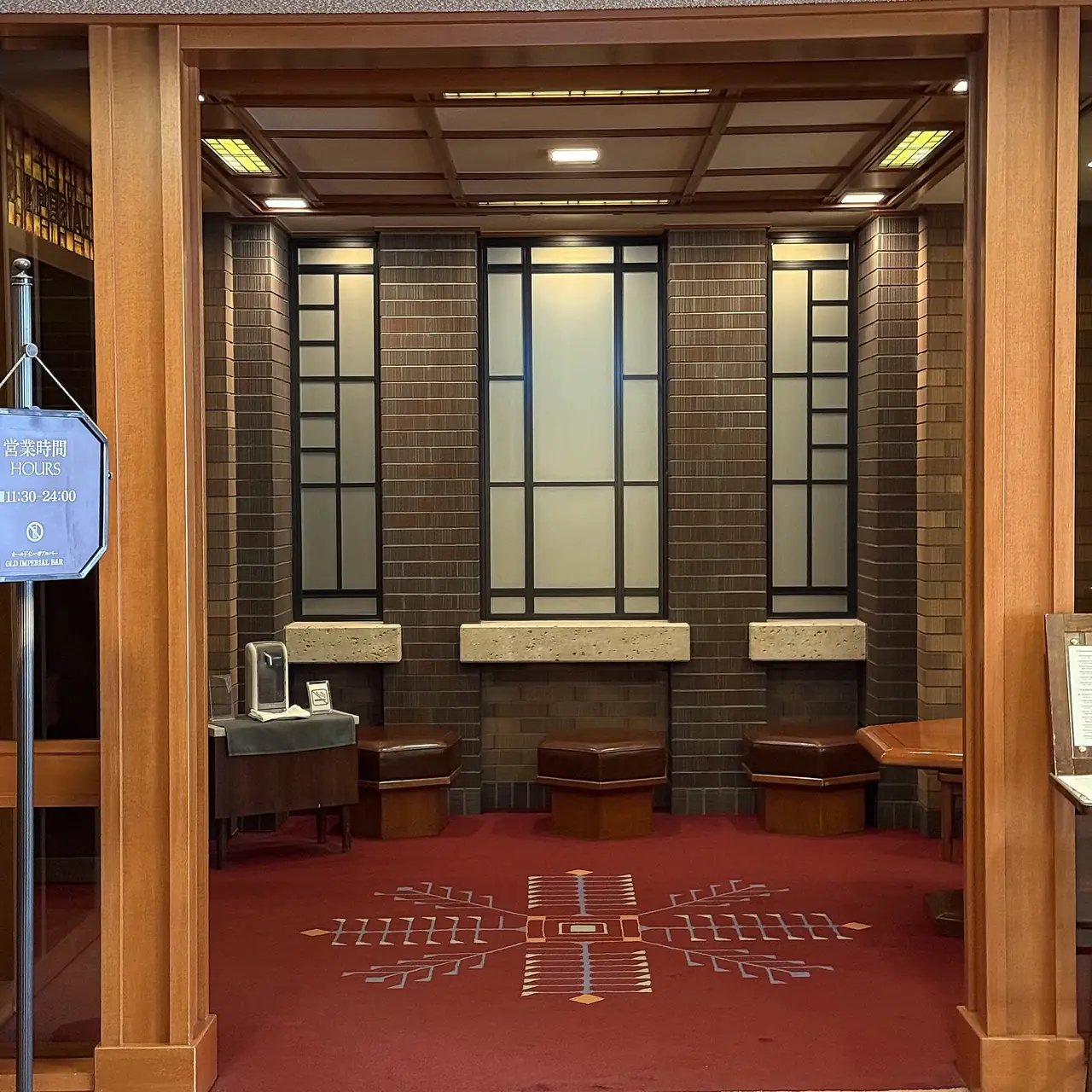
What's left is a bar. The Old Imperial Bar opened in 1970 on the mezzanine of the new main building, and it was built with materials and walls saved from the Wright building. According to the hotel, the Oya stone and terracotta walls are original, as is a relief that once hung in the Wright building. It's dark, low and quiet, a long way from a modern hotel lounge. Order a drink, then look at the stone behind the bar.
The bar is open from 11:30 a.m. to midnight (last orders 11:30 p.m.). Drinks start at ¥1,400 with tax and service included, as of 2026, and sandwiches are served at lunch. Under-20s aren't admitted. The hotel asks guests not to wear shorts, sandals or loungewear, and photography in public areas is restricted, so ask before you take pictures.
There is a reason to go sooner rather than later. The Imperial Hotel plans to rebuild both its tower and its 1970 main building, with a new main building designed by the architect Tane Tsuyoshi. The original plan ran from 2024 to 2036, but in March 2026 the hotel pushed it back because of rising construction costs. The tower is now due to start coming down around the end of fiscal 2030, which means early 2031, and the main building, with the bar, will follow after that. No reopening date has been set. The hotel says it will carry the Wright legacy into the new building, but it has made no promise about the bar itself. For now, it's open every day.
Tokyo Midtown Hibiya and the Theatre District
Across the road from the park's northeast corner is Tokyo Midtown Hibiya, a glass tower that opened on 29 March 2018. It replaced two older buildings: the 1930 Sanshin Building and the former Mitsui Bank head office. The lower floors are shops and restaurants (shops 11:00–20:00, restaurants 11:00–23:00, as of 2026). The 4th and 5th floors hold TOHO Cinemas Hibiya, the chain's flagship cinema.
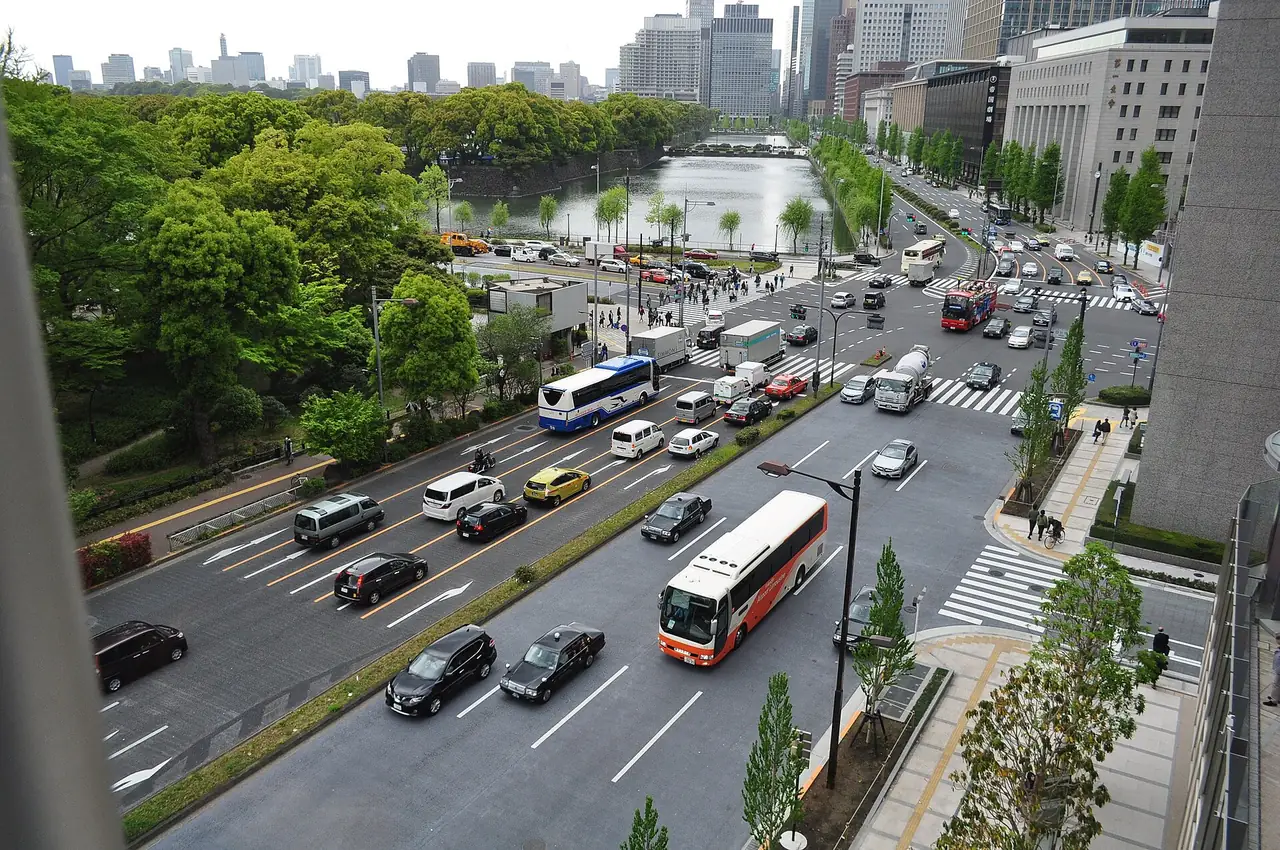
For a visitor, the best thing here is free. The 6th-floor Park View Garden is a roof terrace looking over Hibiya Park, the moat and the trees of the Imperial Palace, and it's open from 8:00 a.m. through the B1 or 1F entrances, before the shops open. It's the easiest raised view of the palace grounds in the area.
The blocks behind Midtown are the reason Hibiya is known in Japan as a theatre and film district, much of it owned by Toho, the studio behind the Godzilla films. The Tokyo Takarazuka Theater opened in 1934 as the Tokyo home of the Takarazuka Revue, the musical theatre company whose performers are all women. During the Occupation the Americans took it over and renamed it the Ernie Pyle Theater. The current building opened in 2001 and seats about 2,000. The Nissay Theatre stands right next to Midtown.
How Hibiya Connects to Ginza, Marunouchi and the Palace
Hibiya works best as part of a longer walk around central Tokyo, since everything is close together. North, along Hibiya-dori and the moat, the office district runs on into Marunouchi and Tokyo Station. West, across the moat from the park, is the Imperial Palace Outer Garden, and from there you can walk on to the Imperial Palace East Gardens. East, under the JR tracks at Yurakucho, is Ginza.
Hibiya Station, on the Hibiya, Chiyoda and Mita subway lines, comes up right beside the park, and JR Yurakucho Station is a short walk east. The stretch under the JR tracks between Yurakucho and Shimbashi is lined with tiny standing bars and yakitori counters that fill with office workers after work. Our Ordinary Tokyo day spends its evening there, a few minutes from the hotel.
Here's one way to spend half a day. Start on the Midtown terrace in the morning, then cross into the park and walk to the ginkgo. Have lunch at Matsumoto-ro, then cross to the Imperial Hotel for a drink at the Old Imperial Bar. From there it's a short walk into Ginza for the evening. If you'd like the history alongside, or a whole day built around Wright, the old city and the theatre district, Infinite Tokyo is our custom tour, and we can plan it around this route.
FAQ
Is Hibiya Park free to enter? Yes. Hibiya Park is a Tokyo metropolitan park, open all year with no admission fee. The restaurants inside, including Matsumoto-ro, are paid, and you'll need a reservation for the tennis courts.
Can you visit the Old Imperial Bar if you're not staying at the Imperial Hotel? Yes. It's on the mezzanine of the hotel's main building and anyone 20 or older can walk in. It's open 11:30 a.m. to midnight, and drinks start at ¥1,400 as of 2026. Dress neatly: the hotel asks guests to avoid shorts, sandals and loungewear.
Is the Imperial Hotel being demolished? Not yet. The hotel plans to rebuild both its tower and its main building, but in March 2026 it pushed the schedule back: work on the tower is now due to start around the end of fiscal 2030, and the main building, where the Old Imperial Bar is, comes after that. The hotel and the bar are open as normal for now.
Where can I see what's left of Frank Lloyd Wright's Imperial Hotel? In Tokyo, the Old Imperial Bar has stone, terracotta and a relief from the Wright building. Its lobby was rebuilt at Museum Meiji-mura in Inuyama, near Nagoya, which is a day trip from Tokyo by shinkansen.
What's the difference between Hibiya and Yurakucho? They overlap. Hibiya is the older name for the area around the park and Hibiya-dori, and it's no longer an official address. Most of what visitors call Hibiya, including Midtown and the Takarazuka theatre, is legally in Yurakucho. In everyday use, Hibiya means the park side of the JR tracks and Yurakucho means the station and the area east of it, toward Ginza.
Photo credits
- Carved Oya stone and brick at the lobby entrance of Frank Lloyd Wright's Imperial Hotel in Hibiya, photographed around 1960: Anonymous, National Gallery of Art Library / Wikimedia Commons, CC BY-SA 4.0, resized
- View from Tokyo Midtown Hibiya over Hibiya-dori and the Hibiya moat toward the Imperial Palace grounds: 江戸村のとくぞう / Wikimedia Commons, CC BY-SA 4.0, resized
- Autumn maples and ginkgo in front of the Matsumoto-ro restaurant in Hibiya Park: Raita Futo / Wikimedia Commons, CC BY 2.0, resized