Komazawa and Setagaya-Daita show you the Tokyo that 14 million people live in, not the one that tourists photograph.
Komazawa is where people move when the fashionable neighborhoods stop being interesting. It sits in Setagaya ward, three stops south of Shibuya on the Tokyu Den-en-toshi Line, and its defining feature is a 41-hectare Olympic park that most foreign visitors have never heard of. Pair it with Setagaya-Daita, one stop south of Shimokitazawa on the Odakyu Line, and you get a full day in two neighborhoods that represent how most of Tokyo actually functions: good coffee, green space, independent shops, and streets quiet enough to hear birds.
Neither neighborhood has tourist infrastructure. There are no guided selfie spots. The restaurants serve the people who live within walking distance. That is the point.
The park that hosted the 1964 Olympics and then stopped caring about fame
Komazawa Olympic Park was the secondary venue complex for the 1964 Tokyo Games, handling soccer, wrestling, field hockey, and volleyball while the National Stadium in Shinjuku hosted the opening ceremony and track events. The women's volleyball final happened here — the match where Japan's national team, nicknamed Toyo no Majo (the Oriental Witches), beat the Soviet Union for gold. It remains one of the most-watched television broadcasts in Japanese history.
Before the Olympics, this land was Tokyo Golf Club, the city's first golf course, established in 1914. In 1922, Crown Prince Hirohito played a round here with the future King Edward VII of Britain. The golf course gave way to preparations for the cancelled 1940 Olympics, and when Tokyo won the 1964 bid, the site was rebuilt from 1962 to 1964 as a campus of purpose-built sports facilities.
The architect Yoshinobu Ashihara designed the gymnasium and the 50-meter control tower that anchors the central plaza. The tower held the Olympic flame during the Games. Its shape references traditional Japanese timber construction — stacked horizontal platforms tapering upward — but built in concrete. It was originally left as raw facing concrete and later painted white. If mid-century Brutalism interests you, it deserves comparison with Kenzo Tange's more famous Yoyogi gymnasium, except nobody is here photographing it. The stadium was designed by Murata Masachika and completed in 1962; its main stand uses large triangular consoles to shield spectators from rain.
The park was not reused for the 2020 Tokyo Olympics. That decision preserved its 1960s character intact.
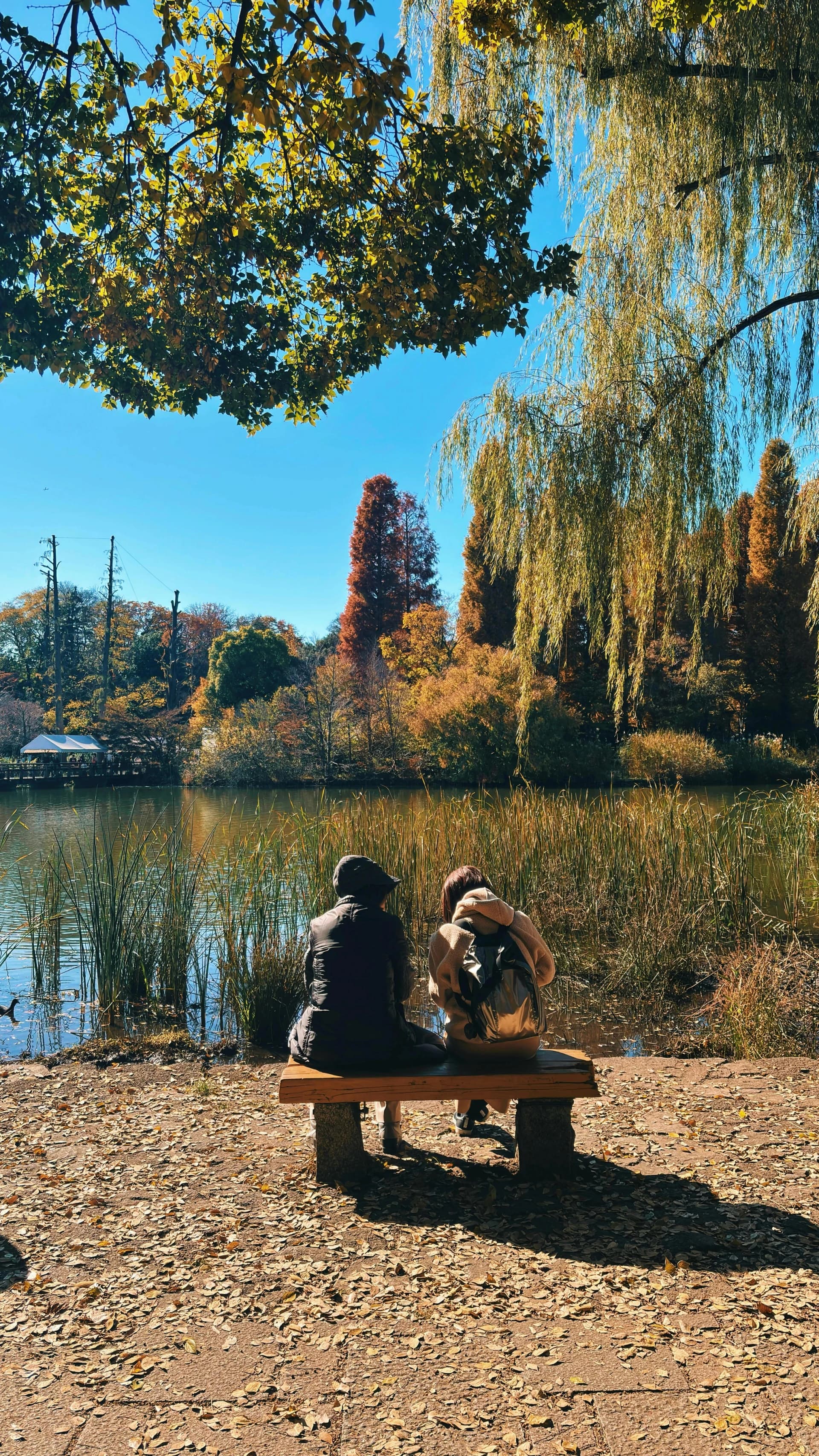
Today, twelve sports facilities operate across the grounds. The 2.1-kilometer jogging course around the perimeter fills with runners every morning — not tourists running, but residents in worn-in shoes doing their daily loop. The central lawn fills with families and dogs on weekends. University students from Komazawa University sit on benches with textbooks and canned coffee. On weekend evenings, the geometric-tiled central plaza becomes an impromptu social space: couples on the steps, pickup basketball, dance groups practicing choreographed jump-rope routines.
The park covers 41.3 hectares, roughly 30 percent green space. Cherry blossoms in late March are beautiful here and significantly less crowded than Ueno or the Meguro River. The park is free, open year-round, and the jogging course stays lit after dark.
A Zen university that predates the Edo period
Komazawa University's history starts in 1592, when the Soto Zen Buddhist sect established a seminary called Sendan-rin at Kichijoji Temple in Surugadai, Edo. Its purpose was training young monks in Zen practice, Buddhist texts, and Chinese classics. The seminary changed names several times: Soto-shu Daigakurin Senmon Gakko in 1882, Soto-shu Daigaku in 1905, and finally Komazawa University in 1925 when it was elevated to university status under the imperial university ordinance.
Shunryu Suzuki — the Soto Zen teacher whose book "Zen Mind, Beginner's Mind" introduced millions of Westerners to Zen Buddhism — studied at Komazawa before leaving for San Francisco in 1959.
The campus sits adjacent to the Olympic park. The Museum of Zen Culture and History is free to enter and worth the stop even if you have no particular interest in Zen. The museum building itself, Kounkan, was built in 1928 and designed by architect Eizo Sugawara. It looks like Frank Lloyd Wright designed a prairie church and dropped it onto a Japanese campus: bold horizontal lines, burnt brown brick tiles, a facade that has nothing in common with the modern buildings around it.
Cafes and bakeries that exist because residents demanded them
The cafe and bakery density around Komazawa-daigaku Station is high — Tabelog lists over 30 bakeries in the immediate area — and almost none of it gets written about in English. These places serve the neighborhood. Quality stays high because the same people walk in every morning and would notice if it dropped.
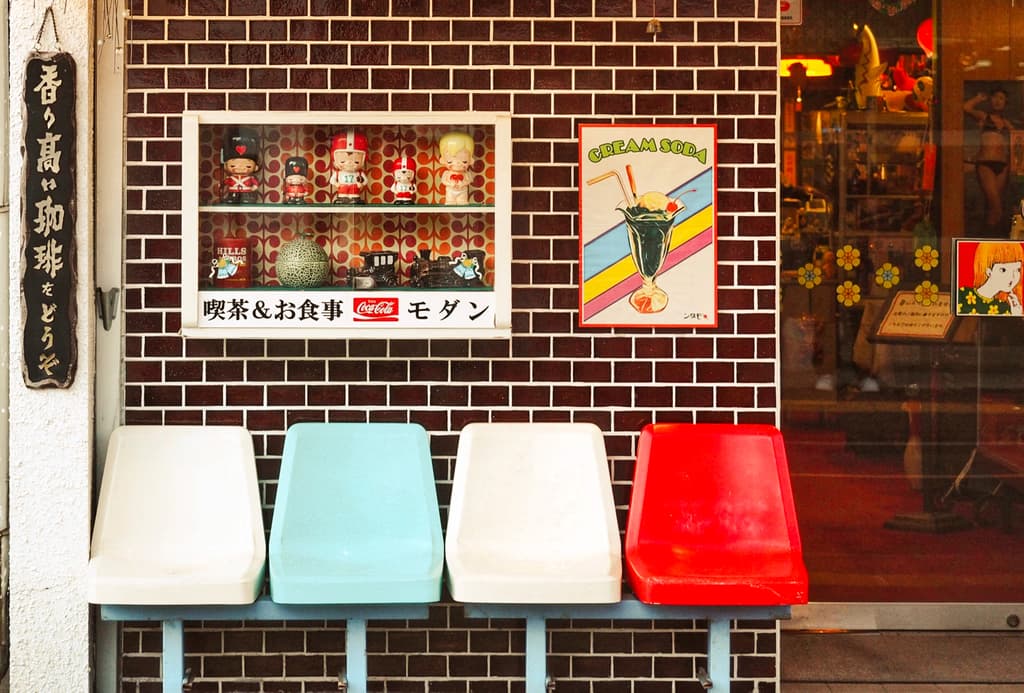
Paon Shogetsu (パオン昭月, 2-18-11 Komazawa) was founded in 1946 as a wagashi shop. Postwar sugar shortages made Japanese sweets production impossible, so the owners started baking coppe-pan, the simple bread loaves that fed a rebuilding Japan. The shop never switched back. Today it stocks over 100 varieties and has a Showa-era retro look, with character dolls in the window. Its seasonal nama cream anpan (available October through May) sells out fast enough to require advance reservation. The name combines "Shogetsu" from the era with "Paon" — French for peacock — added later to sound less old-fashioned.
Patisserie Naoki (パティスリーナオキ) traces its roots to 1964, the same year the Olympics came to Komazawa. The founder opened Hasebe Yogashiten, a Western-style cake shop, steps from the park during the Games. His son Naoto trained in pastry in Alsace and reopened the shop under its current name in December 1969. The Komazawa store is now a compact retail shop blending French traditional pastries — Pets de Nonne, for instance — with the Japanese Western sweets his father started with. The chiffon cake has a following.
daco? Komazawa (ダコー? 駒沢) opened on September 11, 2024. It is a fusion of two popular brands: daco, from the Fukuoka-based AMAM DACOTAN bakery group, and I'm donut?, a fresh doughnut chain. The location near the park's west entrance stocks around 80 varieties of bread, doughnuts, and drinks. It is dog-friendly and has a cafe space for eating in. Weekend mornings, the doughnuts sell out early.
KIKYOYA ORII (桔梗屋織居) opened in Komazawa in late 2023 as the 19th-generation venture of a wagashi house founded in 1607 in Iga City, Mie Prefecture. The Komazawa branch specializes in mochigashi — creative daifuku and ohagi — and pairs them with espresso. No English-language guide covers this shop.
Restaurants for residents, not for reviews
The restaurant scene near Komazawa-daigaku Station feeds the neighborhood. It is not destination dining. It is places where the food is good, the prices are fair, and the person at the next table lives three blocks away.
adito (アヂト) has operated since 2002 in a three-story standalone house about a 12-minute walk from the station. Its signature is the "Otona-sama Lunch" (大人様ランチ) — an adult-sized version of the okosama lunch, the classic Japanese children's meal served at department store cafeterias. It costs 1,200 yen, comes with a flag and octopus-shaped wieners, and the portions are genuine. The cafe was used as a filming location for the movie GANTZ, starring Arashi's Ninomiya Kazunari, and regulars still ask for the "GANTZ seat." Coffee comes in a pot. People stay for hours.
KARICOMA (カリコマ, 4-18-18 Komazawa) is a spice curry shop that doubles as a cafe. The interior is styled after a renovated old private house. Curries come as keema, yellow, or seasonal varieties, and you can order two types on one plate. Toppings include cheese, egg, and fried chicken. They also serve chai, craft beer, and a curry bun for takeout. Closed Tuesdays.
Budget roughly 1,000 to 1,500 yen for lunch at most spots around the station. Dinner with drinks runs 3,000 to 5,000 yen.
Setagaya-Daita: the folklore and the quiet
Setagaya-Daita sits one stop south of Shimokitazawa on the Odakyu Line, about 12 minutes from Shinjuku. The name "Daita" comes from Daidarabotchi, a mythological giant in Japanese folklore. A depression near what is now Moriyama Elementary School collected rainwater and spring water into a shape that villagers thought looked like a giant's footprint. The village that grew around it took the name Daita. The station was originally just "Daita" and was renamed "Setagaya-Daita" in 1946 to avoid confusion with other places of the same name.
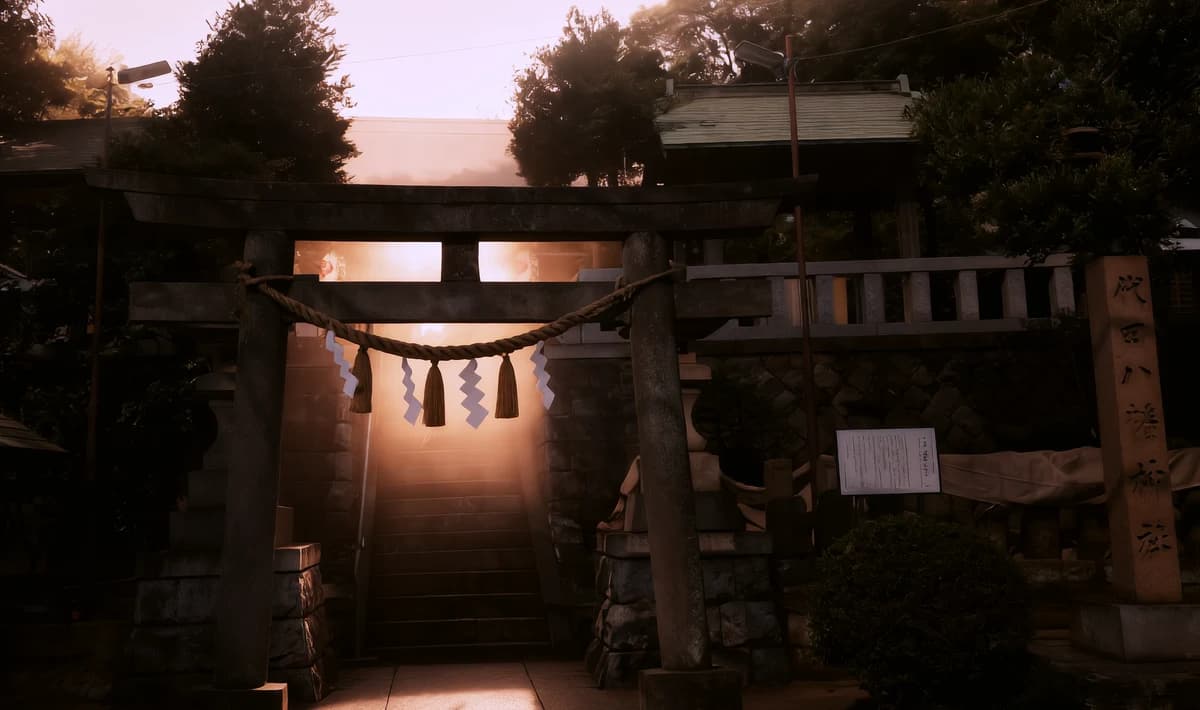
Daita Hachiman Shrine sits in the neighborhood's center. It was founded in 1591 by seven former samurai retainers of the Kira clan, lords of Setagaya Castle, who turned to farming after their overlords — the Hojo — were defeated by Toyotomi Hideyoshi. They invited the spirit of Hachiman from the main Setagaya shrine to protect their new village. The torii gate at the entrance dates to 1785 and is the second-oldest in Setagaya Ward, designated as a ward cultural property. The shrine grounds were roughly halved in 1961 when Route 7 (Kan-nana) was expanded through the area.
The neighborhood today is residential and quiet. It draws the kind of people who want to live near Shimokitazawa's energy without living in the middle of it.
STREAMER COFFEE COMPANY (2-31-12 Daita) opened at Setagaya-Daita Station on March 25, 2017. The entrance is outside the ticket gates. The rectangular interior has high chairs at the counter, sofa seats, and a big communal wooden table. It is known for latte art and serves doughnuts and homemade sandwiches alongside coffee. Power outlets and Wi-Fi are available at the counter. It is pet-friendly. Weekday hours start at 8:00 AM; weekends and holidays at 10:00 AM.
Getting there and what to combine it with
Komazawa-daigaku Station is on the Tokyu Den-en-toshi Line. From Shibuya: three stops, five minutes. No transfers.
Setagaya-Daita Station is on the Odakyu Line. From Shinjuku: about 12 minutes.
The two stations are not connected by rail but are close enough to combine in one day with a short bus ride or taxi between them.
For Komazawa Olympic Park, the nearest entrance is a 15-minute walk south from the station along Komazawa-dori. The walk passes through residential streets lined with the independent restaurants and shops that define the area. Walk slowly.
Combine with Sangenjaya: one stop toward Shibuya on the same Den-en-toshi Line. Morning coffee and a park walk in Komazawa, then Sangenjaya in the evening for the Sankaku Chitai izakaya alleys.
Combine with Shimokitazawa: Setagaya-Daita is literally the next stop. Start in Shimokitazawa for vintage shopping and lunch, then take one stop to Setagaya-Daita for afternoon coffee. One is loud and performative; the other is not.
Combine with Nakameguro: a short bus ride or 20-minute walk from Komazawa. During cherry blossom season, the Meguro River in Nakameguro followed by the less-crowded trees in Komazawa Olympic Park makes a full day of hanami without shoulder-to-shoulder crowds.
When to visit
Spring, late March to April. Cherry blossoms in the park with a fraction of the crowds at Ueno or Meguro River. Bring a blanket and something from one of the bakeries.
Autumn, October to November. The tree-lined paths are at their best and cafe terraces are comfortable all day.
Weekday mornings. The joggers are out, the cafes are quiet, the park is empty enough that the wind in the trees is the loudest thing you hear.
Avoid weekend afternoons in summer. The park gets hot and crowded.
Komazawa-Daita on a private tour
Komazawa and Setagaya-Daita reward context. The 1964 Olympic architecture, the Zen university's 430-year lineage, the reason a bakery founded in a sugar shortage still shapes the neighborhood. A guide who lives in this part of Tokyo can explain why a specific shop matters, or what it means that this neighborhood has five independent coffee roasters within walking distance.
The Ordinary Tokyo tour is 8 hours, from $550 for 2 people, and visits neighborhoods representing different perspectives on residential Tokyo -- Komazawa's quiet park culture, the backstreets of older wards, the places where daily life has more texture than any landmark. If you want a broader introduction that includes residential neighborhoods alongside the essential stops, the Tokyo Essentials tour covers that in 6 hours, from $430 for 2 people.
At Hinomaru One, we design culturally rich, stress-free private Tokyo tours for first-time and seasoned travelers. Unrushed. Insightful. Always customized.
FAQ
Is Komazawa Olympic Park worth visiting?
Yes, but not for the reasons you might expect. The 1964 facilities and Ashihara's control tower are architecturally significant, but the real draw is seeing how Tokyo residents use the space: morning joggers, families with dogs, university students, weekend flea markets. It is a communal living room for the surrounding neighborhoods. Free entry, open year-round.
How do I get to Komazawa from Shibuya?
Komazawa-daigaku Station is three stops south of Shibuya on the Tokyu Den-en-toshi Line. The ride takes about five minutes. The park is then a 15-minute walk south from the station along Komazawa-dori.
Can I combine Komazawa and Setagaya-Daita in one day?
Yes. They are in the same ward and close enough to combine with a short bus or taxi ride. A natural itinerary: morning at Komazawa Olympic Park and the cafes around the station, then afternoon in Setagaya-Daita for coffee and the shrine, with a possible extension into Shimokitazawa (one stop north).
What is the best time of year to visit Komazawa?
Late March to early April for cherry blossoms (less crowded than the famous spots) or October to November for autumn colors and comfortable walking weather. Weekday mornings any time of year give you the neighborhood at its most characteristic. Avoid summer weekend afternoons.
Are there good vegetarian or vegan options near Komazawa?
Mr. FARMER sits at the edge of Komazawa Olympic Park, opens at 7:00 AM, and serves a vegetable-focused menu with vegan options throughout. The morning crowd is runners and dog-walkers. It works well as breakfast before a park walk.