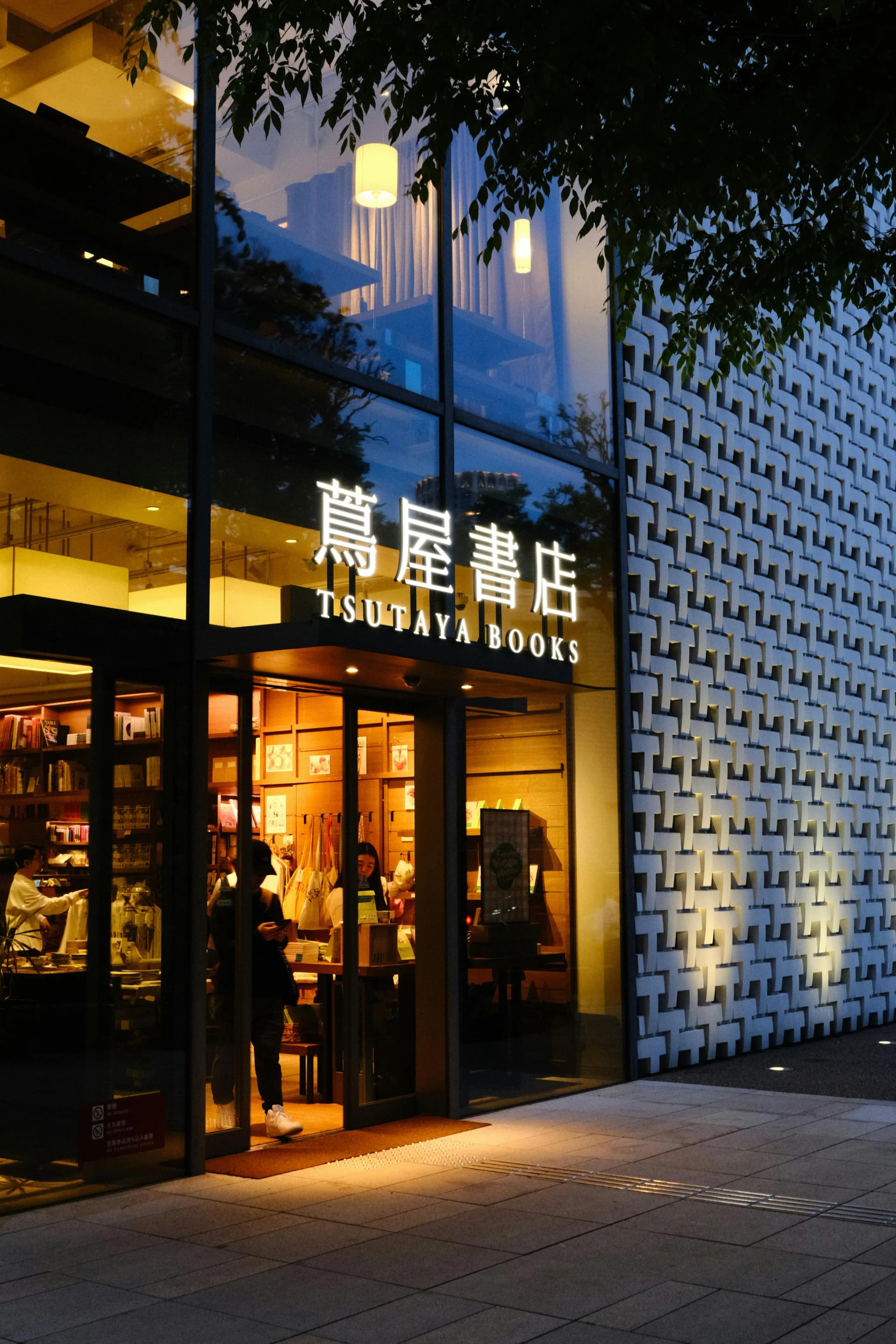
Daikanyama earned its calm through deliberate decisions: zoning that kept buildings low, an architect who worked for 25 years on one street, and a bookshop designed for people over 50 who still read on paper.
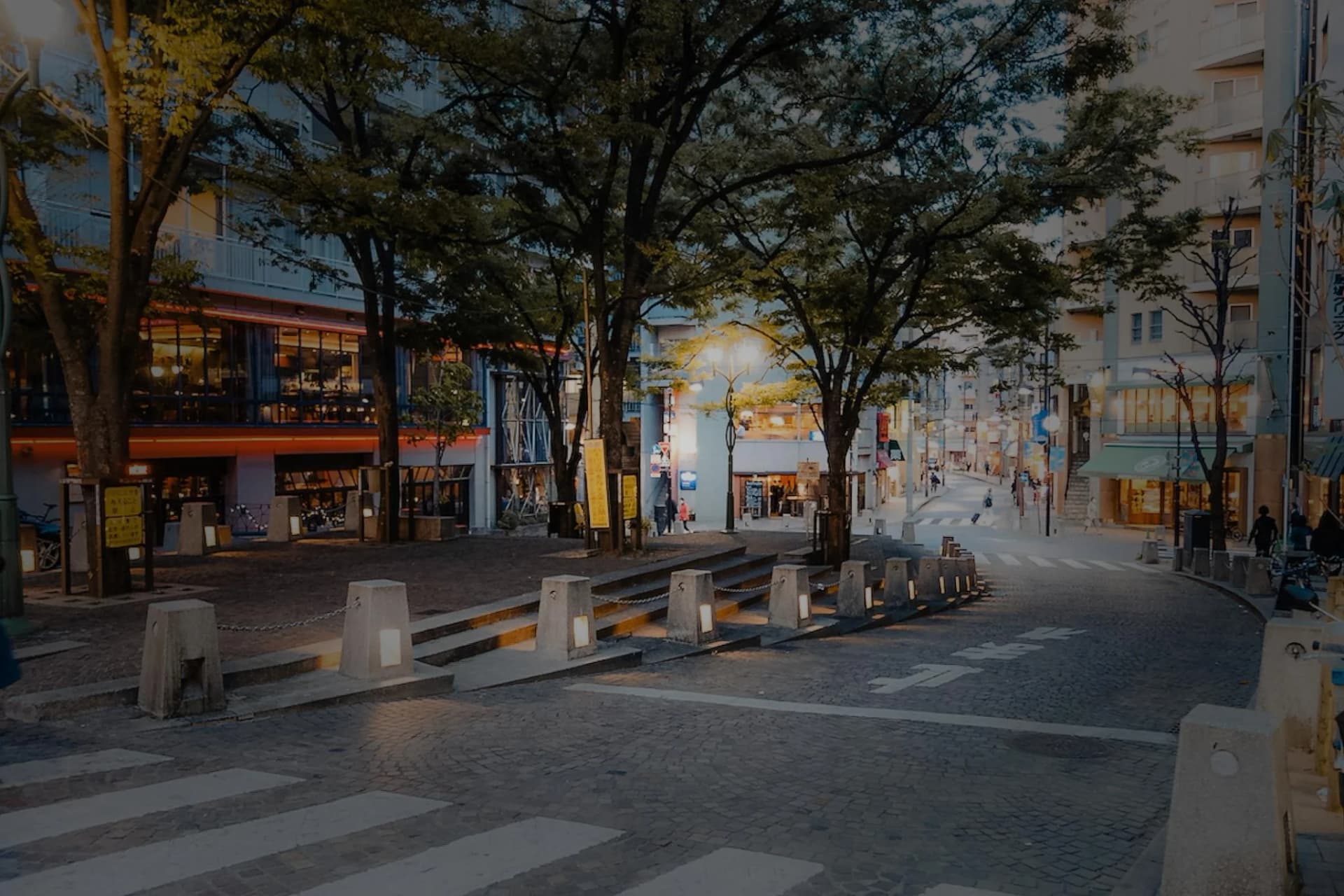
Daikanyama runs on different rules from the rest of Tokyo. The buildings stay low. The signs stay small. The streets curve instead of grid. None of this happened by accident.
The name dates to the Edo period. "Daikan" means magistrate, "yama" means hill. The area was forested land under a magistrate's control, too hilly for rice paddies and too far from central Edo for commerce. When the land was released, the name stuck. Through the Meiji era and into the 1920s, Daikanyama developed as a residential district for the well-off, helped along by the 1923 earthquake that pushed middle-class Tokyoites out of the lowlands and up into hillside neighborhoods like this one.
Today's Daikanyama occupies a few square blocks between Shibuya and Ebisu, technically part of Shibuya Ward. You can walk here from Shibuya Station in fifteen minutes or take one stop on the Tokyu Toyoko Line. The station is small. The exit puts you on a slope. Within two minutes of walking, you are somewhere that does not look or sound like the city you just left.
Hillside Terrace and the Architect Who Stayed
The complex that defines Daikanyama's character sits along Kyu-Yamate Dori, the old Yamate Road. Hillside Terrace is roughly a dozen low-rise buildings stretching along both sides of the street. It holds apartments, galleries, offices, restaurants, and shops. From the sidewalk it reads as a single continuous streetscape, which was the point.
Fumihiko Maki designed all of it. He started in 1967 and finished the last building in 1992. Twenty-five years, one architect, one client. That almost never happens in Tokyo, where buildings go up fast and come down faster. Maki later said no other project occupied his thoughts so continuously over time.
The client was the Asakura family, who had owned this land since the mid-1700s. In 1967, the family's heirs met Maki through a Keio University connection. They had been planning standard apartment development. Maki proposed something else: a complex that would grow over decades, building by building, adapting to the neighborhood rather than replacing it. The Asakuras agreed. They specifically required that even when parcels were sold to the Danish government for their embassy, Maki would design that building too, to keep the streetscape consistent.
The zoning helped. Hillside Terrace sits in what was classified as Category 1 Exclusive Residential, with a 10-meter height limit and a floor area ratio of 150 percent. This meant Maki could not build tall even if he wanted to. Instead, he built outward and connected: wide pedestrian walkways, platforms, stairs between levels, shops at ground level with private residences tucked above. The scale stays human throughout. You notice the plants before you notice the concrete.
One detail that does not appear in English-language guides: the site contains a seventh-century burial mound, a kofun, topped by a small shrine. Daikanyama had residents when Tokyo was still a fishing village.
Maki won the Pritzker Prize in 1993, partly on the strength of this project. He died in June 2024 at ninety-five. Hillside Terrace received the Mecenat Award in 1998 for its cultural programming, which includes the SD Review, an annual showcase for young architects that has run since 1982 and launched dozens of careers.
The Old Asakura House
Behind Hillside Terrace, through a gate you could walk past without noticing, stands a two-story wooden house built in 1919 for Asakura Torajiro. He was the head of the family that later commissioned Maki, and he served as Speaker of the Tokyo Prefectural Assembly. The house survived the 1923 earthquake and the firebombing of 1945. It is now an Important Cultural Property.
The Asakura family settled in this part of Shibuya around 1700 and built their wealth through rice polishing and land management. The house reflects that prosperity without shouting about it. The rooms combine formal reception spaces with private quarters, a tea room, and a storehouse. A stroll garden wraps around the south and west sides, dropping down a slope planted with maples that turn in November.
Admission is free. You need socks (no bare feet on the tatami). The house is open Tuesday through Sunday, 10:00 to 18:00. Most visitors to Daikanyama walk right past the entrance. On a weekday, you might have the garden to yourself.
T-SITE and the Bookshop That Changed the Neighborhood
T-SITE opened in December 2011 and immediately became the reason most people visit Daikanyama. The complex consists of three buildings connected by garden paths, designed by Klein Dytham Architecture, a Tokyo-based firm founded by two British architects.
KDa won the commission in a two-stage invited competition. Seventy-seven firms entered, including Kengo Kuma and Atelier Bow-Wow. The winning concept was a "library in a forest." The three buildings step back gradually from Kyu-Yamate Dori, slotted between existing trees that the architects refused to cut. The facade is the signature: hundreds of interlocking T-shapes that screen the interior from the street and reference the Tsutaya logo. Interior signage was handled by Kenya Hara, the graphic designer behind Muji's visual identity.
The bookshop inside is organized by subject rather than publisher. Art, architecture, automobiles, cooking, travel, and humanities each get dedicated sections staffed by specialists. The magazine collection pulls from dozens of countries. The design brief specified "premier age" customers over fifty, people who browse rather than search, which explains why the furniture is comfortable and the aisles are wide.
Upstairs, Anjin operates as a cafe and bar with a collection of vintage magazines and rare art books. Share Lounge opens at 7:00 AM with wifi, drinks, and workspace. Outside, IVY PLACE serves brunch in a glass-walled dining room that opens onto a terrace. On weekday mornings, you can eat there alone.
T-SITE is open daily, 9:00 AM to 10:00 PM. The complex was shortlisted for the 2012 World Architecture Festival in the shopping category.
What Stood Here Before: The Dojunkai Apartments
The 36-story tower visible from T-SITE is Daikanyama Address. It stands on ground that held something remarkable until 1996.
The Dojunkai Foundation was established after the 1923 earthquake to build modern housing for middle-class workers. Their Daikanyama complex, completed in 1926, consisted of 36 low-rise buildings holding 337 apartments. Reinforced concrete, modern plumbing, a mix of Japanese and Western interior design. Living there was a status marker. The complex earned a spot on DOCOMOMO Japan's list of the twenty most important modern buildings in the country.
By the 1970s, the buildings had aged. Residents had modified their units freely, since each building was collectively owned with no central management. Half the apartments were rentals, thirty sat empty. Magazines loved the complex for its overgrown, European-village quality, but the structures were deteriorating.
Redevelopment took twenty years. The process started with a residents' study group in 1980 and did not finish until August 2000. The difficulty was the ownership structure: 600 individual rights holders spread across 47 land plots, many of them inherited from original tenants. The result is Daikanyama Address, five residential towers with 501 units, of which 273 went to former Dojunkai residents. Those residents received apartments roughly 1.3 times the size of their old ones at no cost. Many sold or rented the new units rather than moving in.
How Fashion Found Daikanyama
The neighborhood's association with fashion starts with a specific shop and a specific year. Hollywood Ranch Market opened in Sendagaya in 1972, founded by the company Seilin & Co. as one of Japan's first stores to sell American vintage denim and workwear as fashion rather than secondhand clothing. In 1979, the shop moved to Daikanyama, onto the old Yamate Dori. It has been there for over forty-five years. The store still carries a mix of Americana-influenced Japanese labels, vintage denim, handmade leather goods, and its own line of basics.
Through the 1980s and 1990s, other independent brands followed. Daikanyama offered something Omotesando and Ginza did not: affordable backstreet rents and a residential atmosphere that suited designers who wanted to build stores as extensions of their own taste. A.P.C. and Maison Kitsune both maintain Daikanyama flagships now. The Maison Kitsune location doubles as a cafe, which tells you something about how the neighborhood thinks about retail.
The side streets between Hachiman-dori and the old Yamate-dori hold the smaller shops: ceramics from individual potters, vintage eyewear, stationery, things that resist categorization. The shopping here works best without a list. Walk the backstreets for thirty minutes and you will find something.
Daikanyama, Nakameguro, and Ebisu
These three neighborhoods sit within a ten-minute walk of each other and visitors sometimes treat them as interchangeable. They are not.
Daikanyama is the quietest and the most design-conscious. The crowd skews older, thirties and forties, well-dressed without visible effort. Nakameguro has the Meguro River, the cherry blossoms in spring, and a younger energy. The canal-side bars and open-front cafes make it better for evening visits. Ebisu is more straightforwardly residential, with Yebisu Garden Place and a concentration of serious restaurants that do not need foot traffic to fill seats.
The natural route connects all three. Start at Daikanyama Station, walk the neighborhood for two or three hours, then head downhill ten minutes southeast to Nakameguro along the river. If you have time, Ebisu is ten minutes east. Together they fill a full day without a train.
Getting There and Timing
Daikanyama Station is on the Tokyu Toyoko Line. From Shibuya, one stop, two minutes. From central Tokyo, take the Yamanote Line or Metro to Shibuya and transfer. You can also walk from Shibuya in fifteen minutes or from Ebisu in ten.
Go on a weekday morning. T-SITE opens at 9:00, Share Lounge at 7:00, most shops between 10:00 and 11:00. Weekday mornings deliver the neighborhood at its emptiest. Weekends bring families from other parts of the city, and the cafes fill by noon.
Spring and autumn are best. Summer is hot everywhere in Tokyo, and Daikanyama has no covered arcades. Cherry blossom season is better spent along the Meguro River in Nakameguro, but the walk between the two neighborhoods during sakura week is good.
Rain works here. T-SITE is covered, the cafes are spacious, and the boutiques become more inviting when you are stepping out of a shower. A light rain thins the weekend crowds.
Where Hinomaru One Fits
Daikanyama fits naturally into a day moving through the quieter neighborhoods south of Shibuya. Combined with Nakameguro and a walk along the Meguro River, it makes a morning-to-afternoon experience that shows a side of Tokyo most visitors never find on their own.
Timeless Tokyo (8 hours, from $550 for 2 people) includes neighborhoods like this — the ones where Tokyo's creative identity lives. The guide explains why Maki spent 25 years on one street, what KDa's "library in a forest" concept means in practice, and why the Asakura House survived when everything around it burned.
Infinite Tokyo (8 hours, from $550 for 2 people) is fully customizable. Build a day around Daikanyama, Nakameguro, and Ebisu — architecture, bookshops, design retail, and the Meguro River walk. A guide who knows these neighborhoods connects the dots between them.
At Hinomaru One, we design culturally rich, stress-free private Tokyo tours for first-time and seasoned travelers. Unrushed. Insightful. Always customized.
FAQ
How long should I spend in Daikanyama? Three hours covers T-SITE, the Asakura House, and a walk through the backstreets. Half a day if you add lunch and combine with Nakameguro.
Is Daikanyama worth visiting? If you want temples, neon, or crowds, no. If you want good architecture, a world-class bookshop, and streets designed for walking, yes.
What is the closest station to T-SITE? Daikanyama Station on the Tokyu Toyoko Line. T-SITE is a five-minute walk from the central exit.
Can I combine Daikanyama with Nakameguro? Yes. They are a ten-minute walk apart and complement each other well. Daikanyama for morning bookshops and architecture, Nakameguro for afternoon coffee and the canal.
Is there an entrance fee for the Old Asakura House? Admission is free. Bring socks.
For a different but equally rewarding afternoon, Jiyugaoka is about 15 minutes further down the Tokyu Toyoko Line — Tokyo's most concentrated patisserie neighborhood.