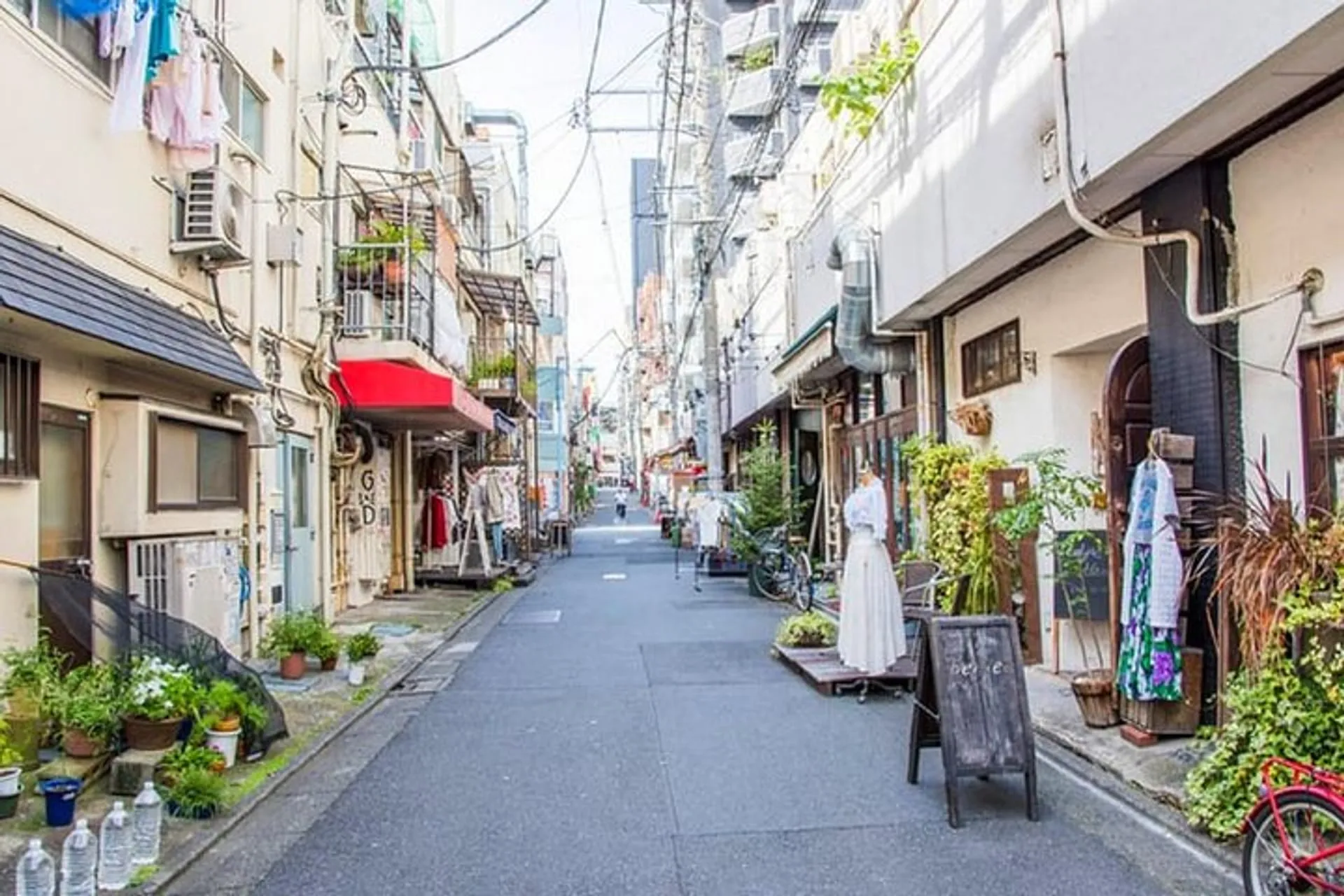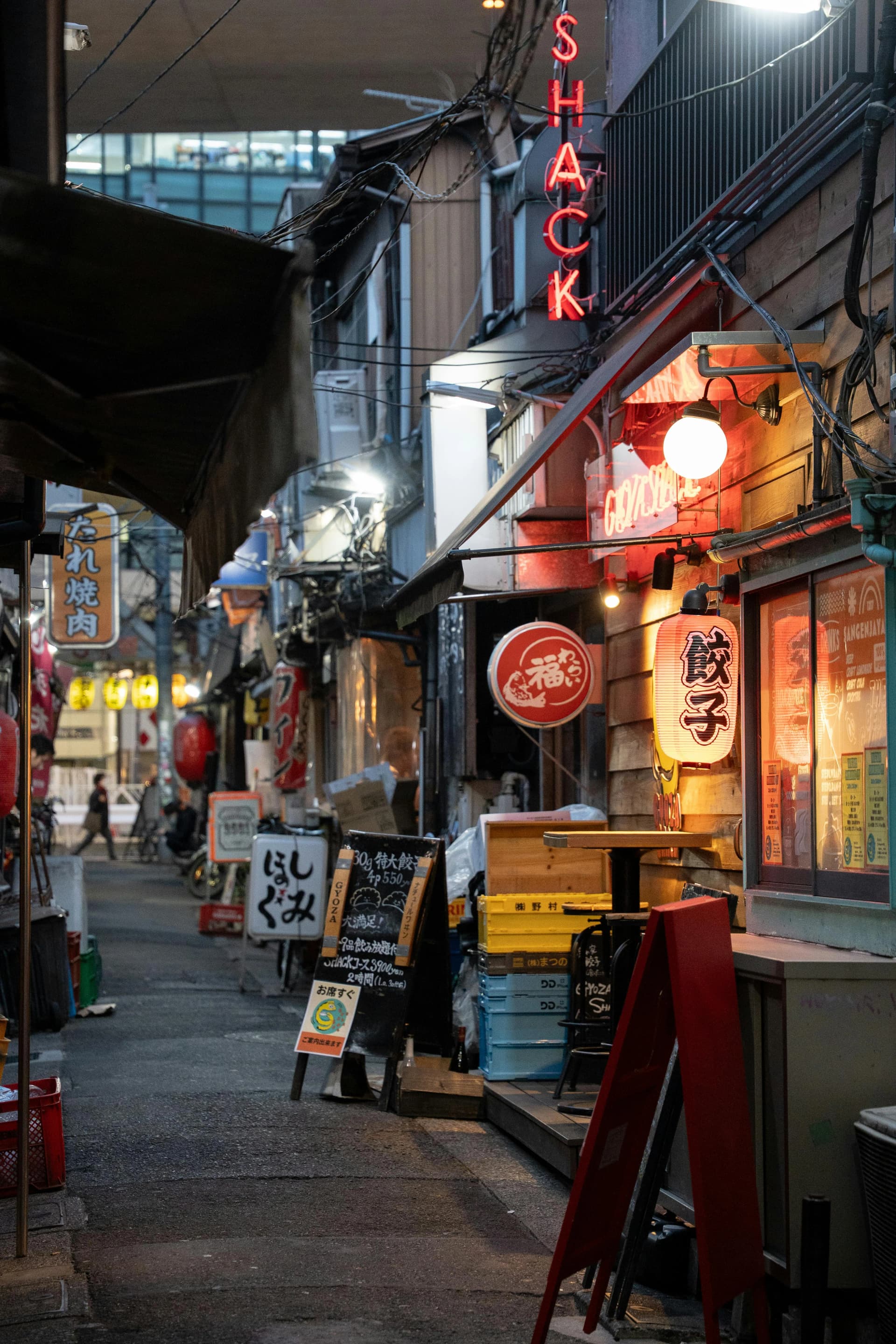
Sangenjaya is two stops from Shibuya on the Tokyu Den-en-toshi Line and feels like it belongs to a different decade. Locals call it Sancha. During the day, the neighborhood moves at the pace of a residential Setagaya side street: people walking dogs, independent cafes with good natural light, a covered shopping arcade where the fishmonger knows everyone by name. The energy is unhurried and creative, the kind of atmosphere that makes Tokyo feel like a place people actually live rather than a theme park built for visitors.
Then evening comes, and Sangenjaya becomes a different place entirely. The Sankaku Chitai, a dense network of postwar drinking alleys just north of the station, fills with smoke from yakitori grills and the sound of beer glasses clinking in bars so small that six people is a crowd. Skewers cost ¥200 to ¥400. Beers start at ¥300. The customer base is almost entirely local, salarymen loosening their ties, construction workers who've been coming here for years, young residents who chose this neighborhood because it still has some grit. Nobody performs the experience for tourists. Nobody needs to.
Most English-language guides mention one side or the other. The cafe blogs cover daytime Sangenjaya. The nightlife posts mention the alleys in passing, usually in a listicle alongside Golden Gai. This guide covers both, because the two versions of Sangenjaya are what make it worth knowing about.
What Sangenjaya Actually Is
The name translates to "three tea houses," a reference to three Edo-period rest stops that once served pilgrims walking the Oyama road out of the city. Those tea houses are long gone. What replaced them, over centuries of organic growth, is a neighborhood with genuine layers that no urban planner could have designed on purpose.
Sangenjaya sits in Setagaya ward, historically a working-class area that absorbed waves of artists, musicians, and young professionals who couldn't afford Daikanyama or Nakameguro but wanted somewhere with personality. The result is a neighborhood where a Showa-era yakiton stand operating out of a three-tsubo storefront shares a block with a specialty coffee roaster that sources single-origin beans from Ethiopia. A covered shotengai shopping street where the pickle shop has been open since the 1970s sits around the corner from a craft beer taproom with ten rotating taps. The layers don't blend so much as coexist, each one indifferent to the others.
The comparison people reach for is Shimokitazawa, the other go-to "local" neighborhood on the west side. The comparison doesn't hold up well. Shimokitazawa is consciously bohemian, built around live music venues and vintage clothing shops, attracting a crowd that identifies with the area's counterculture brand. Sangenjaya is less deliberate about what it is. The bohemian elements are here (there's a Setagaya Public Theatre at the base of Carrot Tower, and independent galleries along the Setagaya Line tracks), but they sit alongside blue-collar izakayas, family-run soba shops, and the kind of no-nonsense grocery stores where price matters more than aesthetics. Shimokitazawa is performatively alternative. Sangenjaya just is what it is.
If you've played Persona 5, the fictional neighborhood of Yongenjaya is modeled on Sangenjaya. The resemblance is specific enough that fans visit to see the real version. They find it holds up.
The Sankaku Chitai (Triangle Zone)
This is the section that matters most. If you come to Sangenjaya for one thing, come for this.
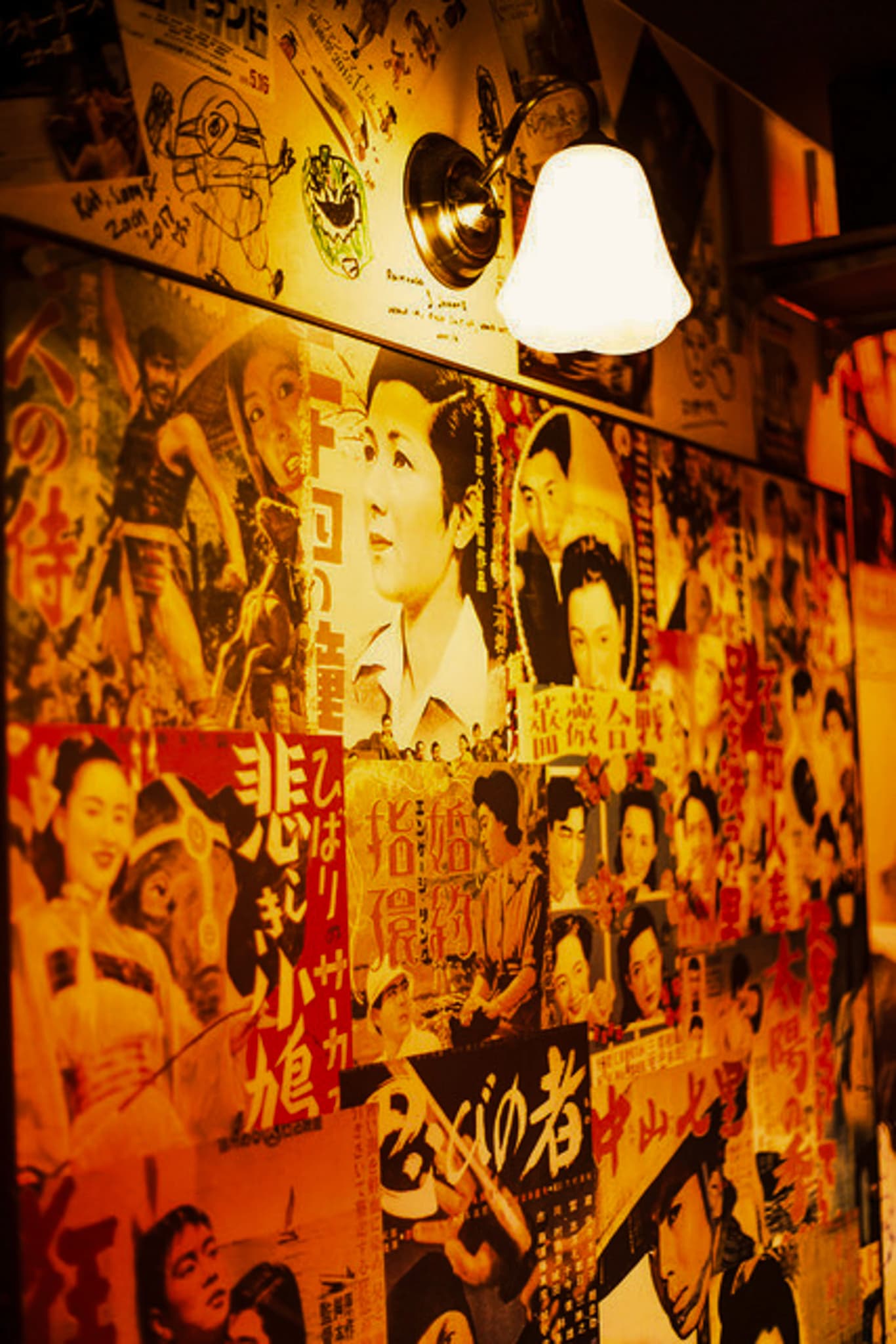
The Sankaku Chitai is a dense cluster of narrow alleys wedged into the triangular space between Setagaya-dori and Tamagawa-dori, just north of the station. The area dates from the postwar years, when vendors set up makeshift stalls in the gaps between tram lines. The trams are gone. The stalls hardened into permanent structures over the decades, but "permanent" is generous. Most buildings are one or two stories of aging wood and corrugated metal, packed together so tightly that some alleys are barely wide enough for two people to pass. Signage is limited to paper lanterns, handwritten menus on plywood boards, and the occasional neon kanji that's been buzzing since the Showa era.
Walk into the Sankaku Chitai on a Friday night and the experience is immediate. Smoke from charcoal grills drifts through the passages and catches the light of the lanterns. The sound is a layered mix of sizzling meat, conversation at close range, and the clink of cheap beer glasses. The alleys branch and reconnect. You turn a corner expecting to reach the end and find another row of tiny storefronts, each one spilling warm light and cooking smells into the passage.
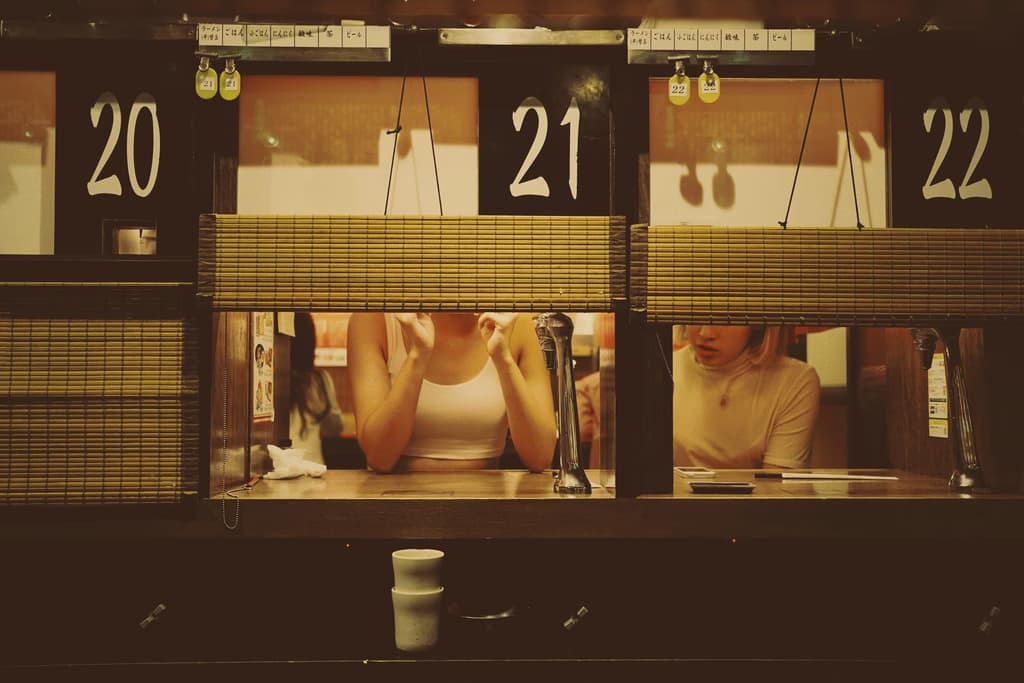
The bars here are small in a way that redefines the word. Yakiton Toshi is run by a single old man who grills pork skewers over charcoal. The menu is nine items. That's it. He works in a space roughly the size of a walk-in closet, and the counter seats maybe five people. Aoki Shoten is a standing bar where six or seven bodies fill the room. The owner specializes in sake and shochu, and the selection is more considered than the size of the place suggests. TICO serves homemade infused liquors (they call them tsuke-zake) in flavors that change with the owner's mood, and the bar runs late into the evening, making it a natural last stop for people working their way through the alleys.
The crowd is not tourists. On a weeknight, you'll share counter space with salarymen who stopped in on the way home, young couples on cheap dates, and solo drinkers who treat their regular spot the way some people treat a living room. On weekends, the alleys get louder and more crowded, but the energy stays local. This is not Golden Gai, where the tourist-to-local ratio tipped years ago. Sangenjaya's alleys haven't been written about enough in English to attract that kind of attention. For now, they remain the unpolished version: cheaper, less self-conscious, and in most ways more honest about what a Tokyo drinking alley actually is.
Best Cafes
Sangenjaya's specialty coffee scene developed alongside its residential creative community, and several of the cafes here are destinations in their own right rather than afterthoughts.
Cafe Obscura is the one that coffee people already know. Located on a quiet side street, it focuses on single-origin beans roasted in-house, with pour-over as the default brewing method. The space is small and intentional, a handful of seats and a counter where you can watch the barista work. A cup runs ¥500 to ¥700 depending on the origin. It's the kind of place where the barista will tell you about the farm if you ask, and the information will be specific rather than performative.
Tokyo Saryo takes a different approach entirely. This is a contemporary tea parlor that reimagines the Japanese tea ceremony for people who don't want to sit in seiza for an hour. The teas are hand-dripped like pour-over coffee, and the presentation is beautiful without being precious. It's a useful counterpoint to the coffee shops if you want something that feels distinctly Japanese rather than globally third-wave.
Kissaten Seven operates on two timelines. During the day, it's an old-school kissaten (the Japanese version of a coffee house, complete with dark wood interiors and the faint smell of cigarette smoke embedded in the furniture). After dark, it transitions into a mellow retro bar. The coffee is fine. The atmosphere is the reason to come. There's something about drinking a hand-dripped blend in a room that hasn't been renovated since the 1980s that makes the neighborhood's layers feel tangible.
For something more modern, Rain on the Roof, a few minutes' walk from the station, serves solid espresso drinks in a clean, light-filled space that contrasts sharply with the Showa aesthetic of the surrounding streets. It works well as a morning starting point before the alleys wake up.
Best Bars and Izakayas
Beyond the Sankaku Chitai's standing bars, Sangenjaya has a proper drinking scene spread across the surrounding streets.
Bar Cielo is the most polished option. It occupies two floors: a gin-focused bar downstairs with a collection that justifies a dedicated visit, and a whiskey lounge upstairs that's quieter and darker. Cocktails are well-made and priced in the ¥1,200 to ¥1,800 range. The atmosphere is closer to a serious cocktail bar than anything you'd find in the alleys, which makes it a good counterpoint if you want range in a single evening.
Sanity Craft Beer Bar is the taproom that the neighborhood's younger residents treat as a default. Ten rotating taps, most of them Japanese craft breweries, with pints in the ¥800 to ¥1,200 range. The space is compact and hip without trying too hard. It works for an early-evening beer before heading into the alleys, or as a standalone destination if craft beer is your thing.
Komaru Standing Bar bridges the gap between the Sankaku Chitai's rough-edged tachinomi and a conventional bar. It's a standing bar (no seats), but the sake and wine selection is curated rather than cheap, and the izakaya-style small plates are a step above the typical standing-bar fare. Budget ¥2,000 to ¥3,000 for a few drinks and some food.
Okaeri, tucked into the Sankaku Chitai, deserves a separate mention. The name means "welcome home," and the mama-san who runs it, Sanae, treats regulars and newcomers with the same warmth. The food is homemade and additive-free, and the otoshi (appetizer that comes with your first drink) is a bowl of soup rather than the usual edamame. It's closed weekends, which tells you everything about who it's for.
Best Restaurants
Sangenjaya's restaurant scene reflects the neighborhood's mixed identity: no Michelin stars, but a collection of places where the food is serious and the prices haven't caught up to the quality.
Isaan Kitchen is a Thai restaurant with interiors that look like someone raided a Bangkok street market for decorations. The food matches the energy. The Isaan set, a spread of northeastern Thai dishes, is the move. Lunch sets run ¥1,000 to ¥1,500. Dinner with drinks for two comes in around ¥5,000 to ¥7,000.
Gyoza Shack has been a neighborhood institution for years. The concept is pan-fried gyoza with inventive fillings (14 varieties at last count, including some that border on experimental), all made with organic ingredients. The space is small and stylish. Budget ¥1,500 to ¥2,500 per person with a beer.
Shiva Curry Wara is a Japanese-Indian curry house where the chef uses seasonal Japanese ingredients in curry preparations that don't fit neatly into any single tradition. The portions are generous, the spice levels are real, and a lunch plate costs around ¥1,200. It's the kind of restaurant that inspires the loyalty of regulars who eat there weekly.
Ten Fingers Burger does gourmet burgers with house-baked buns and thick beef patties. It's not trying to be a Tokyo burger destination. It's a neighborhood burger shop that happens to be very good. Burgers run ¥1,500 to ¥2,000 with a side.
Day vs Night: Two Completely Different Neighborhoods
The practical advice for Sangenjaya depends entirely on when you show up.
Daytime Sangenjaya is quiet and residential. The covered shotengai shopping arcade near the station is the commercial spine, a mix of fishmongers, vegetable stalls, pickle shops, and the kind of stores that serve a neighborhood rather than a tourist economy. The Carrot Tower observation deck on the 26th floor is free and offers views toward Shinjuku and, on clear winter days, Mount Fuji. It's not a skyline experience on the level of the Shibuya Sky, but the absence of crowds and admission fees makes it worth ten minutes. The specialty cafes are best in the morning, when the seats are open and the baristas aren't rushed.
Evening Sangenjaya is a different animal. The Sankaku Chitai alleys start filling around 6 PM on weeknights, earlier on Fridays. By 8 PM on a weekend, the passages are shoulder-to-shoulder, the grills are at full capacity, and the noise level has shifted from residential calm to something louder and more chaotic. The transition happens fast. If you're sitting in a cafe at 5 PM, you can watch the neighborhood change character in real time as the lanterns come on and the standing bars slide open their doors.
If you can only visit once, come in the evening. The alleys at night are the experience you can't get anywhere else. If you can visit twice, morning coffee followed by an evening in the alleys is the full picture.
Getting There and When to Visit
Sangenjaya Station sits on the Tokyu Den-en-toshi Line. From Shibuya, it's two stops and about five minutes. The Setagaya Line, a small two-car tram that's been running since the 1920s, also departs from Sangenjaya and rattles through residential Setagaya toward Gotokuji Temple (the famous lucky cat temple filled with maneki-neko figurines). The tram ride is worth doing for its own sake, a 17-minute trip through a version of Tokyo that feels closer to the 1960s than the 2020s. The line terminates at Shimotakaido, another old shotengai neighborhood with a retro cinema and cheap izakayas. Riding the full line and exploring both ends makes a strong half-day.
The best time for the alley scene is Thursday, Friday, or Saturday evening. Most Sankaku Chitai bars open between 5 and 6 PM, with the peak atmosphere arriving around 8 PM. Weekday mornings are best for cafes. Sunday evenings are the worst time to visit, as many of the smaller bars close for the night.
One practical note: almost nothing in the Sankaku Chitai takes credit cards. Bring cash. ¥5,000 is enough for a solid evening of eating and drinking in the alleys.
Sangenjaya on a Private Tour
Sangenjaya's izakaya alleys are one of the experiences covered in Standing Room Only, our evening tour through Tokyo's local drinking culture. The Sankaku Chitai is the kind of place where having someone who knows the alleys, speaks the language, and can introduce you to a bar owner makes the difference between standing outside wondering which door to open and sitting at a counter with a beer in your hand within thirty seconds.
For grilled skewer culture taken seriously, Kushiyaki Confidential covers the craft behind the smoke. Or build your own evening route through neighborhoods like this with a private tour in Tokyo.
| Neighborhood | Vibe | Best for | Time to visit | Distance from Shibuya |
|---|---|---|---|---|
| Sangenjaya | Gritty, local, creative | Alley bars, real Tokyo night | Evening | 5 min (train) |
| Shimokitazawa | Bohemian, music-focused | Vintage shops, live music | Afternoon/evening | 5 min (train) |
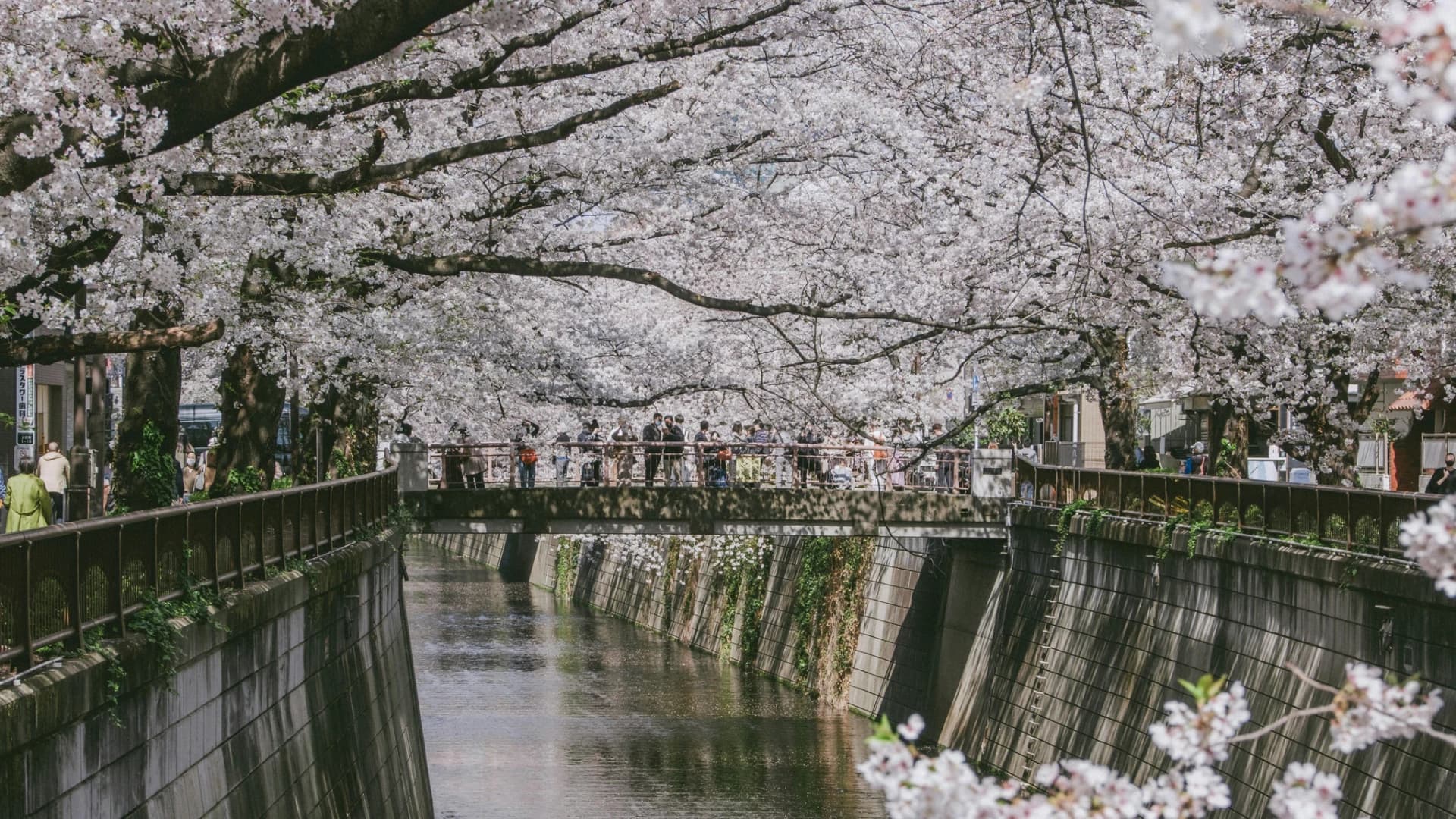
| Nakameguro | Canal-side, design | Coffee, cherry blossoms | Daytime | 5 min (train) |
| Koenji | Subculture, alternative | Vintage clothing, live music | Afternoon/evening | 20 min (train) |