The etiquette matters less as a set of rules and more as a way of signaling that you understand you're in a functioning place of worship, not a tourist attraction with props.
Shrine and temple etiquette starts with a distinction most visitors miss: shrines and temples belong to different religious traditions, and the rules differ. You don't clap at Sensoji, which is a Buddhist temple. You do clap at Meiji Shrine, which is a Shinto shrine. Of everything in this guide, that's the one visitors get wrong most often.
It also helps to know that Japanese people make mistakes here all the time. The people who run these places know that visitors, Japanese and international alike, are working through a complicated system. Nobody minds clumsy technique. What reads as disrespectful is treating a working place of worship like a photo opportunity.
How to Tell Them Apart
Shinto shrines (神社) and Buddhist temples (寺) shared space in Japan for over a thousand years until the Meiji government forcibly separated them in 1868. Many sites still carry architecture from both traditions, which is why the line can feel blurry.
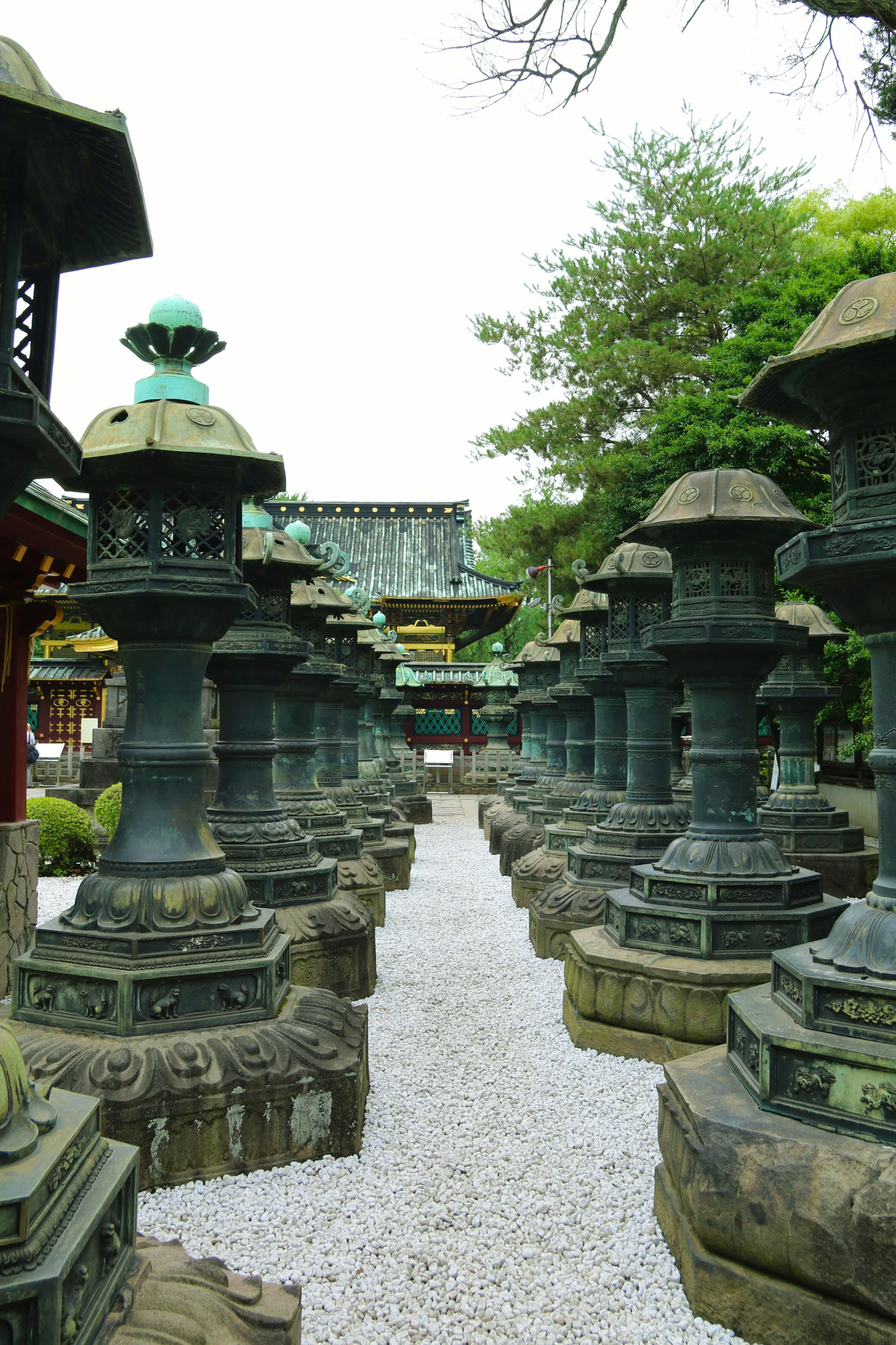
A few markers are reliable. A torii gate means a Shinto shrine. A sanmon gate means a Buddhist temple: it's a large, building-like structure, often with warrior statues (Nio guardians) standing inside the pillars. Guardian lion-dogs (狛犬) sit outside shrines, and Buddha statues sit inside temples. If you see graves or an incense burner, you're at a temple.
The name usually tells you too. Shrine names end in -jinja, -jingu, or -taisha, and temple names end in -ji, -tera, or -in. Sensoji (浅草寺) ends in -ji, so it's a temple. Meiji Jingu (明治神宮) ends in -jingu, so it's a shrine.
The Temizuya: Purification Before Worship
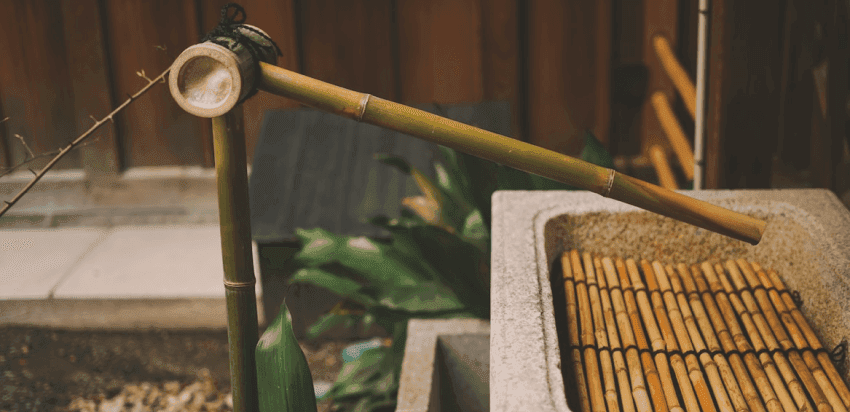
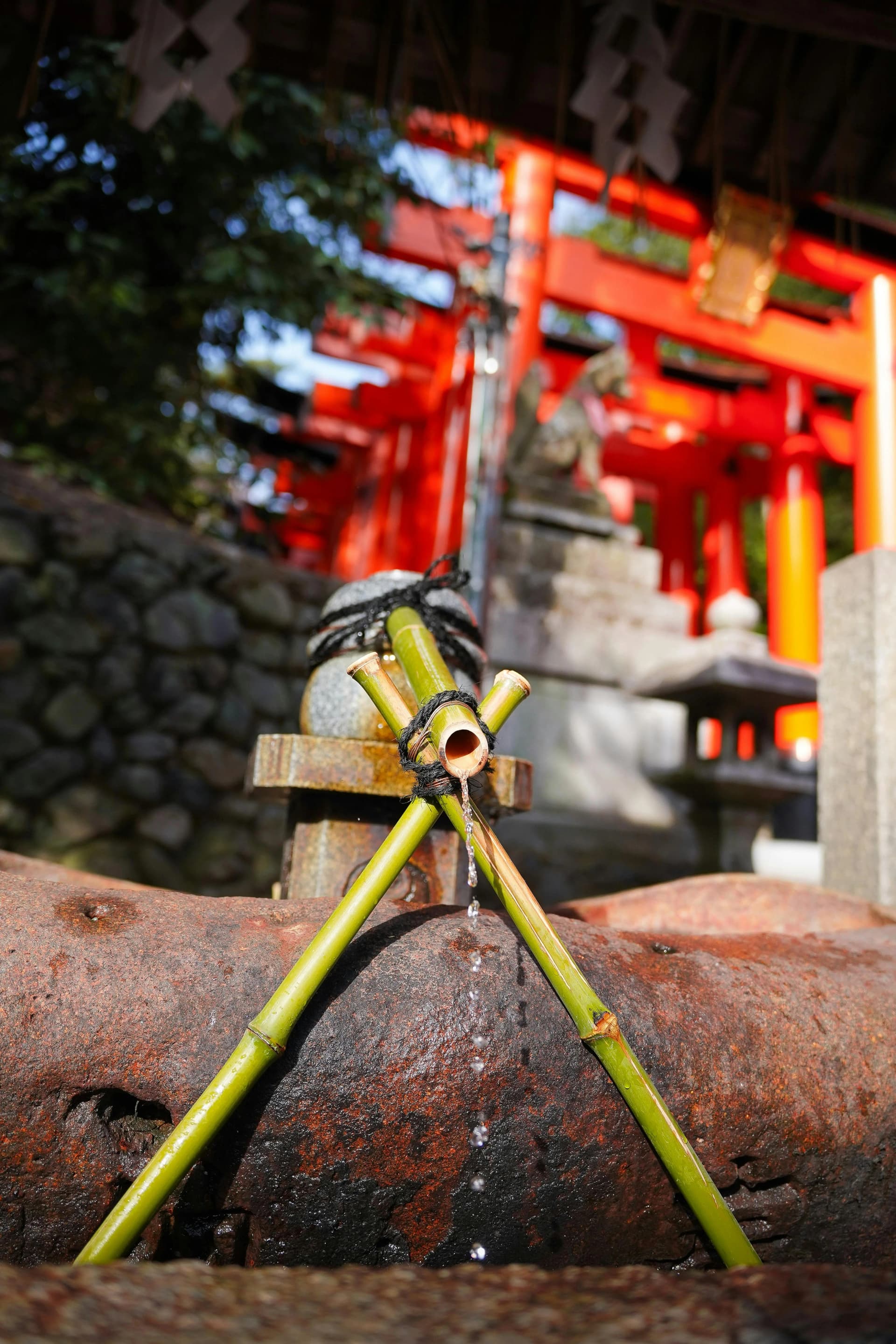
Before you approach the main hall of a Shinto shrine, you purify yourself at the temizuya (手水舎), the water basin near the entrance. It's a shortened form of misogi, the full ritual purification in a river, done in about a minute with a wooden ladle.
The Association of Shinto Shrines (神社本庁) gives this order.
Bow slightly to the basin. Pick up the ladle in your right hand and fill it. Pour water over your left hand. Move the ladle to your left hand and pour water over your right. Move it back to your right hand, pour a little water into your cupped left palm, and rinse your mouth from your palm. The ladle itself never touches your lips. Pour water over your left hand once more. Finally, tip the ladle upright so the last of the water runs down and rinses the handle, and set it back face-down on the rack.
If you can, do all of that with one scoop.
About the mouth rinse: many shrines took their ladles away during COVID and haven't fully brought them back. Where ladles are out, plenty of shrines now post signs asking you to skip the mouth rinse for hygiene reasons. Japanese etiquette sources agree that washing your hands is enough. If a shrine has changed its temizuya, with new signs or no ladles, do what the shrine says, whatever a travel guide told you.
The Shrine Worship Sequence
The formal sequence at a Shinto shrine is 二拝二拍手一拝 (ni-hai ni-hakushu ichi-hai): two bows, two claps, one bow. 拝 (hai) means a deep bow. In everyday speech people say 礼 (rei) instead, and the two get used interchangeably.
Standing in front of the offering box at the main hall:
Put your coin in gently. Don't toss it. Several Japanese sources list coin-throwing among the most common etiquette mistakes, and a head priest in Kyoto put it simply: you wouldn't want someone throwing money at you. The amount doesn't matter either. You'll often hear that five-yen coins are lucky because go-en (五円) sounds like "connection," and Japanese etiquette specialists call that an urban legend. Any coin will do.
If there's a bell rope hanging over the offering box, shake it once. The bell announces you to the deity and purifies the space.
Bow deeply twice, to roughly ninety degrees, letting your hands slide down to your knees. Stand all the way up between the bows.
Then clap twice. Bring your hands up to chest height, palms facing. Before clapping, slide your right hand down a little, about one finger-width below your left, as a small gesture of deference to the deity. Spread your hands to about shoulder width and clap twice, clearly, so the sound is clean.
Bring your palms back together with the fingertips lined up again, and pray silently. People usually say their name first, then give thanks, then make their request.
Finish with one more deep bow, and step back with a small bow.
This sequence dates from the Meiji standardization of the late 1800s. Earlier Shinto practice varied a lot from region to region and shrine to shrine, and some exceptions survive. Izumo Taisha in Shimane Prefecture uses four claps, and eight during its annual Grand Festival. Usa Jingu, the head shrine of all the Hachiman shrines, also uses four. Every major shrine in Tokyo follows the two-clap standard, but the "universal rule" has always had variants.
Temple Etiquette: What's Different
At a Buddhist temple the sequence changes, and above all, you don't clap. Clapping belongs to Shinto. At a temple you do 合掌一礼 (gasshō ichirei): press your palms firmly together in front of your chest with no gaps between the fingers, lower your head slightly, pray silently, and bow once.
If the temple has an incense burner (香炉), light a stick and place it starting from the middle of the burner and working outward. Don't wave the flame out with your hand. Let it go out by itself, or fan it gently with your other hand. In the big courtyard at Sensoji you'll see people wafting the burner's smoke over themselves, a folk practice said to heal whatever part of the body the smoke reaches. That's a Buddhist custom, and you won't see it at shrines.
Temples often ask you to take your shoes off before going into the inner hall. Shoe lockers or racks at the door are the signal. Temple guidelines specifically ask for clean socks, since everyone walks on the same inner-hall floors.
One more detail at the sanmon gate: step over the threshold, never on it. Stepping on it is considered disrespectful, and English guides almost never mention it.
The Torii Gate
When you walk through a torii gate onto a shrine's approach path, the custom is to keep to one side and leave the center open. The center is thought of as 神様の通り道, the deity's path.
The rule is softer than most guides make it sound. A Shinto priest at Ogami Jinja has publicly called center-avoidance an "urban legend" and pointed out that it isn't in the formal Shinto training manuals. The Association of Shinto Shrines does recommend walking at the side, but as a courtesy, with no religious prohibition behind it. Walking down the middle isn't forbidden or spiritually risky.
The advice that stays consistent is to bow slightly toward the main hall before passing under each torii, every one of them and not just the first, and to bow again on your way out. If you need to cross the center line, a small bow acknowledges the space.
What Even Japanese People Get Wrong
Multiple Japanese etiquette sources list these as mistakes Japanese visitors make, tourists included.
Clapping at Buddhist temples. Every Japanese source we've read puts this near the top. Two bows, two claps, one bow has become so fixed as "how you pray in Japan" that people use it everywhere, temples included, where it doesn't belong.
Collecting goshuin or buying omamori before worshipping. Worship comes first. Then you go to the shrine or temple office for stamps and amulets. Heading straight to the booth is like buying the souvenir before you've seen the exhibition.
Walking through the torii without bowing. The torii marks where everyday space ends and sacred space begins. A slight bow toward the main hall as you pass through shows you know you're crossing that line.
Believing omamori from different shrines will fight. The Association of Shinto Shrines and several shrine priests have explicitly called this a superstition (迷信). Shinto is polytheistic, with eight million gods getting along fine, so an omamori from Meiji Shrine and one from Sensoji can share a bag without any theological trouble.
Believing you should only visit one shrine per day. Also a myth, with no rule, tradition, or theology behind it. Visit as many shrines in a day as you like.
Omamori, Goshuin, and Ema
Omamori (お守り) are protective amulets sold at shrine and temple offices. Each one has a job: safe travel, passing an exam, finding love, doing well in business. People treat them as working objects, and keep them in a bag, a pocket, or wherever they apply (a study desk for exams, a car for traffic safety). Don't open one. The sealed inside holds sacred text.
The usual practice is to return an omamori after one year so it can be ritually burned (お焚き上げ), either at the shrine that issued it or at any shrine during the year-end rituals. Ones with a specific purpose, like safe childbirth or exam success, go back once that event is over, however long it took. If you can't return one in person, some shrines will take it by mail. Contact them first.
Goshuin (御朱印) are stamps with handwritten calligraphy that record your visit, collected in a dedicated stamp book (御朱印帳). They're records of pilgrimage, and people treat them that way. Worship at the main hall first, then hand your book over at the goshuin window and say "goshuin o onegai shimasu." It usually costs ¥300 to ¥500, so have exact change. Don't photograph the calligrapher at work, and don't ask for a particular style or design. The priest writes what they choose.
Some temples won't stamp a book that already has shrine stamps in it, and some shrines feel the same about temple stamps. Not all of them, but it happens often enough that we'd keep two books, one for shrines and one for temples.
At busy sites you may be handed a pre-written goshuin slip (書き置き) in place of live calligraphy. You glue it into your book yourself. It's standard practice and counts just the same.
Ema (絵馬) are wooden votive tablets. Write your wish on the plain back. When you hang it on the rack, the painted side faces in. Leave it there, since it's an offering and stays at the shrine or temple.
Photography
Japan has no nationwide rule. Each shrine and temple sets its own policy and posts it at the entrance, in Japanese and usually in English.
The pattern holds pretty well, though. Grounds and exteriors are almost always fine. The inside of main halls and sanctuaries is almost always off limits. In Japanese practice, pointing a camera straight at an enshrined deity or a Buddha statue is taboo, on the idea that something sacred should be experienced in person and not copied. Flash is banned everywhere.
Most major shrines and temples ban tripods and selfie sticks. Drones are prohibited. Professional or commercial shoots need permission from the shrine or temple office in advance.
In practice: worship first, take photos after. If you're not sure, look for a sign, and if there isn't one, ask at the office.
Frequently Asked Questions
What if I do the wrong sequence? Nobody will scold you. Staff at the big Tokyo shrines and temples see every possible variation every day. What they notice is disrespect: noise, photos where photos aren't allowed, using the place as a backdrop. Whether your bow hit exactly ninety degrees doesn't register.
Can I visit both shrines and temples in one day? Yes. The idea that it's disrespectful is a myth. Shinto and Buddhism have lived side by side in Japan for over a thousand years, and visiting both in one day is completely normal.
Should I buy a goshuin book? If the practice interests you at all, yes. The book turns into a record of your trip, and every stamp is handwritten calligraphy, often beautiful. Starting at Meiji Shrine and carrying on to Sensoji and the temples around Yanaka makes a nice sequence. Buy the goshuinchō at the first shrine or temple you visit; the office sells them.
Is the five-yen coin actually lucky? Japanese etiquette specialists call it an urban legend. The go-en/ご縁 pun is real, but no shrine thinks one coin works better than another. Use whatever you have in your pocket.
What about tattoos? Shrines and temples don't turn anyone away for tattoos. That issue comes up at onsen and sento, not at places of worship. You can visit any shrine or temple in Tokyo with visible tattoos.
At Hinomaru One, shrine and temple visits are part of our private Tokyo days, because they're a big part of how the city's religious life works. We take our time at them, because taking part changes the visit. Knowing the temizuya order and the shrine and temple differences before you arrive helps a lot, and so does having someone beside you the first time you go through the steps.