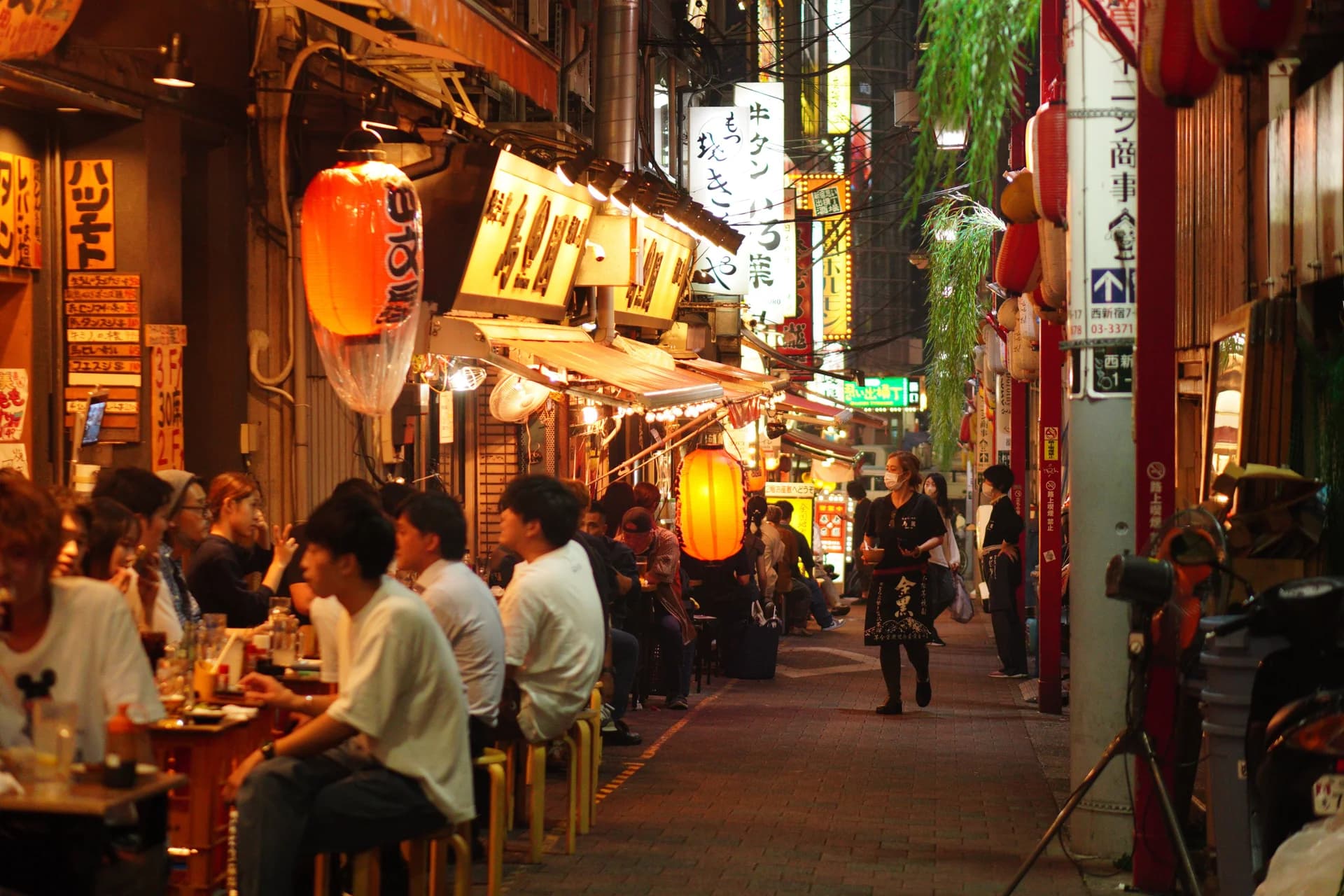
Golden Gai is roughly 280 bars packed into a cluster of narrow alleys in Shinjuku, occupying about 6,600 square meters of land that looks like it was accidentally left behind by the rest of modern Tokyo. The buildings are postwar wood and corrugated metal, two or three stories tall, each floor a separate bar. Most bars fit five to ten people. Some fit fewer. The alleys are famous, the atmosphere is real, and the crowd on a Friday or Saturday night is now predominantly tourists who read the same articles you did.
That last point is the most important thing to understand before you go. Golden Gai is one of the most written-about drinking districts in the world. Every English-language Tokyo guide includes it. Every travel influencer photographs it. The result is that the "authentic local bar scene" framing you'll find in most articles is about fifteen years out of date. Knowing this doesn't ruin the visit. It makes the visit better, because you stop looking for something that isn't there anymore and start noticing what still is.
What Golden Gai Actually Is
The area traces back to the end of World War II. In 1945, a black market (闇市) that had sprung up east of Shinjuku Station was relocated by occupation forces to the current location, then known as Sankōchō. The land was mostly empty, described by people who were there as a field of pampas grass. Vendors set up makeshift stalls. Through the late 1940s and 1950s, the area operated as what was called a "blue line" district, with establishments that were technically registered as restaurants but functioned otherwise. The 1958 Anti-Prostitution Law ended that era. The businesses converted to bars and snacks, and a different kind of culture moved in.
Through the 1960s and 1970s, Golden Gai became the gathering place for Tokyo's literary and artistic circles. Writers, editors, journalists, film directors, and theater people drank here because the bars were cheap, the spaces were private, and the bartenders were often part of the same creative world. The term "bundan bar" (文壇バー, literary-world bar) comes from this period. The area's association with Japanese avant-garde theater and new wave cinema is well documented, though specific claims about which famous writers drank at which specific bars tend to get embellished in the retelling. What's clear from multiple Japanese sources is that Golden Gai functioned as an informal social infrastructure for Tokyo's creative industries for roughly three decades.
In the early 1990s, the area faced demolition pressure. The land, valuable Shinjuku real estate occupied by aging wooden structures, attracted commercial developers. Local bar owners organized resistance. Fire safety reclassifications and collective advocacy kept the buildings standing. The area survived, but by the late 1990s many storefronts sat empty. The revival came in the 2000s and accelerated after 2010, driven increasingly by foreign tourism rather than a return of the old literary crowd. Today the bars number somewhere between 280 and 300, nearly every storefront is occupied, and the mix includes traditional snack bars alongside ramen shops, no-cover-charge tourist bars, and late-night spots that would have been unrecognizable to the postwar regulars.
The Honest Assessment
Here is what most Golden Gai guides won't say directly: the tourist-to-local ratio tipped years ago. On weekend nights, the alleys fill with visitors from Korea, the United States, Taiwan, Australia, and across Southeast Asia. Bars that once posted "regulars only" signs in the window have adapted, hiring English-speaking staff and dropping cover charges to attract walk-in traffic. This is not speculation. It is observable every Friday and Saturday night after 9 PM.
Knowing this matters because it changes what you should expect and how you should plan. If you arrive on a Saturday expecting to stumble into an intimate conversation with a bartender who's been pouring drinks since the Showa era, you will probably be disappointed. If you arrive on a Tuesday expecting atmospheric alleys, genuinely old buildings, and a format of drinking that exists almost nowhere else in the world, you will not be.
What remains genuine is the physical space itself. The buildings are original postwar construction. The format, tiny rooms with a single bartender and a handful of seats, is unchanged. The experience of walking the alleys at night, peering through windows, reading handwritten menus taped to doors, hearing different music leaking from each bar, remains distinctive even with the crowds. Golden Gai has not been torn down and rebuilt as a theme-park version of itself. The tourism changed the crowd, not the infrastructure.
The practical recommendation is straightforward. Come on a weeknight. Come after 9 PM. Commit to one bar for the evening rather than trying to visit four. The format rewards sitting down, ordering a drink, talking to the bartender, and staying put. Bar-hopping Golden Gai is expensive (you pay a new cover charge at every bar) and unsatisfying (you never settle in anywhere long enough for the space to work on you). One bar, ninety minutes, a conversation you didn't plan. That is the experience worth having.
Some bars still post "regulars only" (一見さんお断り) signs or something equivalent. Fewer than before, but they exist. If you see one, respect it and move to the next door. There are 280 other options.
How Golden Gai Actually Works
The mechanics of drinking in Golden Gai confuse people because most guides explain them badly or not at all.
Cover charges. Most bars charge a cover (チャージ or 席料) of ¥300 to ¥1,000 per person. Some charge up to ¥2,000. The cover typically includes a small appetizer called otoshi (お通し), which might be peanuts, pickled vegetables, dried fish, or a small bowl of something the bartender made that day. This is not dinner. It is not optional. It is not a scam. It is how small bars with five seats pay rent in Shinjuku. Bars that advertise "no cover charge" tend to be the newer, more tourist-oriented establishments. Neither option is wrong. Just know what you're walking into.
Drink prices. After the cover, drinks are ordered and paid for separately. Beer runs ¥600 to ¥900. Cocktails range from ¥800 to ¥1,200. Sake and shochu vary by selection. A typical evening at one bar, with a cover charge and three drinks, costs ¥2,500 to ¥4,500 per person. If you hop between three bars, the math gets unfriendly: three covers plus drinks easily reaches ¥7,000 to ¥10,000. Golden Gai punishes bar-hopping.
How to choose a bar. Walk the alleys. Look at the bars from outside. Most have menus, chalkboards, or handwritten signs visible from the entrance, and because the spaces are tiny, you can usually see the entire bar from the doorway. Check whether seats are open. If the bar has five seats and three people are sitting in them, that's a bar you can enter. If five people are already there, that bar is full. The bartender will wave you off or a sign on the door will say so. Move to the next one.
Look for bars where the bartender makes eye contact when you peer in. Listen for music you like coming through the door. Choose based on atmosphere and instinct rather than recommendations from a list. The bars with the most character are often the ones with the least internet presence.
Photography. Many bars discourage photos inside. The spaces are small and intimate, and a camera pointed at someone three feet away changes the dynamic. Ask before you shoot. The alleys themselves are fair game and are, in fact, extremely photogenic.
Food. Golden Gai does not serve dinner. A few bars offer light snacks beyond the otoshi, but nothing resembling a meal. Eat before you come. The natural pairing is Omoide Yokocho, the yakitori alley on the west side of Shinjuku Station, about a ten-minute walk away. Eat there at 7 PM, walk to Golden Gai, arrive at the alleys around 8:30 or 9 PM when the bars have opened and the atmosphere has started to build.
Opening times. Most bars open between 7 and 9 PM. Arriving before 8 PM on a weeknight means half the shutters are still down. The peak atmosphere arrives around 9:30 to 10 PM. Some bars stay open until 2 or 3 AM, a few until dawn.
The Physical Space
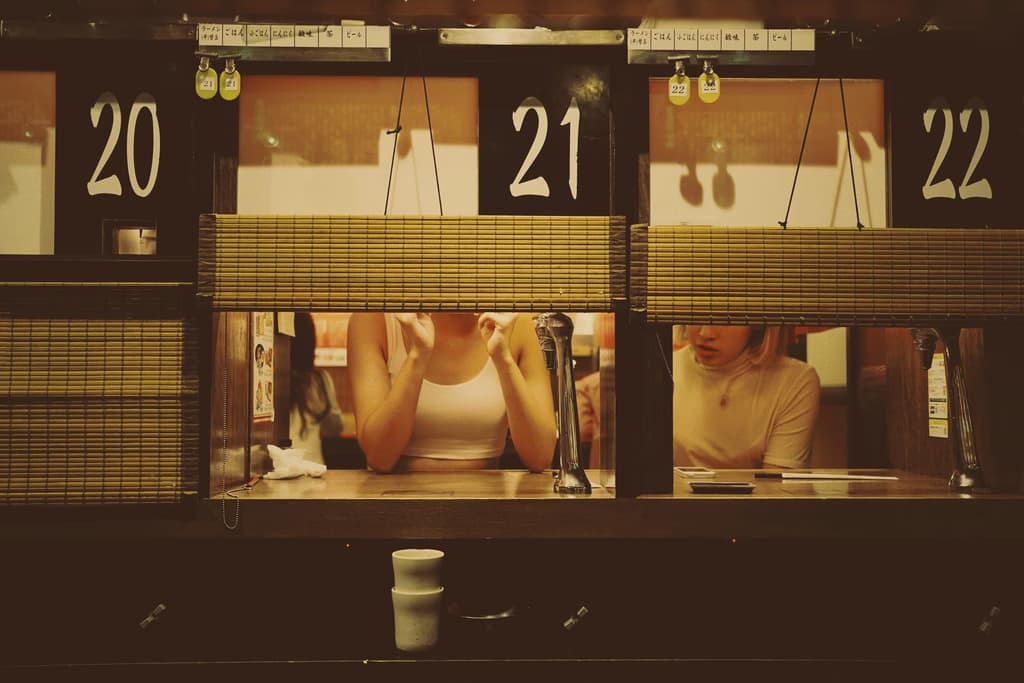
Six alleys run roughly parallel through the district. The buildings line both sides of passages so narrow that two people can barely walk side by side. The structures are two and three stories, and each floor typically houses a separate bar. A single building the size of a large closet might contain three businesses stacked vertically, connected by a steep interior staircase or sometimes only by going back outside and entering through a different door.
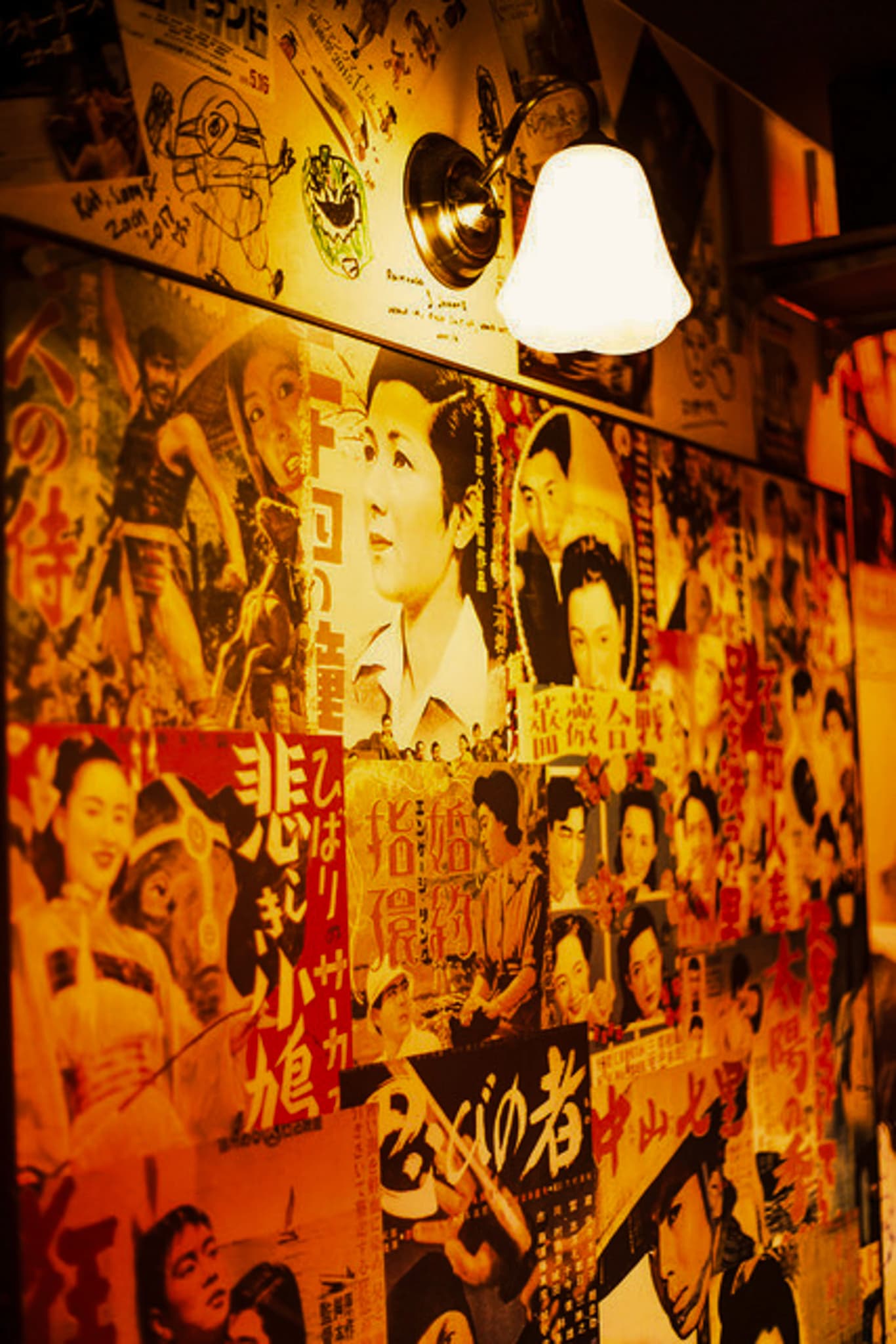
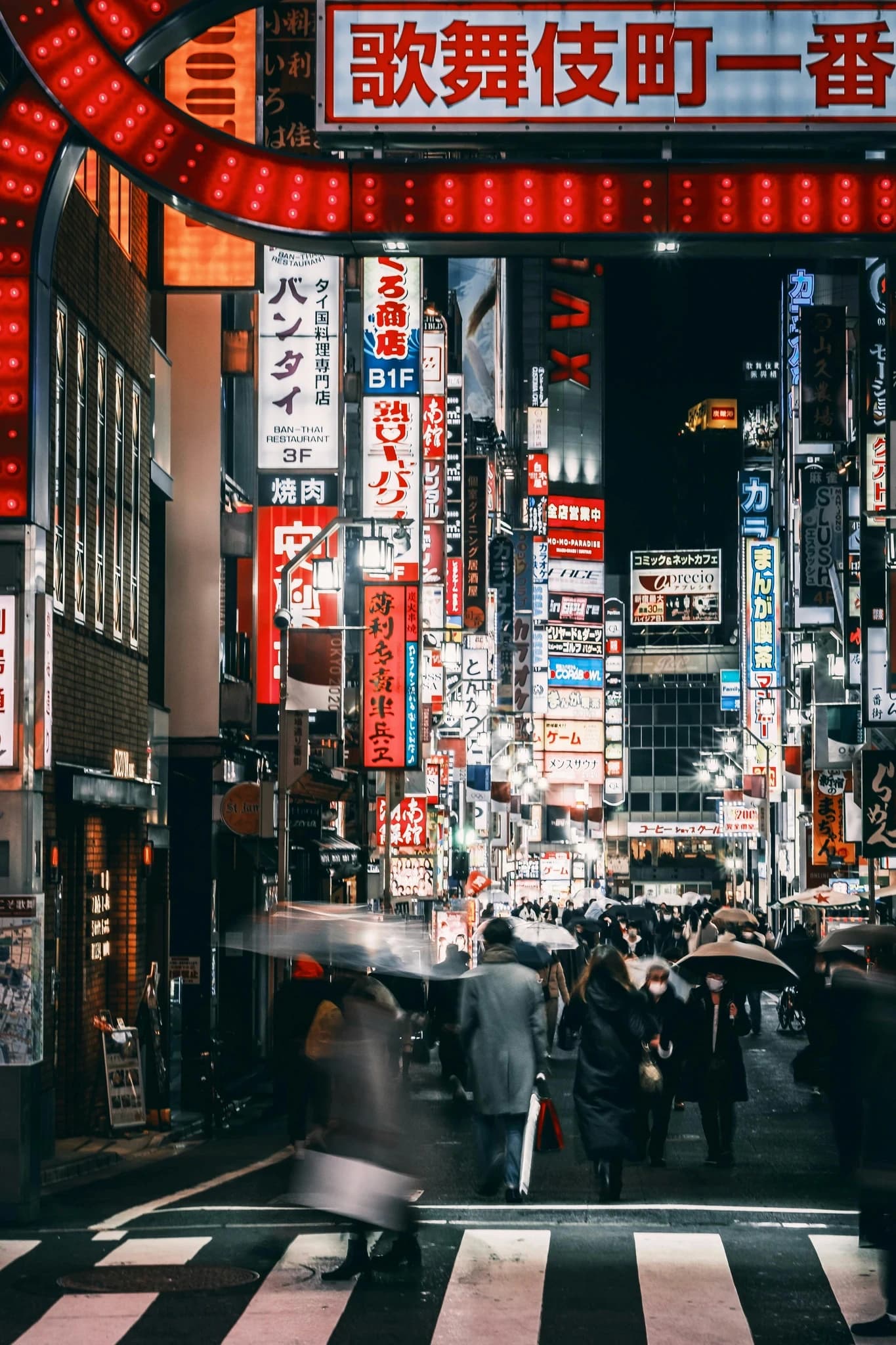
The signage is layered and chaotic in the way that only decades of organic accumulation produce. Hand-painted wooden boards sit next to buzzing neon kanji. Paper menus are taped inside windows alongside photos of regulars and handwritten rules. Small lanterns hang from awnings. Cables and ducting run overhead in tangles that would give a building inspector nightmares.
At night, the alleys glow. The lanterns cast warm light across the wooden facades, and the gaps between buildings create pockets of shadow that make the whole district feel smaller and more enclosed than it already is. The smell is cigarette smoke (many bars still allow indoor smoking) mixed with whatever the bar next door is grilling. The sound is conversation at close range, ice clinking in glasses, and music from a dozen competing speakers bleeding into the passages.
The buildings look like they shouldn't exist next to the glass-and-steel towers of modern Shinjuku. That visual contrast is deliberate in a sense. The buildings survive specifically because people fought to keep them when developers wanted the land. Walking into Golden Gai from the surrounding streets feels like stepping through a crack in the timeline, and that feeling is not manufactured. The buildings really are that old. The spaces really are that small. No contemporary architect would design this, and no developer would build it. It exists because it refused to stop existing.
How to Choose a Bar
Specific bar recommendations for Golden Gai age quickly. Bars close, change owners, shift their vibe, or stop welcoming walk-ins. Rather than a list that may be outdated by the time you read it, here is how to find a bar that works for you on any given night.
Walk all six alleys first without entering anything. This takes about fifteen minutes. Get a sense of which bars are open, which ones are full, and which ones look interesting. Pay attention to the handwritten menus and chalkboards in the windows. Bars with menus written entirely in Japanese may or may not welcome non-Japanese speakers, but many do. Bars with English menus are explicitly inviting foreign visitors, which can be either welcoming or transactional depending on the specific place.
Listen to the music. In spaces this small, the bartender's taste in music defines the room. If you hear jazz you like, that's a signal. If you hear J-pop or punk or 1970s soul, same thing. The music tells you more about a bar's personality than its exterior signage does.
Look at who's inside. A bar with three Japanese salarymen and an empty seat has a different dynamic than a bar with four tourists and an empty seat. Neither is wrong, but they're different experiences.
The best approach is to commit to the first bar that feels right rather than optimizing across all 280 options. The format works when you stop comparing and start settling in. Order a drink, talk to the bartender if they're inclined, sit with the atmosphere of the room, and let the evening develop at the pace of the bar rather than your itinerary.
When to Go and How Long to Stay
The best nights are Tuesday, Wednesday, and Thursday. The alleys are quieter, more bars have open seats, and the ratio of locals to tourists shifts back toward something closer to what Golden Gai used to feel like. Arrive after eating dinner elsewhere. Nine PM is the right time. Plan to stay in one bar for ninety minutes to two hours.
The worst time is Friday or Saturday night after 9 PM. The alleys fill with foot traffic, the popular bars are standing room only (which in a five-seat bar means standing in the doorway), and the dynamic shifts toward volume rather than intimacy. If your schedule only allows a weekend visit, come early, around 8 PM, before the peak crowds arrive.
One bar per night is better than four bars in an evening. The experience is depth, not breadth. The cover charge structure reinforces this: paying ¥1,000 four times for fifteen minutes each is a worse deal and a worse experience than paying it once and staying for the evening.
Getting There
From Shinjuku Station, take the east exit and walk toward Kabukichō. Golden Gai sits just east of Kabukichō's main entertainment blocks, bordered roughly by Hanazono Shrine to the east and the Kabukichō nightlife strip to the west. The walk from the station takes about five to eight minutes depending on which exit you use and how directly you navigate.
Google Maps will get you to the right area, but the alleys themselves don't have formal names or addresses that map apps handle well. Look for the cluster of low wooden buildings that contrasts sharply with the surrounding modern architecture. Once you spot the first narrow alley entrance, you've found it.
If you're coming from Omoide Yokocho after dinner, the walk takes about ten minutes across the station area. The two districts form a natural evening sequence: food on the west side, drinks on the east.
How Golden Gai Compares
If you've read our Sangenjaya guide, you already know about the Sankaku Chitai, another postwar drinking alley network in Tokyo. The two places share DNA. Both emerged from the same era, both pack small bars into narrow passages, and both survive as remnants of a Tokyo that's mostly been demolished and rebuilt. But they feel different now, and the difference comes down to fame.
| Golden Gai | Sangenjaya Sankaku Chitai | Harmonica Yokocho (Kichijōji) | |
|---|---|---|---|
| Tourist ratio | High (weekends) | Low | Low |
| Price per drink | ¥600–1,200 | ¥300–600 | ¥300–500 |
| Cover charge | Yes (¥300–1,000) | Rarely | Rarely |
| Opens | 8–9 PM | 6 PM | 5–6 PM |
| Best night | Weekday | Any | Any |
| Vibe | Famous, atmospheric, touristed | Local, gritty, postwar | Local, retro, eclectic |
Golden Gai is the famous version. Sangenjaya is the version that still works the way Golden Gai used to. If you want the atmospheric alleys and the literary history, Golden Gai is the right choice. If you want cheap drinks with a local crowd and no cover charges, Sangenjaya is the answer.
Golden Gai on a Private Tour
Golden Gai is one of the neighborhoods covered in Standing Room Only, our evening tour through Tokyo's local drinking culture. The value of going with someone who knows the alleys is practical: instead of spending forty-five minutes peering through windows and second-guessing yourself, you walk into a bar where the guide knows the bartender, sit down, and the evening starts immediately.
For the grilled-skewer side of Tokyo's drinking culture, Kushiyaki Confidential covers the craft behind the smoke. Or explore the full scope of what Tokyo looks like after dark with our nightlife guide, which explains why the city's drinking culture works the way it does and where Golden Gai fits within it.
Planning a broader Shinjuku day? The natural sequence runs Shinjuku Gyoen in the afternoon, Omoide Yokocho for dinner, and Golden Gai after 9 PM. The timing matters because Gyoen closes before either bar district opens. Get the order right and the whole evening flows.