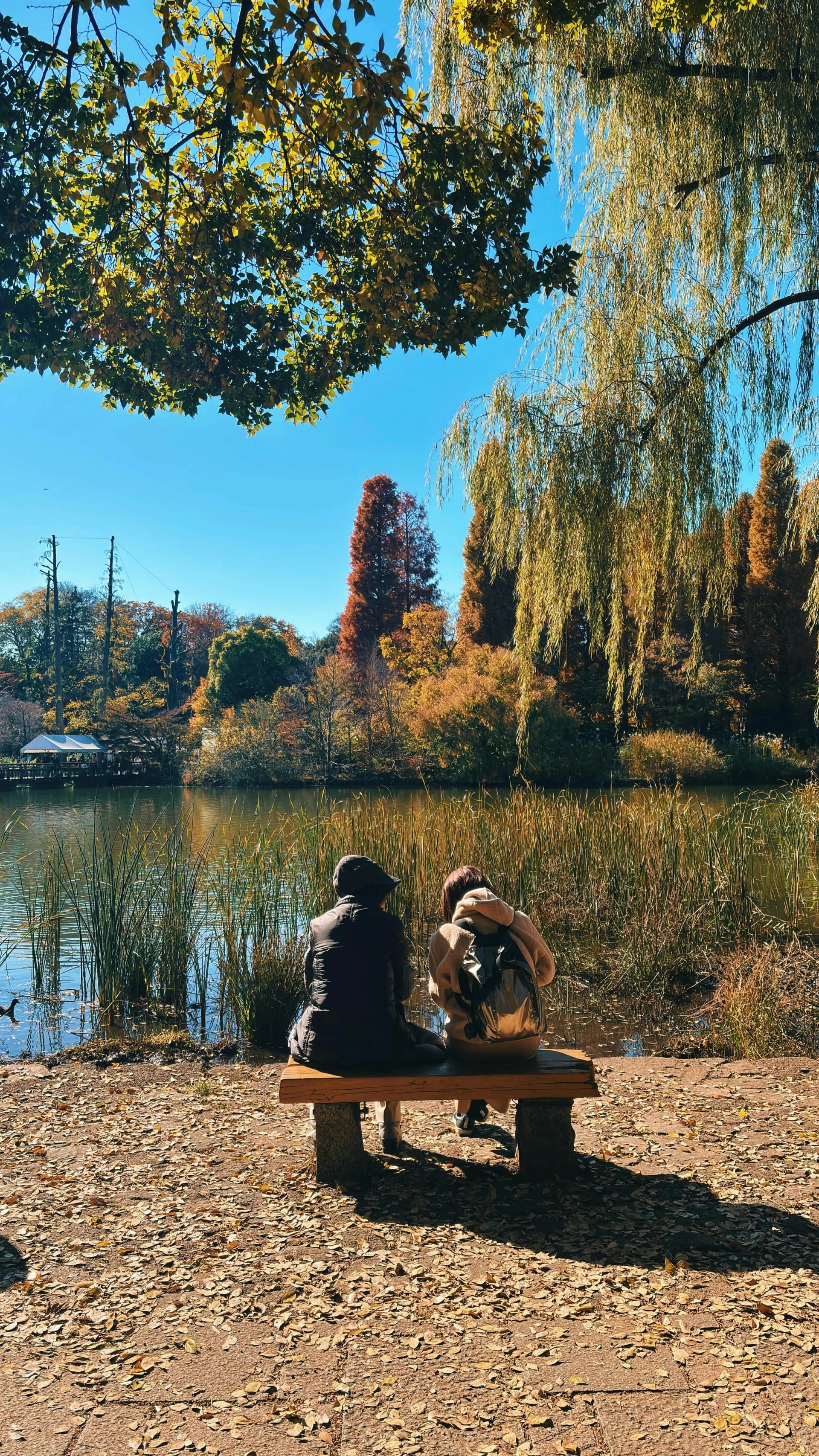
Every residential neighborhood has a performed version and a functional version. Travel blogs show you the first. Guides navigate to the second.
Tokyo's livable neighborhoods — Kichijoji at #1, Yanaka with its pre-war streets intact — are the ones your guidebook never mentions.
Shimokitazawa has two parallel streets. One is lined with vintage shops selling secondhand fashion to visitors. One block over, residents queue at Ozeki Supa and Foodium Daiei for groceries. Both versions run simultaneously on the same blocks — but every travel guide only shows you the first one.
The same pattern repeats across Tokyo's residential neighborhoods. Kichijoji has Sun Road for daily necessities and Harmonica Yokocho for after-work drinks. Yanaka has a shopping street that once served elderly residents but now tilts toward tourists. Each neighborhood has a version that faces visitors and a version that serves the people who actually live there.
You can walk the first version alone. The second requires someone who knows where to look.
Kichijoji: Why ¥171,000/Month Rent Proves the Math Works
The calculation that makes it #1 (or top 3): park + shopping + commute in one location
Kichijoji ranks among Tokyo's most desirable neighborhoods — #1 in some surveys, top three in most. Many assume this means it's a cheaper alternative to central Tokyo — a way to save money by accepting a longer commute.
The opposite is true. Average rent for a 1LDK apartment in Kichijoji: ¥171,300 per month. That's among the highest on the Chuo Line, comparable to many central wards. People don't live here to save money. They pay a premium for something rare: 43 hectares of park with 20,000 trees, a 14-15 minute express commute to Shinjuku, and daily-necessity shopping they never have to leave the neighborhood for.
The high rent is the proof that the calculation works. If Kichijoji were just a compromise, the premium wouldn't exist.
Sun Road: 95% locals, farm vegetables, household goods
Sun Road starts immediately north of Kichijoji Station — a 300-meter covered arcade lined with 150 shops. Unlike Asakusa's Nakamise or Osaka's Shinsaibashi, this isn't a tourist shopping street. One resident described it as "95% locals."
The mix tells you what residents need: farm vegetables from local suppliers, Daiso and 100-yen shops, drugstores, Natural Kitchen and CouCou for household goods. Satou, the butcher famous for menchi-katsu — ranked third in the world in a documentary about great beef — draws a daily line.
"Livable" in concrete terms: everything you need for daily life, on foot from the station.
Harmonica Yokocho: the after-dark transformation
Harmonica Yokocho sits just north of the station — a maze of narrow lanes named for the way its rows of tiny shops resemble harmonica reeds. During the day, you'll find a fishmonger that's been trading since the Showa era, traditional sweets shops, and cozy clothing stores.
Around 5pm, it transforms. The clothing stores close. Red lanterns light up. Standing bars open, serving drinks for ¥200-500. Ahiru Beer Hall, which sparked Harmonica's reinvention in the late '90s, sits in the middle of the alley — standing room downstairs, seating above. By 8pm, Harmonica Yokocho is fully activated — about 100 small bars and eateries packed into the narrow alleys, locals stopping for after-work drinks.
This day-to-night transition happens on the same streets. Without timing knowledge, you might walk through at 2pm and see only daytime retail.
What you see vs. what the guide decodes
A first-time visitor sees a pleasant neighborhood with a park and covered shopping streets. What they miss: the economic calculation that makes it work. The specific constraints Kichijoji resolves. The infrastructure clustering that lets residents never leave the neighborhood. The Showa-era businesses that survived alongside newer establishments.
That context transforms "nice neighborhood" into "this is how Tokyo optimizes residential life." For a deeper look at what guides navigate here, see our Kichijoji private tour page.
Shimokitazawa: Vintage Shops and the Street One Block Over
The vintage street: what every travel blog covers
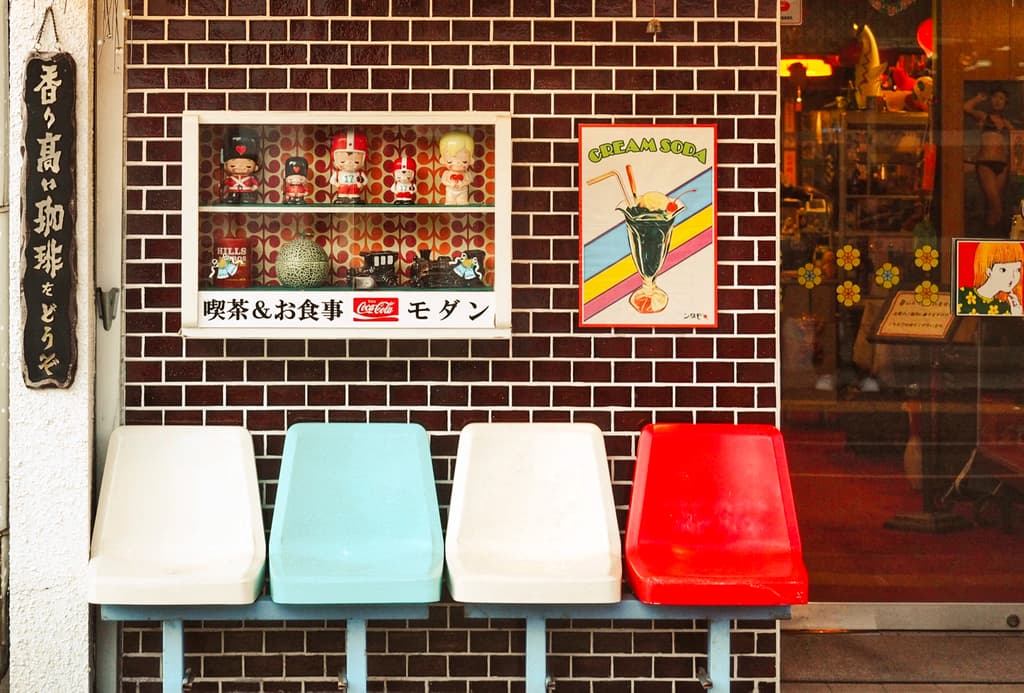
Shimokitazawa's reputation centers on vintage fashion. Shops like New York Joe Exchange, Chicago, and dozens of independent retailers line the narrow streets around the station. The neighborhood draws young people hunting secondhand finds, and travel guides have made it a fixture.
This version of Shimokitazawa is real. But it's the performed version — the layer designed to attract visitors, and the only one most travel content covers.
The residential street: supermarkets, drugstores, daily life
Shimokitazawa exists because it's surrounded by residential areas. People live here, not just shop here.
South of the station, the retail changes character. Drugstores. Bank branches. The 24-hour Foodium Daiei supermarket. Ozeki Supa, one minute from the station, stocking specialty produce and prepared foods. Recipe Shimokita, a building with five floors of daily necessities: supermarket, Uniqlo, Daiso 100-yen store.
This infrastructure explains why the neighborhood feels different from tourist districts. It's built for people who live here, with vintage shops as an attraction but not the only function.
The theater scene: what's left of the original bohemia
Before vintage fashion, Shimokitazawa was Tokyo's fringe theater capital. Honda Gekijo, founded in 1982, became the center of the scene. The Suzunari, started in 1981 as a rehearsal space, evolved into a venue where emerging and established theater companies still perform. Eight Honda Group theaters now operate around the station, with the Shimokitazawa Theater Festival running annually since 1990.
Toen Parata, the oldest theater in the neighborhood, has operated since 1978. Alongside the theaters, live music venues cluster in basements — Shelter (opened 1991, capacity 250), Shimokitazawa Garage (since 1994), Club 251. The scene that started in the 1970s still runs — but you wouldn't know it exists from reading travel blogs about vintage shopping.
Evening transformation: when Shimokitazawa becomes something else
Shimokitazawa doesn't activate until late morning. By afternoon, the vintage shops are crowded. After 8pm, the neighborhood shifts again.
The southern section — bars, izakayas, live houses — comes alive. The Suzunari's ground floor opens as a drinking alley. Music venues host evening shows. Mother's Ruin, the oldest rock bar in the neighborhood, fills with regulars.
First-time visitors arrive at noon for vintage shopping and leave before the transformation. They experience one mode of a neighborhood that runs in several. For how guides navigate both versions, see our Shimokitazawa private tour overview.
Yanaka: 70 Temples That Don't Announce They Survived
What survived: 1657, 1923, 1945 — why this neighborhood still stands
Most of Tokyo's "historic" buildings aren't original. Senso-ji in Asakusa was rebuilt in the 1950s after wartime bombing. The Imperial Palace is largely reconstruction. What looks old is often new.
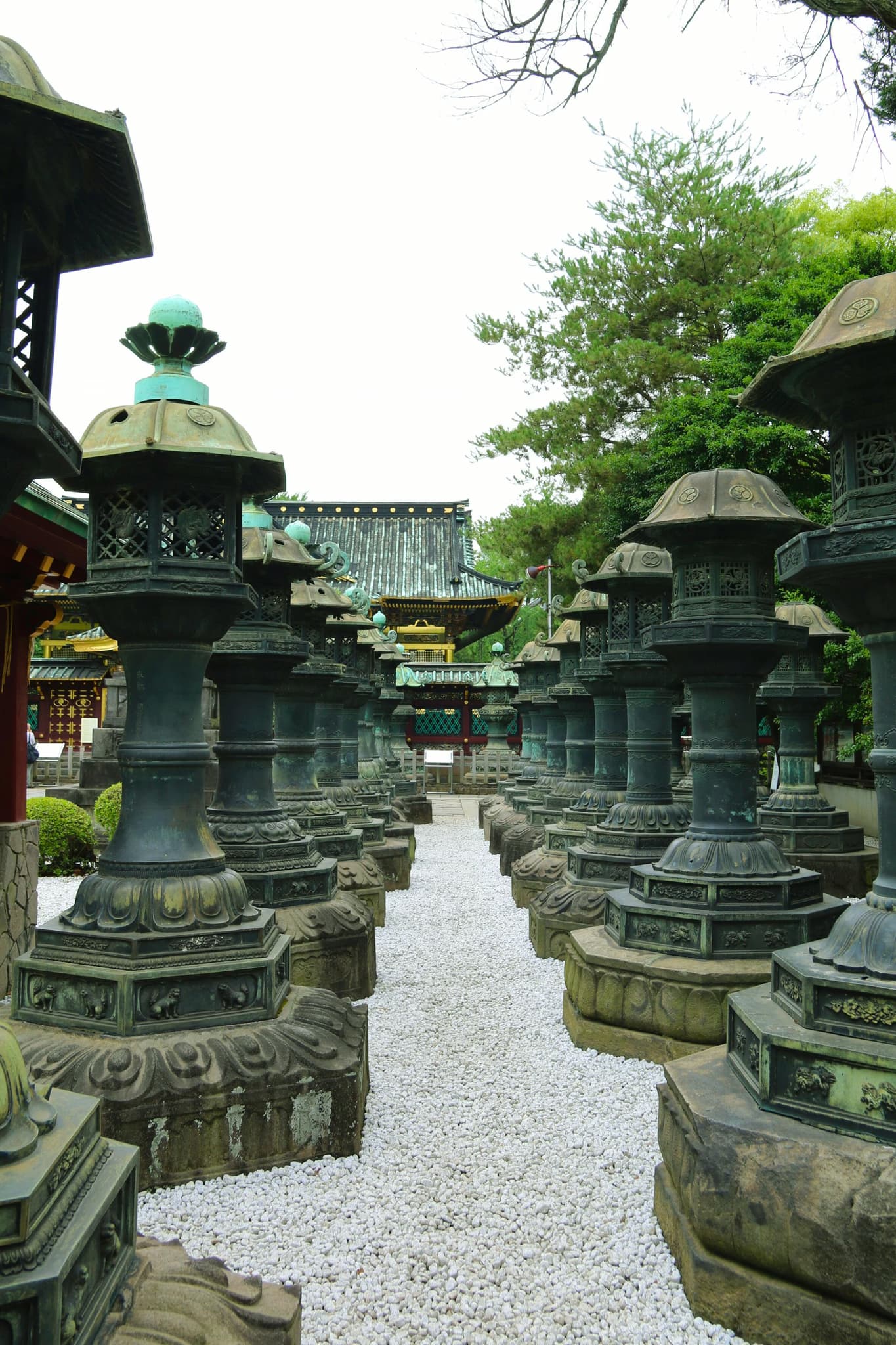
Yanaka is different. The neighborhood survived the Great Meireki Fire of 1657, the Great Kanto Earthquake of 1923, and the Allied firebombing of 1945. Unlike Asakusa and Ueno, where a few large buildings made it through, Yanaka survived as a whole neighborhood — narrow lanes, wooden houses, and over 70 temples intact.
Tennoji Temple, founded in 1274, still stands with its bronze Buddha statue from 1690 modeled after the Kamakura daibutsu. The five-story pagoda survived both the earthquake and the war, only to be destroyed by arson in 1957.
Walking through Yanaka, the buildings look old. Without someone to tell you, you don't know they actually are — that what you're seeing is genuine survival, not careful reconstruction.
Yanaka Ginza: shotengai serving elderly residents (or serving tourists?)
Yanaka Ginza is a 170-meter shopping street with 60-70 small shops. It started as a neighborhood market after the war and still operates as a shotengai — a traditional shopping street.
The original function was serving local residents, particularly the elderly population that dominates Yanaka's demographics. Niku-no-Sato, a butcher operating since 1933, sells menchi-katsu and croquettes. Prepared food shops offer ready-to-eat meals. Greengrocers and fish sellers stock ingredients for home cooking.
But tourism has changed the mix. Cat-themed souvenirs now fill shops that once sold household goods. Visitors crowd the street for photographs at sunset. The butcher's menchi-katsu is now famous with tourists, not just known to locals.
The tension: local stores becoming souvenir shops
Some longtime visitors have noticed the shift. "Some of the charm is fading," one noted, "as a few local stores are replaced by souvenir stores selling plastic junk."
This isn't unique to Yanaka. It's the tension every residential neighborhood faces when it becomes a tourist destination — the performed version gradually overtaking the functional one. The butchers and prepared food shops still exist. The cat-tail donuts at Shippoya are a recent addition. Both are real, but the balance is shifting.
Temple backstreets: the residential Yanaka behind the tourist-facing one
Beyond Yanaka Ginza, the neighborhood returns to its residential character. Narrow lanes wind between temples and wooden houses. The pace is slower. The shops, where they exist, serve elderly neighbors rather than visitors.
This is the Yanaka that earned its reputation — not the Instagram-famous shopping street, but the temple backstreets where the quiet character of old Tokyo persists. Free walking tours don't cover this area. Audio guides have limited content here. The performed version of Yanaka ends at the edge of Yanaka Ginza. For what guides show you beyond that edge, see our Yanaka private tour breakdown.
Walking These Neighborhoods Alone
What self-guided gives you
You can walk these neighborhoods yourself. Inokashira Park is accessible to anyone. Shimokitazawa's vintage shops are marked on Google Maps. Yanaka Ginza's sunset stairs appear in every travel guide.
The performed layer works fine without help.
What self-guided misses
The functional layer needs narration. Which Sun Road shop has the farmer who drives in from Saitama? Why does Harmonica Yokocho transform at 5pm? What makes Yanaka's survival different from Senso-ji's reconstruction?
These places aren't hidden. They're visible infrastructure whose significance isn't apparent without context.
The honest trade-off
Self-guided gets you the performed version free. Guided gets you the functional layer plus real-time narration, for money and a half-day. Neither is wrong — they're different experiences of the same geography.
For a complete comparison of free walking tours, audio guides, and private guides—including when each format works for different neighborhoods—see our tour format guide.
When to Show Up
| Neighborhood | Opens | Peak | Closes | Note |
|---|---|---|---|---|
| Yanaka | 10am | Mid-afternoon | 5-6pm | Sunset views at Yuyake Dandan stairs. Arrive at 7pm = shutters. |
| Shimokitazawa | Lunchtime | Afternoon (vintage) / 8pm+ (bars) | Late | Two distinct modes. Most visitors see only the first. |
| Kichijoji | Consistent (Sun Road) | — | 5pm transition → 8pm full (Harmonica) | Red lanterns signal activation. |
This timing knowledge is invisible from travel guides. It determines whether you see neighborhoods functioning or dormant.
Who Should Skip This
When tourist highlights serve you better
If you have limited time in Tokyo and want famous landmarks — Senso-ji, Meiji Shrine, Shibuya Crossing, TeamLab — residential neighborhoods won't serve that goal.
These neighborhoods offer ordinary streets, functional infrastructure, and insight into how Tokyo works. They don't offer postcard photography or famous attractions. A day in Kichijoji is a day not spent at must-see sites.
When visual spectacle is the priority
Residential neighborhoods photograph like residential neighborhoods. Storefronts, covered arcades, narrow lanes with bicycles parked outside. Nothing spectacular. Nothing that screams "Tokyo."
If you want dramatic images — neon crossings, digital art installations, massive temple gates — these neighborhoods won't deliver. Sun Road's covered arcade doesn't compete with Shibuya at night.
What residential neighborhoods actually offer
The value: understanding how Tokyo works. How residents solve daily life in a city this dense. How infrastructure clusters to serve specific populations. How neighborhoods maintain distinct character at the street level.
Systemic understanding, not visual spectacle. It rewards curiosity about how cities function.
If that's what you want, these neighborhoods are worth your time. If not, tourist districts serve you better — and that's a reasonable choice.
Which Tour Fits
| If you want... | Tour | Why it fits |
|---|---|---|
| Compare patterns across neighborhoods | Ordinary Tokyo | Togoshi Ginza → Shimokitazawa → Kichijoji in one day. See performed/functional pattern repeat. |
| Yanaka's survival in historical context | Timeless Tokyo | Contrast genuine pre-war architecture with reconstruction. Understand why Yanaka exists as it does. |
| Deep dive on one neighborhood | Infinite Tokyo | Full customization. Hours in Shimokitazawa's theater district, or Kichijoji from morning through evening transformation. |
Where Hinomaru One Fits
Our guides know where the functional layer is. They walk you through Sun Road at 95% locals, time Harmonica Yokocho's 5pm transformation, and explain why Yanaka's buildings are actually old — not just old-looking. The performed version is on every map. We navigate to the version one block over.
At Hinomaru One, we design culturally rich, stress-free private Tokyo tours for first-time and seasoned travelers. Unrushed. Insightful. Always customized.