Reviews describing adaptations and problem-solving predict your experience better than "amazing guide, highly recommend."
How to read private tour reviews when every operator sits at 4.8 stars: ignore the stars and look for capability verbs, the complaint hiding after "but," and whether people booked again. Reviews are useful. Most advice about reading them just points you at the wrong things.
You've read fifty reviews. Every operator has 4.8 stars and every review says "amazing guide, highly recommend," and you still can't tell whether the tour will suit your trip.
Star ratings don't help when everyone falls between 4.5 and 5.0. Volume doesn't help either, since 500 generic reviews tell you less than 50 detailed ones. And hunting for fakes misses the larger issue, which is the 92% of reviews that are real and tell you nothing useful.
The reviews worth reading describe what happened when something had to change, and they're often not the most enthusiastic ones.
When Every Operator Has Great Reviews
The 4.8-Star Ceiling
Once legitimate operators all sit between 4.5 and 5.0 stars, the stars stop helping you compare them. A 4.7 operator and a 4.9 operator aren't meaningfully different. The gap could be one disappointed customer, one complaint about language, or one rainy day the guide couldn't help.
Nearly half of all TripAdvisor reviews are 5-stars, and another third are 4-stars. With three-quarters of reviews positive by default, the average says very little about whether you will have a good time.
Why 500 Generic Reviews Tell You Less Than 50 Detailed Ones
The numbers here run against intuition. 78% of travelers never leave a review unprompted, but when a company asks its happy customers, the rate jumps to 80%. So there are two filters: most people don't review at all, and the ones who do were asked to.
A high-volume operator can collect hundreds of "great tour, highly recommend!" reviews by asking hard enough. A boutique operator with 50 detailed reviews, where guests describe particular moments, changes of plan and situations, tells you more than an aggregator with 500 generic ones. A big review count mostly tells you the operator is large.
The Words That Actually Matter
Capability Verbs vs. Satisfaction Adjectives
The most useful reviews use verbs for what the guide did. The less useful ones use adjectives for how the guest felt.
Adjusted, adapted, improvised, accommodated, handled, resolved: words like these mark the moments when plans changed and the guide dealt with it. They show you what the operator can actually do.
Generic reviews lean on amazing, wonderful, fantastic, incredible. Those describe the guest's mood. They say nothing about what the guide will do when your child gets tired, the rain starts or the restaurant turns out to be closed.
"When the temple we planned to visit was unexpectedly closed, our guide pivoted to a nearby garden we never would have found" tells you more about a guide than ten reviews saying "amazing experience, 5 stars."

The Story Behind "But"
In a positive review, read what comes after "but." Politeness makes people lead with praise, and the real concerns come afterward.
"The tour was great, but the guide mostly walked in front of us and rarely gave information unless we asked." The 5-star rating hides a real gap in the experience, and that "but" gives it away.
Another review praised a guide's "great knowledge of history" and then tucked in the actual story: "It was not very comforting to be walking up the side of a hill at twilight on a very narrow sidewalk while our guide used Google to direct us to our accommodation." That guide knew the history and was still navigating by phone at dusk.
"Overall experience was good… only bad experience we had was in our hotel where there was no electricity whole night in chilling cold." The problem is buried and the rating stays positive, even though the night clearly wasn't.
Why 3-Star Reviews Often Tell You More
3- and 4-star reviews are often more informative than 5-star ones because they explain why. A 5-star review might just say "loved it." A 3-star review says what worked, what didn't and who it suited.
Middling reviews tend to be the honest, practical ones. The reviewer liked some things, disliked others, and bothered to say both, which helps you judge whether those tradeoffs matter for your trip.
When you research an operator, go looking for the 3-star and 4-star reviews on purpose.
The 2-Year Expiration Date on Reviews
Why Your Guide Might Not Work There Anymore
Every guide to reviews says "check recent reviews," and almost none of them say why.
The average tour guide stays in the job for 1 to 2 years. Over half work part-time, and nearly two-thirds are self-employed or freelance. It also helps to know the difference between licensed and unlicensed guides when you read reviews.
A glowing 2022 review might be about a guide who has since left the company. Book in 2025 and you get whoever is on the roster now, quite possibly someone else with different strengths, a different way of talking and different expertise.

What "Recent" Actually Means
For private tours, treat "recent" as the last 12 to 18 months. Give anything older than two years much less weight. The company may be the same, but the guide who earned that review has probably moved on.
This matters most on aggregator platforms and freelance marketplaces, where guides turn over fastest. On Viator, for example, you don't find out who your guide is until 24 to 48 hours before the tour, so you may be reading reviews of guides you'll never meet.
It matters less with small operators who keep the same guides year after year and can tell you exactly who will lead your tour before you book.
The Strongest Signal Isn't in the Words
When Someone Books a Second Day
Writing "highly recommend" is free. Booking a second day in the middle of a trip means getting the credit card out.
Rebooking is the strongest sign you'll find in any review. When someone finishes a tour and immediately puts more money and holiday time into the same operator, they're showing you something words can't fake.
Give weight to reviews that mention rebooking on the same trip, coming back on later trips, or relatives booking after a recommendation. One reviewer described their February trip as their "5th time working with" the same tour company: five separate decisions to spend money, which counts for more than five enthusiastic paragraphs.
What Reviews Never Mention
Reviews record how people felt after the tour. A lot of your experience depends on what happens before the tour, and reviews rarely mention it:
-
How quickly and thoroughly does the company respond to inquiries?
-
Do they ask questions about your interests, or just confirm the booking?
-
Can they articulate what makes their tours different?
-
Do they proactively mention logistics, meeting points, and what to expect?
The inquiry is a preview. A company that sends a three-sentence confirmation works differently from one that asks about your mobility, what you like to eat and whether you're celebrating anything.
One traveler wrote: "I was hesitant to book with few reviews, but after exchanging emails, I felt confident."
When there aren't many reviews, or none match your situation, the conversation before booking fills the gap. We cover the specific questions worth asking separately.
Reading Reviews by Platform
| Platform | Strength | Weakness | Best For |
|---|---|---|---|
| TripAdvisor | Longer narrative reviews | "Most helpful" sorting buries detail | Finding adaptation stories, 3-4 star filtering |
| Volume and recency (3x faster) | Shorter reviews, ratings run ~0.3 higher | Checking active status, recent red flags | |
| Company websites | Shows what company values | Curated (expected) | Detecting specificity vs. generic praise |
| Aggregators (Viator, GetYourGuide) | Wide selection | Reviews can't capture platform-level failures | Avoid for support-critical decisions |
TripAdvisor: Where to Find the Real Stories
TripAdvisor is still the review site most focused on travel. Its reviews run longer and carry more detail: where people went, what went wrong, how it got fixed.
Filter for 3- and 4-star reviews. Skip the "most helpful" sort, which pushes up generic positive reviews that collected agreement clicks and buries the detailed stories underneath.
The badges (Contributor, Senior Contributor, Top Contributor) measure how many reviews someone has written, not how good they are. A first-time reviewer with a detailed story is worth more than a Top Contributor who posts "Great tour!" everywhere.
Google: Volume Over Depth
81% of consumers check Google reviews first. Google piles up reviews roughly three times faster than TripAdvisor, partly because anyone with a Gmail account can post one straight away.
The catch is that Google reviews are shorter and the same business rates higher there. A 4.6 on Google is roughly a 4.3 on TripAdvisor, so adjust for that.
Google is good for recency: whether the company is still operating and whether recent customers flagged problems. For detail about the tour itself, TripAdvisor has more.
Aggregators like Viator or GetYourGuide have one limit worth knowing. One traveler landed in Lapland to find their excursion cancelled, then found the weather was fine, and said the platform "had zero involvement with the actual people providing the trips." When something goes wrong on an aggregator, you get customer service instead of the guide who could fix it.
Company Websites: Specificity Is the Signal
Companies curate the testimonials on their own sites, as you'd expect. What's worth noticing is which ones they put up.
Generic testimonials ("10/10 would recommend!") suggest the company either doesn't collect detailed feedback or doesn't want to share it. Specific ones, with guest names, situations, changes of plan and stories, show a company confident in how it runs things.
A testimonial about a guide handling something particular, like accessibility needs, dietary restrictions or a child who hit a wall mid-afternoon, tells you two things. The company copes with unusual situations, and it's willing to publish reviews that mention difficulties alongside the praise.
If a company's website shows only generic enthusiasm, its reviews elsewhere probably say something different.
Reading Review Photos and Videos
Text tells you how the guest felt. Photos and videos show what happened.
What review photos reveal:
| Photo Type | What It Tells You |
|---|---|
| Group shots with guide | Guide's demeanor, group size in practice, where they actually went |
| Food photos | Whether the tour hits local spots or tourist restaurants |
| Street scenes | Neighborhood character, crowd levels, weather conditions |
| Inside venues | Whether the tour accesses intimate spaces or sticks to public areas |
| Selfies only | Guest focused on themselves rather than the tour, so less useful |
Red flags in photos:
- Every photo is at the same famous landmarks (suggests cookie-cutter itinerary)
- No photos of guide or group (may indicate minimal engagement)
- Photos that don't match the review text (copied from elsewhere or stock images)
- All photos from one angle or location (tour may have been shorter than described)
Video reviews are rare and worth finding. A 30-second clip of a guide explaining something in a market tells you more about how they communicate than 500 words of text. Search YouTube and TikTok for "[operator name] Tokyo tour."
If a review has no photos at all, the reviewer either didn't think to take any or didn't think the day was worth recording. Neither tells you much, though reviewers who post photos are generally more engaged, and their opinions count for more.
The 8% Problem (and the 92% Bigger Problem)
Where Fake Reviews Happen
TripAdvisor removed 2.7 million fake reviews in 2024, about 8% of submissions. More than half were "review boosting" by businesses or their affiliates, and some were AI-generated.
So fakes exist, and they're a small slice.
The Genuine Reviews That Tell You Nothing
The other 92% are genuine, and most of them are unhelpful. They come from people who had a good time and said so, and they contain nothing that helps you choose.
"Great tour, amazing guide, would recommend to anyone!" is probably a real review from a real person. It tells you nothing about whether the guide copes with mobility limits, works around the weather or can change plans when a shrine is unexpectedly closed. The ability to customize and adapt is what separates good guides from adequate ones.
So spend less effort spotting the 8% of fakes and more reading the 92% of real reviews for capability verbs, buried complaints, rebooking and travelers in situations like yours.
Seasonal Review Patterns
Reviews from different seasons show different things about a guide.
| Season | What Reviews Reveal | What to Look For |
|---|---|---|
| Cherry blossom (late Mar–early Apr) | Crowd management ability. Whether guide found quiet spots or followed tourist herds. | "Found us a spot away from the crowds" vs. "beautiful but packed everywhere" |
| Summer (Jun–Aug) | Heat and weather adaptation. Willingness to modify plans for comfort. | "Adjusted the route when the heat got intense" vs. "pushed through despite the humidity" |
| Rainy season (Jun–early Jul) | Real-time pivot ability. Indoor backup knowledge. | "Had great alternatives when rain started" vs. "we got soaked waiting for it to pass" |
| Autumn foliage (Nov) | Timing knowledge for peak colors. Crowd navigation at popular gardens. | "Knew exactly which garden would be at peak" vs. "leaves were past prime" |
| Winter (Dec–Feb) | Pace adjustment for shorter days. Warm-up spot knowledge. | "Found cozy spots to warm up between sites" vs. "felt rushed as it got dark" |
Ratings lean positive in the pleasant seasons (spring, autumn) when the weather cooperates. Reviews from the hard seasons (summer, rainy) tell you more. A 5-star review in August means the guide got a group through conditions that make touring difficult.
Reviews from January-February often come from more experienced travelers, since most tourists avoid the "bad" seasons, and those reviewers tend to be pickier and more specific. A guide who keeps high ratings through the off-peak months has shown more than one praised during cherry blossom season.
Match the reviews to when you're traveling. Visiting in summer? Read reviews from summer visitors. A guide praised for cherry blossom know-how may handle heat badly.
What This Looks Like in Practice
The Adaptation Stories
You can use this approach on any company's reviews, ours included. We tried it on our own guest feedback.
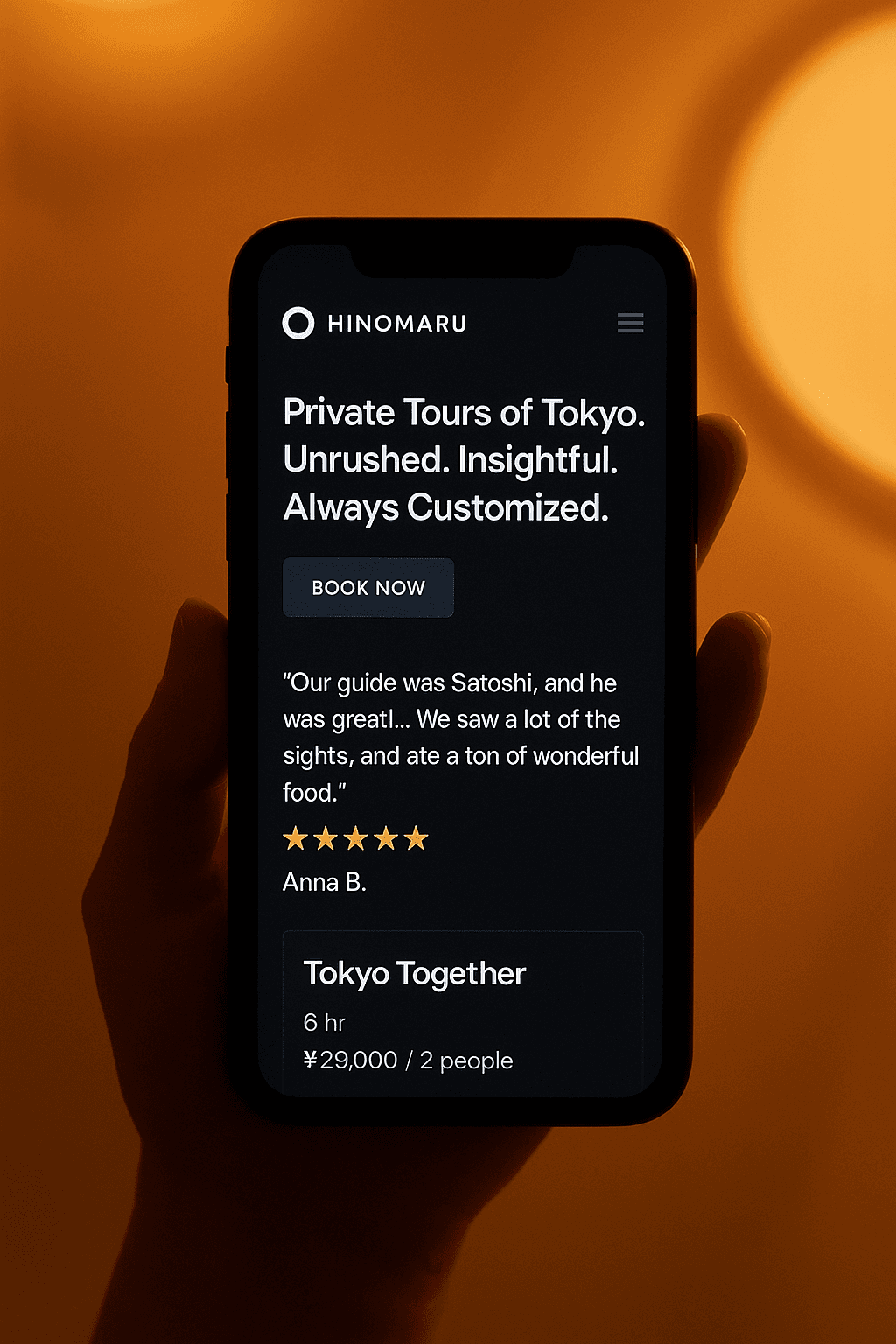
One guest traveling with a daughter who uses a wheelchair wrote: "Satoshi went out of his way to accommodate her needs." That names a real constraint and how the guide handled it, which "great guide" never would.
Another guest, who had explored Tokyo on their own many times, wrote: "I'd been to Tokyo many times before and still had never seen or heard of most everything he included in our tour." That's a specific claim from someone in a position to judge.
What Guests Mention Without Prompting
The reviews that tell you most describe things we never asked guests to bring up:
"We liked it so much, we immediately booked a second day… I can't recommend Rina enough." Deciding to rebook mid-trip, after the first tour, is the behavior worth paying attention to.
We picked these reviews for what they describe: accommodating a need, adapting a plan, showing experienced travelers things they hadn't found, and guests acting on their opinion instead of just stating it.
Read any operator you're considering the same way.
Finding the Reviews That Match Your Trip
When Generic Reviews Don't Apply to You
If someone in your group uses a wheelchair, reviews from able-bodied travelers won't predict your day, and we look at how private tours handle accessibility needs separately. If you're a repeat visitor seeking depth, reviews from first-timers won't show whether the guide can go past the basics. If you're bringing three generations, reviews from couples won't show whether the guide can pace a day for very different energy levels, which is what tours designed for families are built for.
One traveler with mobility concerns booked a tour the salesperson described as having "the least amount of walking," which was "very minimal." Other guests had logged 25,000 steps per day. The reviews were accurate; their writers just cared less about walking. Knowing how much walking to expect helps you read past gaps like that.

The most useful reviews come from people whose situation matches yours. When you can't find any, and for unusual needs you usually won't, reviews alone won't settle it. If you're still comparing operators and deciding what matters, that's a separate decision.
Beyond Reviews: The Conversation That Reveals Everything
Ask about your own situation. With mobility concerns, ask how they adjust routes. With kids, ask about pacing and bathroom breaks. If you've been before, ask what they'd show you that you probably haven't seen.
Watch how they answer: whether they ask follow-up questions, mention similar guests they've hosted, and seem curious about your trip instead of just confirming a booking. We'd trust that over a hundred 5-star reviews.
The companies worth booking treat that conversation as the start of the tour. If you're still deciding whether a private tour is worth it at all, reviews can help with that too.
Frequently Asked Questions
What should I look for in private tour reviews?
Look for capability verbs such as adjusted, adapted, improvised and accommodated, which describe what a guide did rather than how the guest felt. "She noticed we were tired and suggested a coffee break" tells you more than "amazing guide, 5 stars." Read the 3- and 4-star reviews as well, since they tend to be more honest about the tradeoffs.
How do I know if tour reviews are genuine?
About 8% of TripAdvisor reviews are fake (2.7 million removed in 2024). The bigger problem is the 92% of real reviews that tell you nothing useful, the "great tour, highly recommend" kind with no particular moments in them. Concentrate on reviews with place names, stories of plans changing, and details of what the guide did.
Why do all tour operators have similar star ratings?
Legitimate operators sit between 4.5 and 5.0 stars because 78% of travelers never leave a review unprompted and companies ask their satisfied customers to post one. Nearly half of all TripAdvisor reviews are 5-stars. With three-quarters of reviews positive by default, the average can't separate operators, so read the text and ignore the number.
How recent should tour reviews be?
Favor reviews from the last 12–18 months. The average tour guide stays in the role for 1–2 years, and over half work part-time, so a glowing 2022 review may describe a guide who has since left. This matters most on aggregator platforms, where guides turn over fastest and you don't learn who your guide is until 24–48 hours before the tour.
Are reviews enough to choose a tour operator?
No. Reviews record how people felt after the tour, and a lot of your day depends on things before it that reviews rarely mention: how fast the company replies, whether they ask about your interests, whether they bring up logistics without being asked. The conversation before booking shows how the company handles your situation before you've paid anything.
Where Hinomaru One Fits
Our guest reviews describe specific adaptations, the kind of detail this article tells you to look for. When you get in touch, we can put you in contact with past guests who traveled the way you will, whether that's with young children, with a wheelchair user or as a repeat visitor looking for more depth. For us the tour starts with that first conversation, before you've booked.
At Hinomaru One, we plan private Tokyo tours for first-time and seasoned travelers, and we pace them so there's time to take the city in.