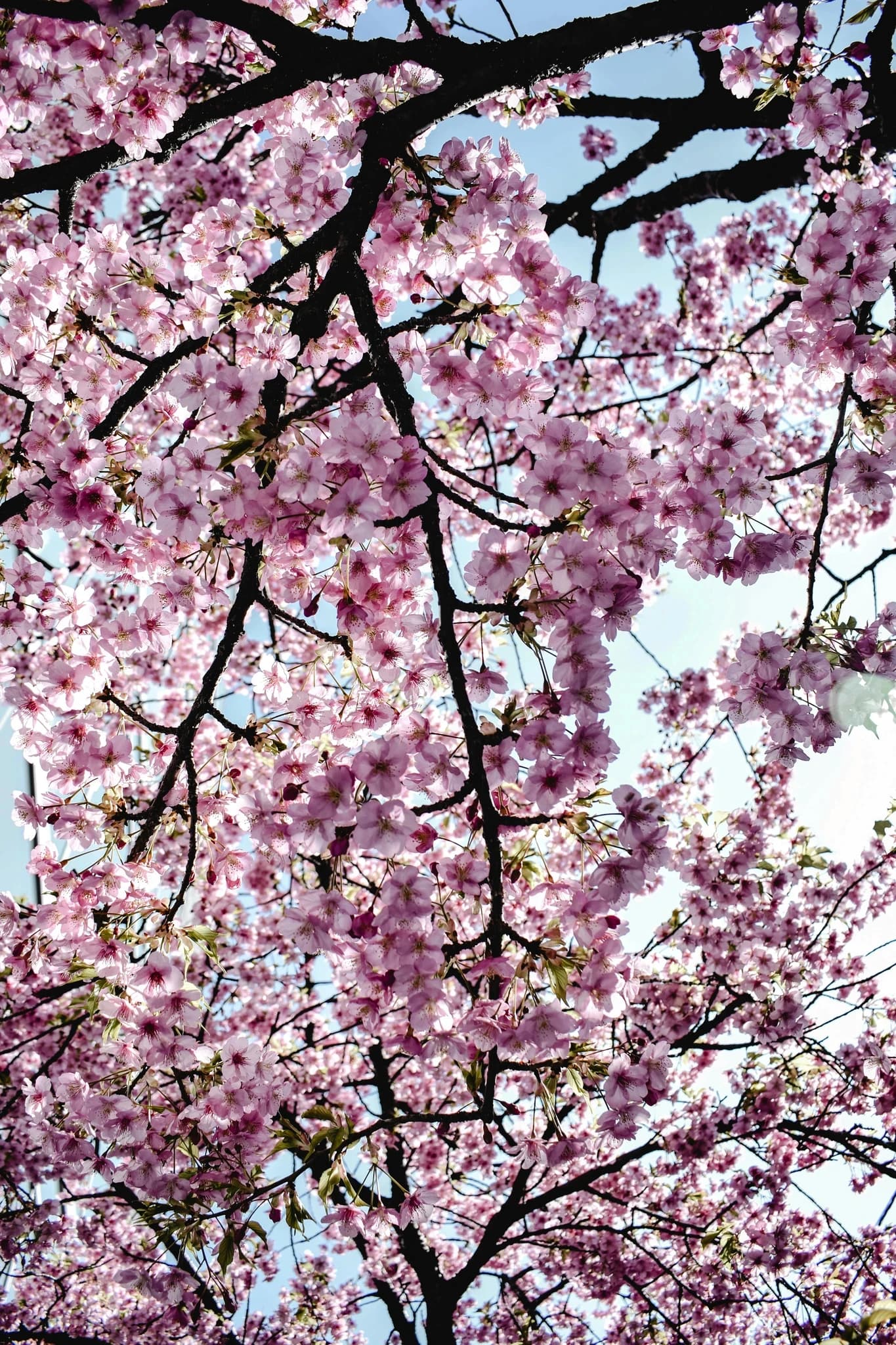
The forecast shifts. The crowds surge. Peak bloom at famous spots becomes unusable. A guide scouts and pivots daily.
Tokyo cherry blossoms come with a forecast that keeps moving and crowds that pile up at the same few famous spots, which at peak bloom can become unusable. A guide scouts each morning and changes the plan to match.
The season runs roughly late March to early April, and the window is narrow enough that one cold week can push peak bloom past your travel dates. Ueno Park draws 2 million+ visitors, and Shinjuku Gyoen requires advance reservations on peak dates. The forecast you booked around can move by a week. And the empty pink tunnels in the photos online look nothing like the famous spots in person, where you'll be standing in a crowd.
If you're here during the season, you'll see cherry blossoms one way or another. What you're deciding is how to handle a short, unpredictable window: do it yourself, join a group tour that sticks to a fixed schedule whatever the conditions, or hire someone who can change course based on what's actually blooming today.
The Peak Bloom Problem: Why Everyone's at the Same Place at the Same Time
Nearly everyone arrives in Tokyo in cherry blossom season with the same plan, which is to see the famous spots at peak bloom. Ueno Park and the Meguro River are always crowded then, and at peak bloom on a weekend they become unusable.
Ueno Park: 2 Million Visitors Per Season
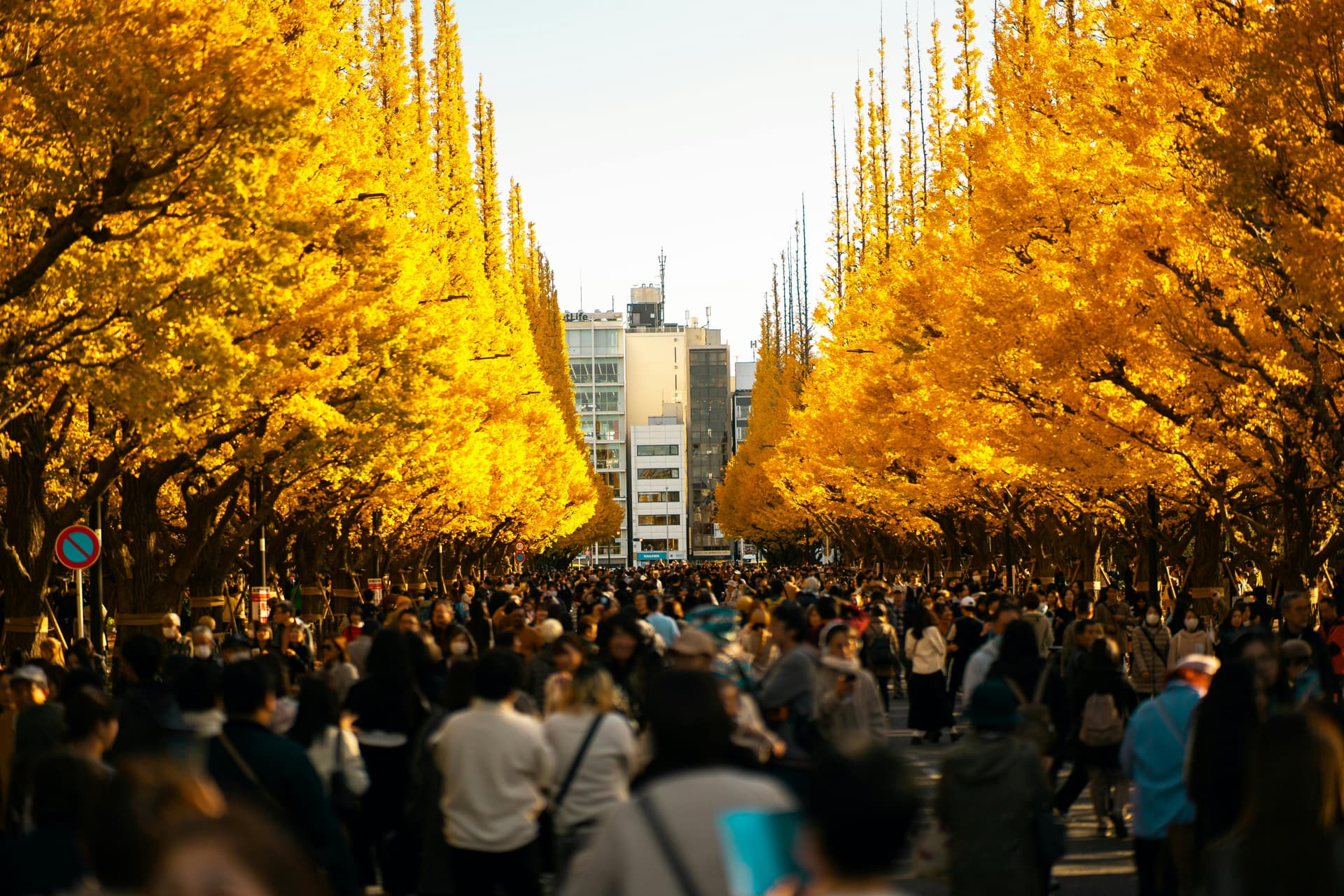
Ueno Park has 1,000+ cherry trees and draws over 2 million visitors during the season. On peak bloom weekends, the main paths turn into what one traveler described as "shuffling along amongst queues of people, far worse than Disneyland." At that point you spend more energy on the crowd than on the blossoms.
"Going Early" Means 6-7am, Not 9am
You've probably read that going early beats the crowds. It does, if early means 6-7am. A peak morning at the big parks goes roughly like this:
-
5am: photographers arrive to claim spots for competition shots
-
6-7am: the real "early" window, when the park is still easy to get around
-
9am: the early advantage is gone
-
11am: on weekends, the paths in Ueno Park are close to impassable
On peak days, some picnic spots at popular parks are claimed the night before or by 5am.
Weekend vs Weekday: A 4-5x Difference
Famous spots are crowded on weekdays too during peak bloom, but weekends bring 4-5 times as many visitors. A spot that's "busy but manageable" on Tuesday is "shoulder-to-shoulder" on Saturday. For crowd strategies that apply beyond the season, see our guide to avoiding crowds in Tokyo.
Shinjuku Gyoen: Peak-Day Reservations
On peak cherry blossom dates, Shinjuku Gyoen requires advance ticket reservations to control numbers (for example, on designated peak days in late March and early April during 10:00-16:00). On normal days you can just pay at the gate. Those peak dates often fall on public holidays, which makes the crowds worse. A public park only brings in reservations when the numbers get that bad.
Forecasts Are Rough Estimates, Not Reliable Predictions
The bloom forecast you're planning around came out in January or February, 2-3 months before the season. It looked authoritative, with specific dates and a color-coded map, and you booked your flight on the strength of it.
When Forecasts Get Accurate
Forecasts get reliable 4-6 weeks before bloom, when green buds show on the trees. Until then, predictions can move by 1-2 weeks depending on winter and early spring weather.
One traveler on TripAdvisor put it directly: "You cannot tell about the Somei Yoshino until two weeks before it blooms."
2 Weeks Can Shift Year to Year
Tokyo's opening dates move by as much as 2 weeks from year to year depending on weather. Recent years have seen opening as early as March 14 and as late as March 29. Another traveler reported: "Somei Yoshino didn't start blooming until April 2017, but 2018 and 2019 it was almost over in April."
Plenty of travelers have written about missing the bloom by a week after planning carefully.
The Booking Problem
The timeline works against you:
| Timeframe | What You Need to Do | What You Actually Know |
|---|---|---|
| 6+ months before | Book hotels (before rates jump 50-100%) | No forecast yet |
| 3 months before | Commit to flights based on the forecast | Forecast is out but can move 1-2 weeks |
| 4-6 weeks before | Hotels mostly booked, rates already up | Forecast gets reliable once green buds show |
| 2 weeks before | Most accommodation gone | You finally know when it will bloom |
Hotels for cherry blossom season book up 3-6 months ahead. Rates rise 50-100% at peak bloom, so a standard 4-star hotel that costs $200/night outside the season goes to $400/night. You have to commit to dates before the forecast is reliable. (For timing beyond the blossoms, see best time to visit Tokyo.)
By the time you can be confident which week will hit peak bloom, you're 2-4 weeks out and there isn't much accommodation left.
The Narrow Window Is Narrower Than You Think
Cherry blossom season in Tokyo lasts 2-3 weeks if you count from first bloom to the last petals falling. The best viewing at any one spot is much shorter.
7-10 Days If You're Lucky
At a single location, peak viewing lasts 7-10 days from first bloom to peak, and that assumes ideal weather (cool, calm, and dry). The famous photos come from 3-5 days within that window, when the trees reach mankai (full bloom).
The 2-3 week "season" counts the days before bloom and the days after the petals fall. If you want peak bloom specifically, you have a 7-10 day window that nobody can predict until 2 weeks before it opens.
One Rainy Day Can End Everything
Nobody can predict the weather at peak bloom months ahead. Strong wind and rain strip the trees in 1-2 days, and a spring storm on Saturday can leave bare branches where Friday's trees looked perfect.
One travel guide warns: "Strong winds and rain can cause cherry blossoms to fall quickly, sometimes in just a day or two."
You Can't Reschedule Cherry Blossoms
If you're in Tokyo for 5-7 days during the season, your dates are fixed. Autumn foliage gives you weeks of viewing across different regions, while cherry blossoms give you one shot.
Miss the window by a week, or lose it to weather, and the main reason for your trip is gone. You can't try again tomorrow when tomorrow is your flight home.
Real-Time Bloom Scouting vs Fixed Tour Schedules
Same-Day Checking vs Pre-Planned Routes
Here's how each approach handles a Saturday at peak bloom:
| Approach | What Happens | Why It Fails or Succeeds |
|---|---|---|
| Group Tour | Bus goes to Ueno Park at 10am (scheduled 3 weeks ago) | Ueno is at 60% bloom today, but the bus schedule is locked and can't switch to somewhere better. |
| DIY Tourist | Follows a "top 10 spots" blog saved in December | Doesn't know Kinuta Park hit 85% bloom this morning, and finds Ueno unusable after 2 hours getting there. |
| Local Companion | Checks bloom reports at 7am and adjusts the plan | Takes you to Kinuta Park at 85% bloom with light crowds while others queue at Ueno. |
Group bus tours follow schedules set weeks in advance. The blog post you saved three months ago can't tell you which neighborhoods hit 80% bloom this morning. A local companion who checks conditions that morning can take you wherever looks best that day.
Why Group Tours Can't Pivot (And DIY Can't Either)
Bus tours sell their schedules in advance, with fixed pickup times and reserved parking. Even when the guide knows somewhere better, the bus can't change route mid-day without throwing off the whole operation.
On your own, you don't have the up-to-date information to choose well. By the time you find out Ueno Park is unusable on Saturday, you've spent 2 hours getting there and pushing through crowds.
The 90% Bloom Sweet Spot No One's Rushing To
Trees at 85-90% bloom are nicer to visit than trees at 100% mankai.
Everyone chases 100% bloom, so the crowds surge as soon as forecasts say "full bloom this weekend." Trees at 90% earlier in the week, or later bloomers in other neighborhoods, look almost the same and get a fraction of the visitors.
A companion checking conditions finds you a park at 85% bloom on Tuesday while everyone else queues for 100% bloom at Ueno on Saturday.
Lesser-Known Parks Worth Knowing
Cherry trees in sunny, south-facing spots bloom several days earlier than shaded trees in the same neighborhood. Western suburbs like Koganei Park bloom a few days after central Tokyo, and Mount Takao, west of the city, blooms 1-2 weeks later than downtown.
Timing differs a little even among central parks. The 2026 forecasts put first bloom at Asukayama Park on March 24, two days before Ueno Park's March 26, with Kinuta Park on March 25. The gaps are small, but these parks also get far fewer people, and a day or two of difference plus a thinner crowd adds up.
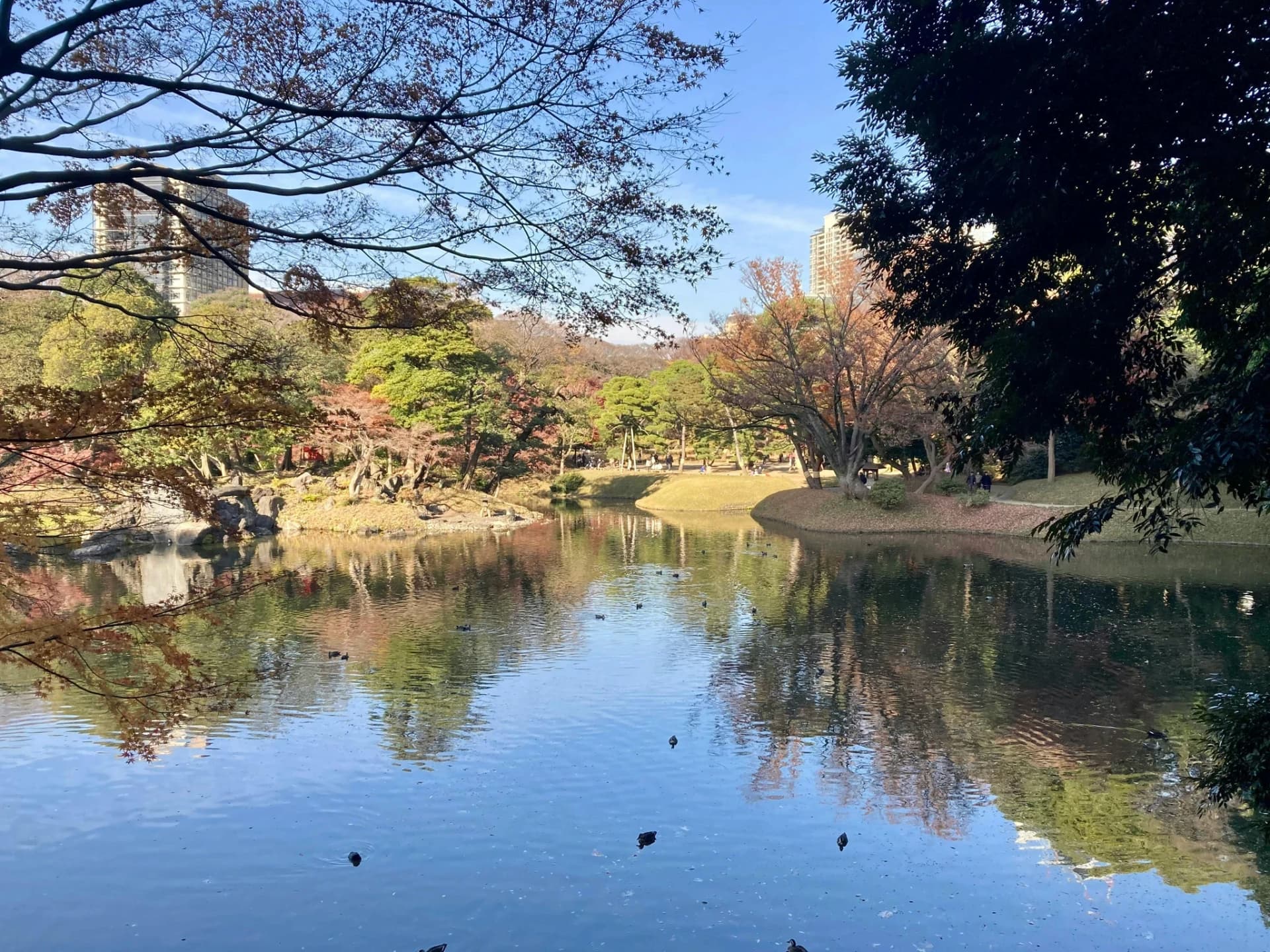
Weeping cherries (shidarezakura) at places like Koishikawa Korakuen bloom a few days ahead of other varieties.
While most people follow the forecast to the famous spots, these parks are better places to be:
| Park | Cherry Trees | Access | Why It Works |
|---|---|---|---|
| Kinuta Park (Setagaya) | 900+ | 20-min walk from Yoga Station | Wide lawns, far less crowded than Ueno |
| Kanda River (Waseda) | Hundreds along 2km path | Walk from Edogawabashi to Gakushuinshita Station | "Similar to Meguro River but far fewer people" |
| Asukayama Park (Kita) | 600 | Near Oji Station, free ropeway to top | Historic Edo-period park on a hilltop |
| Koishikawa Botanical Garden | Many varieties | Near Iidabashi Station | ¥500 admission keeps crowds lighter |
| Aoyama Cemetery | Hundreds lining paths | Near Nogizaka Station | Tokyo's oldest cemetery, quiet, visit respectfully |
### Why Selfies Don't Cut It
If you're traveling alone and want good photos of yourself under the blossoms, the famous spots won't help you. For solo travelers thinking about a guide at any time of year, see our Tokyo private tours for solo travelers guide.
Why Selfies Don't Cut It
Cherry blossoms make beautiful pictures, but you need some distance and framing to get them right. A selfie stick gets your face and a pink blur. What you want is a photo of you under the blossoms, with the setting in the frame.
At the famous spots in peak season, a tripod is impractical. You're dodging crowds and blocking paths, and strangers still end up in the background.
The 30-Second Window at Hidden Spots
The fix is a quieter location where, for 30 seconds, you can set up a shot without 50 people waiting behind you. Better equipment won't get you that, and neither will a different famous spot.
A local companion knows 10-15 spots where they can take you for uncrowded photos. They know which angles work in morning or afternoon light, when to arrive to beat other photographers, and how to frame a shot so it looks composed.
They'll also take the pictures for you, framing the shot properly and trying as many times as it takes.
Photography Guidance vs Just Transportation
Group tours get you to the locations but don't help with photos beyond basic snapshots. The tour runs on a schedule, and everyone's after the same shots.
A private companion has time to help you get photos that work. They'll wait for the light, move around for a better angle, try different compositions, and get both close-ups and wider shots.
For solo travelers, that help is worth more than the guide services group tours advertise. (If photography is a main goal of your Tokyo trip outside cherry blossom season too, our Tokyo photography tours guide covers how it works year-round.)
Early Bloom, Late Bloom, and Falling Petals: Beyond Peak Fetishism
The fixation on 100% peak bloom is what causes the crowding, and the season has more than one good viewing window.
Sakura Fubuki: The Falling Petal Experience
When the petals start falling after peak bloom, Japanese has a word for it: sakura fubuki (桜吹雪), meaning "cherry blossom blizzard" or "flower blizzard."
The falling petals swirl like snow, and Japanese poetry, literature, and art all celebrate the sight. It's tied to mono no aware (物の哀れ), the awareness that beauty doesn't last.
People treat it as its own viewing stage, separate from peak bloom. Petals drift across paths, float on ponds, and carpet the ground under the trees, and many people like it as much as peak bloom or more.
Early and Late Varieties Extend the Season
Tokyo's cherry varieties bloom on different schedules. For spring touring beyond the blossoms, see our Tokyo spring tours guide.
Early bloomers (mid-February to mid-March):
-
Kawazu-zakura grows at Sumida Park/Oyoko River (where you can see it with Tokyo Skytree behind), in small numbers in Ueno Park, and in some gardens near Sensoji
-
These bloom roughly 1 month before the standard Somei Yoshino trees, so you can see blossoms while everyone else is still waiting for the main season
Late bloomers (mid-April):
-
Yae-zakura (double-layer cherry blossoms) grows at Shinjuku Gyoen (which has 65 varieties in all), Kinuta Park, and Koganei Park
-
These bloom 1-2 weeks after the Somei Yoshino peak, which gives you options if you miss the main season
Because Shinjuku Gyoen has early and late varieties, its season runs "a week or two" past the standard Somei Yoshino window. The park has approximately 1,000 cherry trees across 65 different varieties.
When You Don't Need Help During Cherry Blossom Season
Not everyone needs a companion in cherry blossom season. Doing it yourself or joining a group tour makes more sense in these cases.
You can handle it yourself if:
-
You're staying 2-3 weeks with a flexible schedule. You'll have time to check bloom reports daily, try spots on different days, and learn by trial and error.
-
You're arriving 7+ days before the forecast peak. That's enough time to scout neighborhoods before the rush and adjust as you go.
-
You've done Tokyo cherry blossom season before. You already know which neighborhoods to check, which spots to skip at which times, where the alternatives are, and how to read the bloom.
-
Budget is your main constraint. Doing it yourself works; you'll deal with crowds and miss the best timing, but you'll still see cherry blossoms.
-
You only need transportation to the famous spots. A driver costs less than a companion who brings flexibility and timing knowledge.
Group tours work better if:
- You prefer a fixed schedule. If you'd rather know exactly where you'll be and when, and don't want plans changing with morning conditions, a group tour gives you that structure. Some travelers find flexibility more stressful than useful.
For a wider look at when private tours are worth it in Tokyo outside the season, see are private tours in Tokyo worth it. For when doing it yourself makes sense any time of year, see when you don't need a private tour in Tokyo.
Booking a Tour During Cherry Blossom Season
We don't offer exclusive cherry blossom tours. That would need a different license, which we don't have.
What We Offer Instead
We build sakura viewing into the Tokyo tours you're already booking, and if you're here during the season, your itinerary is planned around it.
Most people start with our Tokyo Essentials tour, a 6-hour Tokyo day that adapts to whatever's blooming.
How Cherry Blossoms Fit Into Tokyo Tours
If you're coming to Tokyo during cherry blossom season (late March through early April), we can add cherry blossom viewing to any Tokyo tour you book.
What you book is a general Tokyo tour. During the season, your companion checks bloom conditions that morning and plans the day around what's best right then.
Conditions change every day: the forecast moves, the weather opens some options and rules out others, and the crowds surge on weekends. A companion adjusts to that, and a tour bus running Tuesday's schedule on Saturday can't.
How a Typical Day Works
You book a standard Tokyo tour of 3-6 hours, depending on whether you want a half day or a full day. Mornings (before 11am) are best for cherry blossoms because the light is better and the crowds are lighter. (For help choosing a length, see the tour duration guide.)
Before you meet, your companion will have checked current conditions, including bloom percentages, crowd patterns, and the weather, and they plan the day around what they find. Don't expect a set speech about cherry varieties.
The day combines those conditions with whatever else you want to see in Tokyo. You might start at a park near its best bloom while everyone else queues at the famous spots, visit a neighborhood temple off the usual route in Asakusa or Yanaka, and then shift the afternoon around crowds and light.
If you want photos, your companion knows the angles and timing and will take them for you. If you want context, they'll explain what you're looking at, without lecturing you on things you could read on Wikipedia.
For more on how a tour day runs, including logistics, pacing, and what's included, see what to expect on your Tokyo tour day.
Pricing and Booking During Peak Season
Since this is a general Tokyo tour and not a special cherry blossom product, standard Tokyo private tour rates apply:
-
Half-day tours (4-5 hours): approximately ¥31,000-43,000 ($314-430) for 2 people
-
Full-day tours (6-8 hours): approximately ¥43,000-55,000 ($430-550) for 2 people
We don't charge extra in cherry blossom season. You get the same service as any other time, a person helping you get the most out of your day in Tokyo, and in the season that means working around bloom conditions and crowds. (For more on how pricing works across tour types, see our Tokyo private tour pricing guide.)
Included: flexible itinerary planning, adjustments on the day based on conditions, local navigation, and photography help if you want it.
Not included: transportation (trains, taxis), admission fees where they apply (Shinjuku Gyoen charges ¥500 for adults), and meals.
In peak season (late March to early April), we recommend booking 2-4 weeks ahead. Prices don't go up, but companions get booked out when everyone wants help in the same short window. (For booking timing in other seasons, see how far in advance to book a private tour.) If this sounds right for you, our booking guide walks through the process.
Where Hinomaru One Fits
Every morning in cherry blossom season, we check bloom conditions and adjust your itinerary to what's best that day: which parks reached peak bloom overnight, where the crowds are lighter, and what the weather is doing. You book a general Tokyo tour, and we plan it around the season you're traveling in.
Hinomaru One designs private Tokyo tours for first-time and seasoned travelers, unhurried and full of cultural context, and every one is customized.