Understand Tokyo’s summer by seeing how weather, rhythm and daily life shape the travel experience.
Tokyo in summer runs on a different rhythm, and the heat and humidity shape almost every part of a visit.
If your summer dates are already fixed, touring in July works fine, and you see a different side of the city. Spring visitors queue at cherry blossom sites set up to move crowds through. Summer shows you the working city: 6am temples with monks at their rituals, department store basements where buyers pick seasonal produce, and the underground passages residents use from May through September. Still deciding when to come? Our guide to the best time to visit Tokyo compares summer with the other seasons.
When Worse Weather Makes Guides Worth More
In spring you can improvise. The weather leaves room for mistakes: you wing a route, walk an extra 10 minutes, duck into a cafe when you're tired. Summer takes that room away. By the third hour in 32-36°C heat and 75-82% humidity, a self-guided route starts making people miserable.
That's when a guide earns the fee, mostly in the first four hours, when routing decides whether you finish the day with energy left or wiped out.
For the Japan-wide view (festivals outside Tokyo, escapes to Hokkaido and Okinawa, Obon travel patterns, typhoon season), see the complete summer in Japan guide. This page covers how touring Tokyo itself changes in summer.
Why Spring Advice Breaks in Summer
The packing list approach treats summer as an equipment problem: bring water, wear a hat, start early. Hydration buys you about 90 minutes. After that the heat wins.
Summer days go wrong because standard routes ignore shade, underground passages and how fast your energy drains. The pleasant 20-minute walk between Senso-ji and Tokyo Skytree in April is too much in August.
When Route Design Becomes Infrastructure
A summer guide brings a working map of the city: which department store basements connect, where the shade runs unbroken, and how to cross Tokyo underground without coming up to street level.
The Tokyo Spring Tourists Don't See
Summer pushes you underground and out early, and both show you the city residents live in.
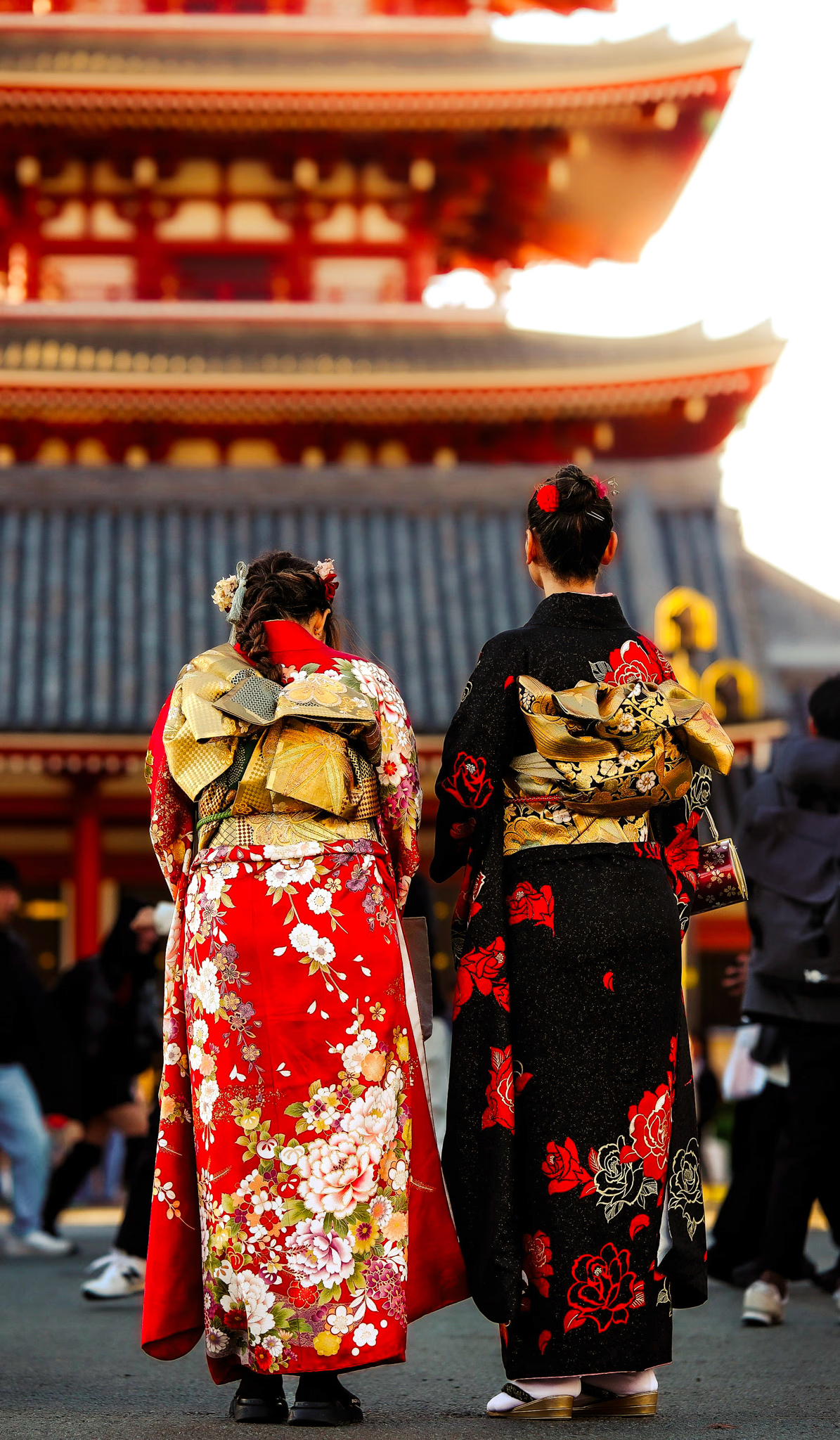
6AM Temples: Before Performance Mode
Senso-ji Main Hall opens at 6:00 AM from April through September. At 6am the monks strike the Toki-no-Kane bell as a timekeeping ritual, and the prayer service then is actual worship.
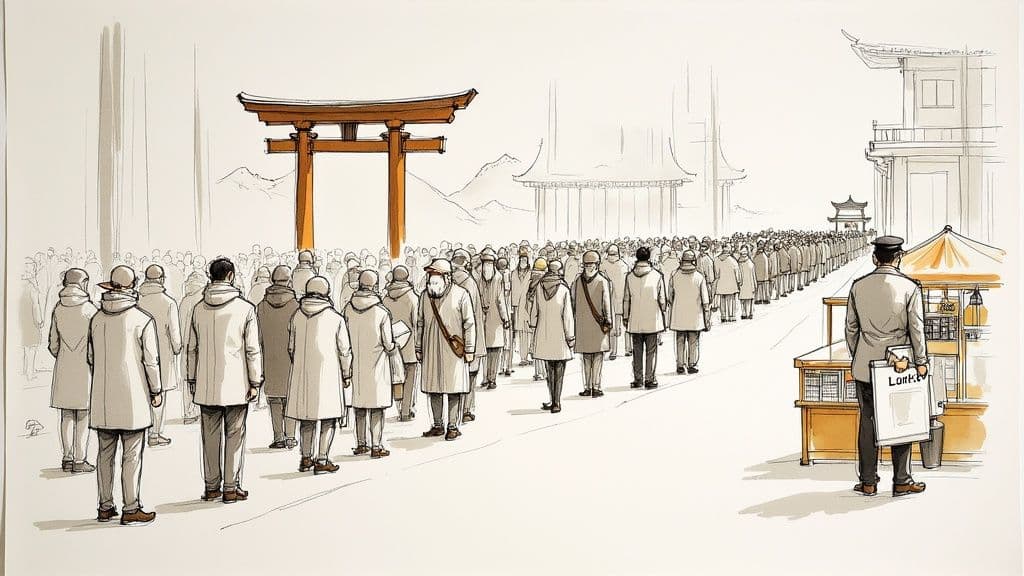
Nakamise Shopping Street opens at 9-10am. At 6:30am you can photograph its traditional Edo-style shutters with nobody in front of them. By 10am the same street is packed.
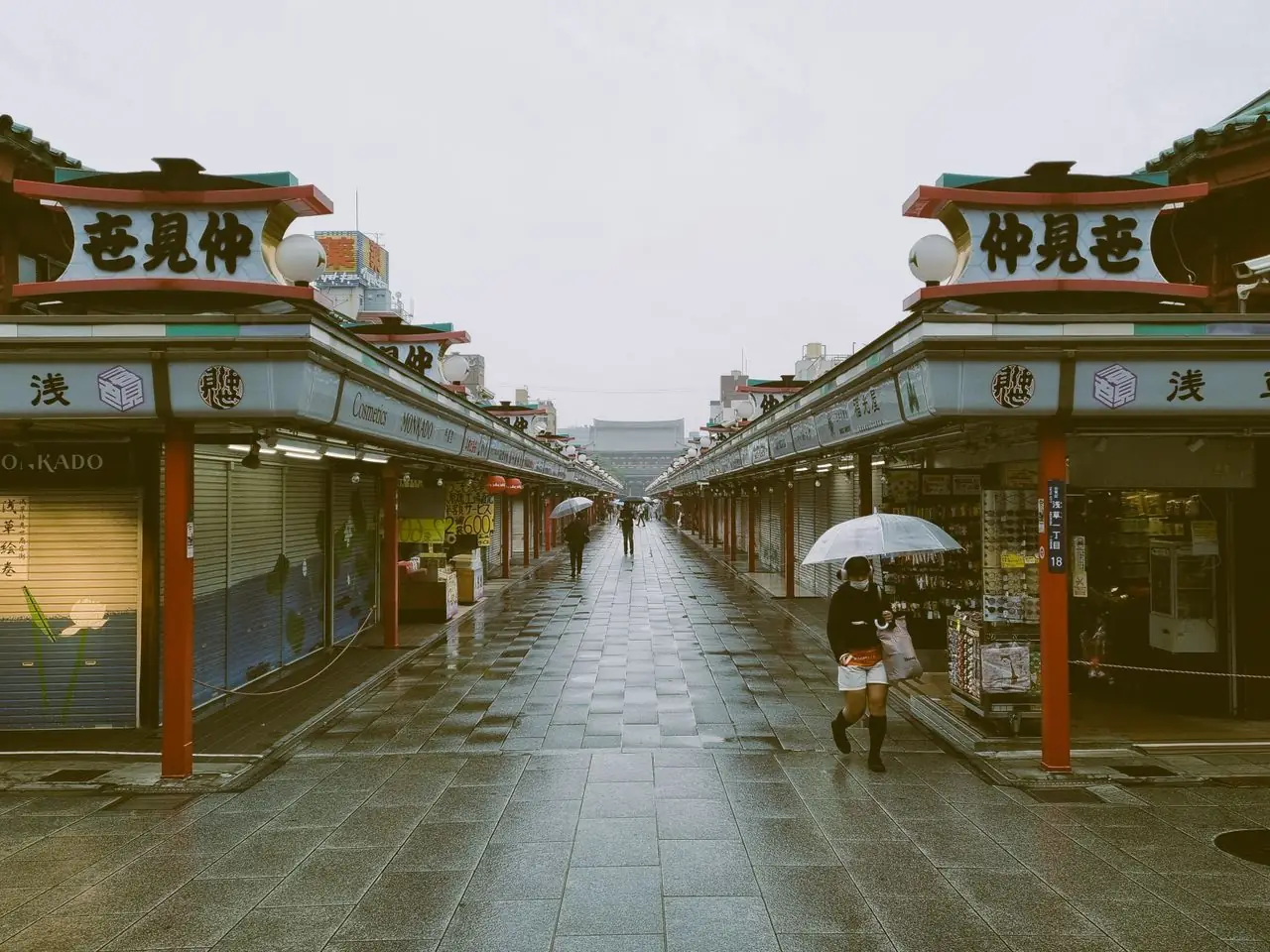
The Subsurface City
Tokyo Station connects to Otemachi through 2 kilometers of climate-controlled passages. Shinjuku Subnade links the JR, Metro and private railway lines underground. Shibuya Chikamichi joins the Fukutoshin, Ginza and Hanzomon lines, so you never have to surface. Department store basements in Ginza and Nihonbashi open at 10am, and the passages between them stay cool all day. From May through September, residents move underground in the middle of the day.
Supply Chain Visibility
Tsukiji Outer Market runs 5am-2pm and is busiest from 7-9am. It's a wholesale operation, and tourists are incidental to it. At Marutake the chef makes tamagoyaki in full view on three pans at once and explains why summer egg cooking differs from winter: the heat changes how the egg holds its moisture.
The depachika, the food floors under the department stores, work like seasonal exhibitions. Buyers choose the August produce (eel, summer vegetables, particular fruit varieties), and the selection changes every month with the harvest.
You can get coffee early. Coffee Shop Ace near Kanda opens at 7am on weekdays, Sarutahiko in Ikebukuro and Ebisu at 7am, and Verve in Shinjuku at 7am every day. A six AM temple visit runs straight into 7am coffee, before the shops open at 10am.
The Obon Window
In mid-August Tokyo empties while the rest of Japan fills up.
Obon falls on August 13-16. Tokyo residents go home for family reunions that happen once or twice a year, and attractions get quieter than a spring weekday. Restaurants with 90-minute waits in spring take same-day bookings. Eight-seat craft workshops that are booked solid from March through May have openings.
Travel in early August (before the 13th) or late August (after the 16th) and you miss the domestic rush on trains and hotels. During Obon itself attractions are close to empty, and summer festivals and Bon Odori dances cluster in this window. The Sumidagawa Fireworks in July launch 20,000+ shells.
Timing Tradeoffs
Every time slot costs you something, and midday costs the most. (For year-round timing, see best time of day for Tokyo tours.)
Morning (6-10am): Jet lag works for you, since 4am in Tokyo is 3pm the previous afternoon in New York. You get the temples from six in the morning, empty streets and the city's working breakfast culture. The catch is that food options are thin until 9am. This timing suits families with children especially well.
Evening (4-8pm): It's 3-5°C cooler than the afternoon peak, and you have festivals, night markets and izakaya culture. The catch is that an 8pm finish means dinner starts at 8:30pm.
Split-day (morning + evening with midday break): The best day you can have in August, and the hardest to coordinate.
Eight hours of continuous touring doesn't work in summer. Midday (11am-3pm) is brutal however well you prepare, so a split day puts you indoors or resting through it.
Workshop Access
On summer weekday mornings, family-run workshops have room for you. Regular customers thin out and the owners have time to talk.
| Workshop | Location | Price | Booking |
|---|---|---|---|
| Kosoen Studio | Ome | from ¥1,600 | 3 days advance |
| Aizome Hakubutsukan | Sumida | from ¥1,500 | Phone booking |
| Wanariya | Asakusa | ¥1,920 | Walk-in (30 min) |
Kosoen is one of the few workshops still using natural fermentation methods (third generation, since 1919). Aizome Hakubutsukan works with historic vats that haven't changed since the shop was founded.
These workshops are booked solid from March through May. In summer the pressure drops, and a third-generation artisan who rushes the explanation in cherry blossom season has 45 minutes to talk fermentation with you.
Summer weekday mornings also get you into Asakusa leather workshops, the small factories of Taito ward and the letterpress shops of Kanda. They don't welcome tour groups, but they'll put up with a guided visit that respects how they work. (Our Asakusa neighborhood guide explains how we approach the area.)
When Cars Make Sense
In spring, walking is the premium way to see the city. Summer reverses that: the route between Senso-ji and Tokyo Skytree that felt pleasant in April is punishing in August. (More on how much walking to expect.)
A car gives you air-conditioned recovery between stops and adds 2-3 hours to the time you can keep touring. It also opens up the edge neighborhoods: the Kiyosumi-Shirakawa coffee district (Blue Bottle, Arise, Allpress), the design studios of Tomigaya and the furniture makers of Naka-Meguro. Each sits 30 minutes from central Tokyo by transit plus a 10-15 minute walk, and in summer that walk is the barrier.
| Duration | Rate | Per person (group of 4) |
|---|---|---|
| 4 hours | ¥50,000 | ¥12,500 |
| 6 hours | ¥60,000 | ¥15,000 |
| 8 hours | ¥77,000 | ¥19,250 |
Rates are through our local partners, paid directly to the transport provider. More on how car-based tours work separately.
Where Hinomaru One Fits
We've mapped shade corridors, underground networks and places to cool off across Tokyo, which makes the heat manageable. A six AM temple start is standard for us, our evening tours are built around the drop in temperature, and four focused hours get you more than eight hours of slogging.
At Hinomaru One we plan private Tokyo tours for first-time and seasoned travelers alike, at your pace and around what you want to see.