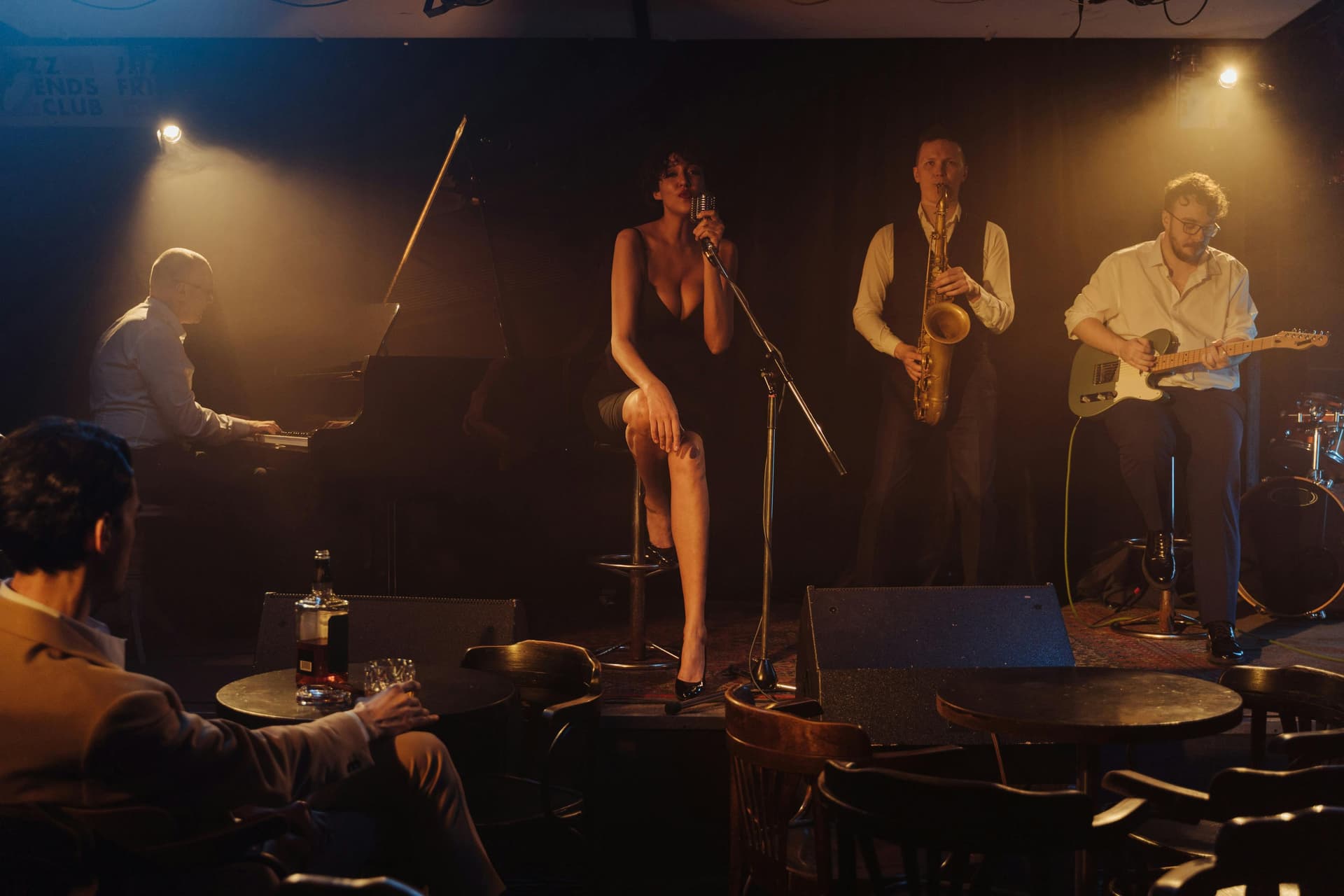
Tokyo jazz isn't a list of venues—it's a living scene with geography, timing, and personalities.
Tokyo jazz bars make up a scene with its own geography, timing, and characters, and it pays to understand that before you pick a door.
There are over 100 jazz venues spread across the city. The obvious approach is to pick one off a list, turn up, and tick it off, and it rarely goes well.
This Isn't a List of Bars
Why Most Lists Fail You
Lists leave out how the scene fits together. The venues cluster by neighborhood, each neighborhood has its own feel, and each venue reflects whatever its founder was obsessed with. A list can't tell you that some rooms expect silence and others are happy for you to talk. It also can't prepare you for an evening that moves through several places.
A Scene, Not a Catalog
The scene has been building since the 1920s. About 600 jazz kissa and bars operate across Japan, most of them in Tokyo. Many were built by people who spent their lives trying to make music sound exactly right in one room.
You're Arriving at a Moment
The jazz kissa revival is real. The BLUE GIANT manga and film brought 690,000 viewers back to jazz. Gen Z now listens to more vinyl than any other age group. The Japanese "listening bar" idea has spread to London, New York, Berlin, Barcelona, and Seoul, and Tokyo is still where it's done best.
You don't need to know anything about jazz to enjoy it. There's a way in for every comfort level, from hotel bars with live sets to serious kissa where you're expected to stay quiet. It helps more to know how the scene works than to know the music.
Three Experiences, One Name
"Jazz bar" covers three quite different things. Walk into the wrong one for your mood and the evening falls flat.
Jazz Kissa — You're Here to Listen
A jazz kissa is a listening room. The music, almost always on vinyl, is the whole point, and talking is kept to a minimum or banned outright. You sit with a coffee or a whisky and listen while the master picks the records on a sound system that cost more than a car. These rooms suit people who'll sit and pay attention, and they'll frustrate you if you wanted background music for a chat. Many kissa have kept their "no talking" rule since the 1950s. That's simply how the format works, and nobody means it as unfriendly.
Jazz Bar — Conversation Over Sound
A jazz bar plays records too, but you're welcome to talk. It's a relaxed evening with friends, jazz and drinks together, without the full focus on the music. Many serve food. The sound system still matters, and so does the room as a place to hang out. They're an easier start than a strict kissa.
Jazz Club — Live and Ticketed
A jazz club has live musicians on a schedule, with set times and a music charge. Some put emerging players on in the daytime and established acts at night. You go for a particular show, more like going to a gig than dropping into a bar. Blue Note Tokyo works this way with international touring acts, and Shinjuku Pit Inn has done it since 1965.
Where Tokyo's Jazz Lives
Tokyo's jazz venues are bunched into a handful of neighborhoods, and each one feels different once you're there.
Kichijoji — The Densest Jazz Cluster
Kichijoji has more jazz venues per block than anywhere else in Tokyo. It's on the Chuo Line, about 15 minutes by rapid train from Shinjuku, and it became a jazz town largely because of one man, Noguchi Iori.
Noguchi started working at jazz kissa while he was still in high school. He went on to open several places in Kichijoji, including Funky, Top Hat, A-Go-Go, and SOMETIME. He died on April 22, 2001, at age 58. SOMETIME, Funky, Lemon Drop, and Outback all trace back to him. His widow and family still run the business, and Uneki, SOMETIME's manager since around 1990, connects the founder's era to today.
That's what people mean by "masters" in Tokyo jazz. The venue is someone's life's work. The record collection is decades of choices, and the speakers reflect a particular idea of how music should sound. When that person dies or retires, the place survives only if someone takes on the vision.
Some venues to know today. SOMETIME has been going for decades and has live jazz every day, with two sets on weekdays (19:00 and 20:30) and afternoon sets on weekends (13:00 and 14:30). Funky has just renovated for its 65th anniversary and has original JBL Paragon speakers and 4,000 records. Strings pairs Italian food with live jazz. MEG was taken over by a regular customer and renamed 音吉!MEG, and it still plays vinyl for listening.
With so many venues close together, you can walk between several in one evening.
Shinjuku — History and High-End
In Shinjuku, jazz sits alongside everything else. The anchor is Pit Inn, coming up on its 60th anniversary. It opened on December 24, 1965, and was the first to split the day: up-and-coming musicians at cheap afternoon shows, established acts at night. In the manager's words: "If you spend several thousand yen in one night, you can't casually go to live shows."
DUG has been on Yasukuni Street for 60+ years and appears in Haruki Murakami's novel Norwegian Wood. The owner, photographer Hozumi Nakadaira, hung his own portraits of jazz musicians on the walls.
The Other Pockets
NARU in Ochanomizu, one minute from the station, opened in 1969. Guitarist Watanabe Kazumi made his debut there at 17. It's another story of succession. Founder Narita Katsuo opened the first location in Yoyogi in 1966 and this live house three years later, and after he died in 2001 his son Narita Hiroki took over. The father's motto, "NARU wants to be the gateway to jazz," still holds, and the son books a mix of young musicians and veterans.
In Shibuya/Aoyama there's Body & Soul, founded in 1974 by "Kyoko-mama" (Seki Kyoko). DownBeat named it one of the world's top jazz venues in 2015. American musicians like Eddie Gomez, Jimmy Cobb, and Dee Dee Bridgewater drop in to pay their respects even when they're playing elsewhere in town.
Ginza's jazz bars are like Ginza itself: in basements, small, with hardly any signage. Bar Evans only takes parties of two or fewer. At Star Bar Ginza, IBA world champion Hisashi Kishi hand-carves the "Ninja Ice."
How Locals Actually Experience the Scene
A jazz night in Tokyo is rarely one venue and home. People move from place to place.
Dinner First, Jazz Second
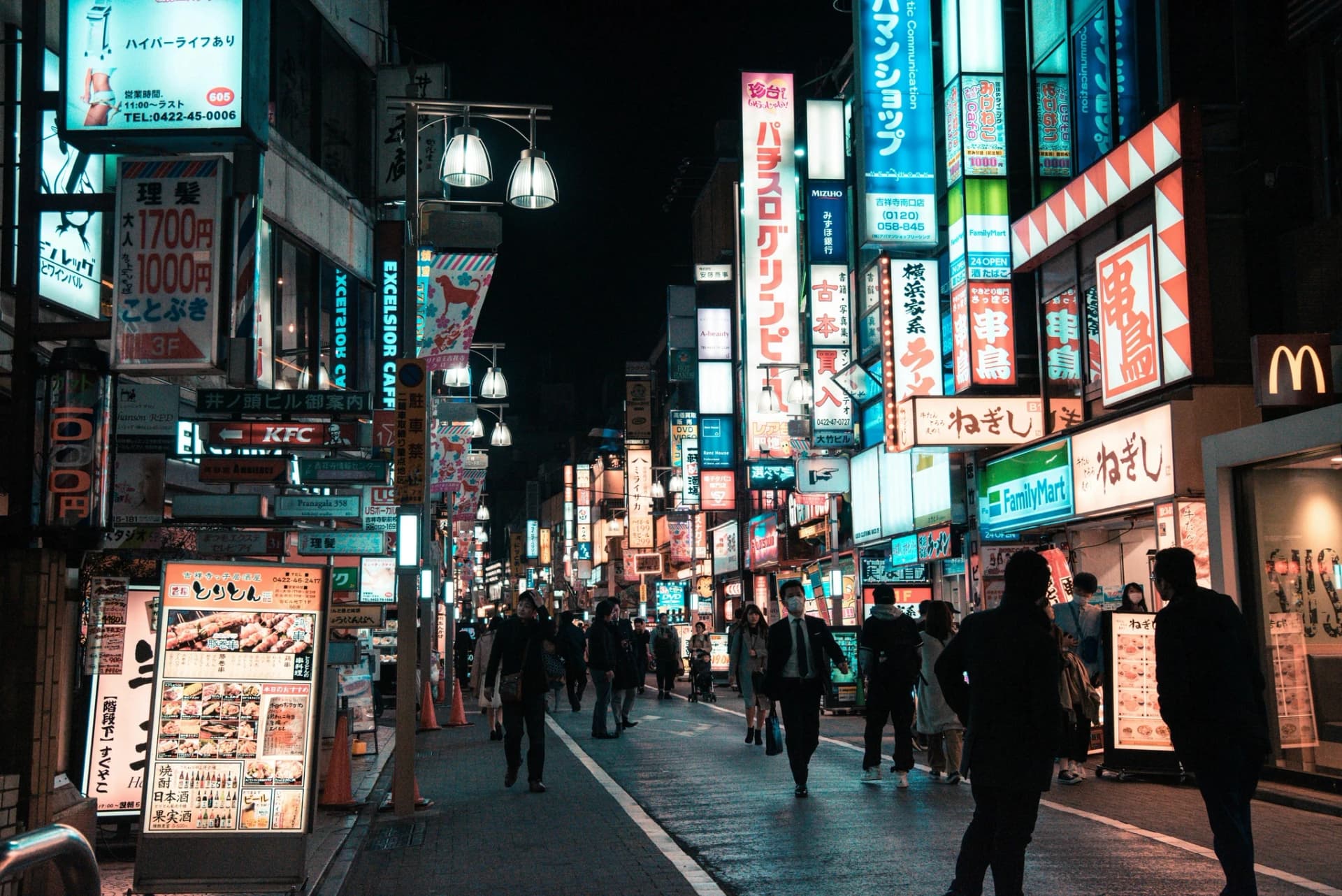
Most jazz venues don't serve a proper meal, and many serve no food at all. So you eat first at a restaurant or izakaya nearby and head to the music afterward. In Kichijoji, Harmonica Yokocho, a tangle of narrow alleys with standing bars and small plates, is a few minutes from SOMETIME. Eat there, then walk over for the 19:00 set.
Multi-Stop Rhythms
A typical evening might be dinner at a yakitori place, the first set at a live club, and late drinks at a kissa with records playing. Kichijoji makes this easy because you can walk between Harmonica Yokocho, SOMETIME, and Funky. In Shinjuku you can go from DUG to Pit Inn.
The money works out too, because you spend a little at each stop and decide on the next one as you go.
Our Standing Room Only evening tour follows this dinner, jazz, and late drinks pattern through Nakano, Nishi-Ogikubo, and Kichijoji, with a guide who knows which places to go to and when.
Timing and Last Trains
Evening sets usually run 19:00-20:00 and 20:30-21:30, so most nights you're done by 22:00.
Last trains matter if you're out in one of the outer neighborhoods. The last Inokashira Line train from Shibuya to Kichijoji leaves around 0:20, and Chuo Line rapid trains from Shinjuku run until about midnight. Most shows finish with time to spare. Late-night kissa are the risk: if you lose track of time listening to records, check your train.
Practical Realities
You need to know what you're looking for to find these places, and a few practical details make the night easier.
Finding the Door
Many venues are in basements with very little signage outside. Pit Inn is on B1 of the Accord Shinjuku building. NARU is on B1, one minute from Ochanomizu Station; look for the stairs going down. Strings is in the basement of the TN Column Building. Funky has a 32-year-old wooden sign set into the wall and a red neon "Funky" over the iron door.
Plenty of other Tokyo bars work the same way. The city's cocktail bars also tend to have basement entrances and next to no signage, and you won't spot them easily from the street.
The building name is more useful than the street address. Search in Japanese if you can, since many venues have websites that don't show up in English results. Google Maps puts the pin in the right place even when the entrance is hard to see from the street.
What Cover Charges Include
What you pay depends on the format:
-
Jazz kissa: No cover; you pay for coffee or drinks (¥500-1,000)
-
Jazz bars: Cover charge common (¥1,000-1,500) plus drinks
-
Live clubs: Music charge per show (¥1,430-5,000+), one drink included at most venues
-
Pit Inn daytime: ¥1,430 weekdays, ¥2,750 weekends (includes drink)
-
Pit Inn nighttime: ¥3,300 (includes drink)
-
NARU Ochanomizu: ¥3,500 (covers both stages; drinks separate, beer ¥800)
-
Ginza bars: Cover ¥1,000-1,500 plus cocktails ¥1,400-2,500
Smoking and Seating
Many of the older venues still allow smoking. Some newer or renovated ones don't, including Strings and NARU Yoyogi, and the list is growing. If smoke bothers you, check before you go.
In smaller venues the counter has the best sound, but at popular spots the regulars take it. A table gives you room, and the counter puts you close to the music. NARU's counter seats in front of the piano are the most sought after and the hardest to get.
Language at the Bar
At the venues visitors tend to go to, most staff understand basic English or can manage with gestures. You can point at bottles, and menus have pictures. Google Translate helps with Japanese-only websites when you're looking up venues or booking.
Pit Inn takes reservations by phone or web form until 22:30 the night before. Some smaller bars don't take bookings at all, so you turn up and hope there's room.
For a special occasion such as an anniversary, a retirement, or another milestone, a jazz or whisky bar makes a good evening end to a full-day tour. Our retirement celebration guide shows how to plan a day that finishes with an evening toast.
When a Guide Changes Everything
The scene really is complicated. Whether you need help with it depends on what you want from the night.
What Guides Actually Provide
A guide gives you a route through the scene. Someone who knows the jazz in Suginami Ward can plan the evening: dinner in Nakano, drinks in Nishi-Ogikubo, jazz in Kichijoji. They know which places are good right now, which masters are friendly to first-timers, and how to fit the night around the trains. They also help with the language gap where staff don't speak English.
The Standing Room Only tour follows that route. After food and drinks in gritty Showa-era neighborhoods that most tourists never get to, it ends around 10:30 PM in Kichijoji's nightlife area, close to the jazz.
When DIY Works Fine
If you have two or three evenings, a taste for adventure, and you've read this far, you can find your own way. Kichijoji's venues are close enough that you can walk to another if the first isn't right. Pit Inn and NARU are easy to find and visit on your own. The more Japanese you speak, the easier all of it gets.
A guide helps most when you only have one evening, want to get to know a neighborhood you've never been to, or would rather someone else handle the logistics while you enjoy the music. If you're happy to improvise and take the odd wrong turn, you need one least.
This guide is published by Hinomaru One, a Tokyo-based private tour operator.