Published 2-day Tokyo itineraries ignore the math that shapes your actual day. This teaches routing logic, not attraction lists.
Published 2-day Tokyo itineraries skip the math that shapes your actual day. What follows is routing logic you can apply to your own trip.
Asakusa to Shibuya is a 35-minute train ride. Door to door, for a first-timer working out station exits, it's closer to 50 minutes. That gap between what Google Maps promises and what happens on the ground is why so many "Day 1: Traditional, Day 2: Modern" itineraries fall apart before lunch.
The rest of this article covers the constraints that shape your routing and what to cut when something has to give.
If you have a third day, the structure changes, and Day 3 goes to depth rather than coverage. Our 3-day framework explains how that extra day shifts the whole approach.
The 35-Minute Illusion
Published train times are accurate. The itineraries built on them usually aren't.
What "35 Minutes" Actually Means
The Ginza Line from Asakusa to Shibuya takes 33-37 minutes platform to platform. That number leaves out:
-
Finding the right station entrance (Asakusa has four different "Asakusa Stations" run by different companies)
-
Walking from street level down to the platform
-
Waiting for the train
-
Getting through Shibuya Station when you arrive
-
Picking the correct exit out of dozens
For first-time visitors, door to door runs 40-50 minutes, and the train ride is less than half of that. Our walking distances guide breaks down what adds to these times: station navigation, crowd friction, and seasonal adjustments.
The Station Navigation Tax
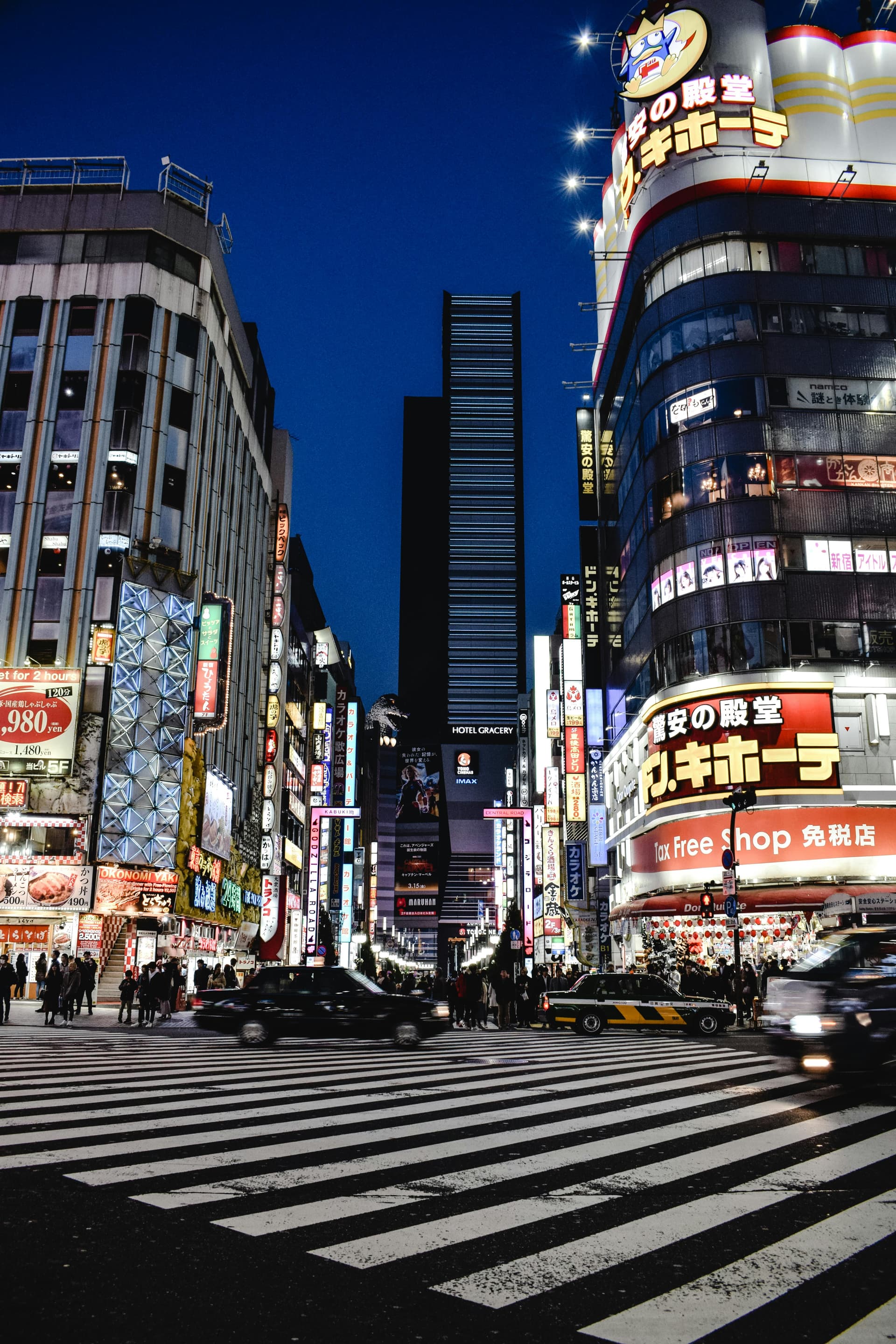
Shinjuku Station has over 200 exits, with six rail operators sharing the complex across 35+ platforms. First-timers spend 10-20 minutes just getting from the platform to the street.
The main JR exits alone are the East Exit, West Exit, South Exit, Central East Exit, Central West Exit, and New South Gate. East takes you to Kabukicho, West to the skyscraper district. Mix them up and you lose 15 minutes and some patience.
A 2020 renovation improved the east-west passage and cut 10 minutes off a walk that used to be even worse.
Three Routes That Take Twice as Long as Published
| Route | Train Time | Realistic Door-to-Door |
|---|---|---|
| Asakusa → Shibuya | 33-37 min | 40-50 min |
| Asakusa → Harajuku | 35-40 min | 45-55 min |
| Tsukiji → Shinjuku | 20-30 min | 35-45 min |
Minute-by-minute itineraries ignore this math. Plan in time blocks and drop the timestamps.
The East/West Split and Why It's Arbitrary
Nearly every two-day Tokyo guide uses the same structure: Day 1 on the east side (Asakusa, Ueno, Akihabara), Day 2 on the west (Shibuya, Harajuku, Shinjuku). It's tidy and it makes geographic sense, but it's still an arbitrary choice.
Where the Split Came From
The east/west division sticks around because it's easy to explain. Tokyo's traditional neighborhoods cluster in the east and the modern shopping and nightlife districts cluster in the west, so grouping by geography cuts down on cross-city train rides.
That logic holds if your hotel happens to sit the same distance from both.
What Your Hotel Location Changes
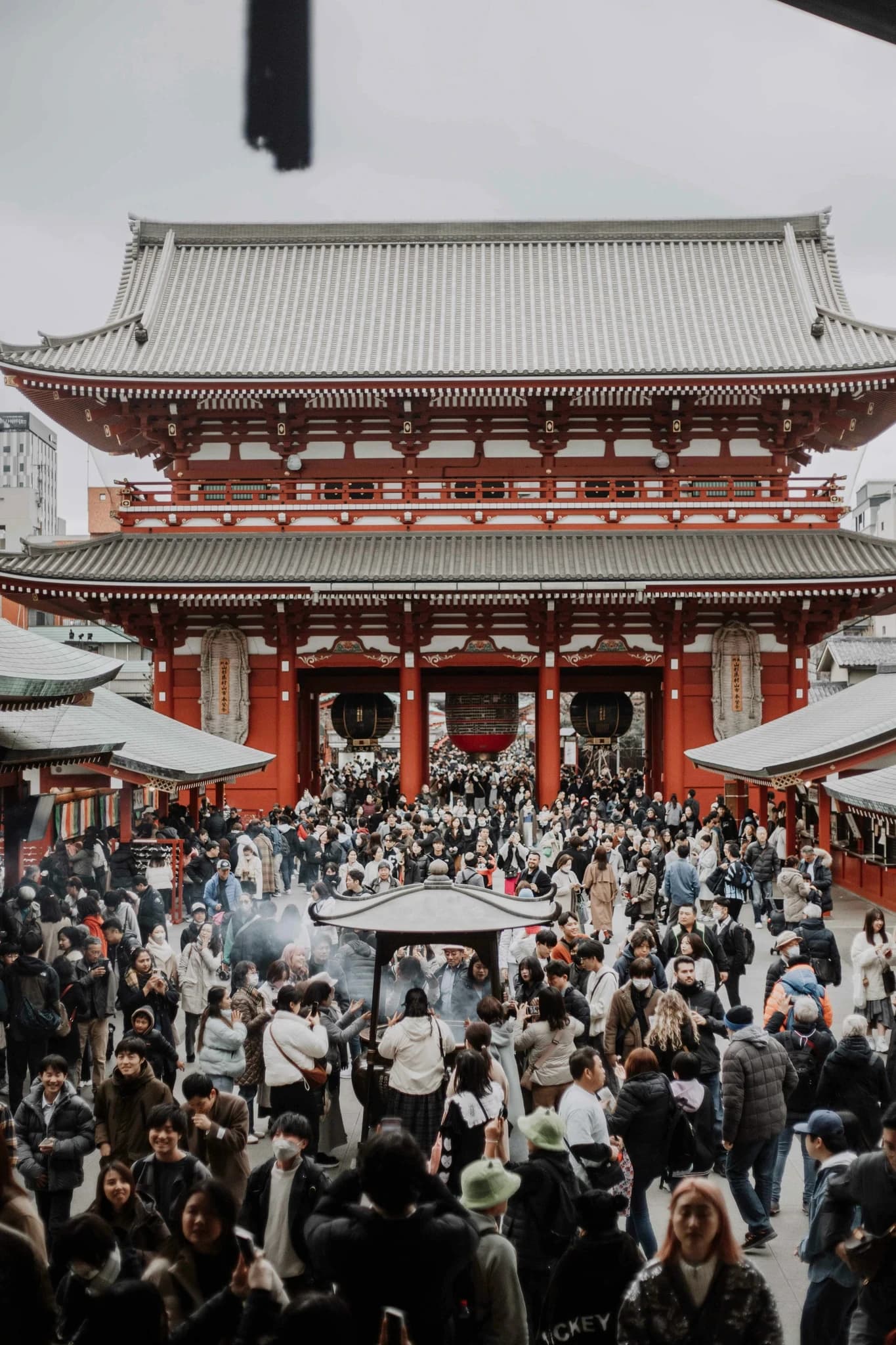
If you're staying in Asakusa, starting on the east side means you're already there. Wake up early, walk to Senso-ji before the crowds arrive, and you'll see something that someone staying in Shinjuku can't.
If you're staying in Shibuya, reverse the order. Go up Shibuya Sky at sunset on Day 1 while you're fresh, and use the Shibuya places guide for what else is worth your time beyond the Crossing.
Then do the long Ginza Line ride to Asakusa on the Day 2 morning, once you've adjusted to the pace.
The split works fine as a default. It just ignores where you wake up, which matters more than anything else on the map.
When to Ignore It Entirely
Fixed points override geography:
-
A timed teamLab reservation at 2 PM anchors your afternoon wherever you're staying
-
Cherry blossom timing at Ueno Park doesn't care about your hotel
-
A dinner reservation in Shinjuku Golden Gai means ending Day 1 on the west side no matter where you started
Put your fixed points in first and fill in around them.
The Reservation Anchor Problem
Timed entries save you from queues, and they also box in everything else.
What One Timed Entry Does to Your Day
A 4 PM teamLab Planets reservation means being in Toyosu by 3:30 PM. If you're going there anyway, a morning sequence (wholesale market breakfast, then Planets) beats backtracking. Otherwise you're leaving central Tokyo by 2:45 PM, and your whole afternoon routes backward from one fixed point.
That's normal for an anchor. Trouble starts when an itinerary stacks several of them and pretends the day hasn't been squeezed.
Book These, Leave These Open
Book in advance:
-
teamLab Planets or Borderless: Slots at popular times sell out 1-2 months ahead. Tickets run ¥3,600-5,400 depending on timing. Our full teamLab guide compares the venues and how to build a day around each.
-
Shibuya Sky sunset: The 2-week booking window opens at midnight JST, and sunset slots go within minutes.
-
Ghibli Museum: Tickets for the following month go on sale on the 10th at 10:00 AM JST. Set up your Lawson Ticket account the day before and have payment details ready, because the virtual queue is random and popular dates sell out in minutes. Adults pay ¥1,000 at face value. JTB package tours cost more but guarantee entry.
-
Popular restaurants that take online bookings
Leave flexible:
-
TMG Building observation deck (free, no reservation)
-
Senso-ji: temple grounds open 24/7, no booking needed
-
Most neighborhood wandering
-
Convenience store meals and street food
-
Department store visits
For each one, ask whether the reservation is worth tying up 3-4 hours of your day.
The Flexibility vs. Certainty Trade-off
Two anchors a day is manageable. Three starts to feel rigid, and at four you're running a schedule instead of seeing a city.
On a 2-day trip, keep it to one major timed entry per day. That leaves room to adjust for weather, energy, and whatever you stumble on.
The Subtraction Framework
Most 2-day Tokyo itineraries fail by addition. They list everything worth seeing, imply you can fit it all in, and hand you a bloated schedule that collapses by mid-afternoon.
You won't find more time, so cut on purpose.
If You Add X, Drop Y
Each pair below overlaps on time, energy, or category, and doing both means doing each one worse.
| If you do this... | Consider skipping... | Why |
|---|---|---|
| teamLab (2-3 hours) | Tokyo Skytree | Both are immersive, timed, and tiring |
| Shibuya Sky sunset | Morning observation deck | One skyline view is enough, unless you're considering a helicopter tour, which is a different experience altogether |
| Full Ueno museum day | Asakusa same day | Both are on the east side and fight over the same half-day |
| Harajuku deep dive | Shibuya Crossing photo stop | Harajuku is next to Shibuya, so do one properly |
| Tsukiji breakfast | Hotel breakfast + early temple | You can't fit both before 9 AM |
Our 25 things to do guide has the full list of options. Use this table to cut it down once you know what's on it.
The Observation Deck Decision
Tokyo has several observation decks. On a 2-day trip you need one.
| Deck | Price | Height | Key Feature |
|---|---|---|---|
| TMG Building (Shinjuku) | Free | 202m | No reservation, South open until 10 PM (entry until 9:30 PM) |
| Shibuya Sky | ¥2,700-3,700 | 229m | Open-air rooftop, best photos, advance booking required |
| Tokyo Skytree | ¥2,100-3,400+ | 350-450m | Tallest, indoor only, family-friendly |
Shibuya Sky gets the best photos but takes planning. TMG is free and you can walk in. Skytree is the tallest, though you can't see Skytree from Skytree.
What Experienced Travelers Skip
Repeat visitors tend to drop these:
-
Shibuya Crossing: "Just a busy crosswalk." Walk through it instead of standing there for 30 minutes. Skipping the photo stop buys you time for the parts of Shibuya off the tourist loop.
-
Tokyo Skytree observation deck: The tower looks good from outside. Inside is a queue.
-
Toyosu Market tourist areas: "Sanitized office building." Tsukiji Outer Market has more character.
-
Takeshita Street (Harajuku): "Mostly chain stores now." Cat Street has RAGTAG for discounted Comme des Garçons and Issey Miyake, Pigsty for American vintage, and CHICAGO for vintage jeans and kimonos.
None of these are bad. On a 2-day trip, the alternatives are a better use of the hours.
Two Adaptable Templates
You can move pieces of these around without breaking the day.
Two timing realities to build around:
-
Most shops don't open until 10-11 AM, so use early mornings for temples, parks, and markets.
-
By the Day 2 afternoon, jet lag plus 30,000+ cumulative steps catches up with you. Leave slack late on Day 2.
Template A: Start Near Your Hotel
Build the Day 1 morning around wherever you wake up, and keep transit short while you're freshest.
Day 1:
-
Morning block (3-4 hours): The neighborhood near your hotel
-
Midday transition: One train ride to a contrasting area
-
Afternoon block (3-4 hours): A second neighborhood
-
Evening: Open. Dinner near the afternoon spot, or head back to the hotel area
Day 2:
-
Morning block (3-4 hours): The place farthest from your hotel (get the long ride done while you have energy)
-
Midday: Light lunch, one or two focused stops
-
Afternoon block (2-3 hours): Keep it light, because you'll be tired
-
Evening: Near the hotel so getting back is easy
Modification logic: Swap any block you like, but keep the energy curve: heavy morning, lighter afternoon. For food-focused routing, replace a neighborhood block with a market or dining district.
Template B: Anchor Around One Timed Entry
Plan the day backward from your reservation.
Day 1:
-
Morning until the anchor: A nearby neighborhood (less transit, less risk)
-
Timed entry: A 2-4 PM slot works well
-
After the anchor: Dinner in the same area, then head back
Day 2:
-
No timed entries, so you can go wherever
-
Morning: The farthest destination
-
Afternoon: Adjust to how much energy you have
-
Evening: Wherever you end up
Modification logic: Never put two timed entries back to back. Leave 2+ hours of buffer around any anchor.
How to Modify Without Breaking the Day
Safe swaps:
-
Asakusa for Ueno (same area, same transit). If you want Asakusa beyond Senso-ji, budget 3-4 hours.
-
Shibuya for Harajuku (you can walk between them)
-
The observation deck into any late afternoon or evening slot
-
Akihabara onto any east-side day
Risky swaps:
-
A timed entry on a day that already has an anchor
-
Asakusa and Shibuya in the same afternoon (transit eats the time)
-
Anything important on Day 2 after 4 PM
When Weather Changes Everything
Rain changes which version of a Tokyo day works. When it starts, move to the nearest indoor cluster rather than crossing the city.
| Area | Indoor Options |
|---|---|
| Asakusa | Senso-ji main hall, Kappabashi (covered), Skytree + Solamachi mall |
| Shibuya | Shibuya Sky indoor gallery, Scramble Square, Shibuya 109/Parco |
| Shinjuku | TMG observation deck, Subnade underground mall, department store basements |
| Ueno | Tokyo National Museum, Science Museum, covered park areas |
The Edo-Tokyo Museum reopened March 31, 2026 after four years of renovations.
When the Routing Gets Complicated
Some two-day trips are simple: two adults, a flexible schedule, moderate walking ability, nothing fixed. The framework above handles those fine.
Other trips are harder.
Constraints That Compound
The trouble comes from combinations like these:
-
Traveling with young children AND elderly parents (they need different paces)
-
A wheelchair user AND specific food restrictions (accessibility plus restaurant research)
-
First visit AND only 2 days AND several must-do reservations
-
Non-English speakers AND detailed cultural questions
You can solve each of these on its own. Stacked, they eat planning time and make it hard to change course on the day.
What a Guide Actually Does in 2 Days
Navigation: Guides cut out the wrong turns and station confusion. Self-guided tourists average 19,000-27,000 steps, while guided tours cover comparable ground in 12,000-18,000.
Real-time pivots: When the weather turns or energy drops, a guide reroutes on the spot. On your own, you're replanning with less information.
Reservation management: Guides know which places need booking, which take walk-ins, and when to arrive to keep the wait short.
Accessibility: Wheelchair-friendly routes exist but aren't obvious. All major stations (Shinjuku, Shibuya, Asakusa, Tokyo) have at least one elevator route from street to platform, and if you tell the ticket inspector your destination, they'll radio ahead for a ramp. Senso-ji, Tokyo Skytree, and the TMG Building are fully accessible with elevators. Apps like Wheelmap help with route planning.
How to Decide
Ask yourself:
-
Can your group handle train stations at its mobility level?
-
Do you have time to research backup plans for weather and closures?
-
Are your constraints simple enough for one framework to cover?
-
Does your group agree on pace and priorities, or will someone need to referee?
If those answers feel manageable, the framework above will do. We've also written plainly about when DIY makes more sense.
If they don't, one guided day covers more ground with less friction than two self-guided days of constant problem-solving. For 2-day visits with stacked constraints, Tokyo Essentials is our most focused full-day format and was designed for this situation.
Private guides in Tokyo run $400-600 for a full day, depending on group size and tour type. On a 2-day trip, if one of those days goes sideways, that cost looks different.
Where Hinomaru One Fits
Our guides handle the routing math that breaks DIY itineraries. We know the real door-to-door times, and when the weather or someone's energy shifts, we change the plan around the reservation anchors. For 2-day trips with stacked constraints, like families, accessibility needs, or several must-do reservations, a guided day saves you from replanning all the time.
At Hinomaru One, we design unrushed, customized private Tokyo tours for first-time and seasoned travelers.