The best ramen isn't at Ichiran's 60-minute line. It's at shops locals actually eat at — and tours teach you how to recognize them.
The best ramen isn't at Ichiran's 60-minute line. It's at shops locals actually eat at — and tours teach you how to recognize them.
Everyone talks about Ichiran. Locals don't go there. That gap — between what tourists line up for and what residents actually eat — is exactly why ramen in Tokyo is more complicated than any "top 10" list can solve.
Ichiran Has a 60-Minute Wait. Your Neighborhood Has Just as Good Ramen.
If you're standing in line at Ichiran Shibuya, you're about to spend 60 minutes waiting for what Japanese locals rate as perfectly average ramen.
Why Tourists Line Up for Average Ramen
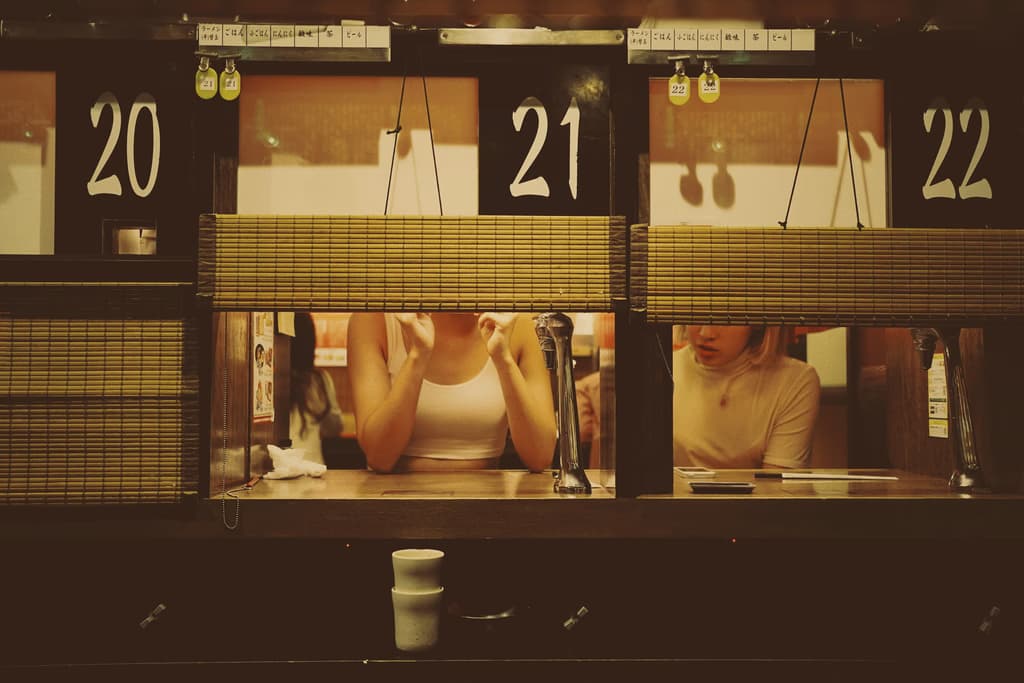
Ichiran draws tourists for reasons that have nothing to do with the bowl. The private booth experience feels authentic. The English menus eliminate ordering anxiety. The 24-hour availability fits jet-lagged schedules. The customization sheet creates the illusion of personalized craft.
It's not bad ramen. It's just not special ramen. Locals on Tabelog — Japan's restaurant review platform with 82 million reviews — consistently rate Ichiran locations as average at best. One resident described it as "the most basic white bread of noodles in Japan." Another called it "perfectly engineered to be inoffensive."
The real draw isn't the food. It's the comfort of knowing what you'll get. No language barriers. No social awkwardness. No risk of ordering wrong. Ichiran built a system that eliminates tourist anxiety, and tourists reward that by waiting an hour.
What Tabelog Ratings Actually Tell You
Tabelog operates like Japanese Yelp, but with 800,000 restaurants and 82 million reviews. It reflects where locals actually eat, not where Instagram says to go.
Ichiran locations cluster around 3.0-3.2 out of 5. That's not bad. It's middle-of-the-pack. Shops with 3.5+ ratings — the ones locals line up for — are 10-seat operations in residential neighborhoods that tourists never hear about.
The highest-rated shops don't need English menus because they're not optimizing for foreign visitors. They're optimizing for the same 30 local customers who come three times a week. That's a different kind of pressure. You can't survive on novelty when your customer base memorized your menu years ago.
The Real Cost of Famous Shops (Time, Not Money)
Ichiran's standard bowl starts at ¥980 — about $6.50. That's actually more expensive than many neighborhood shops charging ¥850-900 for comparable or better quality.
But price isn't the real cost. Time is. Sixty minutes in line for a bowl you'll finish in 10 minutes. Three to four other ramen shops sit within a five-minute walk, most with zero wait. The opportunity cost: one of your limited Tokyo meals spent on "fine."
If you have eight meals in Tokyo and dedicate one to standing outside Ichiran, that's 12.5% of your food budget on a bowl locals wouldn't wait for. The math gets worse when you consider the shops you're skipping.
Every famous shop creates this trade-off. The question isn't whether Ichiran is worth eating. It's whether the wait is worth the alternative — which is almost always better.
There's No Michelin-Starred Ramen. That's Not a Problem.
In 2024, all three of Tokyo's Michelin-starred ramen shops lost their stars. The ramen didn't change. The ratings did.
What Happened to Tokyo's Three Starred Shops
Nakiryu, Konjiki Hototogisu, and Ginza Hachigou were the only Michelin-starred ramen restaurants in the world. Nakiryu specializes in tantanmen — a Tokyo adaptation of Sichuan dan dan noodles with sesame paste and chili oil. It's a 10-seat operation where wait times after noon stretch to two hours. The shop didn't change anything about its process when it lost the star.
Konjiki Hototogisu sits in Shinjuku. The broth combines clams, chicken, and pork with a dollop of white truffle oil. The shio version — salt-based, not soy — is the standout. Still the same bowl, still the same chef, still the same line out the door.
Ginza Hachigou uses French bouillon technique instead of traditional kaeshi (the concentrated flavoring base). The broth is golden, almost translucent, with chicken, duck, pork, and dried vegetables. Add prosciutto for tang. It's a unique approach that took years to develop. Nothing changed about that process when Michelin downgraded it.
All three shops now hold Bib Gourmand status — Michelin's designation for quality food at reasonable prices. They're still in the guide. They're still excellent. The credential shifted, but the craft didn't.
Why Bib Gourmand Matters More for Ramen
Ramen costs ¥850 to ¥1,200 per bowl. Even the most famous shops rarely exceed ¥1,500. Michelin stars traditionally recognize restaurants where dinner costs ¥20,000 or more.
Ramen emerged as working-class fuel in post-war Japan. It's meant to be fast, affordable, and satisfying. The whole point is accessibility — similar to Tokyo's street food culture. Michelin's star system — designed for French fine dining — never fit ramen's identity.
Bib Gourmand does. It recognizes restaurants serving high-quality food for under $40. That's ramen's natural category. The 2024 Tokyo guide includes 19 ramen shops as Bib Gourmand selections, plus dozens more in the "selected restaurants" tier. The guide didn't abandon ramen. It recategorized it correctly.
The shops that lost stars now sit among the most authentic ramen options in Tokyo. The ones that never pursued stars sit there too. Credentials don't determine craft. Understanding does.
The Shops That Never Needed Stars
Family-run neighborhood operations never chased Michelin recognition. They perfected one style, built local loyalty, and sustained consistent quality for decades. No press coverage. No tourist lines. No English menus. Just residents who return three times a week because the broth tastes the same every time.
These shops existed long before Michelin arrived in Tokyo in 2007. They'll exist long after the guide's priorities shift again. Quality isn't validated by external credentials. It's validated by whether the chef's children can taste the difference when their parent isn't working that day.
The best bowl isn't the one with the pedigree. It's the one where you understand what you're tasting and why it matters.
What Makes Ramen Different Isn't the Broth — It's the System
Tokyo doesn't serve "ramen." It serves shoyu, shio, miso, tonkotsu, and tsukemen — five distinct regional identities in a bowl.
The Five Styles Tokyo Actually Has (Not "Ramen")
Each style represents a complete regional identity, not just a flavor variation.
| Style | Origin | Broth | Noodles | History |
|---|---|---|---|---|
| Shoyu | Tokyo | Light brown, clear. Chicken/pork stock + soy sauce + dashi + kelp + dried sardines | Moderately thick, straight | Tokyo's original ramen. Efficient meal for urban workers who needed to eat quickly and return to work |
| Shio | Hokkaido | Pale yellow, almost golden. Chicken/fish bones + high-quality sea salt | Thin, straight | Hardest style to master — salt must balance everything without dominating. Get it wrong: expensive salty water. Get it right: every ingredient becomes distinct |
| Miso | Sapporo (post-WWII) | Thick brown. Fermented soybean paste + butter + corn | Tighter (don't overcook in hot broth) | Created to nourish undernourished population rebuilding after war. Butter/corn provide calories and warmth in bitter Hokkaido winters. Heaviness is function, not indulgence |
| Tonkotsu | Fukuoka (1937) | Creamy, milky white. Pork bones boiled 16 hours until pulverized | Thin (concentrated broth coats more surface area) | Born from accident: chef fell asleep, bones boiled overnight turning clear broth white. Became Kyushu's signature — fuel for port workers |
| Tsukemen | Tokyo (1955) | Served separately, 5-10x thicker than shoyu, almost like sauce | Cold, thick. Dip small portions, eat quickly | Invented by Yamagishi Kazuo at Taishoken in Ikebukuro. Experimented with soba dipping sauce. Ramen reimagined for summer heat when hot soup feels oppressive |
Why Regional Identity Lives in a Bowl
These aren't arbitrary flavor choices. They're cultural expressions rooted in climate, economy, and local ingredients.
When you order tonkotsu, you're not just choosing creamy broth. You're choosing Kyushu's working-class port city history. When you order miso, you're choosing Hokkaido's post-war recovery and brutal winters. Shoyu is Tokyo's urban efficiency. Shio is Hokkaido's seafood culture.
Locals recognize this immediately. A Tokyo resident eating tonkotsu knows they're eating Fukuoka's interpretation. A Sapporo visitor ordering shoyu in Tokyo tastes the difference from home. The regional identity is embedded.
This matters because ramen shops don't serve all five styles. They specialize. A shop perfects one style over 30 years and never attempts another. That obsessive focus is the craft. Asking "which style is best" is like asking "which regional culture is best." The question misunderstands the system.
What Shop Philosophy Means (The Obsession Culture)
Japanese ramen culture values obsessive specialization. Chefs spend years perfecting one broth, one noodle texture, one balance of salt and fat. They don't experiment with fusion. They don't rotate seasonal specials. They make the same bowl, better, every day.
Shops build reputation on consistency and refinement. Regulars notice when the noodles are 30 seconds underdone. They notice when the broth temperature drops 2 degrees. That level of scrutiny forces precision. It also explains why shops close when the founder retires. The bowl is personal. It's not transferable.
This obsession culture is what tours teach. Not just "tonkotsu is creamy" but "this chef has been perfecting this specific tonkotsu for 23 years and his version tastes different from the shop three blocks away that's also been perfecting tonkotsu for 19 years." That difference — the individual interpretation within a regional style — is what you learn to taste.
If this cultural depth resonates, fully customizable experiences explore Tokyo's craft obsessions across multiple domains — from pottery to sake brewing to neighborhood history.
The Ticket Machine Isn't Tourist-Friendly. It Just Looks Simple.
The most common mistake tourists make at ramen shops happens before they even sit down: they try pressing buttons before inserting cash.
The Cash-First Mistake Every Tourist Makes
Ticket machine buttons don't activate until money is inserted. Stand in front of the machine. Press buttons. Nothing happens. Look confused. Other customers wait behind you. Pressure builds.
The fix is simple: insert cash first, then the buttons illuminate. But that's not intuitive if you're accustomed to systems where you select first, pay later. Many tourists stand pressing non-responsive buttons for 20-30 seconds before someone behind them gestures at the cash slot.
This isn't a minor inconvenience. It's the first interaction with the shop, and it signals incompetence. You've now started your meal with public confusion and social friction. Some travelers avoid ramen shops entirely because this moment stressed them out once.
What the Buttons Actually Say (When There's No English)
Older machines lack pictures. You're reading kanji you don't recognize. The top-left button is the most popular item. Left side shows base ramen options. Right side shows add-ons — extra pork (chashu), egg (tamago), seaweed (nori), extra noodles (kaedama).
Without knowing this, you're guessing. The risk: ordering ¥1,500 worth of add-ons when you intended to spend ¥850 on basic ramen. Or accidentally ordering cold tsukemen when you wanted hot shoyu.
Newer machines at chain locations include English. Some accept IC cards (Suica, Pasmo). But independent shops — the better ones — have cash-only machines with Japanese-only labels. Those are the shops tourists skip because the barrier feels insurmountable.
The Customization Sheet That Decides Your Bowl
After purchasing your ticket, many shops hand you a customization sheet. Choices include noodle firmness (hard, medium, soft), spice level, garlic amount, green onion density, oil richness. Each choice dramatically affects the final bowl.
English versions exist at some shops. Many shops don't offer them. You're looking at Japanese text with checkboxes, trying to decode what "硬め" versus "普通" means. (Hard noodles versus normal noodles, for reference.)
Choose wrong and the bowl suffers. Order soft noodles when the shop's specialty is firm texture, and you've undermined what they do well. Order maximum garlic when you're sensitive to it, and the meal becomes unpleasant. The customization sheet should improve your experience. Without understanding it, it introduces risk.
Where Guides Save 15 Minutes of Confusion
A guide either orders for the group or walks you through the process at your first shop. You see how cash insertion works. You learn which buttons represent what. You understand the customization options and their effects.
By the second shop, you're ordering independently with confidence. No fumbling. No stress. No wasted time figuring out a system that should be simple but isn't for non-Japanese speakers.
The value isn't hand-holding. It's eliminating the 15-minute learning curve that some tourists never overcome. Those 15 minutes are the difference between eating three times at shops you chose versus eating once at the shop with English menus and skipping the rest.
What a Ramen Tour Actually Teaches (It's Not Restaurant Names)
The best ramen tour review we found didn't mention the food first — it mentioned the "historical and cultural overview" that made everything else make sense.
Why 6 Mini Bowls Beat 2 Full Bowls
Standard ramen shops serve 400-500ml of broth per bowl. That volume fills you completely. After two full bowls in three hours, you're uncomfortable. Your palate is overwhelmed. Subtle differences between styles disappear under general fullness.
Mini bowls solve this. Tours serve 150-200ml portions — one-third of a full bowl. Six mini bowls across three shops means sampling six styles without overeating. You can directly compare tonkotsu richness against shoyu clarity because you're not fighting fullness.
The format exists to teach, not feed. Finishing six full bowls would cost ¥5,000+ and leave you feeling sick. Finishing six mini bowls costs ¥17,000 ($120) and leaves you understanding the system.
The Difference Between Eating and Understanding
Eating ramen alone, you taste salt, richness, noodle texture. That's surface-level.
Understanding means recognizing regional identity. Knowing tonkotsu's milky appearance comes from 16 hours of boiling collagen into emulsion. Tasting that shio's delicate salt balance required years to perfect. Identifying why this chef chose this specific soy sauce for their shoyu.
A traveler who took one of Tokyo's mini bowl tours said: "The historical and cultural overview was a useful primer, and helped us understand where each of the restaurants we visited sat in the ramen pantheon." That phrase — "ramen pantheon" — reveals the shift. It's no longer just noodles. It's a hierarchy, a tradition, a cultural system you're now equipped to navigate.
What You Learn That Applies to Every Bowl After
Tours teach pattern recognition that persists beyond the three hours:
-
Menu literacy — Style names (shoyu, tonkotsu) appear in katakana. Customization terms repeat. After seeing the same characters three times, you recognize them the fourth time
-
Quality evaluation — Signs to look for: local presence in line, small capacity (10-20 seats), specialty focus rather than diverse menu, consistent crowd composition across time slots
-
Ordering confidence — The cash-insertion mistake never happens again. Button layouts become predictable. Customization sheets stop feeling intimidating
-
Style preferences — Maybe tonkotsu's richness overwhelms you, but shio's clarity resonates. Now you know what to order at future shops. That preference is worth more than any "top 10" list because it's calibrated to your palate
When Education Matters More Than Efficiency
Opening Tabelog, finding highly-rated shops, and eating there yourself is faster and costs ¥850 per bowl instead of ¥17,000 for six mini bowls. Tours cost roughly three times what DIY costs for equivalent food volume. That's real money.
But you're still guessing at what makes shops different. Why does this 3.8-rated shop have different lines than that 3.8-rated shop? Why do locals prefer this style over that one? Which customizations are safe experiments versus which are shop-philosophy violations?
The tour costs significantly more than DIY but delivers pattern recognition that compounds across your entire trip. For travelers with eight meals in Tokyo and uncertainty about how to spend them, that investment prevents wasted experiences. The ¥17,000 isn't paying for six bowls. It's paying for the ability to make informed decisions about the other meals.
Who Should Skip a Ramen Tour (Honest Disqualification)
If all you need are restaurant addresses, don't book a tour — open Tabelog, save $120, and get on with your day.
If You Just Want Restaurant Addresses
Tabelog exists. It's free. It has 82 million reviews. You can filter by rating, location, and style. The addresses include maps and directions. Many listings include photos of the exact dishes.
Tours add context: why shops matter, what makes them distinctive, how the regional system works. If context doesn't interest you, that added value is zero. A list of addresses accomplishes your goal faster and cheaper.
If Your Tokyo Budget Is Tight
Tours cost approximately $120 per person. DIY ramen costs $8-10 per bowl. The tour consumes resources equivalent to 12 DIY meals.
If every dollar matters — if you're choosing between tour costs and better accommodations or additional days in Tokyo — skip the tour. The knowledge it provides is valuable, but it's not essential. You can still eat excellent ramen with Tabelog and trial-and-error learning.
If You Have 1-2 Meals Left in Tokyo
A three-hour tour consumes one full meal slot plus parts of two adjacent ones. Six mini bowls represent substantial food volume. After finishing, you won't want another meal for 4-5 hours.
If you're on your last full day with two remaining meals, spending one on a tour means dedicating half your remaining food time to guided education. That makes sense if you have four Tokyo days ahead. It doesn't make sense if you're leaving tomorrow.
For families wanting food experiences without the intensity, family-friendly tours that include food moments as part of a full day work better — kids, parents, and grandparents discover together without the deep-dive format.
When DIY Makes More Sense
Skip tours if you're confident navigating ticket machines, comfortable with Japanese ordering systems, fine with trial-and-error learning, and indifferent to cultural context behind food. Also skip if you're a repeat Tokyo visitor who already learned the ramen system on previous trips.
Tours exist for travelers who value education over efficiency, want ordering confidence, experience language barriers as friction, or recognize that understanding compounds across the entire trip.
If you don't match those criteria, you're not a good fit. That doesn't reflect poorly on you. It reflects honestly on what tours actually provide.
For a broader look at when private tours make sense in Tokyo, this worth-it evaluation across all tour types covers the decision framework.
The Two-Hour Wait Question: When Lines Signal Quality vs. Hype
Nakiryu still draws two-hour lines post-noon, even after losing its Michelin star. Ichiran also has long lines, but locals avoid it. That's not a contradiction — it's two different kinds of lines.
Why Nakiryu Still Draws 2-Hour Lines
Nakiryu is a 10-seat operation. Limited throughput means wait times stretch regardless of demand pace. The tantanmen they serve isn't generic dan dan noodles — it's a Tokyo-Sichuan adaptation with sesame paste, chili oil, and vinegar creating layered flavor instead of pure heat.
Former Michelin recognition built awareness. People waiting understand what makes Nakiryu distinctive. They're not waiting because Instagram told them to. They're waiting because they researched tantanmen and this shop's interpretation matters to them.
When you know why you're waiting, the wait has purpose. Nakiryu's line represents informed choice. Those two hours aren't wasted — they're invested in accessing specific craft.
The Difference Between Quality Lines and Instagram Lines
Quality lines have locals present. You see residents in business clothes, clearly on lunch break, willing to sacrifice time for this specific bowl. The crowd knows the specialty. Ask anyone in line what makes this shop different, and they can tell you.
Instagram lines are predominantly tourists. Many are photographing the line itself. The menu boards have multiple languages. The shop is a chain with 15+ locations. The wait peaks during social media-friendly hours — evenings, weekends — rather than distributing evenly.
Ichiran represents Instagram lines. The wait is for the experience: private booths, customization theater, foreigner-friendly systems. The bowl itself? Locals rate it average. You're not waiting for craft. You're waiting for comfort.
What Time of Day Changes Everything
Ramen shops open around 11:00-11:30am. Arriving at 11:15am means zero wait, even at popular shops. The lunch rush hits 12:00-1:00pm. Lines form. Wait times jump from 5 minutes to 60 minutes in a 30-minute window.
After 1:30pm, the lunch crowd thins significantly. Salarymen return to work. Wait times drop substantially. Same quality, fraction of the wait. Nakiryu's website lists hours as 11:30am-3:00pm for lunch, 6:00-9:00pm for dinner. Arriving at 2:45pm gets you in before they close for afternoon break, with minimal or no line.
Dinner (6:00-8:00pm) brings a second rush but shorter than lunch. Japanese work culture means lunch breaks are synchronized. Dinner is staggered. Strategic timing can dramatically reduce wait times while accessing identical food.
When to Walk Past the Queue
If you don't know what makes this shop distinctive, the wait won't teach you. If the line is predominantly tourists taking photos, that signals hype rather than quality. If three other highly-rated shops within 10 minutes have zero wait, the opportunity cost is clear.
Walk past when you're spending limited Tokyo meals on credential-chasing instead of understanding. Walk past when the wait serves Instagram rather than your palate. Walk past when the shop's distinctive qualities aren't clear to you — that means the wait won't teach you anything.
The confidence to make these judgments — knowing when to wait, when to walk — is what stays with you after tours end.
What Happens After the Tour (The Compounding ROI)
The three hours you spend on a ramen tour don't end when the tour does — they change how you read menus, choose shops, and taste every bowl for the rest of your trip.
The Rest of Your Trip Gets Better
Pattern recognition becomes automatic. You see a shop with 12 seats and local regulars at the counter. That's a quality indicator. You notice another shop advertising 20 different ramen styles. That's a red flag — specialization matters.
You read menus with literacy. Shoyu, shio, miso, tonkotsu, tsukemen — those were foreign terms three hours ago. Now they're categories you understand. The customization options make sense. You know what "katame" (firm noodles) means and whether you prefer it.
Ticket machines stop intimidating. The cash-first sequence is muscle memory. You recognize button layouts. The process takes 30 seconds instead of 3 minutes of anxious fumbling.
Your palate has reference points. You taste a bowl and recognize "this is tonkotsu but lighter than the Hakata-style version we tried — less collagen extraction." That comparison only exists because you tasted both styles with context.
How to Find Quality Shops on Your Own
Quality indicators:
-
Local queues, not tourist queues — Business attire during lunch, residential crowds during dinner, age diversity in line. Tourist queues: 20-30 year olds with cameras, evening/weekend concentration, multilingual conversations
-
Small capacity — 10-20 seats means the shop commits to its bowl. 50 seats means industrial systems. Best ramen comes from operations where quality control is possible
-
Specialty focus — One style, obsessively refined. Shops advertising "ramen, tsukemen, mazesoba, and 12 regional varieties" optimize for choice, not excellence. Shop serving only tonkotsu for 30 years optimizes for perfection
-
Residential neighborhoods — Shops surviving on local patronage must maintain consistency. Business districts demand lunchtime efficiency. Tourist districts forgive mediocrity because customers don't return
What to Look For in Neighborhoods
Nakameguro, Kichijoji, Shimokitazawa — these neighborhoods have residential density with food scenes serving locals. Shops here can't rely on tourist novelty. The same customers return. Standards are enforced by familiarity.
Contrast this with Shibuya, Harajuku, Asakusa — tourist-heavy districts where shops optimize for accessibility over excellence. English menus, photo menus, chain locations. Not universally bad, but the incentive structure differs.
A traveler wrote: "The best ramen I've eaten has been at random family-run joints I discovered while wandering around town." Those "random" joints aren't random anymore. You recognize them. Small capacity. Local clientele. Minimal English. Specialty focus. The pattern becomes visible.
This pattern recognition extends beyond ramen — Tokyo's standing bars and izakayas operate on the same local vs. tourist dynamics.
The $120 investment doesn't just buy three hours and six bowls. It buys the ability to make informed decisions for your entire Tokyo stay — and every future trip. The knowledge compounds. If navigating Tokyo's food scene feels this complex, private guided experiences remove the decision fatigue from your entire trip — not just ramen.
Where Hinomaru One Fits
Food tours teach you how to recognize quality. Our tours teach the city itself. Door-to-door pickup removes navigation anxiety. Guides with advanced degrees in Japanese history explain why neighborhoods evolved, what food culture reveals about Tokyo's identity, and how to read the city on your own afterward. You leave with a framework, not just restaurant names.
At Hinomaru One, we design culturally rich, stress-free private Tokyo tours for first-time and seasoned travelers. Unrushed. Insightful. Always customized.