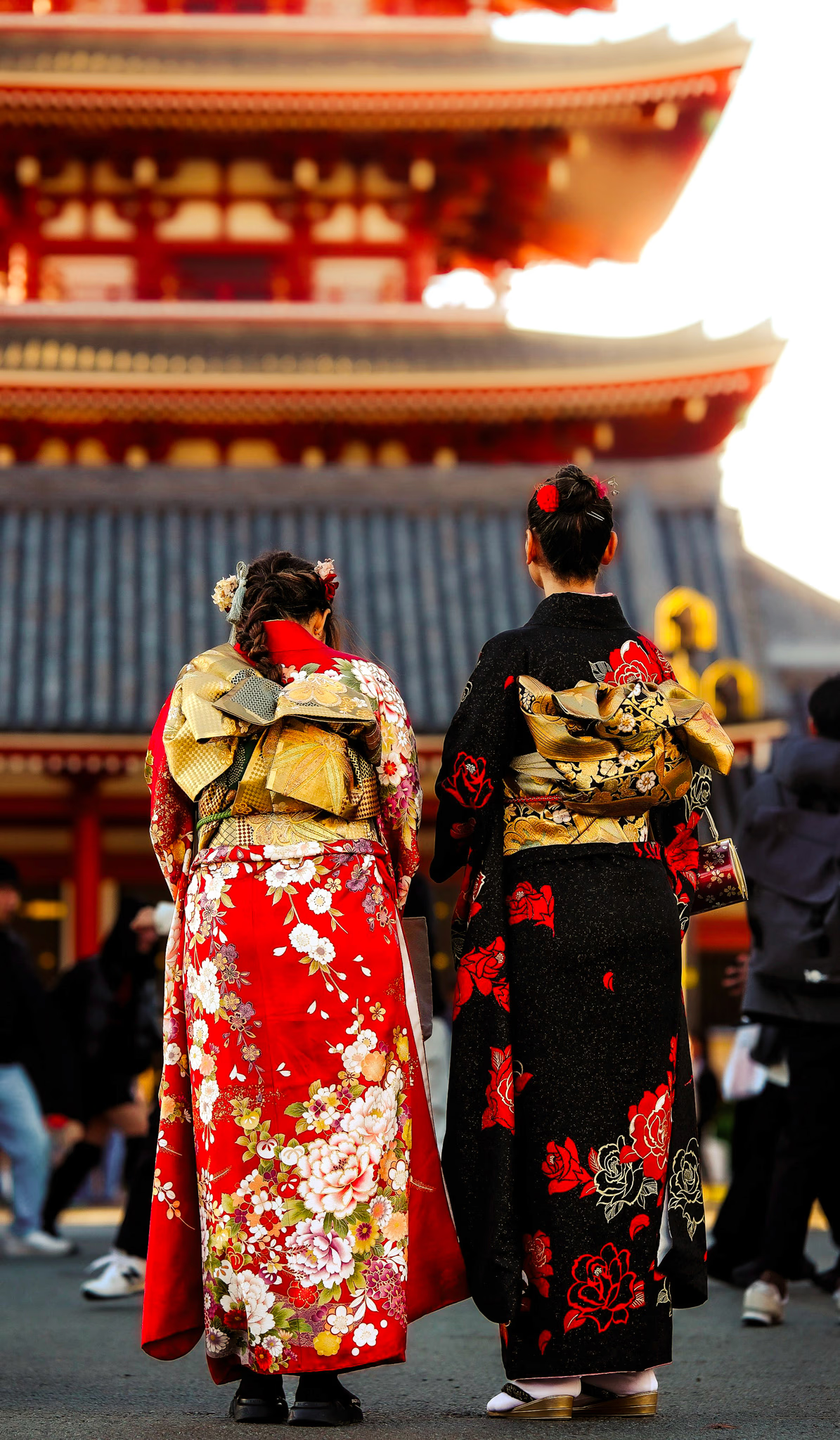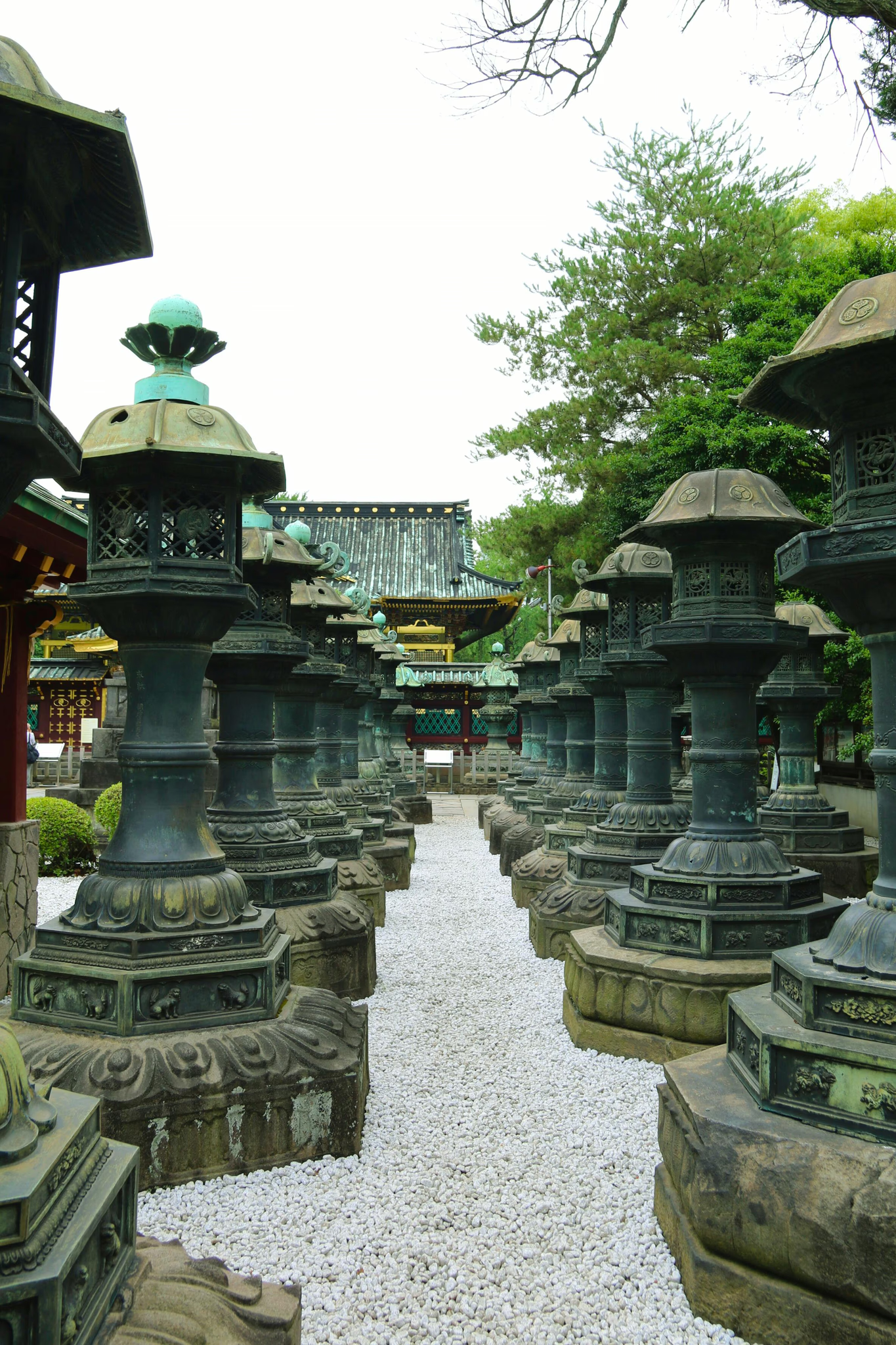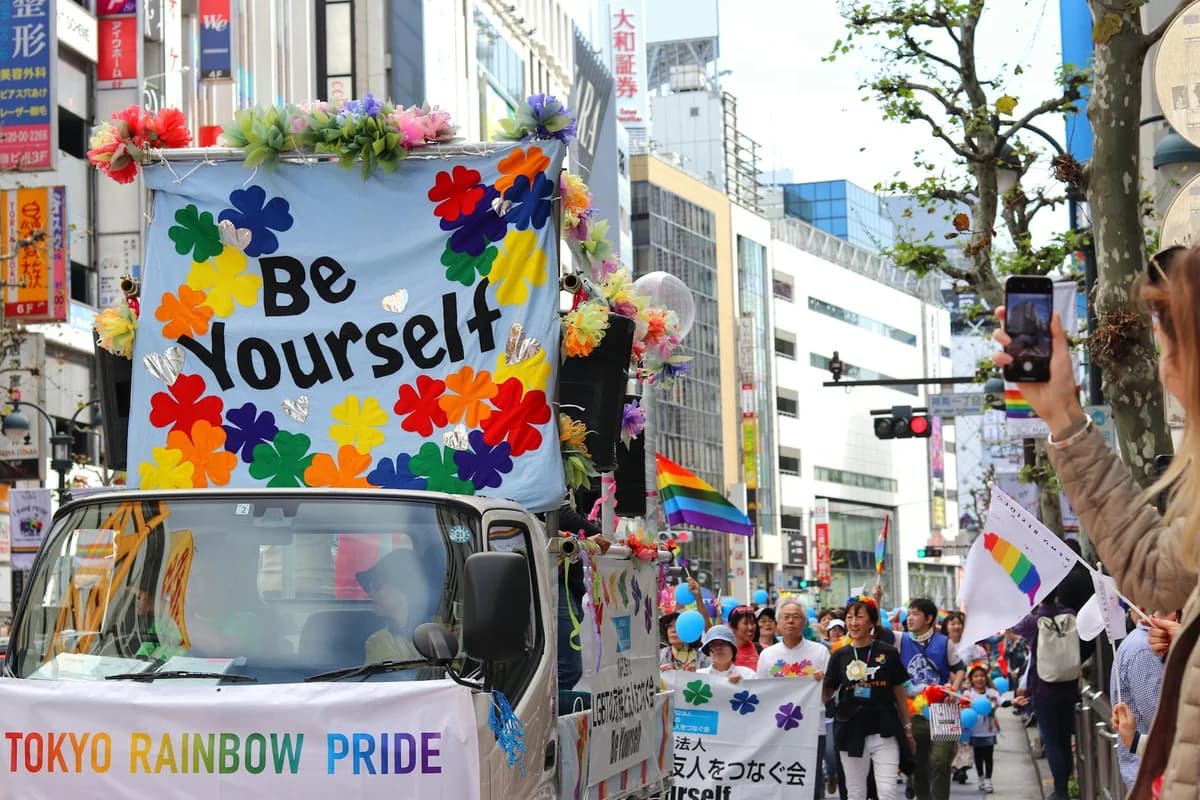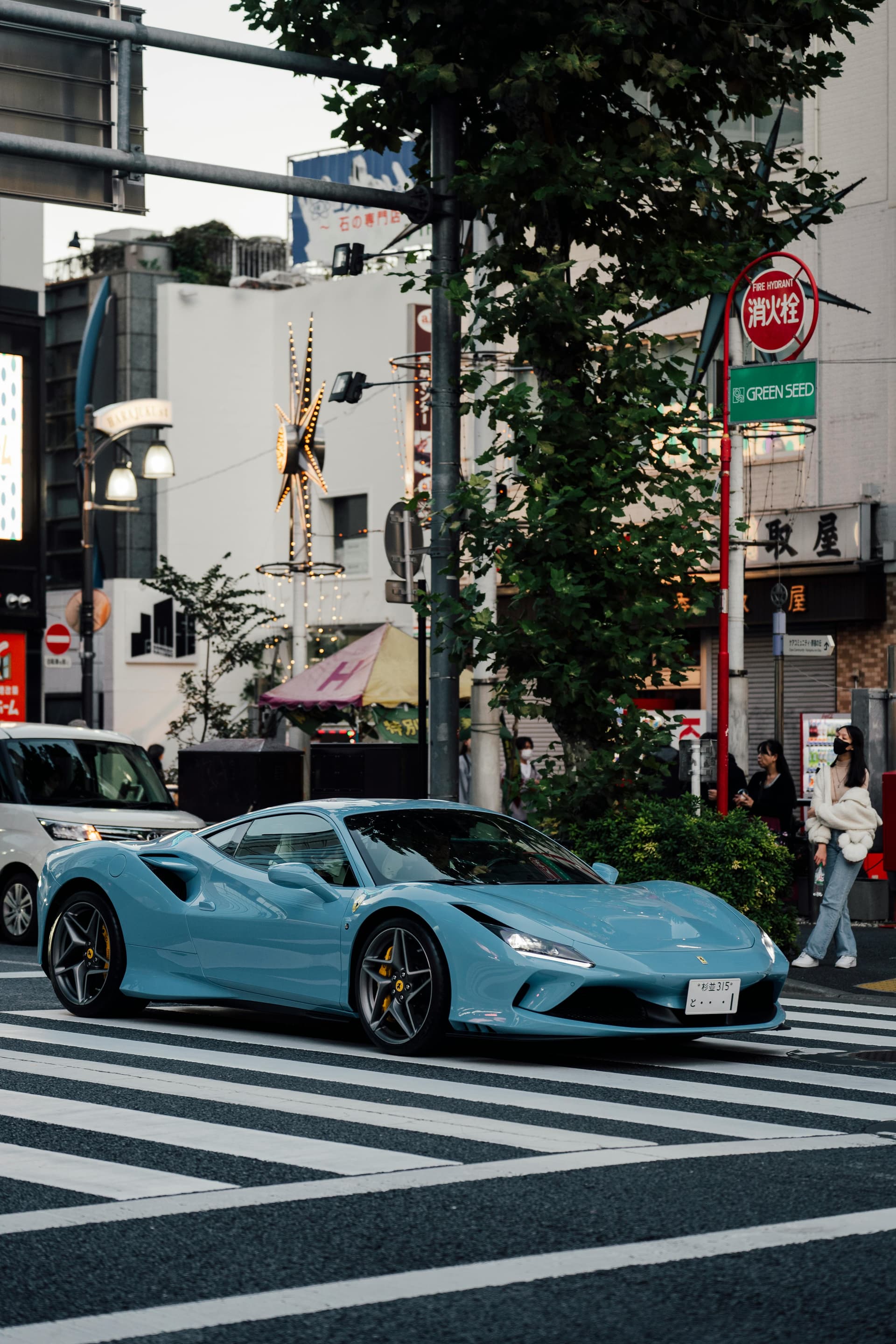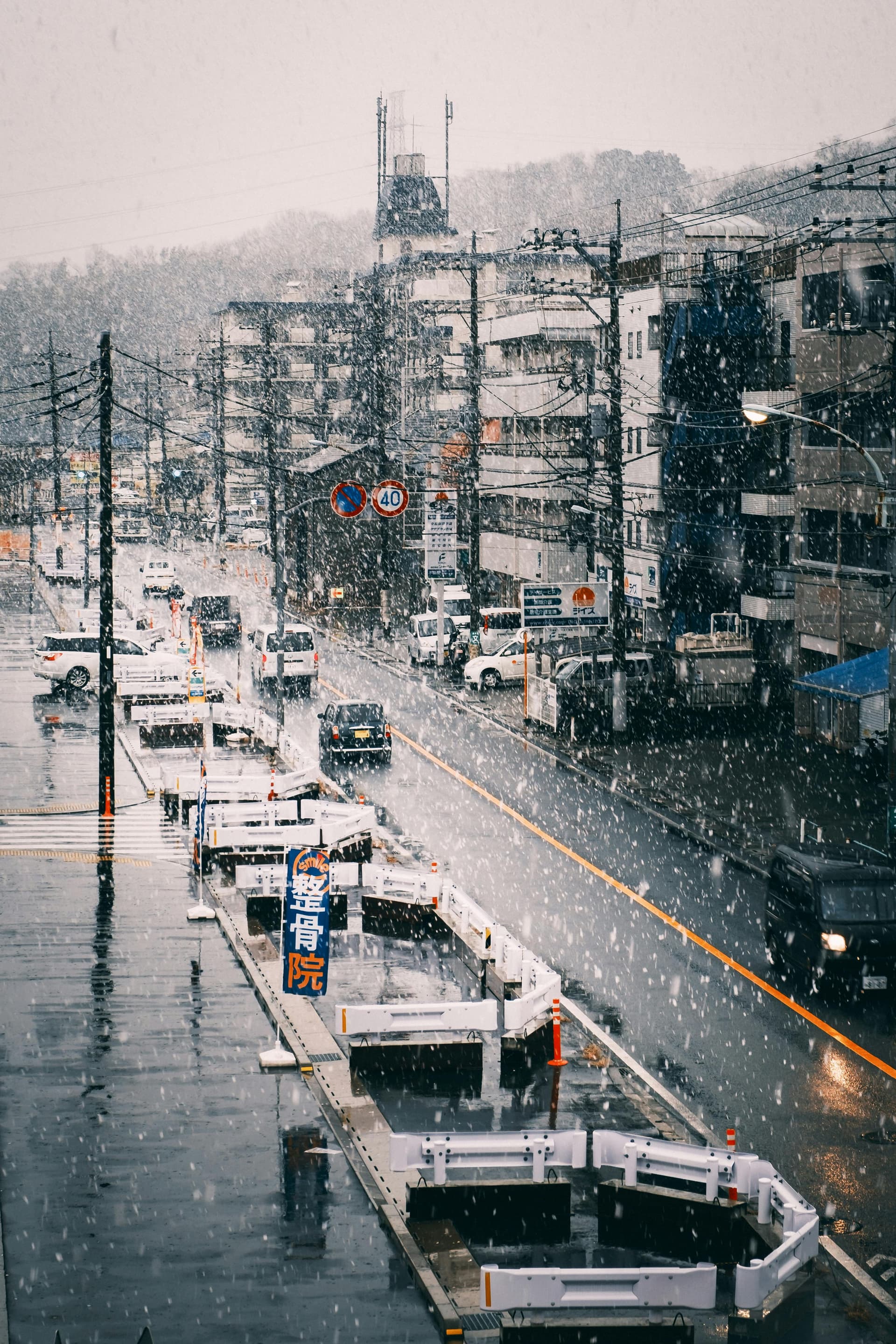
Pick a quiet window, then spend it in the older neighborhoods, where a thinner crowd changes the day most.
Off-season Tokyo experiences come down to two decisions: when you go, and where you spend the time once you're here. The city never really empties, but in some weeks the hotels drop their rates, restaurants have tables a day or two out, and the narrow lanes of the old neighborhoods are walkable again.
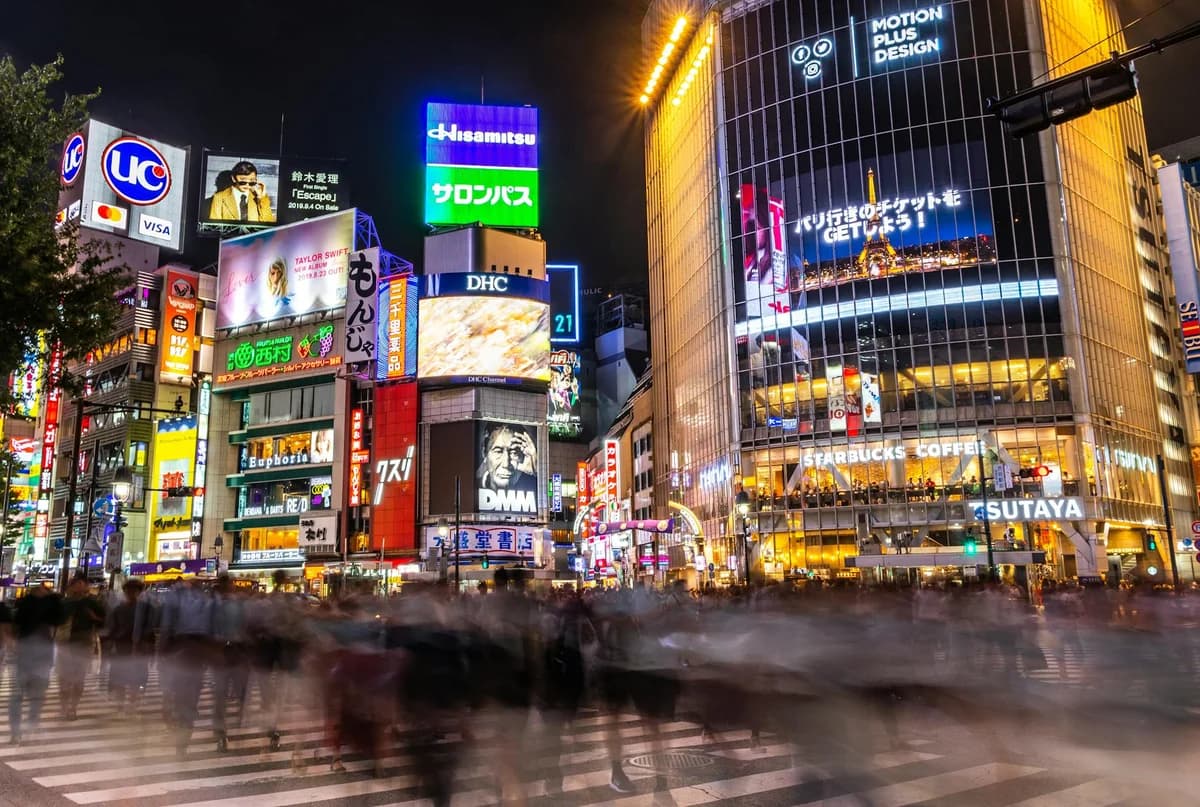
The famous sights still have crowds in a quiet month. Shibuya Crossing is busy every evening of the year. The season matters most in small places with narrow streets, like Yanaka, Nezu and Kagurazaka, where a few tour groups are enough to fill the lanes, and a quiet week there feels like a different neighborhood.
Which months count as off-season
Our best time to visit Tokyo guide goes through the whole year. For this purpose, there are three windows we point people to.
The first is early May, from May 7 onward, after Golden Week ends. In 2026 Golden Week was April 29 (Showa Day) and then a five-day block from May 2 to May 6, and for those days the tourist areas were packed and hotel rates climbed. The week after, Japanese travelers are back at work and school, highs sit around 22-24°C, and the rainy season hasn't started yet.
The second is late November, roughly November 20-30. It sits before the December holiday rush, while the autumn color is still on the trees, and hotel prices haven't climbed to December rates yet. Illuminations start going up around the city, and the average high for November is 16.7°C.
The third is mid-January through February. Once the New Year holidays are over, visitor numbers hit their low for the year and hotel rates drop with them. It's cold, with January averaging a high of 9.8°C and a low of 1.2°C, and the sun sets around 4:30 PM. In exchange the skies are clear and restaurants will often take you at short notice. Our winter guide covers how to plan around the short days.
Months that look quiet but come with a catch
June is quieter than spring for a reason. The rainy season in the Kanto region normally starts around June 7 and ends around July 19 (in 2026 it began about June 2). Expect rain on many days, with some dry spells in between. It's warm, with average highs of 26.1°C and lows of 18.5°C, and the gardens are at their greenest. If you don't mind an umbrella, June works, and we plan routes for it with more covered streets and indoor stops. Our summer guide has more on the rainy season.
September is typhoon season. Most days are fine, but a storm can close train lines and outdoor sites for a day, so leave slack in the plan and don't put anything you can't move on a single date.
October is a lovely month, with highs around 22°C and lows near 15°C, but it isn't really off-season. It's one of the comfortable months, and plenty of travelers know it.
Yanaka
Yanaka came through both the 1923 earthquake and the 1945 firebombing, so it has more surviving wooden machiya than almost anywhere else in central Tokyo. The lanes are narrow, and even a moderate crowd fills them.
Yanaka Ginza, the shopping street, is only about 170 meters long with around 60 shops. You reach it from the Nippori side by going down the Yuyake Dandan, a flight of 36 steps. On a busy weekend it moves at a shuffle. On a weekday in February you can stop at a stall and talk to whoever is running it.
Kayaba Coffee sits in a machiya built around 1916. It opened as a coffee shop in 1938, closed in 2006, and was reopened in 2009 by local volunteers who kept the old building. Near Nippori Station, Habutae Dango has been making dumplings since 1819, and Natsume Soseki mentions it in I Am a Cat.
Nezu
Nezu Shrine has a tunnel of red torii gates, seven buildings completed in 1706 that are designated Important Cultural Properties, and around 3,000 azalea bushes on the hillside. The shrine grounds are free and open at 6 AM, but the azalea garden charges ¥500 to ¥1,000 during the April festival.
The busy month at Nezu is April. The azalea festival ran from April 1 to April 30 in 2026, with the flowers peaking in early to mid April, and the shrine and the lanes around it fill up. Outside April, and especially early in the morning, you mostly share the place with locals. From the shrine it's an easy walk north to Sendagi and on into Yanaka, so we often do the two together.
Kagurazaka
Kagurazaka is a former geisha district that is still an active hanamachi, and it has one of the largest French communities in Japan, which grew up around the Institut français, founded nearby in 1952. The main street runs uphill from Iidabashi Station. The side alleys are the reason to go.
Kakurenbo Yokocho is a stone-paved alley between Kagurazaka Naka-dori and Honda Yokocho, with traces of the old hanamachi still visible. It's barely wide enough for two people to pass, and one tour group can block it. Akagi Shrine was rebuilt to a design by Kengo Kuma and finished in August 2010. It won a Good Design Award the following year.
Kagurazaka is also a restaurant neighborhood. At the small places off the main street, a table that needs weeks of notice in spring can sometimes be had a few days ahead in January.
Shimokitazawa
Shimokitazawa gets around 150,000 visitors a day, and it stopped being a secret a long time ago. Weekends are crowded in any season. A weekday morning is calmer, though the vintage shops mostly don't open until late morning.
Bear Pond Espresso, in the north part of the neighborhood, opens at 11:00 and closes at 17:30 (hours can change). For live music, SHELTER has been running since 1991 and BASEMENT BAR since 1995. Both are small rooms, and outside the busy seasons it's easier to pick up a ticket for a show that same week. Shimokitazawa is on the Odakyu Line and the Keio Inokashira Line.
Monzen-Nakacho
Monzen-Nakacho is in Koto Ward, east of the Sumida River, on the Tozai and Oedo lines. It's a shitamachi neighborhood of small bars and food stalls, and very few tourists.
The main thing to see in the morning is the goma fire ritual at Fukagawa Fudodo. Prayers run daily at 9:00, 11:00, 13:00, 15:00 and 17:00 and last about 30 minutes. Check the times on the day, as they can change. The ritual draws worshippers more than tourists in any season. The approach road from the station is lined with small shops and stalls, and that's the part that gets crowded on busy days.
Tsukiji Outer Market
The wholesale side of Tsukiji moved to Toyosu in 2018. The outer market stayed, with more than 400 shops. Some open around 5 or 6 AM, but the main visitor hours run roughly from 9:00 to 14:00. Many shops close on Sundays, public holidays and market holidays, so check the calendar before you plan a morning around it.
At Tsukiji the time of day matters more than the season. The lanes are narrow, and by late morning they're slow going in any month. Arrive early, eat standing at each stall as you go, and you're done before the worst of it. In a quiet month the late-morning crush is a little lighter.
A sento at the end of a cold day
About 430 neighborhood bathhouses are left in Tokyo. Our sento guide explains how they work, from the washing sequence to tattoos (many small sento have no posted rule). After a day of walking in January, a hot bath is one of the better reasons to come in winter.
In Yanaka, Asahi-yu is about two minutes from Sendagi Station. It's roughly 100 years old and changes its herbal bath every day. If you want hot spring water, Musashi-koyama Onsen Shimizu-yu in Shinagawa has natural black-water and golden baths, indoors and outdoors. It opens 12:00 to 24:00 (from 8:00 on Sundays) and closes on Mondays. Check before you go, as we couldn't confirm its current hours.
Workshops and booking ahead
Craft workshops are small and keep their own schedules. A swordsmith who takes one group a day has very few dates to offer, so ask early in any season. Our authentic Tokyo experiences page lists the ones we work with, including blade forging, Edo kiriko glass cutting and a private Noh lesson.
Some things need booking in any season. Ghibli Museum tickets go on sale on the 10th of each month at 10:00 for the following month through Lawson Ticket, the standard channel, so for an October visit you'd buy on September 10. Authorized travel agents such as JTB also sell tickets for international visitors.
Putting the neighborhoods together
Nezu, Yanaka and a bath at Asahi-yu make one easy day on foot, since they're all within walking distance of each other. Tsukiji in the early morning and Monzen-Nakacho for the fire ritual fit together on the east side, and Kagurazaka works well as an evening on its own. Shimokitazawa is out to the west, so we'd give it an afternoon and an evening.
If you're flying in from far away for a short trip, two neighborhoods a day is enough, three if they're next to each other. In winter the light goes early, so start early and keep the evening for food. Our Tokyo Essentials tour adjusts its route to the season, and Infinite Tokyo is fully customizable, so we can build the day around neighborhoods like these.