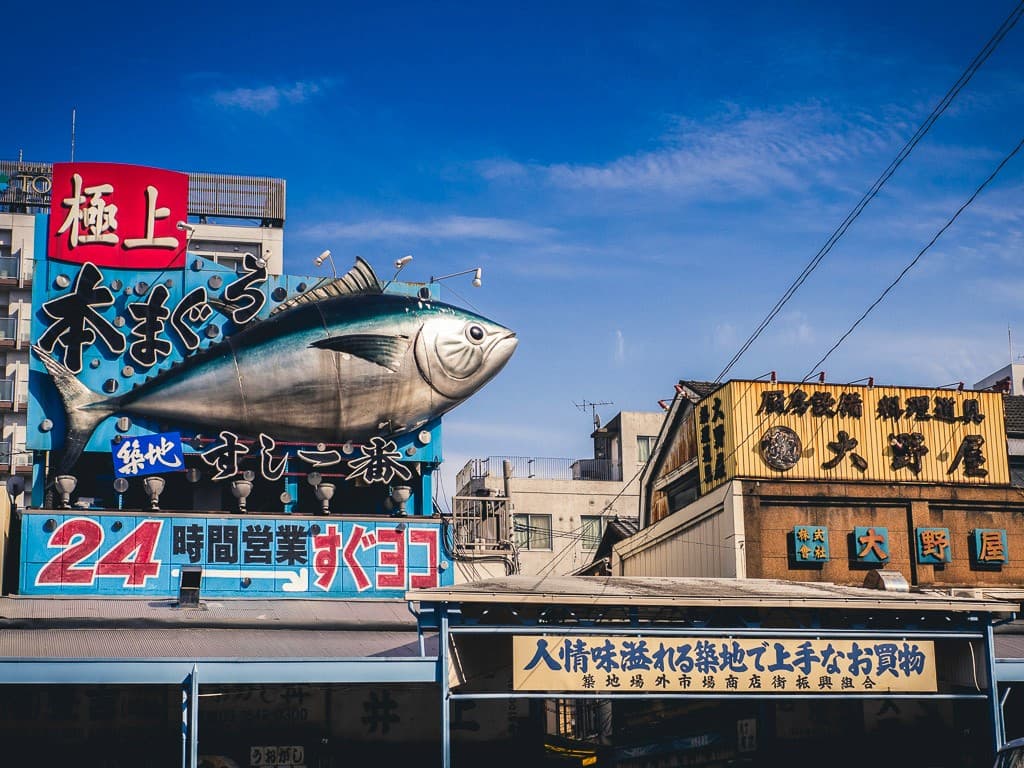
Tsukiji is DIY-friendly with English signage and tourist infrastructure. Tours sell timing optimization and vendor expertise, not access.
Tsukiji is DIY-friendly with English signage and tourist infrastructure. Tours sell timing optimization and vendor expertise, not access.
Tsukiji market food tours don't give you access you can't get yourself—the outer market is open, English signage exists, and vendors welcome walk-ins. What guides provide is timing optimization, vendor expertise, and mistake avoidance. This matters because most DIY visitors arrive too late (missing the breakfast window), overpay on tourist-trap wagyu skewers, and leave without understanding what they actually ate.
Guides Solve Timing, Not Access
The outer market opens around 5-6 AM, with most shops fully operational by 9 AM. Crowd patterns are predictable:
| Time Window | Crowd Level | What's Available |
|---|---|---|
| 6-7 AM | Minimal crowds | Full selection, freshest prep, vendors not exhausted |
| 8-9 AM | Comfortable navigation | Full selection, manageable lines |
| 10 AM+ | Packed alleys | Items selling out, long waits, vendor fatigue |
| 2-3 PM | Closing time | Most shops closed |
Tours start between 8:15-10:45 AM, which catches the operational window but misses the quietest hours. If you want to avoid crowds entirely, go at 6-7 AM on your own—no tour operates that early because clients don't want to wake up that early. The best time of day for Tokyo tours varies by venue, but markets specifically reward early arrivals.
What Sells Out (And What Doesn't)
Nothing at Tsukiji sells out in the sense that tours get special access. Popular vendors like Tsukiji Yamacho for tamagoyaki (¥100 on a stick, ¥400 for a sandwich) have lines regardless of when you arrive. The scallop and oyster stalls restock throughout the morning. The fresh tuna doesn't disappear at 9 AM—for the wholesale tuna auctions, you'd need to visit Toyosu instead.
Arriving early means fresher prep, shorter lines, and vendors who aren't yet exhausted from hours of tourist interactions. You can achieve this on your own by setting an alarm.
The Wagyu Problem Is Real
A5 wagyu skewers at Tsukiji cost ¥3,000-5,000 ($20-35), which travelers call overpriced after discovering all-you-can-eat wagyu restaurants elsewhere in Tokyo charge similar amounts for unlimited meat. The skewers are good—rich, tender, properly grilled—but represent poor value compared to what the same budget buys you 15 minutes away in Ginza.
Value Comparison:
| Item | Price | What You Get |
|---|---|---|
| Tsukiji wagyu skewer | ¥3,000-5,000 | One skewer (~100g) |
| Ginza all-you-can-eat wagyu | ¥4,000-6,000 | Unlimited wagyu + sides (90 min) |
| Tamagoyaki at Tsukiji | ¥100-400 | Authentic specialty from decades-old shop |
| Grilled scallops at Tsukiji | ¥600-1,600 | Fresh portions, properly seasoned, good value |
Guides skip these stalls or warn against them explicitly. DIY visitors see the Instagram-worthy presentation, assume it's a market specialty, and pay tourist prices for something better enjoyed as a full restaurant experience elsewhere.
What Actually Represents Good Value
The better value propositions at Tsukiji:
-
Tamagoyaki from specialty vendors (¥100-400): These shops have made egg omelettes for decades, and the technique shows
-
Oysters and scallops from seafood stalls (¥600-1,600 for portions): Grilled fresh to order with proper seasoning
-
Uni and toro from established fishmongers: When you see locals buying, that's the signal
-
Strawberry daifuku and seasonal fruit: Japan's fruit culture on display, reasonably priced for what you get
Guides know which vendors have been there for 20+ years versus which opened post-2018 to capitalize on tourist traffic. This distinction isn't obvious from storefront appearance. For more on Tokyo's street food scene beyond markets, we cover the broader landscape separately.
When DIY Makes More Sense
Tsukiji Outer Market is accessible to independent travelers. The tourist infrastructure exists: English signage on major stalls, cash-only warnings posted clearly, designated eating areas marked, and a helpful information center (Plat Tsukiji) with maps and recommendations.
If you're comfortable with:
-
Navigating based on maps and pre-research
-
Making food choices without extensive explanation
-
Missing some cultural context you'd never know to ask about
-
Learning what's reasonable by overpaying on 1-2 items
Then DIY makes perfect sense. Arrive by 8 AM, budget ¥3,000-5,000 per person for food sampling, avoid the obvious tourist traps (wagyu skewers, anything with Instagram-optimized presentation), and follow where locals are buying. Tsukiji is one of the situations where you don't need a private tour—the infrastructure supports independent exploration.
The English Barrier Is Overstated
Most Tsukiji vendors don't speak conversational English, but food transactions don't require much language. Point at what you want, they show you the price on a calculator or menu board, you hand over cash. It works.
Where language becomes useful: understanding what you're eating, learning preparation methods, getting recommendations based on your preferences, and navigating the difference between wholesale supply shops versus tourist-oriented stalls. A guide provides this context, but you can also research beforehand or use translation apps with reasonable success. The language barrier in Tokyo is real but manageable in tourist-friendly venues like Tsukiji's outer market.
For a broader look at when DIY, free walking tours, and audio guides work—and when private guides add value—see our tour format comparison.
What a Guide Changes (and What It Doesn't)
A guide's contribution at Tsukiji:
-
Vendor expertise: Knowing which tamagoyaki shop uses the best eggs versus which one optimized for tourist volume
-
Timing strategy: When to arrive, how long to spend, what closes early
-
Mistake prevention: Steering you away from ¥5,000 wagyu skewers and toward ¥600-1,600 scallop portions that deliver better value
-
Cultural context: Why dashi appears in everything, how seasonal fish shapes menus, what professional chefs look for when they shop here
-
Efficient routing: Moving through 400+ shops in a logical sequence rather than chaotic wandering
Guides compress the learning curve from "your second or third visit" to "your first morning there."
How Tour Groups Navigate the Market
Tour groups of 6-15 people create their own logistical problems at Tsukiji. The narrow alleys weren't designed for cluster movement, and vendors need space in front of their stalls for regular customers.
Group Size Impact:
| Group Size | Navigation | Vendor Engagement | Best For |
|---|---|---|---|
| 2-4 people | Moves like independent travelers | Natural, personalized | Intimate exploration |
| 6-8 people | Can maneuver with coordination | Professional but less personal | Small group tours |
| 12-15 people | Becomes an obstacle | Transactional only | Budget tour groups |
Private tours with 2-4 people move through the market like independent travelers, which means faster navigation and vendors who engage more naturally. Hinomaru One caps groups at 8 maximum and recommends 2-4 for food-focused experiences—the group size affects how comfortably you can navigate any food-dense environment, and markets impose this constraint more than most venues.
What Public Tours Include
Tokyo food tours at Tsukiji run 2-3 hours with pricing that varies by group size and inclusions:
| Tour Type | Price Per Person | What's Included |
|---|---|---|
| Small group tours (6-10 people) | $90-130 | 5-7 tastings plus a seafood bowl |
| Budget tours with minimal food | $40-65 | Basic market walk with fewer tastings |
| Private tours | $300+ for 2-4 people total | Customized pacing and vendor selection |
The tastings are curated but not exclusive—guides take you to the same vendors you could visit independently. What you're paying for is the selection logic (which stalls represent good value), timing optimization (arriving when lines are manageable), and cultural context (why these foods matter in Japanese cuisine).
Group tours visit tourist-friendly establishments because they need to accommodate 8-15 people simultaneously, handle English communication, and maintain predictable timing. This means you'll eat at larger stalls with English menus rather than the tiny, Japanese-only counters where local chefs shop. The guide also handles getting to and around Tokyo logistics, which matters more when visiting multiple neighborhoods than for a single-location market visit.
When You Need the Guide
A guided visit makes sense if:
-
You're in Tokyo for 2-3 days total and want to maximize the market visit
-
You want to combine Tsukiji with other neighborhoods in an efficient multi-venue food tour
-
You have specific dietary restrictions that require menu navigation
-
You're interested in the cultural and historical context beyond just eating
-
You want to experience venues beyond Tsukiji where independent access requires language skills or reservations (reservation-only izakayas, Japanese-only counters in residential neighborhoods)
The guide becomes valuable when Tsukiji is one component of a larger food exploration, not when it's your only destination. Customizing your private tour lets you adjust pacing, vendor selection, and dietary preferences in ways public tours can't accommodate.
The December Exception
The Tsukiji Association formally requested tour operators avoid year-end visits in December 2024 due to dangerous overcrowding. The narrow market alleys become unsafe when packed with both regular year-end shoppers (Japanese families stocking up for New Year celebrations) and peak tourist season overlap.
What changes in late December:
-
Tour groups that normally navigate efficiently become stuck in bottlenecks
-
Vendors who welcome tour business actively discourage group visits
-
Even guides can't solve the crowding problem
-
Regular customers preparing for New Year get priority
If you're visiting Tokyo in late December and want to experience Tsukiji, go independently in the earliest hours (6-7 AM before tours operate) or skip it entirely in favor of less chaotic food experiences elsewhere in the city. This is the one time when a guide provides no advantage—nobody can make those alleys less crowded when they're at maximum capacity. Avoiding crowds in Tokyo requires either timing adjustments or venue substitutions during peak periods.
If You're Booking a Tour
Public group food tours focused solely on Tsukiji run 2-3 hours and cost $40-130 per person. Multi-stop tours that include Tsukiji as one destination alongside temples, neighborhoods, and other sites run 4-6 hours with per-group pricing.
Tour Format Comparison:
| Format | Duration | Price Range | Best For |
|---|---|---|---|
| Public Tsukiji-only | 2-3 hours | $40-130 per person | Market culture focus, budget-conscious |
| Private Tsukiji-only | 2-3 hours | $300+ for group of 2-4 | Dietary restrictions, custom pacing |
| Multi-stop tour (e.g., Tokyo Essentials) | 6 hours | $430 for group of 2 | Market + temples + neighborhoods in one day |
The difference: market-only tours give you depth on one location. Multi-stop tours give you breadth across Tokyo—Tokyo Essentials includes Tsukiji as part of a 6-hour tour covering Ueno, Asakusa, and Akihabara, letting you experience the market without making it your only destination.
For travelers who want market visits combined with temples, shopping districts, and neighborhood exploration, the multi-stop format delivers more variety per hour. For travelers specifically interested in market culture and seafood sourcing, the Tsukiji-focused tour makes sense.
What Kushiyaki Confidential Does
This 6-hour private food tour (from $430 for 2 people) starts in late afternoon and moves through five distinct venues:
Tour Stops:
-
4:30 PM — Standing sushi in Shibuya
-
5:20 PM — Yakitori in a cozy joint
-
6:30 PM — Sake bar in Ebisu
-
7:30 PM — Izakaya in Nakameguro
-
9:00 PM — Retro bar or dessert spot to close
Food and drink at all venues are not included—you spend approximately ¥5,000-8,000 per person ($35-55) depending on appetite and drink choices. The tour handles navigation, menu translation, and reservation logistics. You control your culinary budget by choosing what to order at each stop.
This format works for travelers who want exposure to multiple neighborhood food scenes in one evening with a guide handling the logistics. It doesn't work if you want comprehensive time at any single location or prefer exploring independently. The 6-hour duration allows for deeper exploration than 2-3 hour public market tours while staying shorter than full 8-hour day tours.
When Private Tours Change the Math
Private tours at Tsukiji cost around $300+ for 2-4 people for 2-3 hours, which breaks down to $150+ per person. Public tours cost $90-130 per person for 2-3 hours.
Pricing Breakdown:
| Tour Type | Total Cost | Per Person (2 people) | Duration | Coverage |
|---|---|---|---|---|
| Public group | $180-260 total | $90-130 each | 2-3 hours | Tsukiji only |
| Private Tsukiji-only | $300+ total | $150+ each | 2-3 hours | Tsukiji only, custom pacing |
Private Tsukiji-only tours make sense if you want customized pacing (linger at specific vendors, skip others entirely) or have dietary restrictions that public tour formats can't accommodate. Most travelers don't need that level of control for a market visit. Understanding how private tour pricing works helps clarify why per-group rates differ from per-person public tour pricing.
For travelers interested in Tokyo's broader food culture, Kushiyaki Confidential covers five venues across Shibuya, Ebisu, and Nakameguro—standing sushi bars, yakitori joints, craft sake counters, and izakayas that represent how Tokyo eats beyond just markets. For those interested in old-school izakaya culture specifically, Standing Room Only explores Suginami Ward's retro standing bars and local nightlife in Nakano, Nishi-Ogikubo, and Kichijoji.
The core question—whether exploring with a private guide adds value over going alone—comes down to whether you want to compress the learning curve or are comfortable with trial-and-error discovery. Both approaches work at Tsukiji; the difference is efficiency versus independence.
Decision Framework:
| Choose DIY If... | Choose Guided If... |
|---|---|
| You have time for trial and error | You're in Tokyo 2-3 days and want efficiency |
| You enjoy independent exploration | You want cultural context beyond transactions |
| You're comfortable with maps/apps | You want to avoid tourist trap mistakes |
| Budget ¥3,000-5,000 for sampling | Combining market with multi-venue food tour |
| You're okay overpaying on 1-2 items | You have dietary restrictions needing navigation |
| You visit markets regularly at home | This is your introduction to Japanese food culture |
Where Hinomaru One Fits
For travelers interested in Tokyo's broader food culture beyond markets, Kushiyaki Confidential explores five venues across Shibuya, Ebisu, and Nakameguro—standing sushi bars, yakitori joints, sake counters, and izakayas. The 6-hour tour handles all navigation, menu translation, and reservation logistics, letting you experience neighborhood dining culture with the same efficiency and expertise that guides bring to market visits.
At Hinomaru One, we design culturally rich, stress-free private Tokyo tours for first-time and seasoned travelers. Unrushed. Insightful. Always customized.